Lamentations 1
Biblica® Open Nueva Biblia Viva 2008 · Tap a verse to see its cross-references.
About this book
About Lamentations
- In the Hebrew canon the book is called 'Ekhah, meaning “How,” the formula that opens a song of wailing and the first word of the book. The Septuagint adopted the name rendered “Lamentations” (Greek threnoi, equivalent to Hebrew qinoth) to mark its character, and in the Hebrew Bible it is placed among the Khethubim.Sources: Easton: Lamentations, Book of
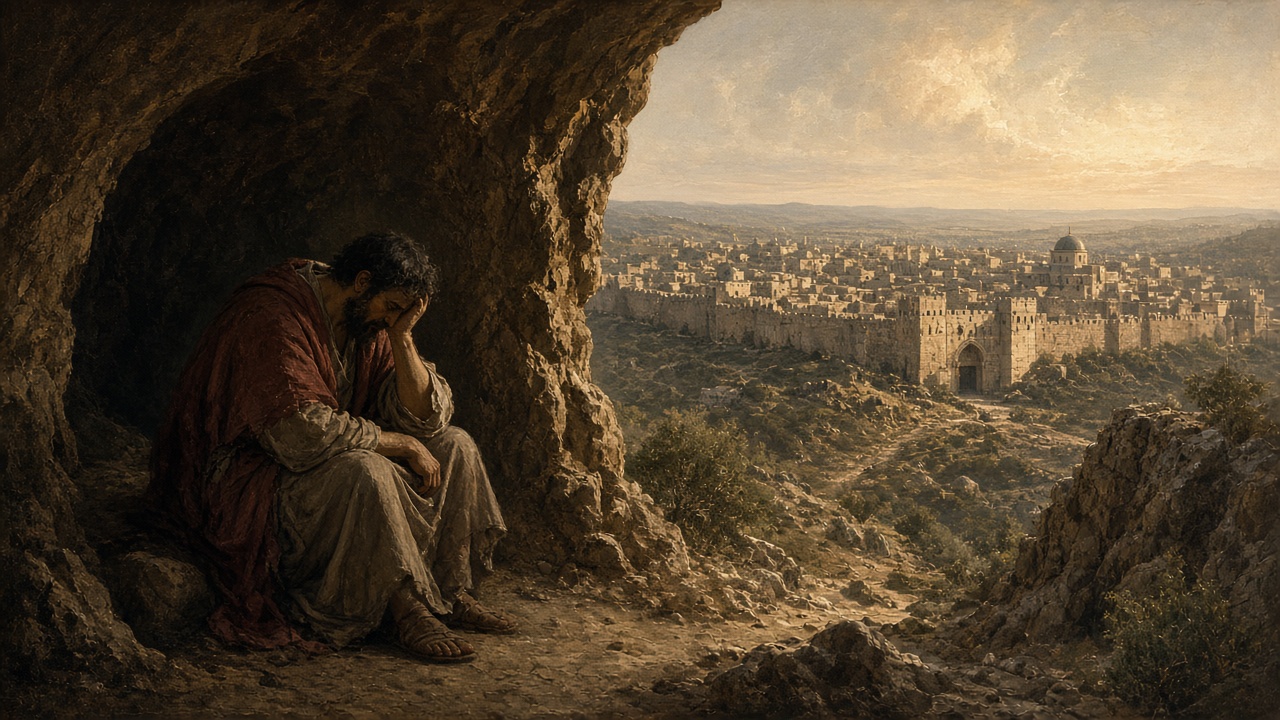
- The Septuagint and the Targum ascribe Lamentations to Jeremiah, and Easton's Bible Dictionary (1897) follows that tradition. Tradition says that after Nebuchadnezzar destroyed Jerusalem he withdrew to a cavern outside the Damascus gate and wrote the book there, mourning the desolations the Chaldeans brought on the city and the holy land; the dictionary notes that the cavern was still pointed out, and local belief placed the “grotto of Jeremiah” in the face of a rocky hill on the western side of the city.Sources: Easton: Lamentations, Book of
- The book consists of five separate poems. The first four are acrostics, like Psalms 25, 34, 37, and 119: each verse begins with a letter of the Hebrew alphabet in order. Chapters 1, 2, and 4 each have twenty-two verses, the number of letters in the Hebrew alphabet; chapter 3 has sixty-six verses, with each letter beginning three successive verses; chapter 5 is not an acrostic.Sources: Easton: Lamentations, Book of
- In chapter 1 the prophet dwells on the many miseries under which the city sits as a solitary widow, weeping sorely. Chapter 2 describes those miseries in connection with the national sins that had caused them; chapter 3 speaks of hope for the people of God, that the chastisement would only be for their good and that a better day would dawn; chapter 4 laments the ruin and desolation of the city and the temple and traces it only to the people’s sins; and chapter 5 is a prayer that the reproach of Zion—the south-eastern hill of Jerusalem, called the city of David—might be taken away in the people’s repentance and recovery.Sources: Easton: Lamentations, Book of · Zion
- At the Wailing-place of the Jews in Jerusalem, a portion of the old wall of Solomon’s temple, Schaff reported that Jews assembled every Friday afternoon to bewail the fall of the holy city, kissing the stone wall and watering it with their tears, and that they repeated the Lamentations of Jeremiah and suitable psalms from worn Hebrew Bibles and prayer books.Sources: Easton: Lamentations, Book of
Notes written with AI assistance from open sources (Theographic Bible Metadata, CC BY-SA 4.0; Easton’s Bible Dictionary, public domain) and reviewed before publishing.
¡Qué solitaria ha quedado la ciudad!
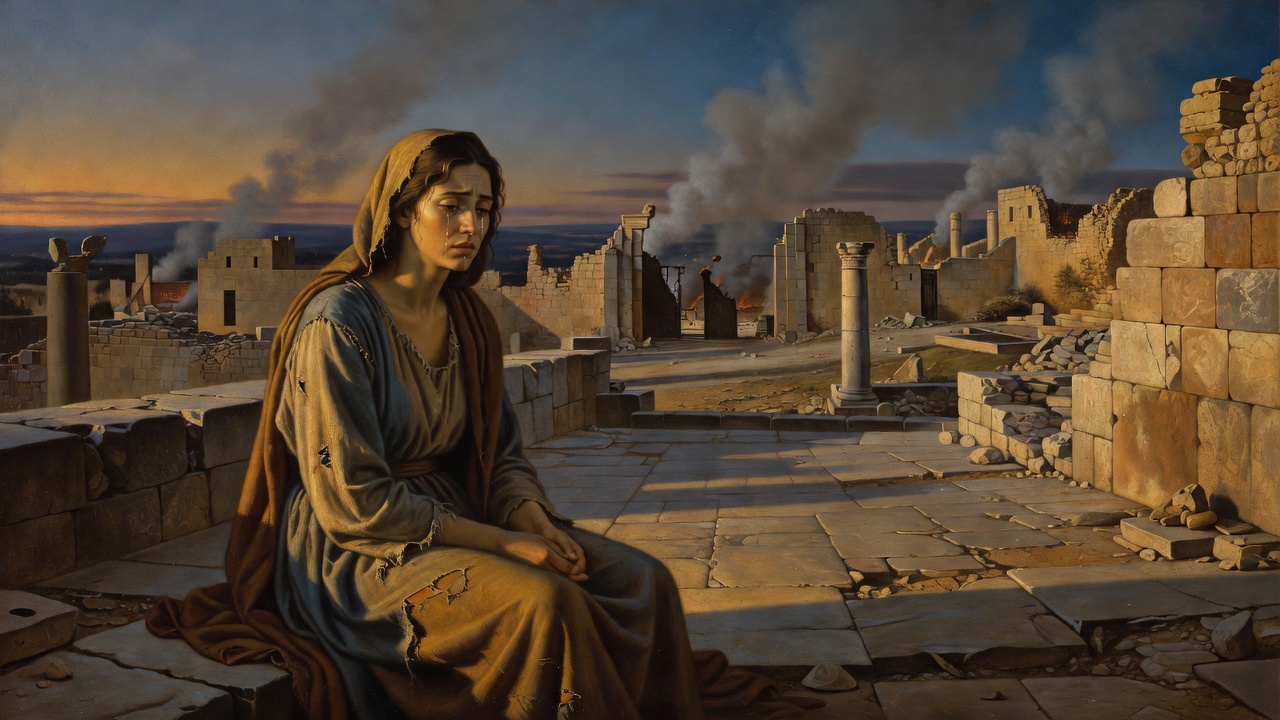
1Las calles de Jerusalén donde antes siempre había un feliz alboroto están ahora en silencio. La que era gran señora ahora es como una viuda que se sienta a llorar su soledad. La que era reina de pueblos ahora es la criada.
2Llora toda la noche; las lágrimas corren por sus mejillas. Entre todos sus amantes no hay quien la consuele. Todos sus amigos la han traicionado y son ahora sus enemigos.
3Han expulsado a Judá de su propio territorio y la han sometido a trabajos forzados y dolorosos. Sus enemigos la alcanzaron y la llenaron angustia.
4Los caminos que conducen a Jerusalén están muy tristes, pues no hay quien venga con alegría a celebrar las fiestas del templo. Las puertas de acceso a la ciudad están desportilladas, sus sacerdotes gimotean, las jóvenes afligidas y Jerusalén sufren amargamente.
5Sus enemigos dominan sobre Jerusalén, y están alegres por el dolor de la ciudad. ¡Y todo es porque el Señor ha castigado a Jerusalén por la cantidad de los delitos que ha cometido! ¡Hasta se han llevado a sus niños cautivos a tierras lejanas!
6Jerusalén ha perdido toda su hermosura y majestad. Sus principales ciudadanos son como ciervos hambrientos que buscan pastos, sin fuerzas para seguir huyendo de sus perseguidores que les pisan los talones.
7Y ahora, en medio de toda su aflicción, Jerusalén recuerda toda su historia de sufrimiento, como cuando cayó en poder del enemigo y nadie la ayudó, y cuando sus enemigos vieron su caída se burlaron de ella.
8¡Tantos son los delitos de Jerusalén que parece imposible volver a restaurarle su honra! Todo aquel que la honraba ahora la desprecia, pues la ha visto insignificante y humillada. Ahora sólo llora y no se atreve a dar la cara.
9Se entregó a la inmoralidad y no pensó en el castigo que le podría venir. Ahora está humillada hasta lo más bajo y no hay nadie que la ayude, y clama: «¡Oh Señor, mira mi aflicción; el enemigo ha triunfado sobre mí!».
10Los enemigos se apoderaron de todos sus tesoros, los mismos enemigos a quienes tú prohibiste la pertenencia a tu nación favorita, ahora saquean incluso los tesoros del templo.
11Su pueblo gime buscando pan; han vendido todo lo que tienen por comida para poder sobrevivir: «¡Mira, oh Señor, el lamentable estado en que me encuentro!».
12¿Acaso no los conmueve a todos ustedes los que pasan? Miren y juzguen si hay dolor como el mío, el que el Señor me ha causado en el día de su gran enojo.
13Desde el cielo mandó el fuego que ahora me consume toda; me puso una trampa y me hizo caminar de espaldas hacia ella. Me abandonó y me dejó enferma todo el día.
14¡El Señor mismo ató mis delitos, y me los puso como si fueran un yugo sobre mi cuello! El Señor mismo me ha debilitado y entregado a mis enemigos, ante quienes estoy completamente indefensa. 15El Señor despreció a mis guerreros, reunió un gran ejército para exterminar a mis muchachos. ¡El Señor ha aplastado a la joven Judá como se aplastan las uvas para hacer vino!
16No tengo a nadie que me consuele, los que me pueden animar están lejos de aquí. Mis hijos están abandonados porque el enemigo nos conquistó.
17Jerusalén implora por ayuda, pero nadie la consuela. ¡Es que el Señor ha decidido enviar a los vecinos de Israel como sus enemigos! ¡Deja que la traten como si no mereciera ningún respeto!
18Confieso que el Señor tiene razón, pues me he rebelado en su contra. ¡Oigan, les ruego, pueblos de todas partes, vean mi dolor, pues mis muchachos y señoritas han sido llevados como esclavos a tierras lejanas!
19Pedí ayuda a mis amantes pero ellos me traicionaron. Mis sacerdotes y mis sabios consejeros murieron mientras buscaban comida para sobrevivir.
20¡Mira, oh Señor, mi angustia! ¡Mi corazón está quebrantado y todo mi ser desesperado por haberme rebelado contra ti! En las calles la espada de los enemigos mata a mis hijos y en casa sólo hay muerte.
21¡Escucha mis lamentos, Señor, porque tú eres el único que puede consolarme! Cuando mis enemigos escuchan del mal que tú me has hecho, se alegran. ¡Haz que llegue el día en que a ellos les vaya como me ha ido a mí!
22¡Mira también todos sus delitos, oh Señor, y trátalos por ellos como me has tratado a mí! ¡Es que ya estoy harta de gemir y sentir cómo mi corazón se va debilitando!
Did you know?
The Desolation of Jerusalem
- Lamentations portrays Jerusalem—also called Zion after the historic hill fortified by King David—as a grieving widow stripped of her majesty, abandoned by former allies, and forced into harsh servitude following the city's destruction.Sources: the Bible text itself · Jerusalem · Zion
- The poem highlights the cessation of religious life, noting that the roads leading to Zion lie empty because pilgrims no longer journey there for appointed festival feasts, while foreign invaders have entered and seized the sacred sanctuary.Sources: the Bible text itself · Zion
- During and after the siege, the surviving population experienced severe famine, with priests, elders, and common citizens trading their remaining family treasures just to obtain enough bread to survive.Sources: the Bible text itself
Notes written with AI assistance from open sources (Theographic Bible Metadata, CC BY-SA 4.0; Easton’s Bible Dictionary, public domain) and reviewed before publishing.
Places in this chapter
- Jerusalem · 31.777, 35.234 · verses 1, 5, 7, 8, 17, 18
- Zion · Today: Jerusalem · 31.777, 35.234 · verses 4, 6, 17
Only places identified with high confidence are shown (90% or more according to the scholarly sources compiled by OpenBible). Period map: DARE (Digital Atlas of the Roman Empire), CC BY 4.0; modern map: © OpenStreetMap contributors; places: OpenBible.info (CC BY 4.0).
Credits and license for this translation
Biblica® Open Nueva Biblia Viva 2008
The Holy Bible in Spanish: Biblica® Open Nueva Biblia Viva 2008 (Bible)
copyright © 2008 Biblica, Inc.
Language: Español
Contributor: Biblica, Inc.
Biblica® Open Nueva Biblia Viva™
Copyright © 2006, 2008 by Biblica, Inc.
“Biblica” es una marca registrada en la oficina de Patentes y Marcas de los Estados Unidos por Biblica, Inc. Usado con permiso.
“Biblica” is a trademark registered in the United States Patent and Trademark Office by Biblica, Inc. Used with permission.
Creative Commons license
This work is made available under the Creative Commons Attribution-ShareAlike 4.0 International License (CC BY-SA). To view a copy of this license, visit https://creativecommons.org/licenses/by-sa/4.0 or send a letter to Creative Commons, PO Box 1866, Mountain View, CA 94042, USA.
You have permission to copy and distribute this Work, as long as you do not change it and you keep the title as it is. Changing or translating this Work will create a derivative work. When you publish this derivative work, you must list what changes you have made where people can see them, such as on a website. You must also show where the original Work is from: “The original Work by its copyright holders is available for free at www.biblica.com and open.bible .”
Notice of copyright must appear on the title or copyright page of the work as follows:
Biblica® Open Nueva Biblia Viva™
Copyright © 2006, 2008 by Biblica, Inc.
“Biblica” es una marca registrada en la oficina de Patentes y Marcas de los Estados Unidos por Biblica, Inc. Usado con permiso.
“Biblica” is a trademark registered in the United States Patent and Trademark Office by Biblica, Inc. Used with permission.
You must also make your derivative work available under the same license (CC BY-SA).
If you would like to notify Biblica, Inc. regarding your translation of this work, please contact us at https://open.bible/#feedback .
This translation is made available to you under the terms of the
Creative Commons Attribution Share-Alike license 4.0.
You have permission to share and redistribute this Bible translation in any format and to make reasonable revisions and adaptations of this translation, provided that:
You include the above copyright and source information.
If you make any changes to the text, you must indicate that you did so in a way that makes it clear that the original licensor is not necessarily endorsing your changes.
If you redistribute this text, you must distribute your contributions under the same license as the original.
Pictures included with Scriptures and other documents on this site are licensed just for use with those Scriptures and documents.
For other uses, please contact the respective copyright owners.
Note that in addition to the rules above, revising and adapting God's Word involves a great responsibility to be true to God's Word. See Revelation 22:18-19.
2025-05-21
Section headings adapted from the Berean Standard Bible (public domain); they are not part of this translation’s text.
Source: http://ebible.org/spaonbv/ · eBible.org