Job 1
Biblica® Open Nueva Biblia Viva 2008 · Tap a verse to see its cross-references.
About this book
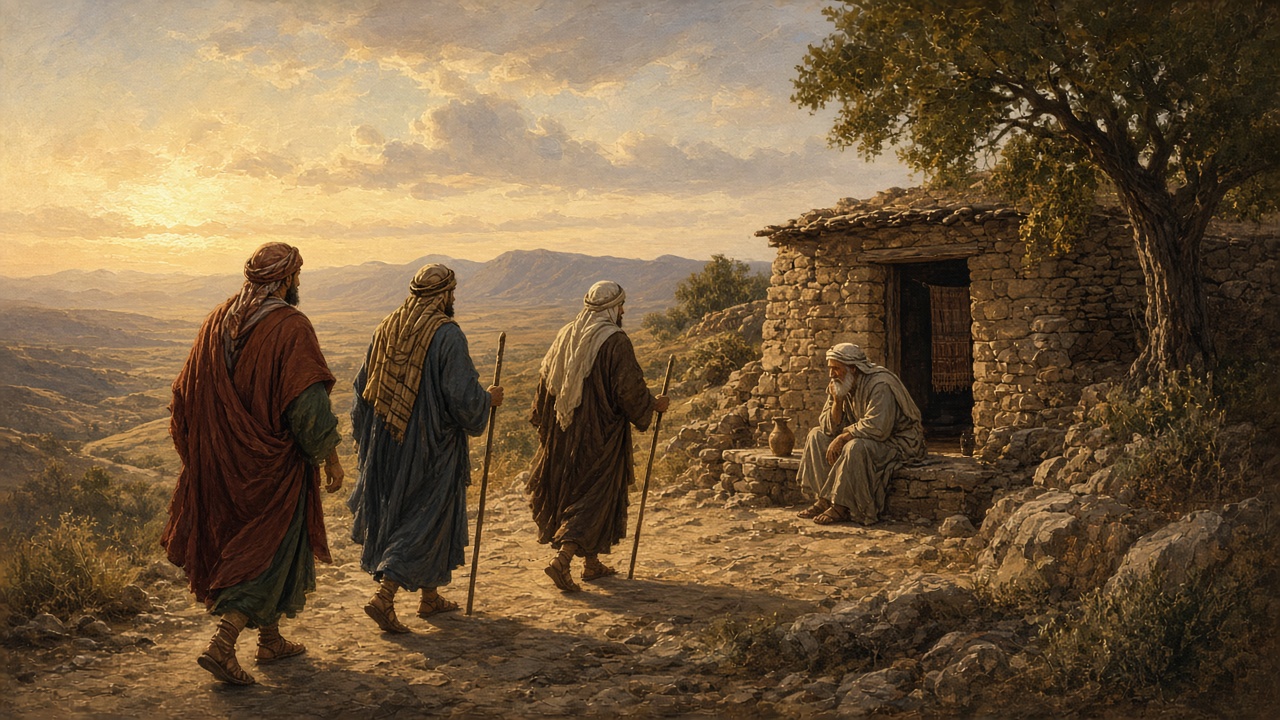
About Job
- Easton's Bible Dictionary (1897) finds the authorship of Job altogether uncertain, despite many proposals. Some place the book in the time of David and Solomon because of similarities with the Psalms and Proverbs and its interest in wisdom; others have credited it to Job, Elihu, Isaiah, or Moses, who might have heard the story in Midian. Easton also notes that the book was apparently well known by the days of Ezekiel, which he dates to 600 B.C.Sources: Easton: Job, Book of
- Job is presented as an Arabian patriarch who lived in the land of Uz, which Easton places probably east or southeast of Palestine and north of Edom. Uz is mentioned in Scripture only in Job, Jeremiah, and Lamentations.Sources: Job · Uz
- Easton describes the book as a historical poem and a didactic narrative in dramatic form. Prose frames it (chapters 1–2 and 42:7–15); between those sections, poetry carries Job's lament, three rounds of debate with his friends, Elihu's speeches, an address by Jehovah, and Job's confession.Sources: Easton: Job, Book of
- The subject, as Easton states it, is Job's trial: its occasion, its nature, how he endured it, and how it ended. From great prosperity he was suddenly overwhelmed by severe trials, yet he is said to have kept his integrity; afterward he received even greater prosperity and lived another 140 years.Sources: Easton: Job, Book of · Job
- Among those who come to him are Bildad the Shuhite, whom Easton links with Shuah in Arabia, and Zophar the Naamathite, called in the Septuagint king of the Mineans of southern Arabia. After their debate ends, Elihu, son of Barachel the Buzite, appears for the first time and gives his own view. In the opening scenes the figure called Satan bears the Hebrew article, so the name means the adversary or accuser.Sources: Bildad · Zophar · Elihu · Satan
Notes written with AI assistance from open sources (Theographic Bible Metadata, CC BY-SA 4.0; Easton’s Bible Dictionary, public domain) and reviewed before publishing.
Prólogo
1En la tierra de Uz vivía un hombre llamado Job, hombre bueno que temía a Dios y se abstenía de lo malo. 2Tenía una familia grande formada por siete hijos y tres hijas, y era inmensamente rico, pues poseía siete mil ovejas, tres mil camellos, quinientas yuntas de bueyes, quinientas burras, y muchísimos siervos. Era en efecto el más rico hacendado de toda aquella región. 4Los hijos de Job, acostumbraban turnarse para celebrar banquetes en sus respectivas casas e invitaban a sus hermanos y hermanas a comer y beber con ellos. 5Al terminar el ciclo de los banquetes, Job reunía a sus hijos y los santificaba; se levantaba muy de mañana y presentaba una ofrenda por cada uno de ellos. Porque pensaba: «Quizás mis hijos hayan pecado y en su corazón se hayan alejado de Dios». Estas cosas eran costumbre en Job.
Primera prueba de Job
6Cierto día en que los ángeles se presentaron ante el Señor, acudió también con ellos el ángel acusador.
7―¿De dónde vienes? —le preguntó el Señor al acusador. Y este respondió:
―De rondar la tierra y recorrerla por todas partes.
8Entonces Dios preguntó al acusador:
―¿Te has fijado en mi siervo Job? No hay otro como él en toda la tierra: hombre perfecto y recto, que me teme y se abstiene de todo mal.
9―¿Y cómo no habría de serlo si lo recompensas tan bien? —dijo burlonamente el acusador—. 10Siempre has librado de todo daño su persona, su hogar y sus bienes. Has hecho prosperar cuanto hace. ¡Mira cómo se ha enriquecido! ¡Razón tiene para adorarte! 11Pero quítale sus riquezas, ¡y ya verás cómo te maldice en tu propia cara! 12El Señor replicó al ángel acusador:
―Tienes permiso para hacer con su riqueza lo que quieras; pero no lo perjudiques en su cuerpo.
Entonces el ángel acusador se fue; y como era de esperarse, no mucho después, en un banquete que los hijos e hijas de Job tuvieron en casa del hermano mayor, ocurrió la tragedia.
14Llegó corriendo a casa de Job un mensajero con esta noticia:
―Estaban sus bueyes arando, y las burras pastaban junto a ellos, cuando nos asaltaron los sabeanos, se llevaron los animales y mataron a los demás siervos. ¡Sólo yo escapé!
16Aún estaba hablando este mensajero, cuando llegó otro con más noticias malas: —Del cielo cayó un rayo que calcinó a las ovejas y a todos los criados. ¡Sólo yo escapé para contárselo!
17No había terminado este, cuando otro mensajero entró corriendo.
―Tres bandas de caldeos se llevaron sus camellos y mataron a sus siervos. ¡Sólo yo escapé para contárselo!
18Mientras aún estaba hablando este, llegó otro mensajero y dijo:
―Sus hijos e hijas estaban celebrando un banquete en casa de su hermano mayor, 19cuando de pronto un fuerte viento del desierto arrasó la casa; desplomó el techo sobre ellos y los mató a todos. ¡Sólo yo escapé para contárselo!
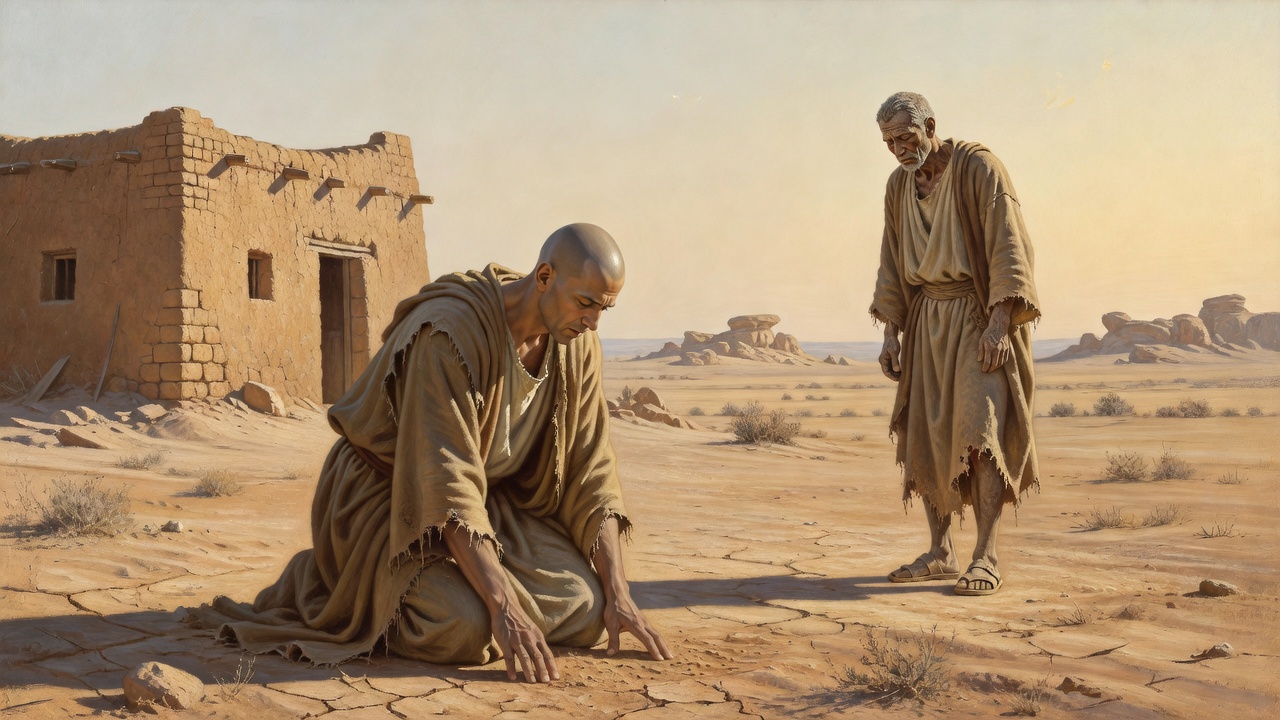
20Job se levantó y rasgó su manto y se rasuró la cabeza en señal de duelo y se postró en tierra en actitud de adoración.
21Entonces dijo: «Desnudo salí del vientre de mi madre, y nada tendré cuando muera. El Señor me dio cuanto yo tenía; suyo era, y tenía derecho de llevárselo. Bendito sea el nombre del Señor».
22En todo esto Job no pecó ni maldijo a Dios.
Did you know?
Job's Integrity and Initial Testing
- The land of Uz, where Job lived, was located east or southeast of Palestine and north of Edom. In the biblical text, Job is described as the greatest man among all the people of the East, possessing vast herds of sheep, camels, oxen, and donkeys.Sources: Uz · Job · the Bible text itself
- In the Hebrew text of Job 1, the title Satan includes the definite article, designating him as the adversary or the accuser. In the heavenly assembly, he challenges Job's integrity by arguing that Job's devotion exists only because God has protected and enriched him.Sources: Satan · the Bible text itself
- Job served as a priest for his household, regularly rising early to offer burnt offerings for each of his children in case they had sinned in their hearts. When disaster struck his livestock, servants, and children in rapid succession, Job responded by mourning in humility and worshiping God rather than accusing him.Sources: Job · the Bible text itself
Notes written with AI assistance from open sources (Theographic Bible Metadata, CC BY-SA 4.0; Easton’s Bible Dictionary, public domain) and reviewed before publishing.
Places in this chapter
Only places identified with high confidence are shown (90% or more according to the scholarly sources compiled by OpenBible). Period map: DARE (Digital Atlas of the Roman Empire), CC BY 4.0; modern map: © OpenStreetMap contributors; places: OpenBible.info (CC BY 4.0).
Credits and license for this translation
Biblica® Open Nueva Biblia Viva 2008
The Holy Bible in Spanish: Biblica® Open Nueva Biblia Viva 2008 (Bible)
copyright © 2008 Biblica, Inc.
Language: Español
Contributor: Biblica, Inc.
Biblica® Open Nueva Biblia Viva™
Copyright © 2006, 2008 by Biblica, Inc.
“Biblica” es una marca registrada en la oficina de Patentes y Marcas de los Estados Unidos por Biblica, Inc. Usado con permiso.
“Biblica” is a trademark registered in the United States Patent and Trademark Office by Biblica, Inc. Used with permission.
Creative Commons license
This work is made available under the Creative Commons Attribution-ShareAlike 4.0 International License (CC BY-SA). To view a copy of this license, visit https://creativecommons.org/licenses/by-sa/4.0 or send a letter to Creative Commons, PO Box 1866, Mountain View, CA 94042, USA.
You have permission to copy and distribute this Work, as long as you do not change it and you keep the title as it is. Changing or translating this Work will create a derivative work. When you publish this derivative work, you must list what changes you have made where people can see them, such as on a website. You must also show where the original Work is from: “The original Work by its copyright holders is available for free at www.biblica.com and open.bible .”
Notice of copyright must appear on the title or copyright page of the work as follows:
Biblica® Open Nueva Biblia Viva™
Copyright © 2006, 2008 by Biblica, Inc.
“Biblica” es una marca registrada en la oficina de Patentes y Marcas de los Estados Unidos por Biblica, Inc. Usado con permiso.
“Biblica” is a trademark registered in the United States Patent and Trademark Office by Biblica, Inc. Used with permission.
You must also make your derivative work available under the same license (CC BY-SA).
If you would like to notify Biblica, Inc. regarding your translation of this work, please contact us at https://open.bible/#feedback .
This translation is made available to you under the terms of the
Creative Commons Attribution Share-Alike license 4.0.
You have permission to share and redistribute this Bible translation in any format and to make reasonable revisions and adaptations of this translation, provided that:
You include the above copyright and source information.
If you make any changes to the text, you must indicate that you did so in a way that makes it clear that the original licensor is not necessarily endorsing your changes.
If you redistribute this text, you must distribute your contributions under the same license as the original.
Pictures included with Scriptures and other documents on this site are licensed just for use with those Scriptures and documents.
For other uses, please contact the respective copyright owners.
Note that in addition to the rules above, revising and adapting God's Word involves a great responsibility to be true to God's Word. See Revelation 22:18-19.
2025-05-21
Source: http://ebible.org/spaonbv/ · eBible.org