John 1
Biblica® Open Nueva Biblia Viva 2008 · Tap a verse to see its cross-references.
About this book
About John
- Easton's Bible Dictionary (1897) attributes the Gospel of John to the apostle John and says it was probably written at Ephesus about A.D. 90. It notes that after Jerusalem was destroyed in A.D. 70, Ephesus became a center of Christian life and activity in the East, and that from about 1820 many attempts were made to deny that John was the author.Sources: Easton: John, Gospel of
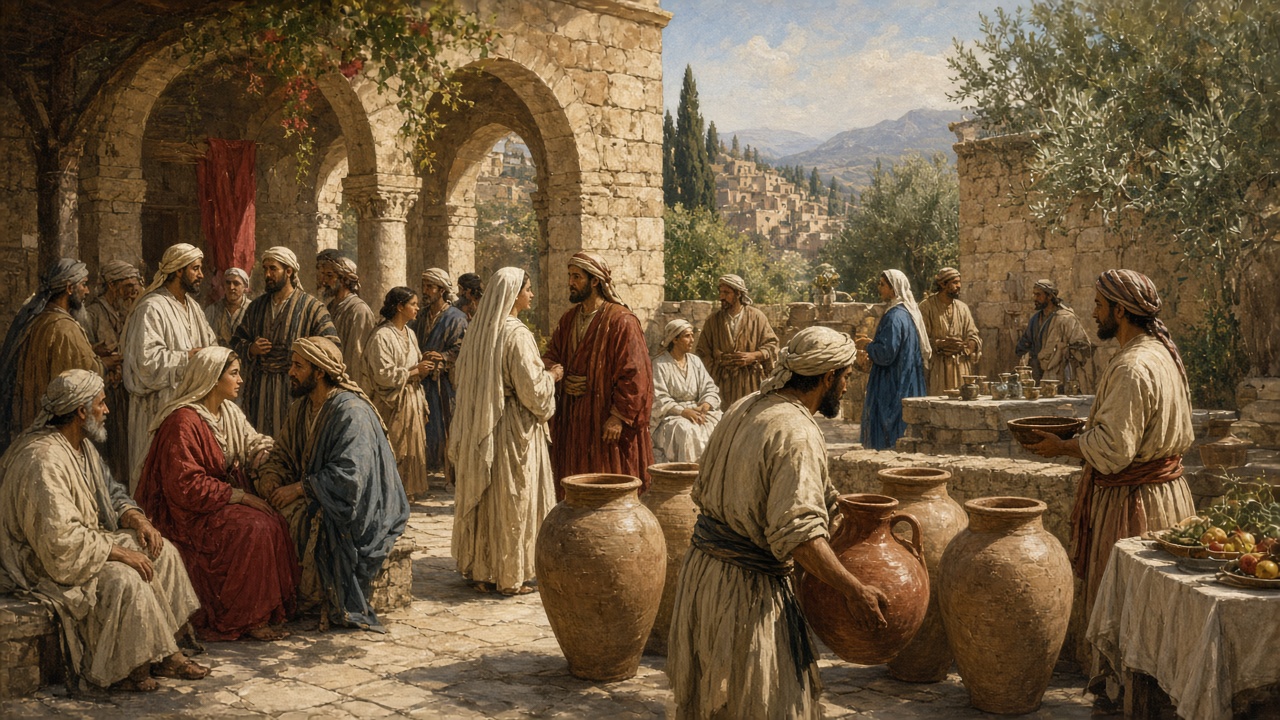
- The narrative is set in the time of Pontius Pilate, the sixth Roman procurator of Judea from A.D. 26 to 36, whose headquarters were at Caesarea and who often went up to Jerusalem. Judea was then the southernmost of Palestine's three divisions, distinguished from Galilee and Samaria, and was part of the Roman province of Syria; the Gospel also places a wedding at Cana, a town of Galilee near Capernaum.Sources: Pontius Pilate · Judea · Cana
- After the prologue (1:1-5), Easton says the historical narrative begins at verse 6 and falls into two parts. The first (1:6 through chapter 12) follows the public ministry from John the Baptist's introduction of Jesus until that ministry closes. The second (chapters 13-21) presents him in private life with his immediate followers (13-17) and then recounts his sufferings and his appearances to the disciples after the resurrection (18-21).Sources: Easton: John, Gospel of
- Easton lists four distinctive features: the relation of the Son to the Father, the relation of Christ to believers, the announcement of the Holy Spirit as the Comforter, and the prominence given to love in Christian character. The dictionary says the Gospel was addressed primarily to Christians.Sources: Easton: John, Gospel of
- Easton notes that it was once supposed John wrote to supply omissions in the first three Gospels, but says there is no evidence for this. Citing Reuss, it describes the book instead as a historical presentation of Christian faith centered on the person of Christ, picturing the world's antagonism to the truth revealed in him and the spiritual blessedness of the few who yield themselves to him as the Light of life.Sources: Easton: John, Gospel of
Notes written with AI assistance from open sources (Theographic Bible Metadata, CC BY-SA 4.0; Easton’s Bible Dictionary, public domain) and reviewed before publishing.
La Palabra se hizo hombre
1Antes que nada existiera, ya existía la Palabra, y la Palabra estaba con Dios porque aquel que es la Palabra era Dios.
2Él estaba con Dios en el principio.
3Por medio de él todas las cosas fueron creadas, y no existe nada que él no haya creado.
4En él estaba la vida, y la vida era también la luz de la humanidad.
5Esta luz brilla en la oscuridad, y la oscuridad no puede apagarla.
6Dios envió como testigo a un hombre llamado Juan, para que les hablara a todos de la luz, y por medio de él todos creyeran. 8Juan no era la luz; él sólo vino a guiar a todos hacia la luz. 9La luz verdadera, la que alumbra a todo ser humano, ya estaba por llegar a este mundo.
10El que es la luz estaba en el mundo, y Dios creó el mundo por medio de él, pero el mundo no lo reconoció. 11Vino a este mundo, que es suyo, y los suyos no lo recibieron. 12Pero a todos los que lo recibieron, a los que creen en él, les dio el derecho de ser hijos de Dios. 13Los hijos de Dios no nacen de la sangre, ni por deseos naturales o por voluntad humana, sino que nacen de Dios.
14Y la Palabra se hizo hombre y habitó entre nosotros. Y hemos visto su gloria, la gloria que le pertenece al Hijo único del Padre, en el que abundan el amor y la verdad.
15Juan habló de él y, a voz en cuello, gritó: «Este es del que yo les había dicho que venía después de mí. Pero él es más importante que yo, porque existía antes que yo».
16De la abundancia que hay en él, todos hemos recibido bendición sobre bendición. 17Por medio de Moisés recibimos la ley mientras que por medio de Jesucristo recibimos el amor y la verdad.
18A Dios nadie lo ha visto nunca; pero el Hijo único, que es Dios mismo y siempre está en unión con el Padre, nos ha enseñado cómo es, para que así lo podamos conocer.
Juan el Bautista niega ser el Cristo
19Los judíos de Jerusalén enviaron sacerdotes y ayudantes del templo para que le preguntaran a Juan quién era él. Esto es lo que Juan les respondió:
20―Yo no soy el Cristo.
Así dijo sin negarse a confesarlo claramente.
21Le preguntaron:
―¿Y quién eres entonces? ¿Eres acaso Elías?
Él respondió:
―No lo soy.
―¿Eres el Profeta?
―No.
22Le dijeron:
―¿Quién eres entonces? Tenemos que llevar una respuesta a los que nos enviaron. ¿Qué puedes decir de ti mismo?
23Juan respondió con las palabras del profeta Isaías:
―Yo soy la voz del que grita en el desierto: “Preparen un camino recto para el Señor”.
24Los enviados de los fariseos 25le preguntaron:
―Si no eres el Cristo, ni Elías ni el Profeta, ¿por qué bautizas?
26Juan respondió:
―Yo bautizo con agua, pero entre ustedes hay alguien a quien ustedes no conocen, 27que viene después de mí. A él, yo ni siquiera merezco desatarle la correa de las sandalias.
28Todo esto ocurrió en Betania, el pueblo que está en el lado este del río Jordán, donde Juan estaba bautizando.
Jesús, el Cordero de Dios
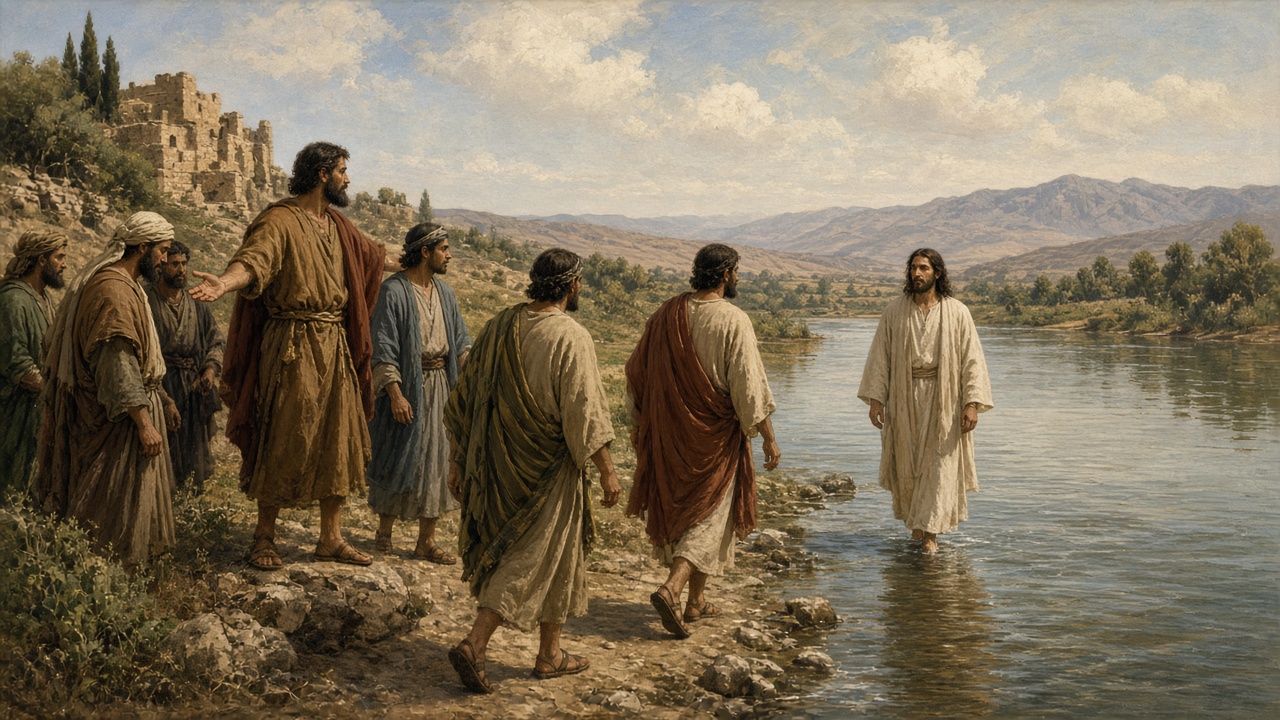
29Al día siguiente Juan vio que Jesús se acercaba a él, y exclamó: «¡Aquí viene el Cordero de Dios, que quita el pecado del mundo! 30Él es aquel de quien dije: “Después de mí viene un hombre que es más importante que yo, porque existía antes que yo”. 31Yo no lo conocía, pero vine bautizando con agua para que él se diera a conocer al pueblo de Israel». 32Juan añadió: «Yo vi al Espíritu descender del cielo en forma de paloma y posarse sobre él. 33Yo mismo no lo conocía, pero el que me mandó a bautizar con agua me dijo: “Cuando veas al Espíritu descender y posarse sobre alguien, ese es el que bautiza con el Espíritu Santo”. 34Yo lo he visto y por eso les aseguro que este es el Hijo de Dios».
Los primeros discípulos de Jesús
35Al día siguiente, Juan estaba con dos de sus discípulos en el mismo lugar. 36Cuando vio que Jesús pasaba por allí, dijo:
―¡Aquí viene el Cordero de Dios!
37Al oír esto, los dos discípulos siguieron a Jesús. 38Jesús volvió la cabeza, y viendo que lo seguían, les preguntó:
―¿Qué buscan?
Ellos contestaron:
―Rabí, (Rabí significa: Maestro) ¿dónde vives?
39Jesús les respondió:
―Vengan y vean.
Ellos fueron con él, vieron dónde vivía, y puesto que eran como las cuatro de la tarde, se quedaron con él ese día.
40Andrés, hermano de Simón Pedro, era uno de los dos que habían seguido a Jesús después de oír a Juan. 41Andrés, al primero que encontró fue a su hermano Simón y le dijo:
―Hemos encontrado al Mesías (es decir, al Cristo).
42Entonces Andrés llevó a Simón a donde estaba Jesús.
Jesús lo miró fijamente y le dijo:
―Tú eres Simón, el hijo de Juan. De ahora en adelante te llamarás Cefas (o sea, Pedro).
Jesús llama a Felipe y a Natanael
43Al día siguiente, Jesús decidió ir a Galilea. Allí se encontró con Felipe y le dijo:
―Sígueme.
44Felipe era de Betsaida, el mismo pueblo de donde eran Pedro y Andrés.
45Felipe fue a buscar a Natanael y le dijo:
―Hemos encontrado a aquel de quien escribió Moisés en la ley y del que también escribieron los profetas. Es Jesús de Nazaret, el hijo de José.
46Natanael replicó:
―¿Acaso puede salir algo bueno de Nazaret?
Felipe le contestó:
―Ven y te convencerás.
47Cuando Jesús vio que Natanael se le acercaba, dijo:
―Aquí viene un verdadero israelita, en el que no hay engaño.
48Natanael le preguntó:
―¿De dónde me conoces?
―Te vi cuando aún estabas debajo de la higuera, antes que Felipe te llamara.
49Natanael exclamó:
―Maestro, ¡tú eres el Hijo de Dios! ¡Tú eres el Rey de Israel!
50―¿Lo crees sólo porque te dije que te vi cuando estabas debajo de la higuera? Pues vas a ver cosas más grandes que estas.
Y siguió diciendo:
51―Les aseguro que ustedes verán abrirse el cielo, y a los ángeles de Dios subir y bajar sobre el Hijo del hombre.
Did you know?
The Word, John's Witness, and the First Disciples
- When the Jews of Jerusalem sent priests and Levites to ask who he was, John denied that he was the Christ, Elijah, or the Prophet, and described himself, in Isaiah's words, as a voice crying in the wilderness. He was of priestly descent: his father, Zacharias, belonged to the course of Abia, and his mother, Elisabeth, was of the daughters of Aaron. A note on the event dates this testimony to AD 27.Sources: the Bible text itself · John the Baptist · John's Witness
- All this happened at Bethany beyond the Jordan, where John was baptizing. A place note records that the Revised Version reads Bethany here instead of Bethabara, on the authority of the oldest manuscripts, and that the name appears to have belonged to a place east of the Jordan.Sources: the Bible text itself · Bethany
- Andrew, then a disciple of John and a man of Bethsaida, heard John call Jesus the Lamb of God, followed him, and is described as the first of Jesus' disciples; he then brought his brother Simon. Philip found Nathanael and told him about Jesus of Nazareth, and Nathanael asked whether anything good could come from there, a town not mentioned in the Old Testament. Nathanael, from Cana in Galilee, is called an Israelite in whom there is no deceit, and because this Gospel never names Bartholomew, he has been identified with him.Sources: the Bible text itself · Andrew · Nathanael · Nazareth
Notes written with AI assistance from open sources (Theographic Bible Metadata, CC BY-SA 4.0; Easton’s Bible Dictionary, public domain) and reviewed before publishing.
Places in this chapter
- Jerusalem · 31.777, 35.234 · verse 19
- Jordan · Today: Jordan River · 31.761, 35.558 · verse 28
- Galilee · 32.760, 35.527 · verse 43
- Nazareth · 32.702, 35.298 · verses 45, 46
Only places identified with high confidence are shown (90% or more according to the scholarly sources compiled by OpenBible). Period map: DARE (Digital Atlas of the Roman Empire), CC BY 4.0; modern map: © OpenStreetMap contributors; places: OpenBible.info (CC BY 4.0).
Credits and license for this translation
Biblica® Open Nueva Biblia Viva 2008
The Holy Bible in Spanish: Biblica® Open Nueva Biblia Viva 2008 (Bible)
copyright © 2008 Biblica, Inc.
Language: Español
Contributor: Biblica, Inc.
Biblica® Open Nueva Biblia Viva™
Copyright © 2006, 2008 by Biblica, Inc.
“Biblica” es una marca registrada en la oficina de Patentes y Marcas de los Estados Unidos por Biblica, Inc. Usado con permiso.
“Biblica” is a trademark registered in the United States Patent and Trademark Office by Biblica, Inc. Used with permission.
Creative Commons license
This work is made available under the Creative Commons Attribution-ShareAlike 4.0 International License (CC BY-SA). To view a copy of this license, visit https://creativecommons.org/licenses/by-sa/4.0 or send a letter to Creative Commons, PO Box 1866, Mountain View, CA 94042, USA.
You have permission to copy and distribute this Work, as long as you do not change it and you keep the title as it is. Changing or translating this Work will create a derivative work. When you publish this derivative work, you must list what changes you have made where people can see them, such as on a website. You must also show where the original Work is from: “The original Work by its copyright holders is available for free at www.biblica.com and open.bible .”
Notice of copyright must appear on the title or copyright page of the work as follows:
Biblica® Open Nueva Biblia Viva™
Copyright © 2006, 2008 by Biblica, Inc.
“Biblica” es una marca registrada en la oficina de Patentes y Marcas de los Estados Unidos por Biblica, Inc. Usado con permiso.
“Biblica” is a trademark registered in the United States Patent and Trademark Office by Biblica, Inc. Used with permission.
You must also make your derivative work available under the same license (CC BY-SA).
If you would like to notify Biblica, Inc. regarding your translation of this work, please contact us at https://open.bible/#feedback .
This translation is made available to you under the terms of the
Creative Commons Attribution Share-Alike license 4.0.
You have permission to share and redistribute this Bible translation in any format and to make reasonable revisions and adaptations of this translation, provided that:
You include the above copyright and source information.
If you make any changes to the text, you must indicate that you did so in a way that makes it clear that the original licensor is not necessarily endorsing your changes.
If you redistribute this text, you must distribute your contributions under the same license as the original.
Pictures included with Scriptures and other documents on this site are licensed just for use with those Scriptures and documents.
For other uses, please contact the respective copyright owners.
Note that in addition to the rules above, revising and adapting God's Word involves a great responsibility to be true to God's Word. See Revelation 22:18-19.
2025-05-21
Source: http://ebible.org/spaonbv/ · eBible.org