Genesis 38
Biblica® Open Nueva Biblia Viva 2008 · Tap a verse to see its cross-references.
Judá y Tamar
1Más o menos por ese tiempo, Judá salió de la casa de su padre y se fue a vivir a Adulán, a casa de un hombre llamado Hirá. 2Allí se casó con una mujer cananea, hija de Súa. 3La mujer quedó embarazada y tuvo un hijo, al que llamó Er. 4Después volvió a quedar embarazada y tuvo otro hijo, al que llamó Onán. 5Tiempo después tuvo otro hijo, al que llamó Selá. Este nació en Quezib.
6Cuando creció Er, su hijo mayor, Judá lo casó con Tamar. 7Pero Er era malo y Dios lo mató, 8Entonces Judá le dijo a Onán, hermano de Er:
―Tienes que casarte con Tamar, conforme a lo que nuestra ley exige del hermano del muerto. Así los hijos que ella tenga serán los herederos de tu hermano.
9Pero Onán no quería tener hijos que no se consideraran suyos, sino de su hermano. Por eso, aunque se casó con Tamar, cada vez que tenía relaciones sexuales con ella derramaba el semen fuera. De esa manera evitaba darle hijos a su hermano. 10Esto le pareció muy malo a Dios, y lo mató también a él.
11Entonces Judá le dijo a Tamar, su nuera, que no se casara por el momento y que se quedara en la casa de sus padres, hasta que Selá tuviera edad suficiente para casarse con ella. Realmente era una excusa, porque temía que su hijo menor también muriera al casarse con ella. Tamar, pues, volvió a vivir con sus padres.
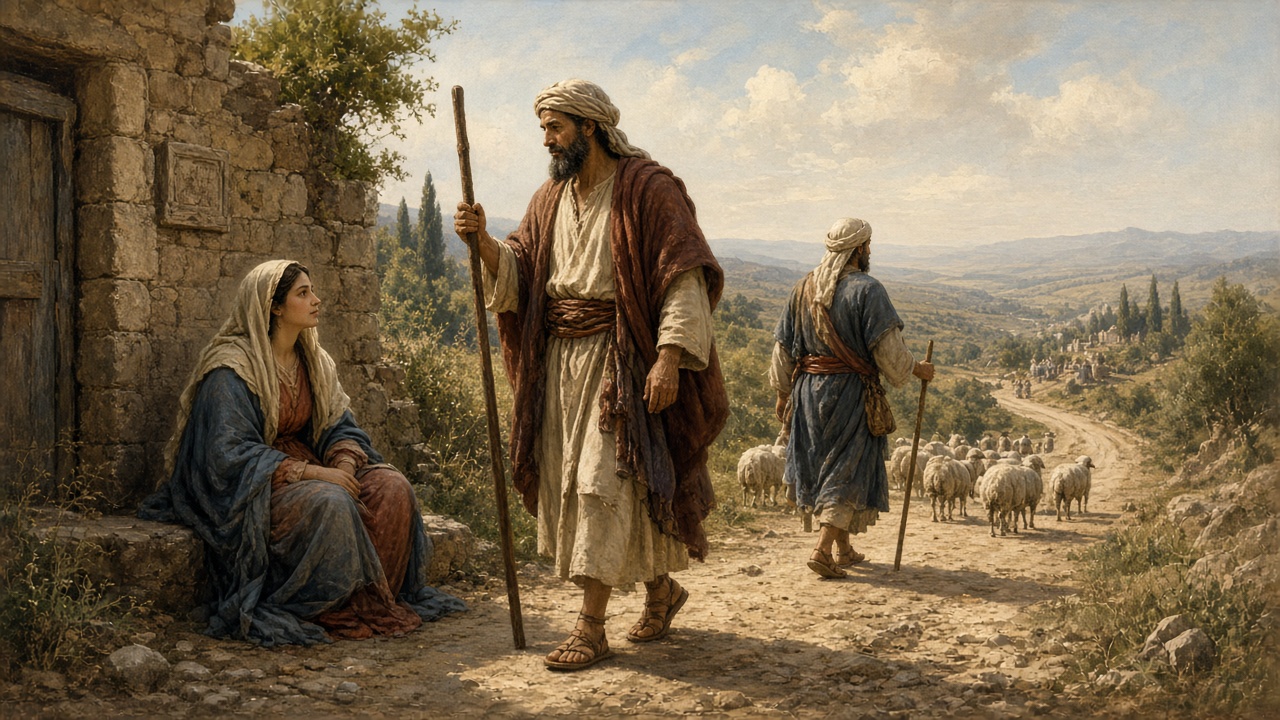
12Pasó el tiempo, y la esposa de Judá, que era hija de Súa, murió. Cuando terminó el tiempo del duelo, Judá y su amigo Hirá, el adulanita, fueron a Timnat a esquilar las ovejas. 13Alguien le dijo a Tamar que su suegro iba a Timnat a esquilar las ovejas. 14Entonces ella, comprendiendo que él no iba a dejarla casar con Selá, a pesar de que él ya tenía edad suficiente, se quitó la ropa de viuda, se cubrió con un velo para no ser reconocida, y se sentó junto al camino, a la entrada de Enayin, que está en el camino a Timnat. 15Judá la vio al pasar y creyó que era una prostituta, ya que tenía el rostro cubierto con un velo. 16Él se detuvo y le propuso que lo dejara acostarse con ella, sin darse cuenta de que era su nuera.
―¿Cuánto me pagarás? —preguntó ella.
17―Te enviaré un cabrito de mi rebaño —prometió él.
―¿Qué prendas me darás para que tenga la seguridad de que me lo vas a mandar? —preguntó ella.
18―Bien, ¿qué es lo que quieres? —preguntó Judá.
―Dame el sello que usas para identificarte, tu cordón y tu bastón —respondió ella. Él le entregó las prendas, y tuvieron relaciones sexuales. Ella quedó embarazada 19y volvió a ponerse su ropa de viuda.
20Judá le pidió a su amigo Hirá, el adulanita, que le llevara el cabrito a la mujer y le pidiera que le devolviera las prendas que le había dado. Pero Hirá no pudo encontrarla; 21así que les preguntó a los hombres de la ciudad:
―¿Dónde vive la prostituta que estaba junto al camino, a la entrada del pueblo?
―Aquí nunca ha habido una prostituta —le contestaron.
22Entonces Hirá volvió a donde estaba Judá y le dijo que no la había podido encontrar. También le contó lo que le habían dicho los hombres del pueblo.
23―¡Que se quede con las prendas! —exclamó Judá—. Hemos hecho lo que teníamos que hacer. Yo cumplí con enviarle el cabrito, pero tú no la encontraste. Seríamos el hazmerreír del pueblo si volvemos a ir.
24Tres meses más tarde, le contaron a Judá que Tamar, su nuera, se había acostado con otro hombre, y que estaba embarazada.
―¡Sáquenla y quémenla! —ordenó Judá.
25Pero, cuando la sacaban para quemarla, ella le envió el siguiente mensaje a su suegro: «El dueño de este sello de identificación, de este cordón y de este bastón es el padre de mi hijo. ¿Los reconoces?».
26Judá reconoció que eran suyos y dijo:
―Ella es más justa que yo, porque yo no quise cumplir mi promesa de darle a mi hijo Selá por esposo.
Por su parte, Judá nunca más volvió a tener relaciones sexuales con ella. 27Llegado el tiempo del parto, Tamar tuvo mellizos. 28En el momento de nacer, la partera le ató un hilo rojo en la muñeca del que apareció primero. 29Pero este metió la mano, y nació primero el otro. Entonces la partera exclamó: «¡Qué brecha te abriste!». Por eso le pusieron Fares, (el que salió). 30Poco después nació el bebé que tenía el hilo rojo en la muñeca, y lo llamaron Zera.
Did you know?
Judah and Tamar
- Soon after Joseph was sold to the Ishmaelites, Judah left his brothers and settled near Hirah, an Adullamite, and married the daughter of Shua, a Canaanite. She bore him Er, Onan, and Shelah; Shelah was born at Chezib, whose name means deceitful and is probably the same place as Achzib.Sources: Judah (patriarch) · Shuah · Chezib · the Bible text itself
- Judah took Tamar as a wife for his firstborn, Er. After Er died, he told Onan to sleep with her, fulfill a brother-in-law's duty, and raise up offspring for Er, but Onan would spill his seed on the ground so the child would not belong to him. Easton's Bible Dictionary (1897) compares that episode with Deuteronomy 25:5 and Matthew 22:24; Onan died before Jacob's family went down to Egypt, and Judah never gave Tamar to Shelah as promised.Sources: Tamar · Onan · the Bible text itself
- After the daughter of Shua died, Judah and his friend Hirah went up to his sheepshearers at Timnah, which Easton's Bible Dictionary (1897) describes as a town of Judah about twenty miles west of Jerusalem. Tamar veiled her face and waited at Enaim, on the way to Timnah—probably Enam, a city in the lowland or Shephelah—and Judah thought she was a prostitute because her face was covered. She later bore twins, and the child who broke out first was named Perez, a name that means breach.Sources: Timnah · Enaim · Pharez · the Bible text itself
Notes written with AI assistance from open sources (Theographic Bible Metadata, CC BY-SA 4.0; Easton’s Bible Dictionary, public domain) and reviewed before publishing.
Credits and license for this translation
Biblica® Open Nueva Biblia Viva 2008
The Holy Bible in Spanish: Biblica® Open Nueva Biblia Viva 2008 (Bible)
copyright © 2008 Biblica, Inc.
Language: Español
Contributor: Biblica, Inc.
Biblica® Open Nueva Biblia Viva™
Copyright © 2006, 2008 by Biblica, Inc.
“Biblica” es una marca registrada en la oficina de Patentes y Marcas de los Estados Unidos por Biblica, Inc. Usado con permiso.
“Biblica” is a trademark registered in the United States Patent and Trademark Office by Biblica, Inc. Used with permission.
Creative Commons license
This work is made available under the Creative Commons Attribution-ShareAlike 4.0 International License (CC BY-SA). To view a copy of this license, visit https://creativecommons.org/licenses/by-sa/4.0 or send a letter to Creative Commons, PO Box 1866, Mountain View, CA 94042, USA.
You have permission to copy and distribute this Work, as long as you do not change it and you keep the title as it is. Changing or translating this Work will create a derivative work. When you publish this derivative work, you must list what changes you have made where people can see them, such as on a website. You must also show where the original Work is from: “The original Work by its copyright holders is available for free at www.biblica.com and open.bible .”
Notice of copyright must appear on the title or copyright page of the work as follows:
Biblica® Open Nueva Biblia Viva™
Copyright © 2006, 2008 by Biblica, Inc.
“Biblica” es una marca registrada en la oficina de Patentes y Marcas de los Estados Unidos por Biblica, Inc. Usado con permiso.
“Biblica” is a trademark registered in the United States Patent and Trademark Office by Biblica, Inc. Used with permission.
You must also make your derivative work available under the same license (CC BY-SA).
If you would like to notify Biblica, Inc. regarding your translation of this work, please contact us at https://open.bible/#feedback .
This translation is made available to you under the terms of the
Creative Commons Attribution Share-Alike license 4.0.
You have permission to share and redistribute this Bible translation in any format and to make reasonable revisions and adaptations of this translation, provided that:
You include the above copyright and source information.
If you make any changes to the text, you must indicate that you did so in a way that makes it clear that the original licensor is not necessarily endorsing your changes.
If you redistribute this text, you must distribute your contributions under the same license as the original.
Pictures included with Scriptures and other documents on this site are licensed just for use with those Scriptures and documents.
For other uses, please contact the respective copyright owners.
Note that in addition to the rules above, revising and adapting God's Word involves a great responsibility to be true to God's Word. See Revelation 22:18-19.
2025-05-21
Source: http://ebible.org/spaonbv/ · eBible.org