Galatians 2
Biblica® Open Nueva Biblia Viva 2008 · Tap a verse to see its cross-references.
Los apóstoles aceptan a Pablo
1Catorce años más tarde fui de nuevo a Jerusalén, esta vez con Bernabé. Tito nos acompañaba. 2Dios me había revelado que debía hablar en privado con los dirigentes de Jerusalén acerca del evangelio que predicaba entre los gentiles. Lo hice para que todo mi trabajo no fuera en vano. 3Y ni siquiera le exigieron a Tito, mi compañero, que se circuncidara, a pesar de que era griego.
4El hecho es que algunos mal llamados hermanos fueron a observar disimuladamente la libertad que teníamos en Cristo Jesús, y ¡querían encadenarnos a sus leyes como si fuéramos esclavos! 5Pero no les hicimos caso ni un momento, pues queríamos que la verdad del evangelio permaneciera entre ustedes.
6Los grandes dirigentes de la iglesia no añadieron ni una tilde a mi mensaje. (No es que me importe que hayan sido grandes, porque Dios no juzga por las aparencias).
7Más aún, Pedro, Jacobo y Juan, indiscutibles columnas de la iglesia, reconocieron que Dios me había usado para ser apóstol entre los gentiles, de la misma manera que había usado a Pedro para predicarles a los judíos (después de todo, fue el mismo Dios el que nos capacitó). Y así, nos dieron la mano, a Bernabé y a mí, en señal de compañerismo, y nos exhortaron a continuar nuestras labores entre los gentiles mientras ellos continuaban la suya entre los judíos. 10Eso sí, nos pidieron que recordáramos a los pobres, cosa que por mi parte he procurado hacer con todo cuidado.
Pablo se opone a Pedro
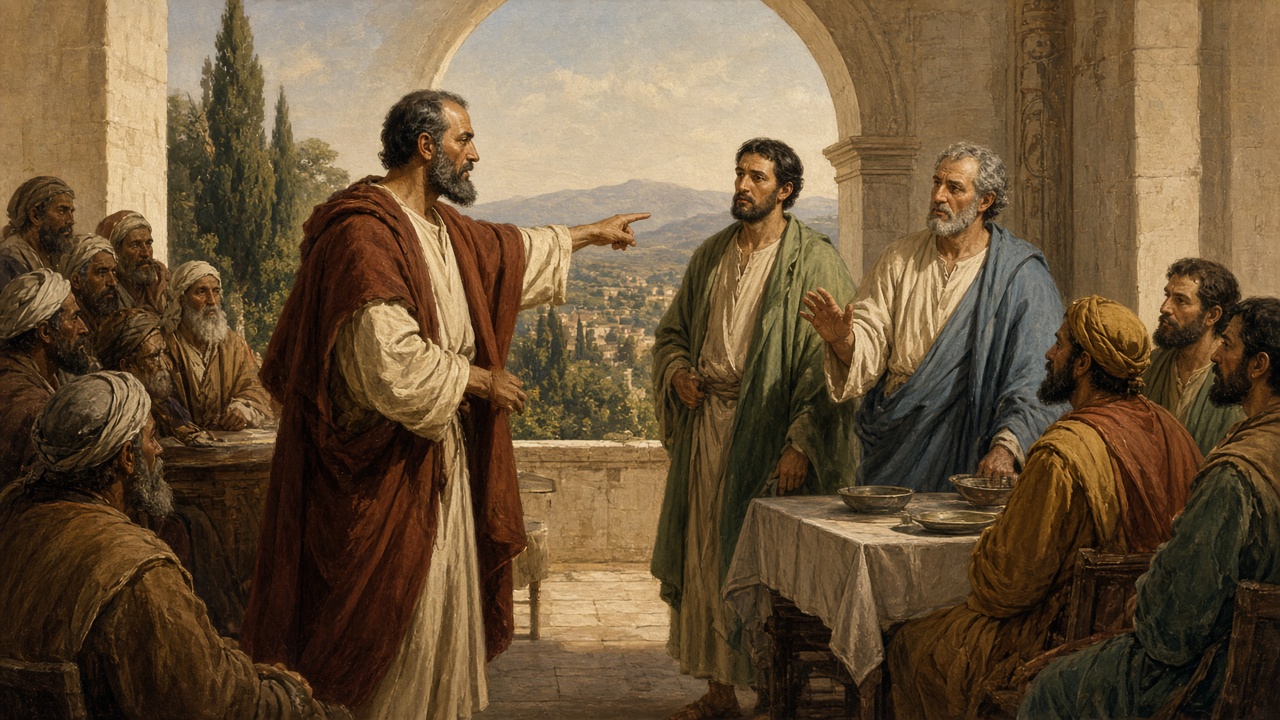
11Pero cuando después me encontré con Pedro en Antioquía, me opuse a él en público, y le critiqué fuertemente algo que estaba haciendo. 12Cuando llegó, comió con los cristianos gentiles. Pero cuando llegaron ciertos judíos amigos de Jacobo, no quiso volver a comer con los gentiles por temor a lo que pudieran decir aquellos que afirman que es necesario circuncidarse. 13Y a la hipocresía de Pedro se unieron los demás cristianos judíos, incluso Bernabé. 14Ante ello, y comprendiendo que no estaban actuando rectamente, conforme a la integridad del evangelio, le dije a Pedro delante de los demás: «Tú, que eres judío, has estado portándote como si no lo fueras. ¿A qué viene ahora que, de pronto, te pongas a decirles a estos gentiles que deben vivir como si fueran judíos?
15»Tú y yo somos judíos de nacimiento, y no simples pecadores gentiles. 16Sin embargo, sabemos muy bien que nadie puede justificarse ante Dios obedeciendo la ley. Sabemos que eso sólo es posible por la fe en Jesucristo. Por eso, nosotros también hemos confiado en Jesucristo, y somos justificados por esa fe y no porque hayamos observado la ley. Nadie se salva por tratar de cumplirla.
17»Ahora bien, ¿qué pasa si confiamos en Cristo para salvarnos y luego nos damos cuenta de que nosotros mismos somos pecadores? ¿Tendremos que decir que la fe en Cristo fue nuestra perdición? ¡De ninguna manera! 18Si uno vuelve a edificar lo que había destruido, se hace transgresor. 19Yo estoy muerto por causa de la ley, pero ahora vivo para Dios. 20Estoy crucificado con Cristo, y ya no vivo yo, es Cristo quien vive en mí. Y esta vida que ahora tengo la vivo por mi fe en el Hijo de Dios, quien me amó y se entregó por mí. 21No rechazo el amor de Dios. Si se obtuviera la justicia por guardar la ley, habría sido vana la muerte de Cristo».
Did you know?
Gentiles, Fellowship, and a Clash at Antioch
- Titus went with Paul and Barnabas to Jerusalem. Easton's Bible Dictionary (1897) says he appears to have been a Gentile and that his name never appears in Acts. Paul writes that Titus, though a Greek, was not compelled to be circumcised.Sources: Titus · the Bible text itself
- The later clash took place at Antioch in Syria, on the Orontes, some three hundred miles north of Jerusalem. The city ranked third among the cities of the Roman Empire, after Rome and Alexandria, and it was there that believers were first called Christians.Sources: Antioch (Syria) · the Bible text itself
- Easton's Bible Dictionary (1897) describes James, named with Cephas and John as one of the pillars, as head of the church at Jerusalem, where he presided at the council on the Gentiles. Paul says that before certain men came from James, Cephas used to eat with the Gentiles, but then drew back for fear of the circumcision group.Sources: James (Brother of Jesus) · the Bible text itself
Notes written with AI assistance from open sources (Theographic Bible Metadata, CC BY-SA 4.0; Easton’s Bible Dictionary, public domain) and reviewed before publishing.
Places in this chapter
- Jerusalem · 31.777, 35.234 · verse 1
- Antioch · Today: Antioch on the Orontes · 36.227, 36.172 · verse 11
Only places identified with high confidence are shown (90% or more according to the scholarly sources compiled by OpenBible). Period map: DARE (Digital Atlas of the Roman Empire), CC BY 4.0; modern map: © OpenStreetMap contributors; places: OpenBible.info (CC BY 4.0).
Credits and license for this translation
Biblica® Open Nueva Biblia Viva 2008
The Holy Bible in Spanish: Biblica® Open Nueva Biblia Viva 2008 (Bible)
copyright © 2008 Biblica, Inc.
Language: Español
Contributor: Biblica, Inc.
Biblica® Open Nueva Biblia Viva™
Copyright © 2006, 2008 by Biblica, Inc.
“Biblica” es una marca registrada en la oficina de Patentes y Marcas de los Estados Unidos por Biblica, Inc. Usado con permiso.
“Biblica” is a trademark registered in the United States Patent and Trademark Office by Biblica, Inc. Used with permission.
Creative Commons license
This work is made available under the Creative Commons Attribution-ShareAlike 4.0 International License (CC BY-SA). To view a copy of this license, visit https://creativecommons.org/licenses/by-sa/4.0 or send a letter to Creative Commons, PO Box 1866, Mountain View, CA 94042, USA.
You have permission to copy and distribute this Work, as long as you do not change it and you keep the title as it is. Changing or translating this Work will create a derivative work. When you publish this derivative work, you must list what changes you have made where people can see them, such as on a website. You must also show where the original Work is from: “The original Work by its copyright holders is available for free at www.biblica.com and open.bible .”
Notice of copyright must appear on the title or copyright page of the work as follows:
Biblica® Open Nueva Biblia Viva™
Copyright © 2006, 2008 by Biblica, Inc.
“Biblica” es una marca registrada en la oficina de Patentes y Marcas de los Estados Unidos por Biblica, Inc. Usado con permiso.
“Biblica” is a trademark registered in the United States Patent and Trademark Office by Biblica, Inc. Used with permission.
You must also make your derivative work available under the same license (CC BY-SA).
If you would like to notify Biblica, Inc. regarding your translation of this work, please contact us at https://open.bible/#feedback .
This translation is made available to you under the terms of the
Creative Commons Attribution Share-Alike license 4.0.
You have permission to share and redistribute this Bible translation in any format and to make reasonable revisions and adaptations of this translation, provided that:
You include the above copyright and source information.
If you make any changes to the text, you must indicate that you did so in a way that makes it clear that the original licensor is not necessarily endorsing your changes.
If you redistribute this text, you must distribute your contributions under the same license as the original.
Pictures included with Scriptures and other documents on this site are licensed just for use with those Scriptures and documents.
For other uses, please contact the respective copyright owners.
Note that in addition to the rules above, revising and adapting God's Word involves a great responsibility to be true to God's Word. See Revelation 22:18-19.
2025-05-21
Source: http://ebible.org/spaonbv/ · eBible.org