Ezekiel 1
Biblica® Open Nueva Biblia Viva 2008 · Tap a verse to see its cross-references.
About this book
About Ezekiel
- Easton's Bible Dictionary (1897) presents the Book of Ezekiel as the prophet Ezekiel's words, opening with the account of his call to the prophetic office in chapters 1-3. It places later prophecies after Nebuchadnezzar's destruction of Jerusalem, and notes that Ezekiel mentions Daniel fourteen years after Daniel's deportation from Jerusalem and again about five years later.Sources: Easton: Ezekiel, Book of · Nebuchadnezzar
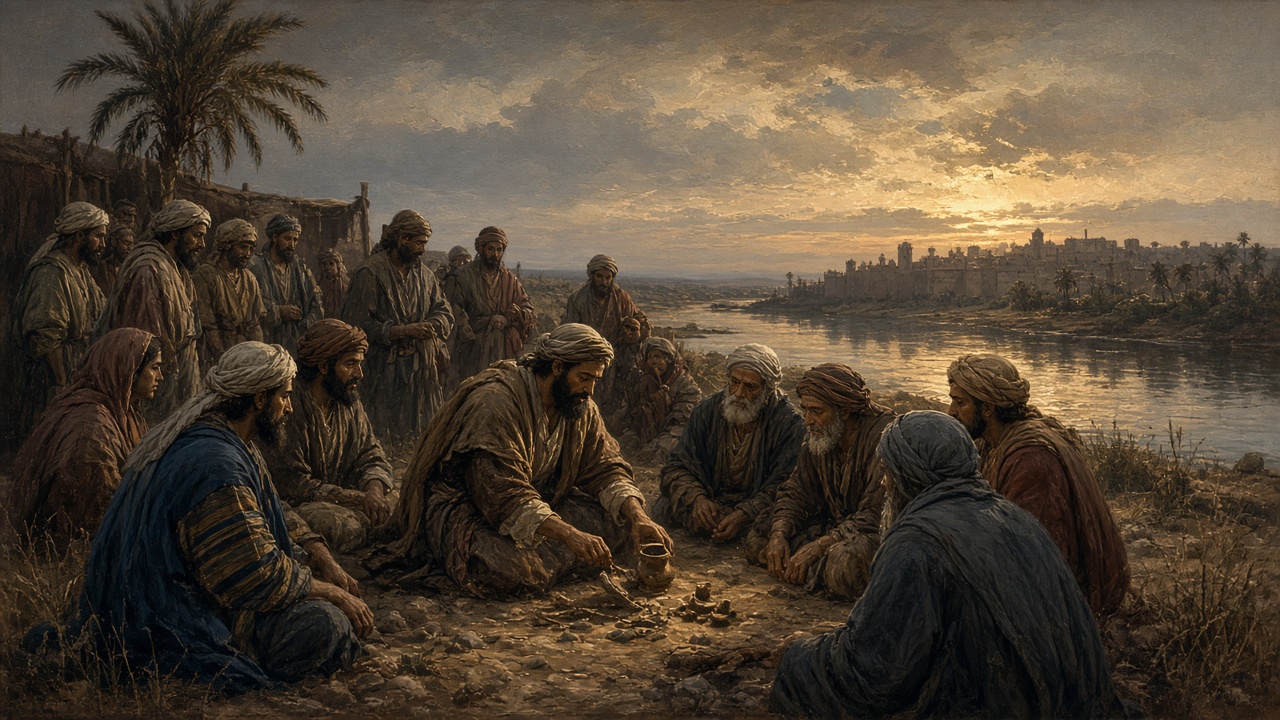
- These words are set among Jews of the captivity beside the river Chebar, in the land of the Chaldeans. Easton records two identifications of that river: some have taken it for the Habor, the Chaboras or modern Khabour, while another opinion, which he says has much to support it, identifies Chebar with Nebuchadnezzar's royal canal, the Nahr Malcha. From that exile the prophet warns of the certain destruction of Jerusalem, contrary to false prophets, and later speaks after the city has fallen.Sources: Easton: Ezekiel, Book of · Chebar · Jerusalem
- Easton says the book consists mainly of three groups of prophecies. After the call, Ezekiel denounces the Jews and warns of Jerusalem's ruin, with symbolic acts in chapters 4 and 5 that Easton says show acquaintance with Levitical legislation; then come prophecies against the Ammonites, Moabites, Edomites, Philistines, Tyre and Sidon, and Egypt. After Jerusalem's destruction, chapters 33-39 concern the triumphs of Israel and of the kingdom of God on earth, and chapters 40-48 what Easton calls Messianic times and the establishment and prosperity of that kingdom.Sources: Easton: Ezekiel, Book of
- Easton's Bible Dictionary (1897) characterizes Ezekiel's prophecies by symbols, allegories, and symbolic actions, and calls them obscure and enigmatical. It records that Jerome called the book "a labyrinth of the mysteries of God," and states that because of this obscurity the Jews forbade anyone to read it until the age of thirty. The same entry notes that the closing visions are referred to in the book of Revelation, and that Ezekiel refers with unusual frequency to the Pentateuch and shows acquaintance with Hosea, Isaiah, and especially Jeremiah, his older contemporary.Sources: Easton: Ezekiel, Book of
Notes written with AI assistance from open sources (Theographic Bible Metadata, CC BY-SA 4.0; Easton’s Bible Dictionary, public domain) and reviewed before publishing.
La visión de Ezequiel junto al río Quebar
1Ezequiel, hijo de Buzí, era un sacerdote que vivía con los exiliados judíos junto al río Quebar, en Babilonia. El recibió de parte de Dios visiones que le mostraban lo que acontecería en los próximos meses y años.
2Un día, a fines de junio, cuando ya habían pasado cinco años del exilio del rey Joaquín, 3fue cuando empecé a recibir visiones y mensajes de parte del Señor.
Los cuatro seres vivientes
4Yo vi en una visión una gran tormenta acercándose hacia mí desde el norte, y delante de ella una enorme nube que resplandecía con fuego, desde adentro de la cual continuamente salían llamaradas, y en el fuego mismo había algo que brillaba como el bronce pulido.
5Luego, desde el centro de la nube aparecieron cuatro seres extraños, aunque su figura era como la de un ser humano. 6¡Pero, cada uno tenía cuatro caras y dos pares de alas! 7Sus piernas eran como las de los hombres, pero sus pies tenían pezuñas como de buey, aunque brillaban como el bronce bruñido. 8Y debajo de cada una de sus alas yo podía ver manos humanas.
9Los cuatro seres extraños estaban vivos y unidos ala con ala y volaban hacia delante sin volverse atrás. 10Cada uno tenía la cara de un ser humano al frente, las caras de los costados eran una de león y una de buey, en tanto que la posterior era de águila. 11Cada uno tenía, además, dos pares de alas desplegadas que partían del medio de sus espaldas. Un par se extendía hacia arriba y el otro par cubría su cuerpo. 12A donde les impulsaba el Espíritu iban, pero moviéndose siempre hacia adelante, sin darse vuelta.
13Subiendo y descendiendo entre ellos había otras formas que resplandecían como brasas ardientes o antorchas brillantes, y desde ellos salían relámpagos. 14Los seres vivos iban y venían con la velocidad del relámpago.
Las cuatro ruedas
15Al estar mirando atentamente todo esto, vi cuatro ruedas sobre el suelo debajo de ellos, correspondiendo una rueda a cada uno de los seres vivientes. 16Las ruedas parecían como si fueran hechas de ámbar pulido, y cada una estaba construida con una segunda rueda cruzada por adentro. 17Así podían avanzar en cualquiera de las cuatro direcciones sin tener que darse vuelta. 18Las cuatro ruedas tenían una enorme circunferencia y despedían brillos intensos.
19Cuando los cuatro seres vivos volaban hacia adelante, las ruedas se desplazaban con ellos. Cuando volaban hacia arriba, las ruedas también subían con ellos. 20Cuando los seres vivos se detenían, también se detenían las ruedas. 21Es que el Espíritu de los cuatro seres vivos estaba en las ruedas de modo que dondequiera su Espíritu iba, las ruedas y los seres vivos iban también.
La gloria divina
22En la parte superior de este extraño ser había una especie de bóveda de cristal purísimo y resplandeciente. 23Las alas de cada uno de los seres estaban debajo de esta bóveda extendidas para tocar las alas de los otros y cada uno tenía dos alas cubriendo su cuerpo. 24Al volar, el ruido de sus alas era muy intenso, como las olas estrellándose sobre la costa, o como la voz de Dios, o como el griterío de un poderoso ejército en medio de una feroz batalla. Cuando se detenían, entonces plegaban sus alas. 25Estaba yo observando cuando se produjo un gran estruendo. 26Entonces vi sobre la cúpula que estaba encima de ellos. Había algo que se parecía a un trono hecho de zafiros azules, y sentado sobre él, alguien con la apariencia de un ser humano.
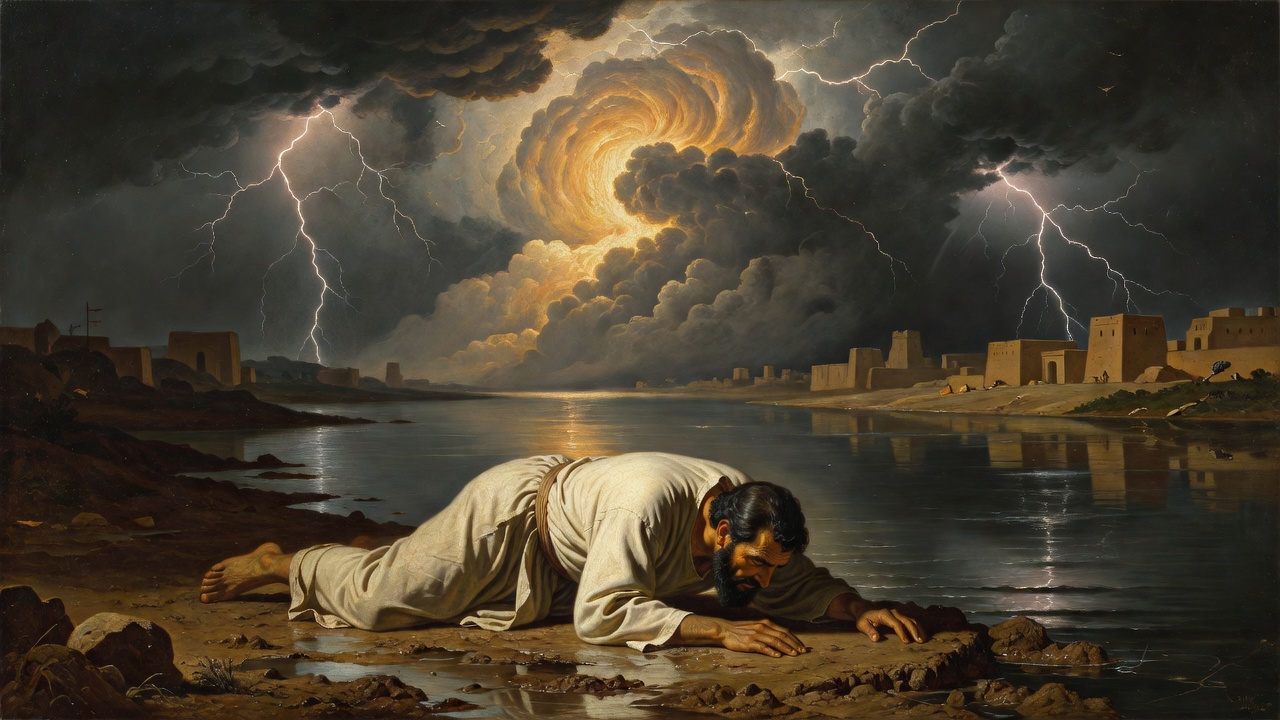
27Desde su cintura hacia arriba parecía como bronce reluciente, deslumbrante como el rayo, y desde su cintura hacia abajo como si todo fuera una llamarada. 28Había una aureola resplandeciente semejante a un arco iris alrededor de él. Ese era el aspecto que la presencia magnífica del Señor tenía para mí. Y cuando yo lo vi, caí rostro a tierra, y oí la voz de alguien que me hablaba.
Did you know?
Ezekiel's Vision by the Chebar
- Ezekiel introduces himself as a priest and the son of Buzi living among the Jewish exiles in the land of the Chaldeans. His vision occurred by the River Chebar, which many scholars identify as a prominent canal in ancient Babylonia.Sources: the Bible text itself · Ezekiel · Chebar
- The prophecy is dated to the fifth year of the exile of King Jehoiachin, who had ruled briefly in Jerusalem before being carried captive to Babylon by Nebuchadnezzar along with thousands of Judeans.Sources: the Bible text itself · Jehoiachin · Ezekiel
- The vision features four winged living creatures accompanied by intersecting wheels covered with eyes, beneath an expanse gleaming like crystal and a sapphire-like throne. Overcome by this likeness of the glory of the LORD, Ezekiel fell facedown before hearing a voice speak.Sources: the Bible text itself
Notes written with AI assistance from open sources (Theographic Bible Metadata, CC BY-SA 4.0; Easton’s Bible Dictionary, public domain) and reviewed before publishing.
Places in this chapter
Only places identified with high confidence are shown (90% or more according to the scholarly sources compiled by OpenBible). Period map: DARE (Digital Atlas of the Roman Empire), CC BY 4.0; modern map: © OpenStreetMap contributors; places: OpenBible.info (CC BY 4.0).
Credits and license for this translation
Biblica® Open Nueva Biblia Viva 2008
The Holy Bible in Spanish: Biblica® Open Nueva Biblia Viva 2008 (Bible)
copyright © 2008 Biblica, Inc.
Language: Español
Contributor: Biblica, Inc.
Biblica® Open Nueva Biblia Viva™
Copyright © 2006, 2008 by Biblica, Inc.
“Biblica” es una marca registrada en la oficina de Patentes y Marcas de los Estados Unidos por Biblica, Inc. Usado con permiso.
“Biblica” is a trademark registered in the United States Patent and Trademark Office by Biblica, Inc. Used with permission.
Creative Commons license
This work is made available under the Creative Commons Attribution-ShareAlike 4.0 International License (CC BY-SA). To view a copy of this license, visit https://creativecommons.org/licenses/by-sa/4.0 or send a letter to Creative Commons, PO Box 1866, Mountain View, CA 94042, USA.
You have permission to copy and distribute this Work, as long as you do not change it and you keep the title as it is. Changing or translating this Work will create a derivative work. When you publish this derivative work, you must list what changes you have made where people can see them, such as on a website. You must also show where the original Work is from: “The original Work by its copyright holders is available for free at www.biblica.com and open.bible .”
Notice of copyright must appear on the title or copyright page of the work as follows:
Biblica® Open Nueva Biblia Viva™
Copyright © 2006, 2008 by Biblica, Inc.
“Biblica” es una marca registrada en la oficina de Patentes y Marcas de los Estados Unidos por Biblica, Inc. Usado con permiso.
“Biblica” is a trademark registered in the United States Patent and Trademark Office by Biblica, Inc. Used with permission.
You must also make your derivative work available under the same license (CC BY-SA).
If you would like to notify Biblica, Inc. regarding your translation of this work, please contact us at https://open.bible/#feedback .
This translation is made available to you under the terms of the
Creative Commons Attribution Share-Alike license 4.0.
You have permission to share and redistribute this Bible translation in any format and to make reasonable revisions and adaptations of this translation, provided that:
You include the above copyright and source information.
If you make any changes to the text, you must indicate that you did so in a way that makes it clear that the original licensor is not necessarily endorsing your changes.
If you redistribute this text, you must distribute your contributions under the same license as the original.
Pictures included with Scriptures and other documents on this site are licensed just for use with those Scriptures and documents.
For other uses, please contact the respective copyright owners.
Note that in addition to the rules above, revising and adapting God's Word involves a great responsibility to be true to God's Word. See Revelation 22:18-19.
2025-05-21
Section headings adapted from the Berean Standard Bible (public domain); they are not part of this translation’s text.
Source: http://ebible.org/spaonbv/ · eBible.org