Acts 1
Biblica® Open Nueva Biblia Viva 2008 · Tap a verse to see its cross-references.
About this book
About Acts
- Ancient tradition, which Easton's Bible Dictionary (1897) calls uniform, attributes Acts to Luke, the "beloved physician," although the writer never names himself. Easton notes that the style and the words and phrases shared by Luke's Gospel and Acts support that view. Easton says the narrator first appears at Acts 16:11, later travels with Paul, including at Rome, and wrote much of that history from personal observation, drawing on Paul's instruction for what lay beyond his own experience.Sources: Easton: Acts of the Apostles
- Easton's Bible Dictionary (1897) dates the writing no earlier than A.D. 61 or 62, because the narrative extends to the close of the second year of Paul's first imprisonment at Rome.Sources: Easton: Acts of the Apostles
- Antioch in Syria, on the river Orontes about sixteen miles from the Mediterranean and some three hundred miles north of Jerusalem, is described as ranking third, after Rome and Alexandria, among the cities of the Roman empire. Christianity was introduced there early, and the name "Christian" was first applied in that city to those who professed the faith. Caesarea, built by Herod the Great on the Mediterranean shore and the seat of the Roman procurators of Judea, is where Festus, successor of Felix in A.D. 60, heard the prisoner Paul and sent him to Rome after Paul appealed to Caesar.Sources: Antioch (Syria) · Caesarea · Portius Festus
- Easton presents Acts as the sequel to Luke's Gospel: that Gospel ends with Jesus taken up from his disciples into heaven, and the opening of Acts expands those closing words. He describes the book as continuing the history of the church after the ascension and as illustrating the gospel preached among all nations, "beginning at Jerusalem." In his account it is only a book of beginnings, a history of the founding of churches and a cycle of "representative events," and it follows Peter and Paul rather than all the apostles.Sources: Easton: Acts of the Apostles
- The book was early called "The Acts," "The Gospel of the Holy Ghost," and "The Gospel of the Resurrection." Easton observes that the later title "Acts of the Apostles" is broader than the contents, since John is noticed only three times and all that is recorded of James, the son of Zebedee, is his execution by Herod.Sources: Easton: Acts of the Apostles
Notes written with AI assistance from open sources (Theographic Bible Metadata, CC BY-SA 4.0; Easton’s Bible Dictionary, public domain) and reviewed before publishing.
Jesús llevado al cielo
1Distinguido Teófilo:
En mi primera carta te hablé de todo lo que Jesús empezó a hacer y enseñar 2y de cómo regresó al cielo después de darles instrucciones, a través del Espíritu Santo, a los apóstoles que había escogido.
3Durante los cuarenta días que siguieron a sus sufrimientos, se presentó repetidas veces ante los apóstoles y les demostró que estaba vivo. En todas esas ocasiones les habló del reino de Dios.
4Estando con ellos, les mandó que no salieran de Jerusalén hasta que, tal como ya les había dicho, recibieran la promesa del Padre.
5―Juan los bautizó con agua —les recordó—, pero dentro de poco ustedes serán bautizados con el Espíritu Santo.
6Los que se habían reunido con Jesús le preguntaron:
―Señor, ¿vas ahora a restaurar el reino de Israel?
7―El Padre ha fijado ese tiempo —les contestó—, y a ustedes no les corresponde saberlo. 8Sin embargo, cuando el Espíritu Santo descienda sobre ustedes recibirán poder para ser mis testigos no sólo en Jerusalén, sino también en toda Judea, en Samaria y hasta lo último de la tierra.
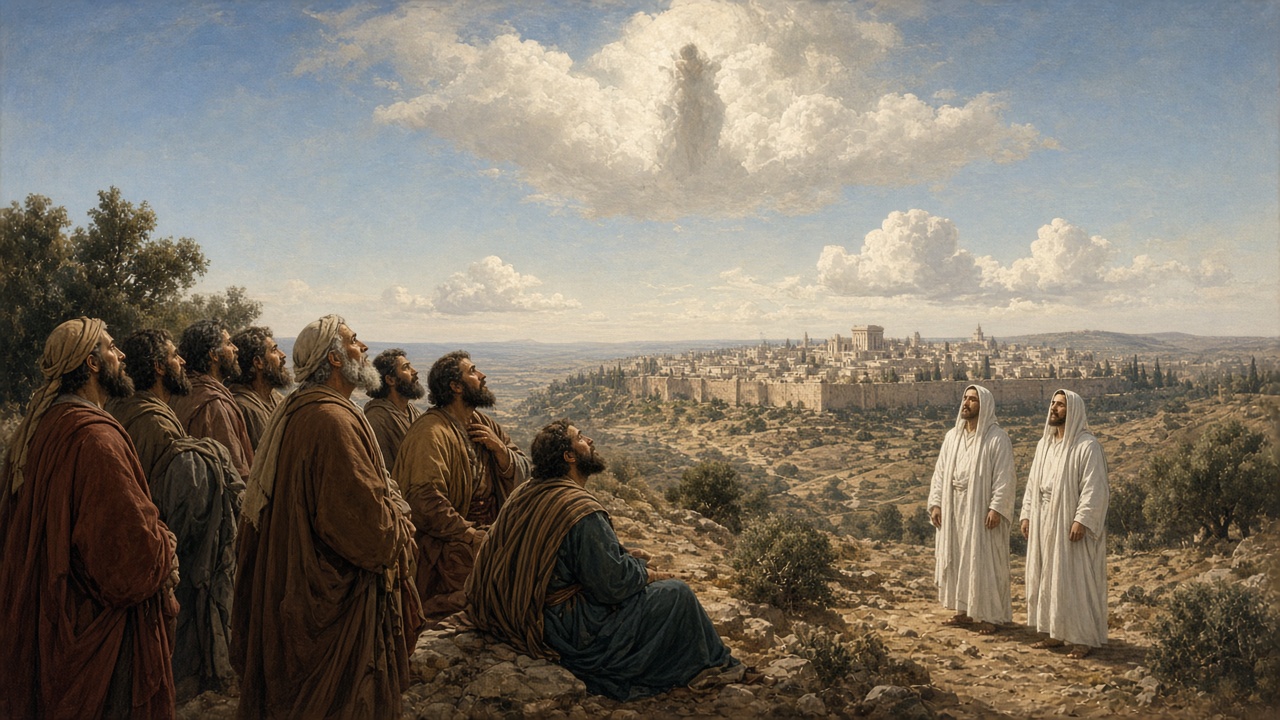
9Y mientras les decía esto, ascendió al cielo y desapareció envuelto en una nube.
10Los discípulos seguían con la mirada fija viendo cómo se perdía en las alturas, y en eso, dos varones vestidos de blanco se pusieron junto a ellos.
11―Galileos —les dijeron—, ¿por qué se han quedado mirando al cielo? Jesús regresará de la misma forma en que lo han visto ascender al cielo.
Elección de Matías para reemplazar a Judas
12Como estaban en el monte de los Olivos, para regresar a Jerusalén caminaron casi un kilómetro, que era lo que se permitía caminar en el día de reposo. 13Allí, en el aposento alto de la casa, se reunieron para orar. Estuvieron presentes: Pedro, Juan, Santiago, Andrés, Felipe, Tomás, Bartolomé, Mateo, Santiago el hijo de Alfeo, Simón el Zelote, Judas el hijo de Santiago y los hermanos de Jesús, además de varias mujeres, entre las que se encontraba la madre de Jesús.
15En aquellos días, en una ocasión en que había ciento veinte personas presentes, Pedro se puso de pie y les dijo: 16«Hermanos, era necesario que se cumplieran las Escrituras en cuanto a Judas, el que sirvió de guía a la turba que apresó a Jesús, porque su traición la predijo hace mucho tiempo el Espíritu Santo por boca de David.
17»Judas era uno de nosotros, y participaba del mismo servicio que hacíamos nosotros. 18Sin embargo, con el dinero que recibió en pago por su traición, compró un terreno en el que, al precipitarse de cabeza, se le reventó el vientre y se le salieron las entrañas. 19La noticia de su muerte corrió rápidamente entre los habitantes de Jerusalén, quienes le dieron a aquel lugar el nombre de “Campo de Sangre”.
20»El libro de los Salmos lo había predicho así: “Quede desierta su casa y no haya quien more en ella”. Y luego añade: “¡Que otro se encargue de su trabajo!”.
21»Entre nosotros tenemos personas que nos han acompañado todo el tiempo que el Señor Jesús estuvo con nosotros. 22Es necesario que seleccionemos a alguien que haya estado con nosotros desde que Juan bautizó al Señor hasta que este ascendió al cielo. Así, junto con nosotros, será testigo de su resurrección».
23Y escogieron a dos: a José Justo (llamado también Barsabás) y a Matías.
24Luego oraron: «Señor, tú que conoces los corazones, muéstranos a cuál de estos hombres has escogido 25para asumir el apostolado de Judas el traidor, quien ya está donde le corresponde estar».
26Y a continuación echaron suertes y la suerte cayó sobre Matías. Desde entonces, Matías se sumó a los once apóstoles.
Did you know?
Waiting in Jerusalem after the Ascension
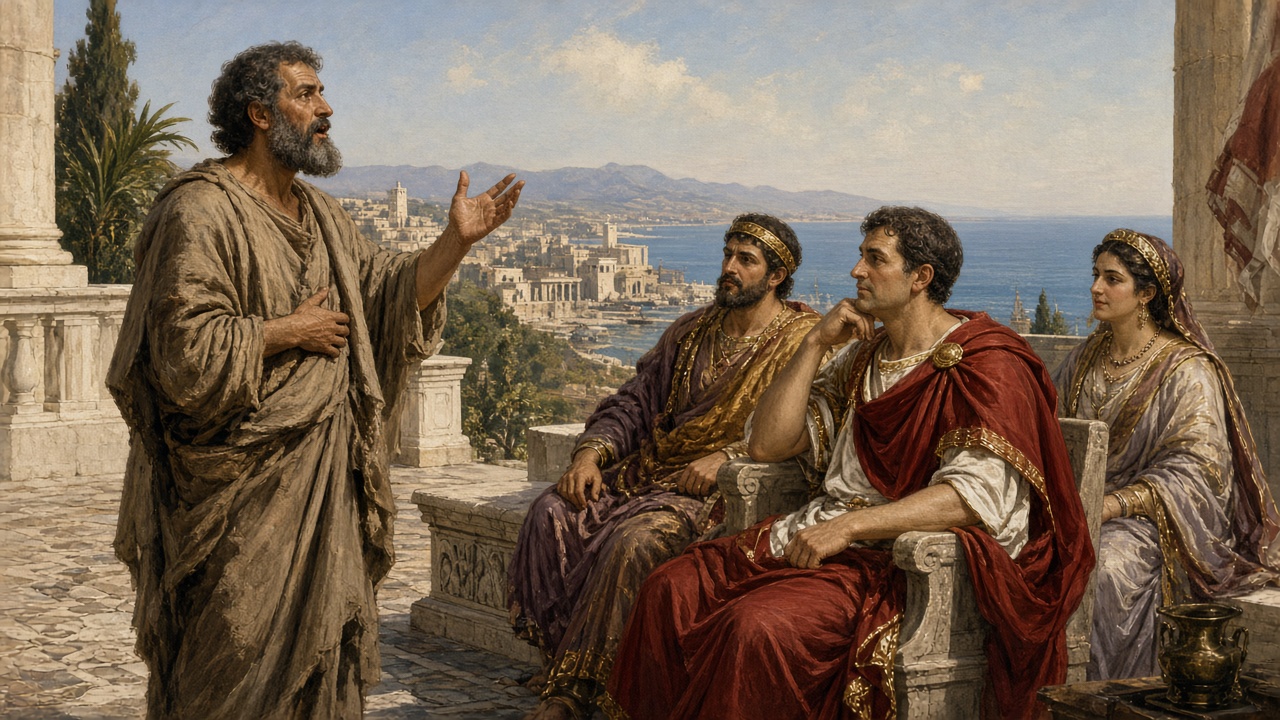
- This chapter opens as a sequel: the writer tells Theophilus that his first book covered all that Jesus began to do and to teach until the day he was taken up to heaven. Easton's Bible Dictionary (1897) says Luke dedicated both that Gospel and Acts to Theophilus, a name meaning "lover of God," and describes him as a Christian, probably a Roman, of whom nothing else is known. From the title "most excellent," the same title Paul uses for the governors Felix and Festus, the dictionary reports that it has been concluded he was a person of rank, perhaps a Roman officer.Sources: Theophilus · the Bible text itself
- Jesus tells the apostles they will be his witnesses in Jerusalem, in all Judea and Samaria, and to the ends of the earth, and the two men in white address them as "men of Galilee." In the Roman period Judea was the southernmost of the three divisions of Palestine, distinguished from Galilee and Samaria, though the name was sometimes used for the whole land, and it was part of the province of Syria. Galilee, called Galil by the Jews, had long been known as "Galilee of the Gentiles" because its original inhabitants remained there.Sources: the Bible text itself · Judea · Galilee
- Peter says Judas, one of their number, became a guide for those who arrested Jesus and then abandoned his place in the ministry. Acts records that with the reward for his wickedness Judas bought a field, fell headlong, and died there, and that the people of Jerusalem called that field Akeldama, "Field of Blood," in their own language. Easton's Bible Dictionary identifies that language as Aramaic, notes that the field had previously been called the potter's field and was set aside as a burial place for strangers, and places it on a narrow level terrace on the south face of the valley of Hinnom.Sources: the Bible text itself · Akeldama
Notes written with AI assistance from open sources (Theographic Bible Metadata, CC BY-SA 4.0; Easton’s Bible Dictionary, public domain) and reviewed before publishing.
Places in this chapter
- Jerusalem · 31.777, 35.234 · verses 4, 8, 12, 13, 19
- Judea · Today: Judea 1 · 31.777, 35.234 · verse 8
- Samaria · Today: Samaria 2 · 32.276, 35.195 · verse 8
- Galilee · 32.760, 35.527 · verse 11
- Mount of Olives · 31.778, 35.246 · verse 12
Only places identified with high confidence are shown (90% or more according to the scholarly sources compiled by OpenBible). Period map: DARE (Digital Atlas of the Roman Empire), CC BY 4.0; modern map: © OpenStreetMap contributors; places: OpenBible.info (CC BY 4.0).
Credits and license for this translation
Biblica® Open Nueva Biblia Viva 2008
The Holy Bible in Spanish: Biblica® Open Nueva Biblia Viva 2008 (Bible)
copyright © 2008 Biblica, Inc.
Language: Español
Contributor: Biblica, Inc.
Biblica® Open Nueva Biblia Viva™
Copyright © 2006, 2008 by Biblica, Inc.
“Biblica” es una marca registrada en la oficina de Patentes y Marcas de los Estados Unidos por Biblica, Inc. Usado con permiso.
“Biblica” is a trademark registered in the United States Patent and Trademark Office by Biblica, Inc. Used with permission.
Creative Commons license
This work is made available under the Creative Commons Attribution-ShareAlike 4.0 International License (CC BY-SA). To view a copy of this license, visit https://creativecommons.org/licenses/by-sa/4.0 or send a letter to Creative Commons, PO Box 1866, Mountain View, CA 94042, USA.
You have permission to copy and distribute this Work, as long as you do not change it and you keep the title as it is. Changing or translating this Work will create a derivative work. When you publish this derivative work, you must list what changes you have made where people can see them, such as on a website. You must also show where the original Work is from: “The original Work by its copyright holders is available for free at www.biblica.com and open.bible .”
Notice of copyright must appear on the title or copyright page of the work as follows:
Biblica® Open Nueva Biblia Viva™
Copyright © 2006, 2008 by Biblica, Inc.
“Biblica” es una marca registrada en la oficina de Patentes y Marcas de los Estados Unidos por Biblica, Inc. Usado con permiso.
“Biblica” is a trademark registered in the United States Patent and Trademark Office by Biblica, Inc. Used with permission.
You must also make your derivative work available under the same license (CC BY-SA).
If you would like to notify Biblica, Inc. regarding your translation of this work, please contact us at https://open.bible/#feedback .
This translation is made available to you under the terms of the
Creative Commons Attribution Share-Alike license 4.0.
You have permission to share and redistribute this Bible translation in any format and to make reasonable revisions and adaptations of this translation, provided that:
You include the above copyright and source information.
If you make any changes to the text, you must indicate that you did so in a way that makes it clear that the original licensor is not necessarily endorsing your changes.
If you redistribute this text, you must distribute your contributions under the same license as the original.
Pictures included with Scriptures and other documents on this site are licensed just for use with those Scriptures and documents.
For other uses, please contact the respective copyright owners.
Note that in addition to the rules above, revising and adapting God's Word involves a great responsibility to be true to God's Word. See Revelation 22:18-19.
2025-05-21
Source: http://ebible.org/spaonbv/ · eBible.org