2 Timothy 1
Biblica® Open Nueva Biblia Viva 2008 · Tap a verse to see its cross-references.
About this book
About 2 Timothy
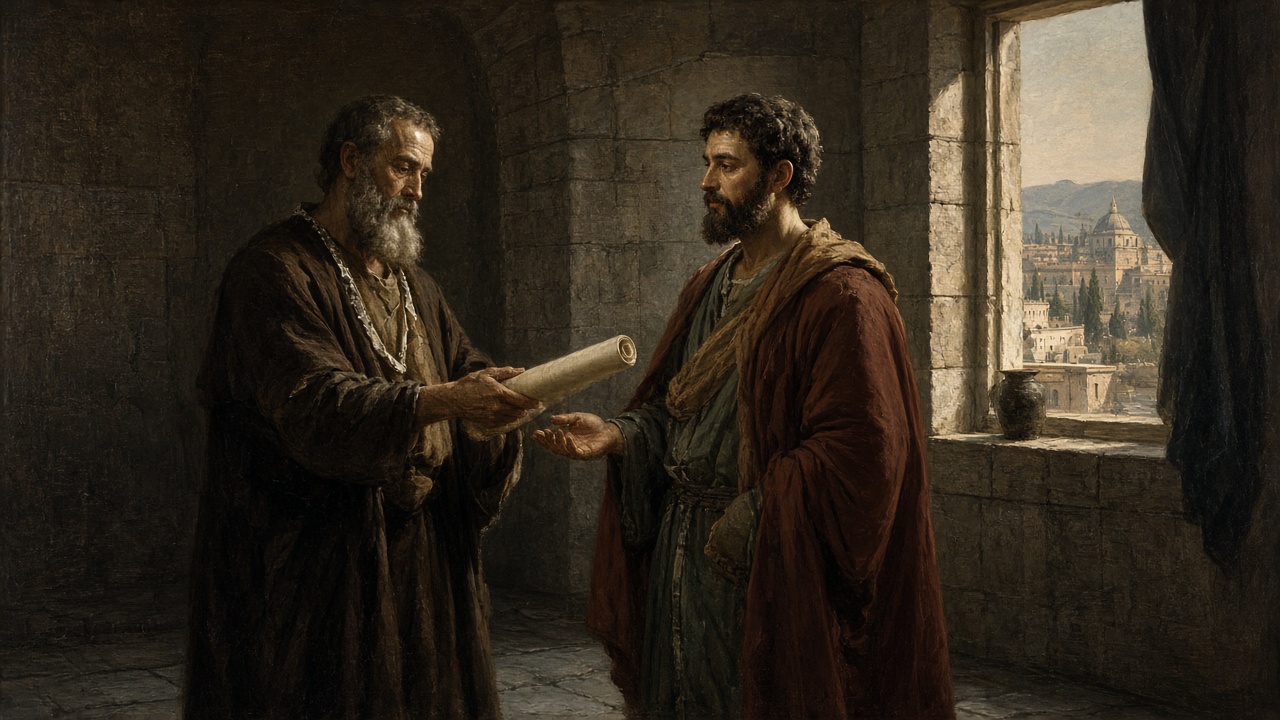
- Easton's Bible Dictionary (1897) says the Second Epistle to Timothy was probably written a year or so after the first, from Rome, where Paul was a prisoner for a second time. It was sent to Timothy by the hands of Tychicus.Sources: Easton: Timothy, Second Epistle to
- According to Easton, Paul writes from that second imprisonment expecting that the time of his departure is at hand, and he asks Timothy to come before winter and bring Mark. When the New Testament was written, Rome was noted for its wealth and luxury and had an estimated population of 1,200,000, half of whom were slaves.Sources: Easton: Timothy, Second Epistle to · Rome
- Easton says Paul exhorts Timothy, whom he calls his son, to diligence and steadfastness, to patience under persecution, and to a faithful discharge of all the duties of his office, with the solemnity of one about to appear before the Judge of the living and the dead.Sources: Easton: Timothy, Second Epistle to
- Timothy was a young disciple who probably lived at Lystra, a town of Lycaonia in Asia Minor, and his father was a Greek. His mother Eunice and his grandmother Lois are mentioned as eminent for their piety, and Paul commends Lois for her faith. Paul called Timothy his own son in the faith, circumcised him so that he might conciliate the Jews, and took him as a companion.Sources: Timotheus · Lois · Lystra
- During Paul's second imprisonment at Rome, Phygellus, a Christian of Asia, and Hermogenes, once his fellow-worker in Asia Minor, turned away from him, probably because of the perils they faced. Asia here denotes proconsular Asia, the Roman province in the western part of Asia Minor, of which Ephesus was the capital. Onesiphorus, an Ephesian Christian, showed Paul great kindness in Rome and often refreshed him, and Paul expresses a warm interest in him and his household.Sources: Phygellus · Hermogenes · Onesiphorus · Asia
Notes written with AI assistance from open sources (Theographic Bible Metadata, CC BY-SA 4.0; Easton’s Bible Dictionary, public domain) and reviewed before publishing.
1Pablo, apóstol de Cristo Jesús porque Dios así lo quiso, de acuerdo con la promesa de vida que tenemos en Cristo Jesús, 2a Timoteo, mi amado hijo:
Que Dios el Padre y Jesucristo nuestro Señor derramen en ti su gracia, su misericordia y su paz.
Exhortación a la fidelidad
3¡Siempre doy gracias a Dios por ti, Timoteo! De día y de noche elevo oraciones por ti al Dios de mis antepasados. A él le sirvo con la conciencia limpia.
4Cuando recuerdo tus lágrimas, anhelo tener la alegría de volver a verte. 5¿Cómo he de olvidar la sinceridad de tu fe, que es como la que animó a tu madre Eunice y a tu abuela Loida? Estoy seguro de que es así.
6Por eso te aconsejo que avives la llama del don que Dios te dio cuando puse las manos sobre ti. 7El Espíritu que es don de Dios, no quiere que temamos a la gente, sino que tengamos fortaleza, amor y dominio propio.
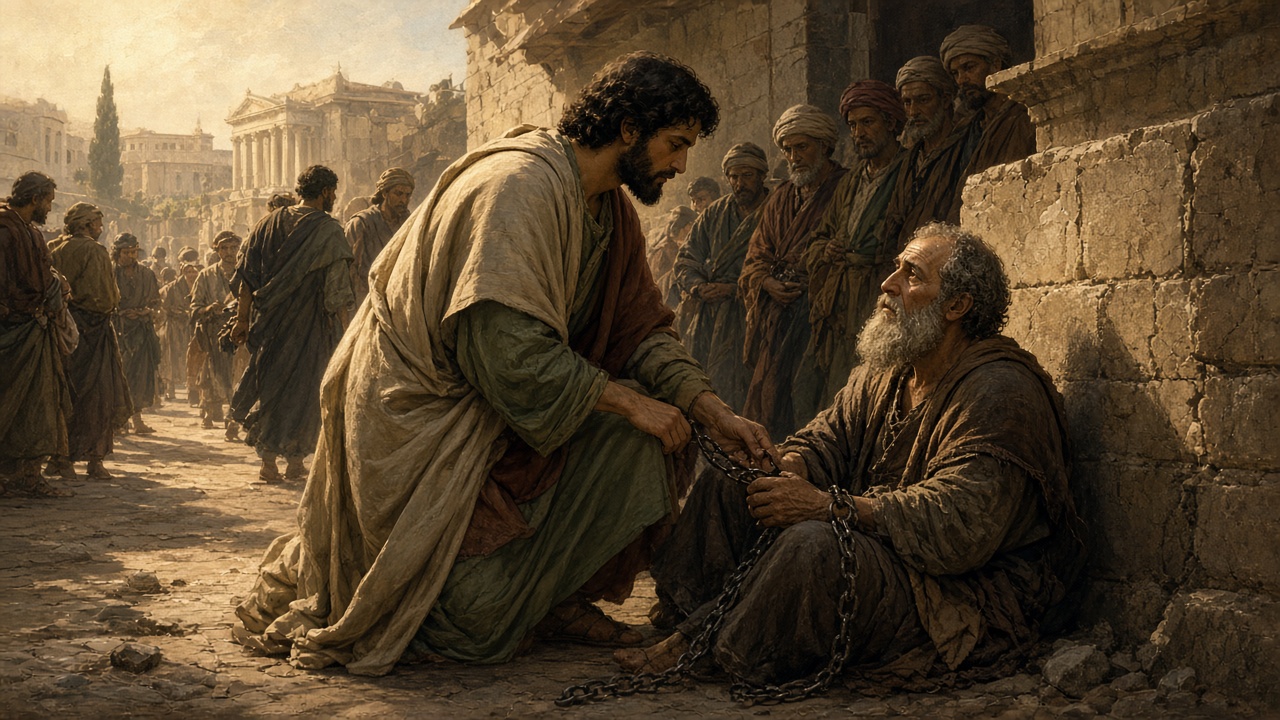
8Así que no te avergüences de hablar de nuestro Señor, ni de mí, que estoy preso por la causa de Cristo. Al contrario, debes ser capaz de sufrir por el evangelio, pues Dios te dará fuerzas. 9Dios nos salvó y nos llamó a una vida santa, no porque lo mereciéramos sino por su amor y porque así lo planeó. Antes que el mundo comenzara, su plan era mostrarnos su bondad a través de Cristo Jesús.
10Esto se hizo patente con la venida de nuestro Salvador Jesucristo, quien quebrantó el poder de la muerte y nos mostró la vida incorruptible por medio del evangelio. 11Dios me nombró apóstol suyo, con la tarea de predicar y enseñar ese mensaje. 12Por ese motivo padezco estos sufrimientos. Mas no me avergüenzo, porque sé en quién he creído, y estoy seguro de que puede guardar lo que le he encomendado hasta el día de su retorno.
13Ten por norma las sanas verdades que te enseñé, especialmente las concernientes al amor y a la fe en Cristo. 14Guarda bien la preciosa enseñanza que Dios te dio, mediante el Espíritu Santo que mora en nosotros.
15Como sabrás, los de la provincia de Asia me han abandonado, aun Figelo y Hermógenes. 16Que el Señor sea misericordioso con Onesíforo y toda su familia, porque muchas veces me confortó y nunca se avergonzó de que yo estuviera preso. 17Al contrario, cuando estuvo en Roma me buscó por todas partes y por fin me halló. 18Que el Señor le conceda hallar misericordia delante de Dios en aquel día. Tú sabes mejor que yo lo mucho que me ayudó en Éfeso.
Did you know?
Faith without shame
- Paul addresses Timothy as his beloved child and recalls the sincere faith that first lived in Timothy’s grandmother Lois and his mother Eunice. Easton's Bible Dictionary (1897) describes Timothy as a young disciple who accompanied Paul on many journeys and whom the apostle regarded as his own son in the faith; it adds that nothing is known of his father except that he was a Greek, and that Timothy probably lived at Lystra.Sources: Timotheus · Lois · the Bible text itself
- Paul writes that everyone in the province of Asia has deserted him, including Phygelus and Hermogenes. Easton's Bible Dictionary (1897), which spells the first name Phygellus, calls him a Christian of Asia who turned away from Paul during what the dictionary describes as Paul’s second imprisonment at Rome, and says that nothing more is known of him; it calls Hermogenes a former fellow-worker in Asia Minor who abandoned Paul along with Phygellus, probably because of the dangers they faced. The dictionary explains that “Asia” is used in the New Testament to denote proconsular Asia, a Roman province in western Asia Minor whose capital was Ephesus.Sources: Phygellus · Hermogenes · Asia · the Bible text itself
- Onesiphorus, an Ephesian Christian whose name Easton's Bible Dictionary (1897) explains as “bringing profit,” often refreshed Paul and was not ashamed of his chains. When he arrived in Rome he searched diligently until he found Paul, and Paul also recalls how much Onesiphorus had served him in Ephesus.Sources: Onesiphorus · the Bible text itself
Notes written with AI assistance from open sources (Theographic Bible Metadata, CC BY-SA 4.0; Easton’s Bible Dictionary, public domain) and reviewed before publishing.
Places in this chapter
Only places identified with high confidence are shown (90% or more according to the scholarly sources compiled by OpenBible). Period map: DARE (Digital Atlas of the Roman Empire), CC BY 4.0; modern map: © OpenStreetMap contributors; places: OpenBible.info (CC BY 4.0).
Credits and license for this translation
Biblica® Open Nueva Biblia Viva 2008
The Holy Bible in Spanish: Biblica® Open Nueva Biblia Viva 2008 (Bible)
copyright © 2008 Biblica, Inc.
Language: Español
Contributor: Biblica, Inc.
Biblica® Open Nueva Biblia Viva™
Copyright © 2006, 2008 by Biblica, Inc.
“Biblica” es una marca registrada en la oficina de Patentes y Marcas de los Estados Unidos por Biblica, Inc. Usado con permiso.
“Biblica” is a trademark registered in the United States Patent and Trademark Office by Biblica, Inc. Used with permission.
Creative Commons license
This work is made available under the Creative Commons Attribution-ShareAlike 4.0 International License (CC BY-SA). To view a copy of this license, visit https://creativecommons.org/licenses/by-sa/4.0 or send a letter to Creative Commons, PO Box 1866, Mountain View, CA 94042, USA.
You have permission to copy and distribute this Work, as long as you do not change it and you keep the title as it is. Changing or translating this Work will create a derivative work. When you publish this derivative work, you must list what changes you have made where people can see them, such as on a website. You must also show where the original Work is from: “The original Work by its copyright holders is available for free at www.biblica.com and open.bible .”
Notice of copyright must appear on the title or copyright page of the work as follows:
Biblica® Open Nueva Biblia Viva™
Copyright © 2006, 2008 by Biblica, Inc.
“Biblica” es una marca registrada en la oficina de Patentes y Marcas de los Estados Unidos por Biblica, Inc. Usado con permiso.
“Biblica” is a trademark registered in the United States Patent and Trademark Office by Biblica, Inc. Used with permission.
You must also make your derivative work available under the same license (CC BY-SA).
If you would like to notify Biblica, Inc. regarding your translation of this work, please contact us at https://open.bible/#feedback .
This translation is made available to you under the terms of the
Creative Commons Attribution Share-Alike license 4.0.
You have permission to share and redistribute this Bible translation in any format and to make reasonable revisions and adaptations of this translation, provided that:
You include the above copyright and source information.
If you make any changes to the text, you must indicate that you did so in a way that makes it clear that the original licensor is not necessarily endorsing your changes.
If you redistribute this text, you must distribute your contributions under the same license as the original.
Pictures included with Scriptures and other documents on this site are licensed just for use with those Scriptures and documents.
For other uses, please contact the respective copyright owners.
Note that in addition to the rules above, revising and adapting God's Word involves a great responsibility to be true to God's Word. See Revelation 22:18-19.
2025-05-21
Source: http://ebible.org/spaonbv/ · eBible.org