2 Samuel 1
Biblica® Open Nueva Biblia Viva 2008 · Tap a verse to see its cross-references.
About this book
About 2 Samuel
- Easton's Bible Dictionary (1897) says the books of Samuel were probably written by Samuel, Gad, and Nathan. According to that entry, Samuel penned the first twenty-four chapters of the first book; Gad, David's companion, continued the history, and Nathan completed it, probably arranging the whole. The entry gives no date of writing, but says Second Samuel covers perhaps fifty years, the reign of David.Sources: Easton: Samuel, Books of
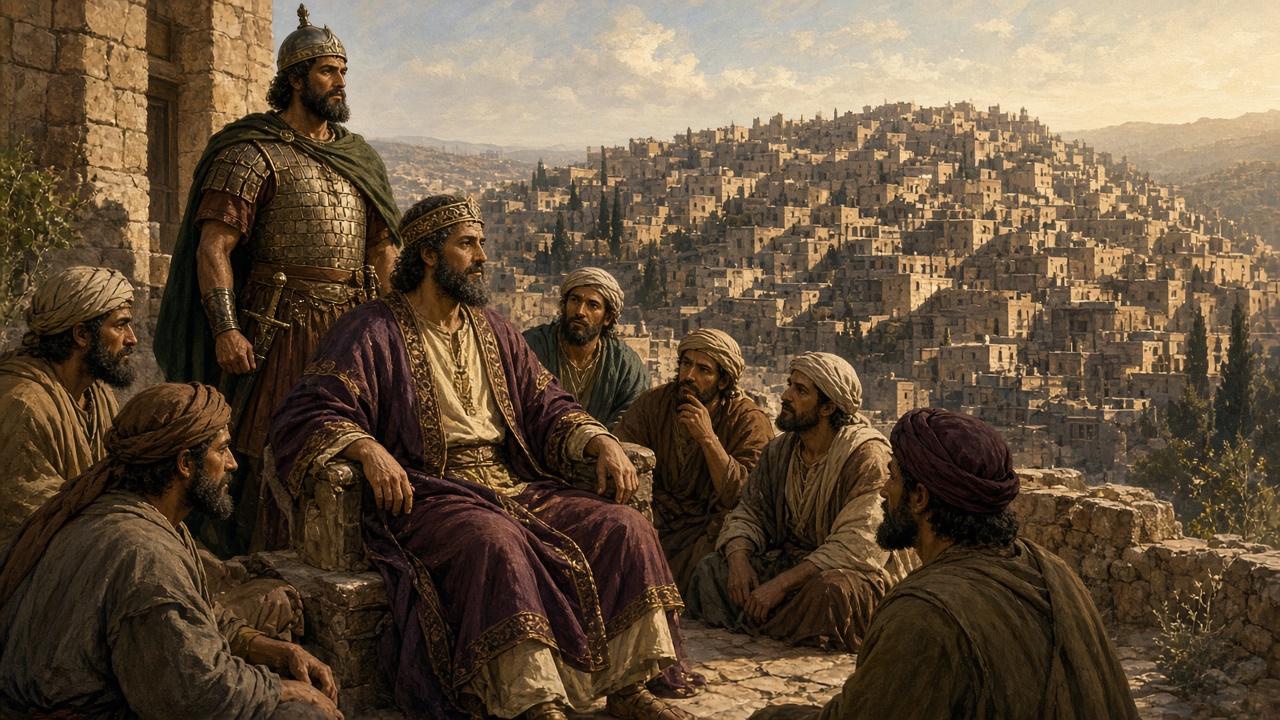
- After Saul's death, David was made king over Judah and reigned in Hebron, while Abner, commander of Saul's army, had Ish-bosheth proclaimed king. Ish-bosheth reigned at Mahanaim, beyond the Jordan, and a state of war existed between the two kings. Joab, captain of the host throughout David's reign, led the assault on the fortress on Mount Zion in Jerusalem and for that service was raised to the rank of prince of the king's army.Sources: Abner · Mahanaim · Joab · Jerusalem
- Easton describes 2 Samuel as a history of David's reign, mainly in its political aspects: over Judah in chapters 1-4, and over all Israel in chapters 5-24. The last four chapters are treated as a sort of appendix, recording various events but not in chronological order. The books are not complete histories; frequent gaps appear because, in Easton's view, their aim is the gradual development of the kingdom of God rather than a full account of each reign.Sources: Easton: Samuel, Books of
- The Septuagint translators regarded the books of Samuel and of Kings as one continuous history, which they divided into four books called the Books of the Kingdom. The Vulgate followed this division but named them the Books of the Kings, so the books called First and Second Samuel in modern Protestant versions were the First and Second Books of Kings. Easton also notes that the account of David's sin in the matter of Bathsheba, in 2 Samuel 11:2-12:29, is omitted from the corresponding passage in 1 Chronicles 20.Sources: Easton: Samuel, Books of
Notes written with AI assistance from open sources (Theographic Bible Metadata, CC BY-SA 4.0; Easton’s Bible Dictionary, public domain) and reviewed before publishing.
Noticia de la muerte de Saúl
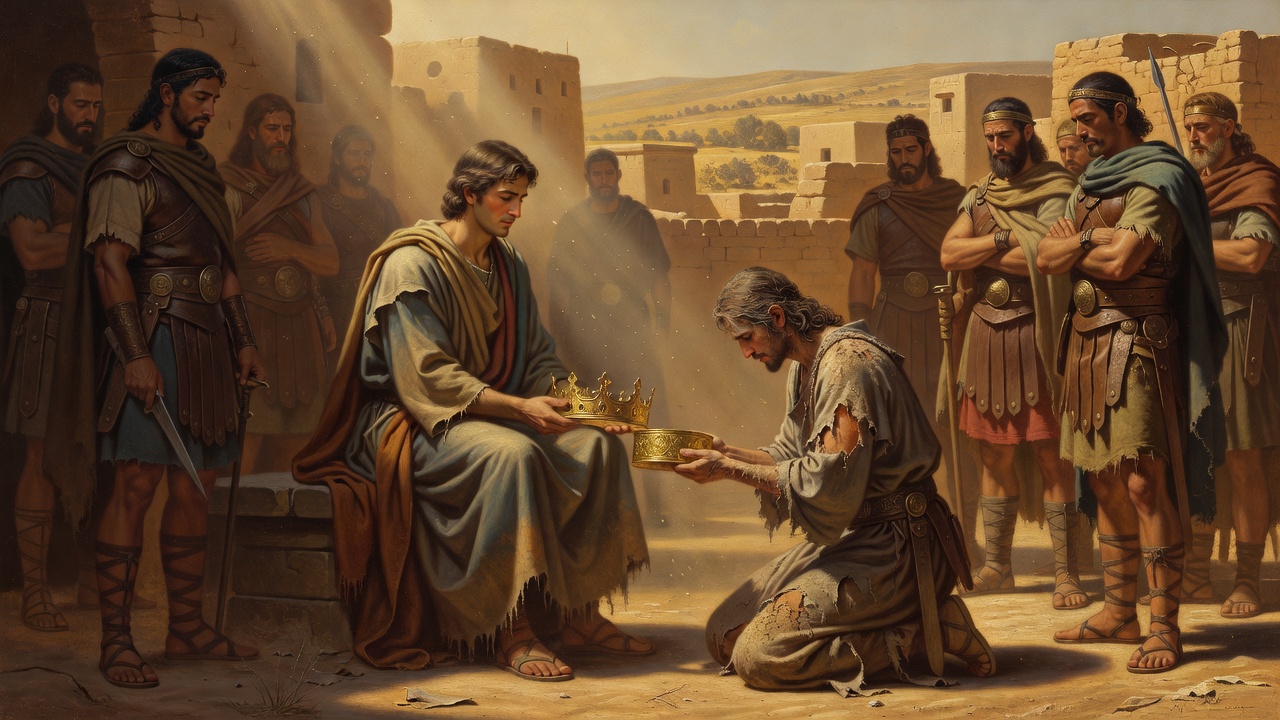
1Cuando Saúl murió, David regresó a Siclag y se quedó allí dos días, después de haber derrotado a los amalecitas. 2Al tercer día llegó un hombre del campamento de Saúl con su ropa desgarrada y con polvo en su cabeza, en señal de dolor. Cuando estuvo delante de David, se inclinó hasta tocar el suelo con la frente, como muestra de respeto.
3―¿De dónde vienes? —le preguntó David.
―Logré escaparme del campamento de Israel —le contestó el soldado.
4―¿Qué ha sucedido? —le preguntó David—. Dime cómo fue la batalla.
Y el hombre respondió:
―El pueblo huyó. Muchos murieron en la batalla. ¡El rey Saúl y su hijo Jonatán también murieron!
5―¿Y cómo sabes que han muerto?
6―Porque yo estaba en el monte Guilboa, y vi que Saúl se apoyaba en su lanza, y los enemigos lo tenían rodeado. 7Cuando él me vio me pidió que me acercara. 8“¿Quién eres?” me preguntó. “Soy un amalecita”, le respondí. 9Entonces me dijo en tono suplicante: “Ven y pon fin a mi angustia, pues estoy sufriendo terriblemente y no acabo de morir”. 10Así que me acerqué y lo maté, pues vi que no le quedaba ninguna esperanza de vida. Tomé luego su corona y uno de sus brazaletes para traérselos a usted, señor mío.
11David y sus hombres rasgaron su ropa en señal de dolor cuando oyeron aquellas noticias. 12Hicieron duelo, lloraron y ayunaron todo aquel día por Saúl, por su hijo Jonatán y por el pueblo del Señor que habían muerto ese día.
13―¿De dónde eres? —le preguntó David al joven que le había traído las noticias.
―Soy hijo de un inmigrante amalecita —respondió.
14―¿Por qué te atreviste a matar al ungido de Dios? —le preguntó David.
15Entonces llamó a uno de sus soldados y le ordenó:
―¡Mátalo!
Y el soldado mató al amalecita, atravesándolo con su espada.
16―Tú mismo te declaraste culpable al confesar que diste muerte al ungido del Señor.
Lamento de David por Saúl y Jonatán
17David compuso un canto fúnebre por Saúl y Jonatán. Después ordenó que ese canto fuera enseñado a la gente de Judá. Este canto está escrito en el libro de Jaser.
19«Israel, los que eran tu gloria y tu gozo yacen muertos sobre los montes.
¡Cómo han caído los valientes!
20»¡Que no lo sepan los filisteos, para que no se gocen!
¡Que no lo sepan las ciudades de Gat y Ascalón, para que no se burlen esa gente idólatra!
21»¡Montes de Guilboa, que nunca más haya rocío ni lluvia sobre ustedes, ni crezca el trigo en sus laderas.
Porque allí quedaron aplastados los escudos de los héroes.
Porque allí el escudo de Saúl perdió todo su esplendor.
22»Saúl y Jonatán daban muerte a sus más poderosos enemigos, y no regresaban con las manos vacías del campo de batalla.
23»¡Cuánto fueron amados! ¡Cuán maravillosos eran Saúl y Jonatán!
¡Inseparables fueron en la vida y en la muerte!
Eran más rápidos que las águilas, más fuertes que los leones.
24»Pero ahora, mujeres de Israel, lloren a Saúl.
Él las enriqueció con finos vestidos y adornos de oro.
25»¡Cómo han caído los valientes en medio de la batalla!
¡Jonatán yace muerto sobre los montes!
26¡Lloro por ti, hermano Jonatán!
¡Te quise más que a un hermano!
Y tu amistad fue para mí más grata que el amor de las mujeres.
27»¡Cómo han caído los valientes!
¡Cómo han muerto los hombres de guerra!».
Did you know?
David Laments Saul and Jonathan
- David ordered that the people of Judah be taught his lament for Saul and Jonathan, referred to as the Song of the Bow. This poetic dirge was recorded in the Book of Jashar, an ancient collection of songs celebrating notable Israelite leaders and events.Sources: Jasher · the Bible text itself
- In his lament, David pleaded that the disaster not be proclaimed in Gath or in the streets of Ashkelon, two prominent Philistine cities. He mourned that news of the defeat on Mount Gilboa would cause the daughters of the Philistines to celebrate over Israel's fallen leaders.Sources: Gath · Ashkelon · the Bible text itself
- David received the report of Saul's death while residing at Ziklag, a town in the Negeb that had been given to him by the Philistine king of Gath. The messenger brought Saul's royal crown and armlet directly to David after the battle on Mount Gilboa.Sources: Ziklag · the Bible text itself
Notes written with AI assistance from open sources (Theographic Bible Metadata, CC BY-SA 4.0; Easton’s Bible Dictionary, public domain) and reviewed before publishing.
Places in this chapter
- Mount Gilboa · 32.434, 35.414 · verses 6, 21
- Ashkelon · Today: Tel Ashkelon · 31.664, 34.546 · verse 20
Only places identified with high confidence are shown (90% or more according to the scholarly sources compiled by OpenBible). Period map: DARE (Digital Atlas of the Roman Empire), CC BY 4.0; modern map: © OpenStreetMap contributors; places: OpenBible.info (CC BY 4.0).
Credits and license for this translation
Biblica® Open Nueva Biblia Viva 2008
The Holy Bible in Spanish: Biblica® Open Nueva Biblia Viva 2008 (Bible)
copyright © 2008 Biblica, Inc.
Language: Español
Contributor: Biblica, Inc.
Biblica® Open Nueva Biblia Viva™
Copyright © 2006, 2008 by Biblica, Inc.
“Biblica” es una marca registrada en la oficina de Patentes y Marcas de los Estados Unidos por Biblica, Inc. Usado con permiso.
“Biblica” is a trademark registered in the United States Patent and Trademark Office by Biblica, Inc. Used with permission.
Creative Commons license
This work is made available under the Creative Commons Attribution-ShareAlike 4.0 International License (CC BY-SA). To view a copy of this license, visit https://creativecommons.org/licenses/by-sa/4.0 or send a letter to Creative Commons, PO Box 1866, Mountain View, CA 94042, USA.
You have permission to copy and distribute this Work, as long as you do not change it and you keep the title as it is. Changing or translating this Work will create a derivative work. When you publish this derivative work, you must list what changes you have made where people can see them, such as on a website. You must also show where the original Work is from: “The original Work by its copyright holders is available for free at www.biblica.com and open.bible .”
Notice of copyright must appear on the title or copyright page of the work as follows:
Biblica® Open Nueva Biblia Viva™
Copyright © 2006, 2008 by Biblica, Inc.
“Biblica” es una marca registrada en la oficina de Patentes y Marcas de los Estados Unidos por Biblica, Inc. Usado con permiso.
“Biblica” is a trademark registered in the United States Patent and Trademark Office by Biblica, Inc. Used with permission.
You must also make your derivative work available under the same license (CC BY-SA).
If you would like to notify Biblica, Inc. regarding your translation of this work, please contact us at https://open.bible/#feedback .
This translation is made available to you under the terms of the
Creative Commons Attribution Share-Alike license 4.0.
You have permission to share and redistribute this Bible translation in any format and to make reasonable revisions and adaptations of this translation, provided that:
You include the above copyright and source information.
If you make any changes to the text, you must indicate that you did so in a way that makes it clear that the original licensor is not necessarily endorsing your changes.
If you redistribute this text, you must distribute your contributions under the same license as the original.
Pictures included with Scriptures and other documents on this site are licensed just for use with those Scriptures and documents.
For other uses, please contact the respective copyright owners.
Note that in addition to the rules above, revising and adapting God's Word involves a great responsibility to be true to God's Word. See Revelation 22:18-19.
2025-05-21
Source: http://ebible.org/spaonbv/ · eBible.org