2 Corinthians 1
Biblica® Open Nueva Biblia Viva 2008 · Tap a verse to see its cross-references.
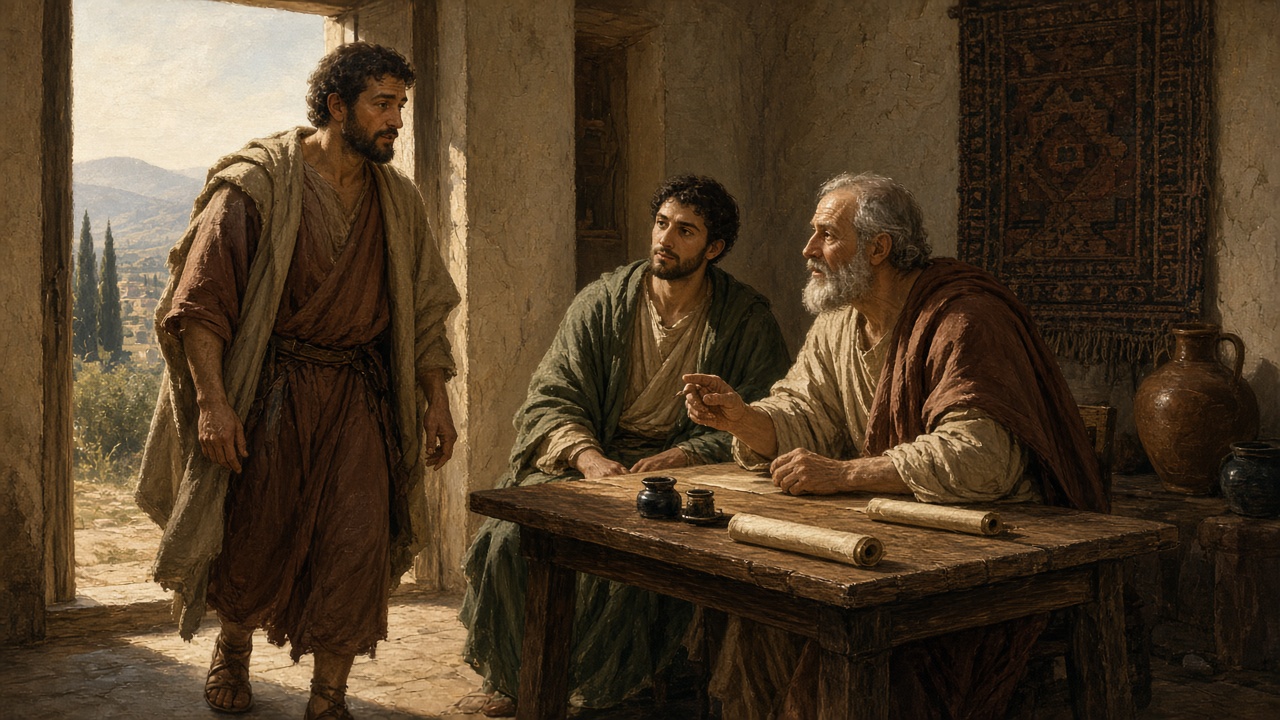
About this book
About 2 Corinthians
- Easton's Bible Dictionary (1897) dates the letter early in A.D. 58 and presents it as written by Paul, probably at Philippi or, as some think, at Thessalonica, and sent to Corinth by Titus.Sources: Easton: Corinthians, Second Epistle to the
- Shortly after his first letter, Paul left Ephesus, where intense excitement had been aroused against him, and followed the usual route to Troas, the port of departure for Europe, expecting to meet Titus with news of that letter's effect. Disappointed, he went on to Macedonia; at Philippi he was soon joined by Titus, who brought a favourable report from Corinth, and also by Timothy, and this second letter was written under the influence of that news.Sources: Easton: Corinthians, Second Epistle to the
- The letter is addressed not only to the church in Corinth but also to the saints in all Achaia, that is, in Athens, Cenchrea, and other cities in Greece. Corinth, about 48 miles west of Athens, was noted for its wealth; the city mentioned in the New Testament had been rebuilt and peopled by a colony of freedmen from Rome, and under the Romans it was the seat of government for southern Greece, or Achaia, one of the two provinces into which the Romans divided the country.Sources: Easton: Corinthians, Second Epistle to the · Corinth · Achaia
- Easton arranges the letter in three parts: Paul speaks of his spiritual labours and course of life and expresses warm affection toward the Corinthians (chapters 1–7); he gives directions for a collection for their poor brethren in Judea (chapters 8–9); and he defends his apostolic claim and answers the charges and insinuations of the false teacher and that teacher's adherents (chapters 10–13).Sources: Easton: Corinthians, Second Epistle to the
- Easton remarks that this letter shows the apostle's individuality more than any other. There is no definite information about its effect on the Corinthian church, though Paul visited Corinth after writing it and stayed three months, and from there, in his letter to Rome, sent greetings from some of the church's principal members.Sources: Easton: Corinthians, Second Epistle to the
Notes written with AI assistance from open sources (Theographic Bible Metadata, CC BY-SA 4.0; Easton’s Bible Dictionary, public domain) and reviewed before publishing.
1Pablo, apóstol de Jesucristo porque Dios así lo quiso, y nuestro hermano Timoteo, a la iglesia de Dios que está en Corinto y a todos los santos que están en toda la región de Acaya.
2Que Dios nuestro Padre y el Señor Jesucristo les concedan su amor y su paz.
El Dios de toda consolación
3¡Bendito sea el Dios y Padre de nuestro Señor Jesucristo, Padre misericordioso y Dios de toda consolación! 4Él nos consuela en todas nuestras tribulaciones, para que podamos consolar a todos los que sufren, con el mismo consuelo que él nos prodigó.
5Pues así como sufrimos abundantemente por Cristo, así de grande es el consuelo que él nos da. 6Si sufrimos es para que ustedes tengan consuelo y obtengan la salvación. Y si Dios nos ha consolado es para bien de ustedes, para que reciban el consuelo que les ayude a soportar con paciencia los mismos sufrimientos que padecemos nosotros. 7Tenemos una esperanza segura en ustedes, porque sabemos que participan tanto de nuestros sufrimientos como de nuestro consuelo.
8Creo que deben conocer, hermanos, las tribulaciones que pasamos en Asia. Nos vimos tan aplastados bajo tanta presión, que temimos no salir de allí con vida. 9Nos pareció que estábamos ya sentenciados a muerte. Pero eso sucedió para que no confiáramos en nosotros mismos sino en Dios, que puede hasta resucitar a los muertos.
10Él nos libró de la muerte y de la misma manera nos volverá a librar cuando sea necesario. En él hemos puesto nuestra esperanza. 11Pero ustedes nos ayudaron también con sus oraciones, y juntos podremos elevar alabanzas a Dios al contestar él los ruegos por nuestra seguridad.
Pablo cambia de planes
12Con gran satisfacción y sinceridad podemos afirmar que siempre hemos dependido de la gracia del Señor y no de nuestra sabiduría y que siempre hemos sido puros y sinceros en el mundo, especialmente en cuanto a la forma en que nos hemos comportado con ustedes. 13Les escribimos de forma directa y fácil de comprender. Espero que me entiendan, 14como ya han entendido, que pueden estar orgullosos de nosotros, de la misma manera que nosotros estaremos orgullosos de ustedes el día en que nuestro Señor Jesús regrese.
15Estaba tan confiado en esto, que primero quise visitarlos a ustedes para serles de doble bendición, 16es decir, hacer un alto en mi viaje a Macedonia y luego hacer lo mismo en el viaje de regreso. Así me podrían ayudar a seguir el viaje a Judea. 17¿Por qué cambié de planes? ¿Estaría de veras decidido? ¿O soy de los que dicen «sí» aunque por dentro están diciendo «no»?
18Pues tan cierto como que Dios es fiel, él sabe que yo cumplo mi palabra. 19Timoteo, Silvano y yo les hemos hablado de Jesucristo, el Hijo de Dios. Pues bien, Jesucristo no es de los que dicen «sí» y luego dicen «no». 20Él hace lo que dice y cumple las promesas de Dios. Y nosotros, por medio de Cristo, respondemos «amén», para gloria de su nombre. 21Ese Dios es precisamente el que nos mantiene firmes en Cristo, a ustedes y a nosotros. Él nos eligió 22y ha puesto su marca en nosotros —marca que declara que le pertenecemos— y también ha puesto su Santo Espíritu en nuestros corazones como garantía de sus promesas.
23Pongo a Dios por testigo de que todavía no he ido a visitarlos porque no quiero ser duro con ustedes. 24No es que les estemos imponiendo la fe, sino que intentamos contribuir al gozo de ustedes. Pues ustedes se mantienen firmes por la fe.
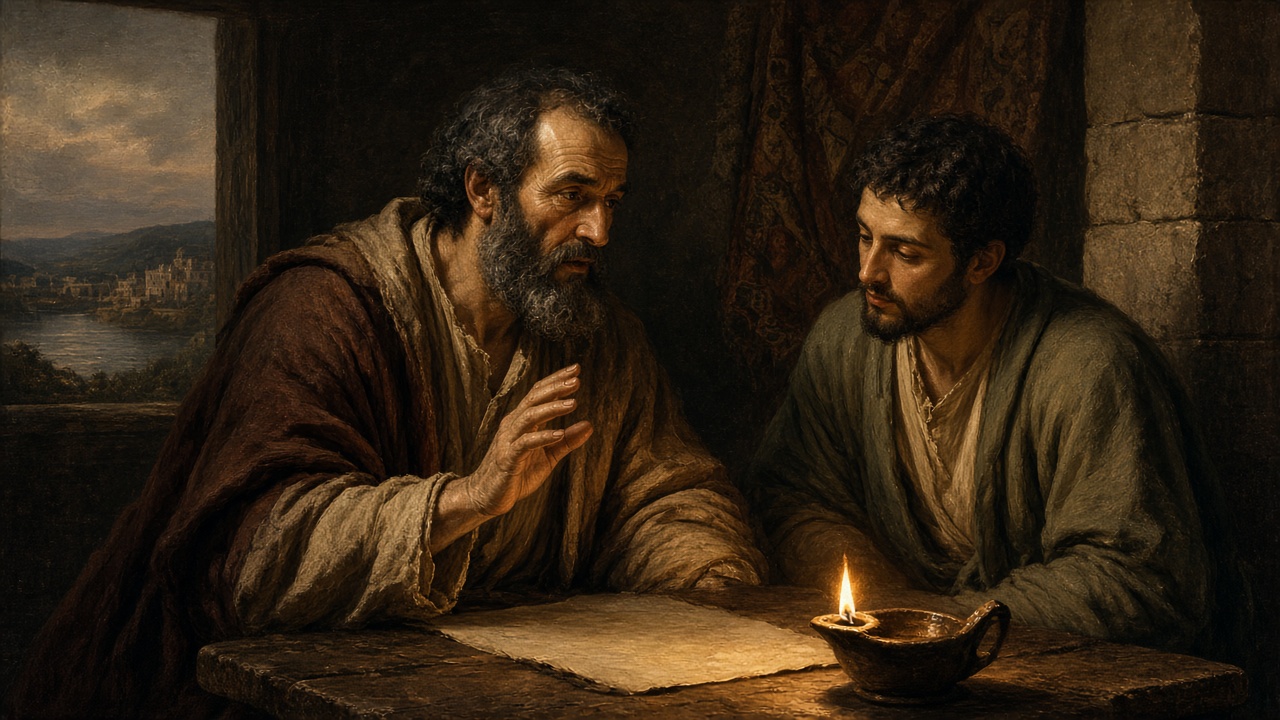
Did you know?
Comfort in Affliction and a Changed Visit
- The letter is addressed to the church of God in Corinth and to all the saints throughout Achaia. Corinth stood on the isthmus joining the Peloponnesus to mainland Greece, about forty-eight miles west of Athens. The city of New Testament times had been rebuilt about a century after the Romans destroyed the ancient city in 146 B.C., was peopled by a colony of freedmen from Rome, and became the Roman seat of government for Achaia, the province covering southern Greece.Sources: the Bible text itself · Corinth · Achaia
- Paul writes that he and his companions met hardships in the province of Asia that were far beyond their ability to endure, so that they despaired even of life and felt they were under a sentence of death. In this sense, Asia is Proconsular Asia, a Roman province in the western part of Asia Minor, of which Ephesus was the capital.Sources: the Bible text itself · Asia
- He had planned to visit Corinth on the way to Macedonia, return from Macedonia, and then have the Corinthians help him on to Judea, but he says he did not return to Corinth in order to spare them. Macedonia was the Roman province north of Greece, while, under the Romans in the time of Christ, Judea was the southernmost of the three divisions of Palestine and part of the province of Syria. Timothy is named with Paul as a sender of the letter, and the chapter recalls that Jesus Christ was proclaimed in Corinth by Paul, Silvanus, and Timothy; Silvanus is the name used in the epistles for Silas, a prominent member of the church in Jerusalem and a companion of Paul.Sources: the Bible text itself · Macedonia · Judea · Silas
Notes written with AI assistance from open sources (Theographic Bible Metadata, CC BY-SA 4.0; Easton’s Bible Dictionary, public domain) and reviewed before publishing.
Places in this chapter
- Achaia · 38.720, 22.540 · verse 1
- Corinth · 37.906, 22.879 · verses 1, 23
- Asia · 38.400, 28.300 · verse 8
- Judea · Today: Judea 1 · 31.777, 35.234 · verse 16
- Macedonia · 41.600, 22.540 · verse 16
Only places identified with high confidence are shown (90% or more according to the scholarly sources compiled by OpenBible). Period map: DARE (Digital Atlas of the Roman Empire), CC BY 4.0; modern map: © OpenStreetMap contributors; places: OpenBible.info (CC BY 4.0).
Credits and license for this translation
Biblica® Open Nueva Biblia Viva 2008
The Holy Bible in Spanish: Biblica® Open Nueva Biblia Viva 2008 (Bible)
copyright © 2008 Biblica, Inc.
Language: Español
Contributor: Biblica, Inc.
Biblica® Open Nueva Biblia Viva™
Copyright © 2006, 2008 by Biblica, Inc.
“Biblica” es una marca registrada en la oficina de Patentes y Marcas de los Estados Unidos por Biblica, Inc. Usado con permiso.
“Biblica” is a trademark registered in the United States Patent and Trademark Office by Biblica, Inc. Used with permission.
Creative Commons license
This work is made available under the Creative Commons Attribution-ShareAlike 4.0 International License (CC BY-SA). To view a copy of this license, visit https://creativecommons.org/licenses/by-sa/4.0 or send a letter to Creative Commons, PO Box 1866, Mountain View, CA 94042, USA.
You have permission to copy and distribute this Work, as long as you do not change it and you keep the title as it is. Changing or translating this Work will create a derivative work. When you publish this derivative work, you must list what changes you have made where people can see them, such as on a website. You must also show where the original Work is from: “The original Work by its copyright holders is available for free at www.biblica.com and open.bible .”
Notice of copyright must appear on the title or copyright page of the work as follows:
Biblica® Open Nueva Biblia Viva™
Copyright © 2006, 2008 by Biblica, Inc.
“Biblica” es una marca registrada en la oficina de Patentes y Marcas de los Estados Unidos por Biblica, Inc. Usado con permiso.
“Biblica” is a trademark registered in the United States Patent and Trademark Office by Biblica, Inc. Used with permission.
You must also make your derivative work available under the same license (CC BY-SA).
If you would like to notify Biblica, Inc. regarding your translation of this work, please contact us at https://open.bible/#feedback .
This translation is made available to you under the terms of the
Creative Commons Attribution Share-Alike license 4.0.
You have permission to share and redistribute this Bible translation in any format and to make reasonable revisions and adaptations of this translation, provided that:
You include the above copyright and source information.
If you make any changes to the text, you must indicate that you did so in a way that makes it clear that the original licensor is not necessarily endorsing your changes.
If you redistribute this text, you must distribute your contributions under the same license as the original.
Pictures included with Scriptures and other documents on this site are licensed just for use with those Scriptures and documents.
For other uses, please contact the respective copyright owners.
Note that in addition to the rules above, revising and adapting God's Word involves a great responsibility to be true to God's Word. See Revelation 22:18-19.
2025-05-21
Source: http://ebible.org/spaonbv/ · eBible.org