1 Timothy 1
Biblica® Open Nueva Biblia Viva 2008 · Tap a verse to see its cross-references.
About this book
About 1 Timothy
- Easton's Bible Dictionary (1897) presents this letter as written by Paul to Timothy, a young disciple and traveling companion whom Paul called his own son in the faith. Timothy's mother, Eunice, and grandmother, Lois, are noted for their piety, and his father was a Greek; he probably lived at Lystra, where Paul took him as a companion and had him circumcised in order to conciliate the Jews. The name Timothy means Honouring God.Sources: Easton: Timothy, First Epistle to · Timotheus
- Easton's Bible Dictionary (1897) dates the letter probably to about A.D. 66 or 67. It places the writing in Macedonia, probably at Philippi or some other city in that region, and not at Laodicea, named in a closing subscription, because the letter speaks of Paul as having left Ephesus for Macedonia. Easton sets this in the interval between Paul's first and second imprisonments, when Paul probably revisited places of his earlier work in Greece and Asia and then went on to Macedonia, having left Timothy behind in Ephesus.Sources: Easton: Timothy, First Epistle to
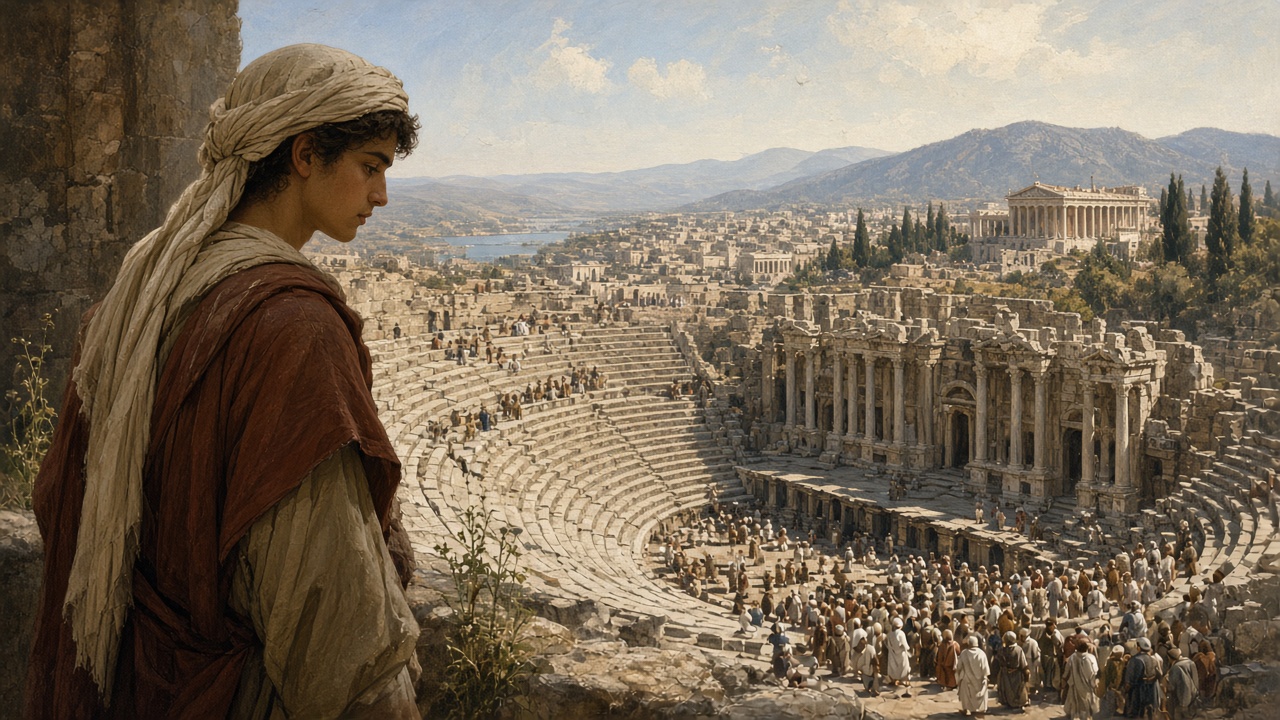
- Ephesus, where Timothy remained, was the capital of proconsular Asia, the western part of Asia Minor. In Roman times it was called the first and greatest metropolis of Asia, and it was famed for the Temple of Diana and for a theatre open to the sky, the largest in the world, capable of holding fifty thousand spectators. Macedonia, from which the dictionary says the letter was sent, was a Roman province north of Greece, governed by a propraetor with the title of proconsul.Sources: Easton: Timothy, First Epistle to · Ephesus · Macedonia
- According to Easton's Bible Dictionary (1897), the letter consists mainly of counsel to Timothy about the worship and organization of the church and the responsibilities of its various members, and of an exhortation to remain faithful in maintaining the truth amid surrounding errors.Sources: Easton: Timothy, First Epistle to
- Easton's Bible Dictionary (1897) identifies Alexander as a coppersmith who, with Hymenaeus and others, promoted certain teachings about the resurrection, which the dictionary calls heresies. It says that he made shipwreck of faith and of a good conscience, and that Paul excommunicated him, with reference to 1 Timothy 1:20.Sources: Alexander
Notes written with AI assistance from open sources (Theographic Bible Metadata, CC BY-SA 4.0; Easton’s Bible Dictionary, public domain) and reviewed before publishing.
1Pablo, apóstol de Cristo Jesús por mandato de Dios nuestro Salvador y de Cristo Jesús nuestra esperanza, 2a Timoteo, mi verdadero hijo en la fe:
Que Dios nuestro Padre y Cristo Jesús nuestro Señor te concedan su amor, misericordia y paz.
Advertencia contra los falsos maestros de la ley
3Cuando salí para Macedonia, te encargué que te quedaras en Éfeso y les mandaras a algunos individuos que no enseñaran falsas doctrinas 4ni prestaran atención a leyendas y a listas larguísimas de antepasados. Tales ideas provocan discusiones en vez de llevar adelante la obra de Dios que está fundada en la fe.
5Sigue haciéndolo, para que el amor proceda de un corazón limpio, de una conciencia buena y de una fe sincera. 6Algunos se han olvidado de esta conducta y pasan el tiempo discutiendo asuntos inútiles. 7Pretenden ser maestros de la ley, pero no tienen ni la más ligera idea de lo que hablan, ni entienden lo que afirman con tanta seguridad.
8Sí, la ley es buena, pero si se aplica conforme al propósito con que Dios la dio. 9La ley no fue instituida para los justos sino para los rebeldes y desobedientes, para los malvados y pecadores, para los irreverentes y profanos, para los que maltratan a sus propios padres, para los asesinos, 10para los adúlteros y los homosexuales, para los que trafican con vidas humanas, para los mentirosos y los que juran en falso. En fin, la ley es para todo lo que está en contra de la sana enseñanza 11del glorioso evangelio que el bendito Dios me ha confiado.
La gracia que el Señor dio a Pablo
12Mil gracias doy a Cristo Jesús, nuestro Señor, por escogerme como uno de sus mensajeros y darme la fortaleza necesaria para serle fiel. 13Antes, yo me burlaba de su nombre, perseguía a sus seguidores y era un insolente. Pero Dios tuvo misericordia de mí, porque, como era incrédulo, no sabía lo que hacía.
14¡Qué bondadoso fue conmigo el Señor al enseñarme a confiar en él y a estar lleno del amor de Cristo Jesús! 15Este mensaje es verdadero y todo el mundo debe creerlo: Cristo Jesús vino al mundo a salvar a los pecadores, de los cuales yo soy el primero. 16Pero precisamente por eso, Dios tuvo misericordia de mí, para que Cristo pudiera usarme como ejemplo de lo paciente que es aun con el más vil de los pecadores, y para que los demás se den cuenta y, creyendo en él, también reciban la vida eterna. 17Por eso, al Rey eterno, inmortal, invisible, al único Dios, sea la gloria y el honor por los siglos de los siglos. Amén.
18Ahora, Timoteo, hijo mío, fíjate en este mandamiento que te doy: Pelea la buena batalla, tal como dicen las profecías que se hicieron en cuanto a ti. 19Aférrate a la fe en Cristo y conserva limpia tu conciencia. Hay quienes desobedecen la voz de su conciencia y han naufragado en la fe. 20¡Sírvannos de ejemplo Himeneo y Alejandro, a quienes entregué a Satanás para que aprendan a no deshonrar el nombre de Dios!
Did you know?
Timothy's Charge in Ephesus
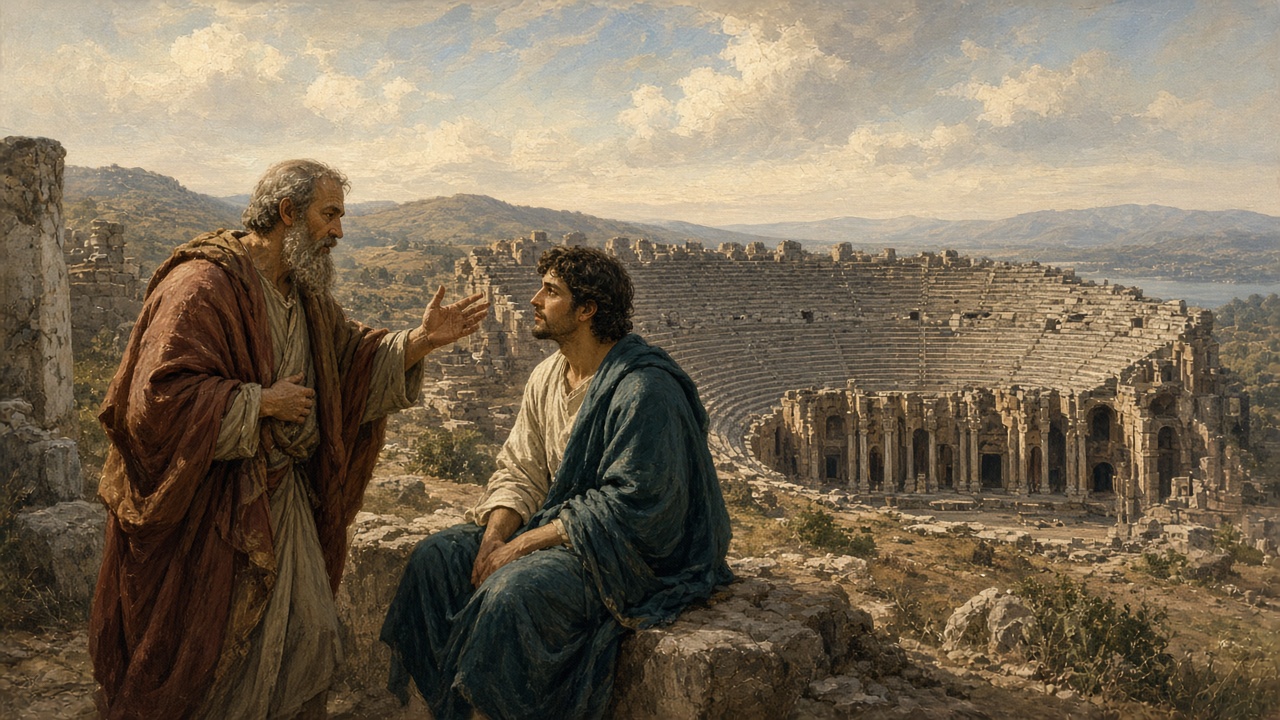
- As he departed for Macedonia, Paul urged Timothy to stay in Ephesus and instruct certain men not to teach false doctrines or devote themselves to myths and endless genealogies. Ephesus was the capital of proconsular Asia, the western part of Asia Minor, and in Roman times bore the title of the first and greatest metropolis of Asia. Macedonia was a Roman province lying north of Greece.Sources: the Bible text itself · Ephesus · Macedonia
- Paul addresses Timothy as his true child in the faith. The name Timotheus means honouring God. Easton's Bible Dictionary (1897) describes him as a young disciple and companion on many of Paul's journeys, the son of a Greek father, whom Paul regarded as his own son in the faith.Sources: the Bible text itself · Timotheus
- The chapter names Hymenaeus and Alexander among those who rejected faith and a good conscience and so shipwrecked their faith; Paul says he has handed them over to Satan to be taught not to blaspheme. Easton's Bible Dictionary (1897) identifies Alexander as a coppersmith who, with Hymenaeus and others, shipwrecked faith and a good conscience, and describes this act as an excommunication, comparing it with 1 Corinthians 5:5. Satan means adversary or accuser, and in the New Testament the name is used interchangeably with the devil.Sources: the Bible text itself · Alexander · Satan
Notes written with AI assistance from open sources (Theographic Bible Metadata, CC BY-SA 4.0; Easton’s Bible Dictionary, public domain) and reviewed before publishing.
Places in this chapter
Only places identified with high confidence are shown (90% or more according to the scholarly sources compiled by OpenBible). Period map: DARE (Digital Atlas of the Roman Empire), CC BY 4.0; modern map: © OpenStreetMap contributors; places: OpenBible.info (CC BY 4.0).
Credits and license for this translation
Biblica® Open Nueva Biblia Viva 2008
The Holy Bible in Spanish: Biblica® Open Nueva Biblia Viva 2008 (Bible)
copyright © 2008 Biblica, Inc.
Language: Español
Contributor: Biblica, Inc.
Biblica® Open Nueva Biblia Viva™
Copyright © 2006, 2008 by Biblica, Inc.
“Biblica” es una marca registrada en la oficina de Patentes y Marcas de los Estados Unidos por Biblica, Inc. Usado con permiso.
“Biblica” is a trademark registered in the United States Patent and Trademark Office by Biblica, Inc. Used with permission.
Creative Commons license
This work is made available under the Creative Commons Attribution-ShareAlike 4.0 International License (CC BY-SA). To view a copy of this license, visit https://creativecommons.org/licenses/by-sa/4.0 or send a letter to Creative Commons, PO Box 1866, Mountain View, CA 94042, USA.
You have permission to copy and distribute this Work, as long as you do not change it and you keep the title as it is. Changing or translating this Work will create a derivative work. When you publish this derivative work, you must list what changes you have made where people can see them, such as on a website. You must also show where the original Work is from: “The original Work by its copyright holders is available for free at www.biblica.com and open.bible .”
Notice of copyright must appear on the title or copyright page of the work as follows:
Biblica® Open Nueva Biblia Viva™
Copyright © 2006, 2008 by Biblica, Inc.
“Biblica” es una marca registrada en la oficina de Patentes y Marcas de los Estados Unidos por Biblica, Inc. Usado con permiso.
“Biblica” is a trademark registered in the United States Patent and Trademark Office by Biblica, Inc. Used with permission.
You must also make your derivative work available under the same license (CC BY-SA).
If you would like to notify Biblica, Inc. regarding your translation of this work, please contact us at https://open.bible/#feedback .
This translation is made available to you under the terms of the
Creative Commons Attribution Share-Alike license 4.0.
You have permission to share and redistribute this Bible translation in any format and to make reasonable revisions and adaptations of this translation, provided that:
You include the above copyright and source information.
If you make any changes to the text, you must indicate that you did so in a way that makes it clear that the original licensor is not necessarily endorsing your changes.
If you redistribute this text, you must distribute your contributions under the same license as the original.
Pictures included with Scriptures and other documents on this site are licensed just for use with those Scriptures and documents.
For other uses, please contact the respective copyright owners.
Note that in addition to the rules above, revising and adapting God's Word involves a great responsibility to be true to God's Word. See Revelation 22:18-19.
2025-05-21
Source: http://ebible.org/spaonbv/ · eBible.org