1 Thessalonians 1
Biblica® Open Nueva Biblia Viva 2008 · Tap a verse to see its cross-references.
About this book
About 1 Thessalonians
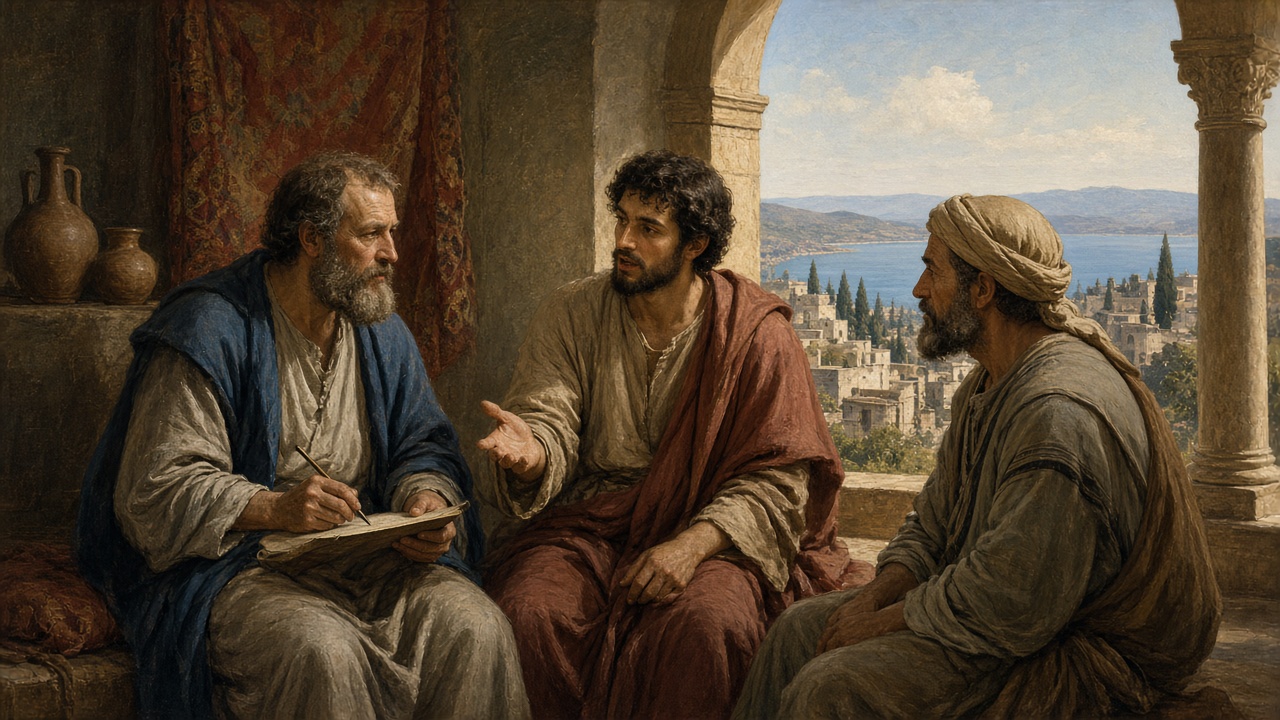
- Easton's Bible Dictionary (1897) presents the First Letter to the Thessalonians as the earliest of all Paul's letters. It says the letter was in all probability written from Corinth, early in the long stay recorded in Acts, about the end of A.D. 52.Sources: Easton: Thessalonians, Epistles to the
- The letter was prompted by the return of Timothy, a young disciple and companion of Paul, bringing news from Macedonia about the church in Thessalonica. Macedonia was a Roman province north of Greece, where a vision of a Macedonian man had called Paul to preach, and Timothy's report was encouraging on the whole, though misunderstandings of Paul's teaching had appeared. Silas, also called Silvanus, a prominent member of the church in Jerusalem and Paul's companion on that journey, is named in the letter's opening.Sources: Easton: Thessalonians, Epistles to the · Timotheus · Silas · Macedonia
- According to Easton's Bible Dictionary (1897), Paul wrote to correct errors and misunderstandings of his teaching that had entered the church, and especially to urge purity of life. He reminded them that sanctification was the great end God desired for them.Sources: Easton: Thessalonians, Epistles to the
- A subscription, a note attached to the letter, wrongly says that it was written from Athens. Easton's Bible Dictionary (1897) calls that note erroneous. Paul had visited Athens on his second journey, but the dictionary places the writing in Corinth rather than there.Sources: Easton: Thessalonians, Epistles to the · Athens
Notes written with AI assistance from open sources (Theographic Bible Metadata, CC BY-SA 4.0; Easton’s Bible Dictionary, public domain) and reviewed before publishing.
1Pablo, Silvano y Timoteo a la iglesia de los tesalonicenses, que está en Dios el Padre y en el Señor Jesucristo:
Que el favor y la paz de Dios estén con ustedes.
Acción de gracias por los tesalonicenses
2Siempre damos gracias a Dios por todos ustedes al mencionarlos en nuestras oraciones. 3Cuando oramos a nuestro Dios y Padre, los recordamos constantemente a causa de la fe que tienen y demuestran con hechos, del amor que los empuja al trabajo, y de la esperanza en nuestro Señor Jesucristo que los mantiene firmes.
4Hermanos amados de Dios, sabemos que él los ha escogido. 5Esto lo sabemos porque cuando les anunciamos el evangelio, les llegó no sólo con palabras sino también con el poder del Espíritu Santo y con una gran seguridad. Ustedes saben que cuando estuvimos entre ustedes buscamos sólo su bien.
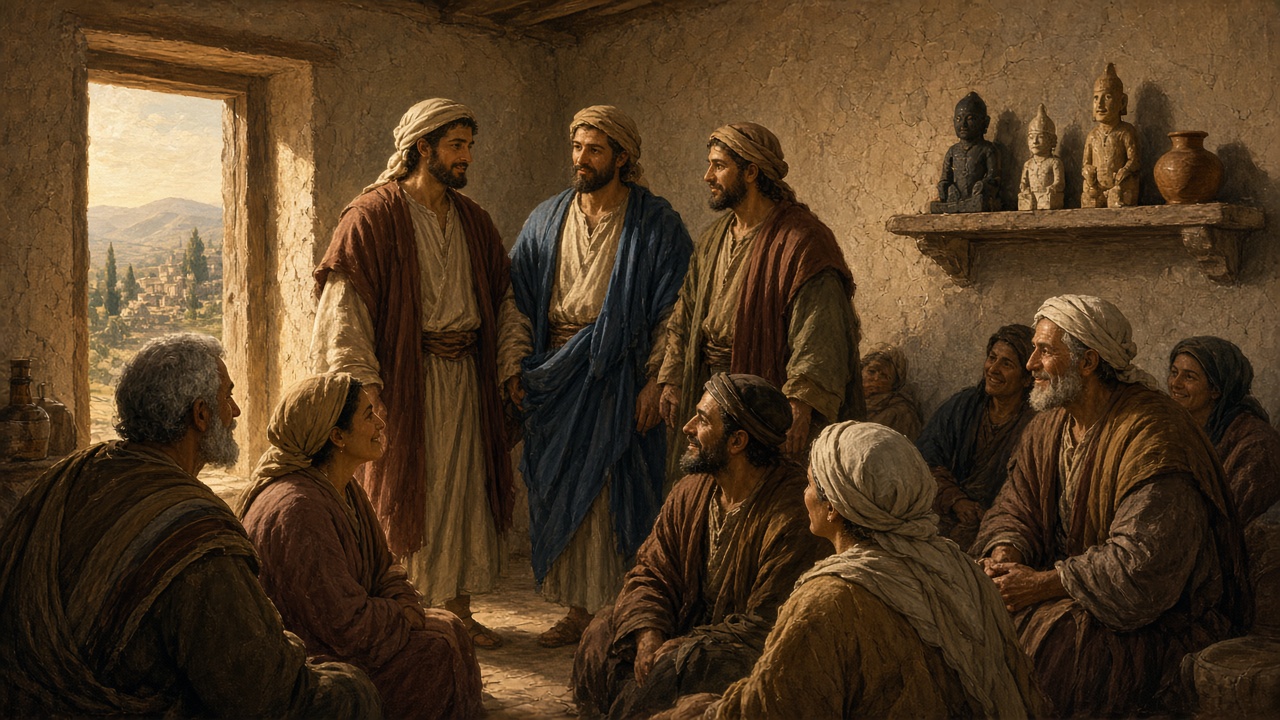
6Ustedes siguieron nuestro ejemplo y el del Señor, cuando, a pesar de todo el sufrimiento, recibieron el mensaje con la alegría que da el Espíritu Santo. 7Por eso se convirtieron en ejemplo para todos los creyentes de Macedonia y Acaya. 8El mensaje del Señor salió de ustedes y ya se ha anunciado no sólo en Macedonia y Acaya sino por todos lados. La fe de ustedes en Dios es tan conocida que ya no es necesario que nosotros digamos nada, 9pues todos cuentan lo bien que ustedes nos recibieron y cómo dejaron los ídolos para servir al Dios vivo y verdadero. 10También cuentan cómo ustedes esperan que Jesús regrese del cielo: él, que es el Hijo amado de Dios, a quien Dios resucitó y quien nos libra del castigo que viene.
Did you know?
An example across Macedonia and Achaia
- The greeting names Paul together with Silvanus and Timothy. A Bible dictionary identifies Silvanus with Silas, a prominent member of the church in Jerusalem who, with Judas, surnamed Barsabas, carried the council's decree to Antioch and was later chosen by Paul as his companion on the second missionary journey; the epistles, including this letter, call him Silvanus. Timothy, whose name Timotheus means honouring God, was a young companion whose father was a Greek; his mother, Eunice, and grandmother, Lois, are mentioned as eminent for their piety.Sources: Silas · Timotheus · the Bible text itself
- In New Testament times Macedonia was a Roman province north of Greece, governed by a propraetor with the title of proconsul, and Paul was summoned there by a vision of the man of Macedonia to preach the gospel. Achaia, originally a narrow strip on the northwest of the Peloponnesus, was the name the Romans gave to the whole Peloponnesus and the south of Greece, one of the two provinces into which they divided the country, Macedonia being the other. This chapter says the Thessalonians became an example to all the believers in Macedonia and Achaia, that the message of the Lord rang out from them to those regions, and that their faith in God had gone out to every place.Sources: Macedonia · Achaia · the Bible text itself
Notes written with AI assistance from open sources (Theographic Bible Metadata, CC BY-SA 4.0; Easton’s Bible Dictionary, public domain) and reviewed before publishing.
Places in this chapter
- Thessalonica · Today: Thessaloniki · 40.638, 22.946 · verse 1
- Achaia · 38.720, 22.540 · verses 7, 8
- Greece · 37.972, 23.727 · verse 7
- Macedonia · 41.600, 22.540 · verses 7, 8
Only places identified with high confidence are shown (90% or more according to the scholarly sources compiled by OpenBible). Period map: DARE (Digital Atlas of the Roman Empire), CC BY 4.0; modern map: © OpenStreetMap contributors; places: OpenBible.info (CC BY 4.0).
Credits and license for this translation
Biblica® Open Nueva Biblia Viva 2008
The Holy Bible in Spanish: Biblica® Open Nueva Biblia Viva 2008 (Bible)
copyright © 2008 Biblica, Inc.
Language: Español
Contributor: Biblica, Inc.
Biblica® Open Nueva Biblia Viva™
Copyright © 2006, 2008 by Biblica, Inc.
“Biblica” es una marca registrada en la oficina de Patentes y Marcas de los Estados Unidos por Biblica, Inc. Usado con permiso.
“Biblica” is a trademark registered in the United States Patent and Trademark Office by Biblica, Inc. Used with permission.
Creative Commons license
This work is made available under the Creative Commons Attribution-ShareAlike 4.0 International License (CC BY-SA). To view a copy of this license, visit https://creativecommons.org/licenses/by-sa/4.0 or send a letter to Creative Commons, PO Box 1866, Mountain View, CA 94042, USA.
You have permission to copy and distribute this Work, as long as you do not change it and you keep the title as it is. Changing or translating this Work will create a derivative work. When you publish this derivative work, you must list what changes you have made where people can see them, such as on a website. You must also show where the original Work is from: “The original Work by its copyright holders is available for free at www.biblica.com and open.bible .”
Notice of copyright must appear on the title or copyright page of the work as follows:
Biblica® Open Nueva Biblia Viva™
Copyright © 2006, 2008 by Biblica, Inc.
“Biblica” es una marca registrada en la oficina de Patentes y Marcas de los Estados Unidos por Biblica, Inc. Usado con permiso.
“Biblica” is a trademark registered in the United States Patent and Trademark Office by Biblica, Inc. Used with permission.
You must also make your derivative work available under the same license (CC BY-SA).
If you would like to notify Biblica, Inc. regarding your translation of this work, please contact us at https://open.bible/#feedback .
This translation is made available to you under the terms of the
Creative Commons Attribution Share-Alike license 4.0.
You have permission to share and redistribute this Bible translation in any format and to make reasonable revisions and adaptations of this translation, provided that:
You include the above copyright and source information.
If you make any changes to the text, you must indicate that you did so in a way that makes it clear that the original licensor is not necessarily endorsing your changes.
If you redistribute this text, you must distribute your contributions under the same license as the original.
Pictures included with Scriptures and other documents on this site are licensed just for use with those Scriptures and documents.
For other uses, please contact the respective copyright owners.
Note that in addition to the rules above, revising and adapting God's Word involves a great responsibility to be true to God's Word. See Revelation 22:18-19.
2025-05-21
Source: http://ebible.org/spaonbv/ · eBible.org