Genesis 18
Rote Dela Alkitab · Tap a verse to see its cross-references.
Atahori telu rema randaa ro Abraham
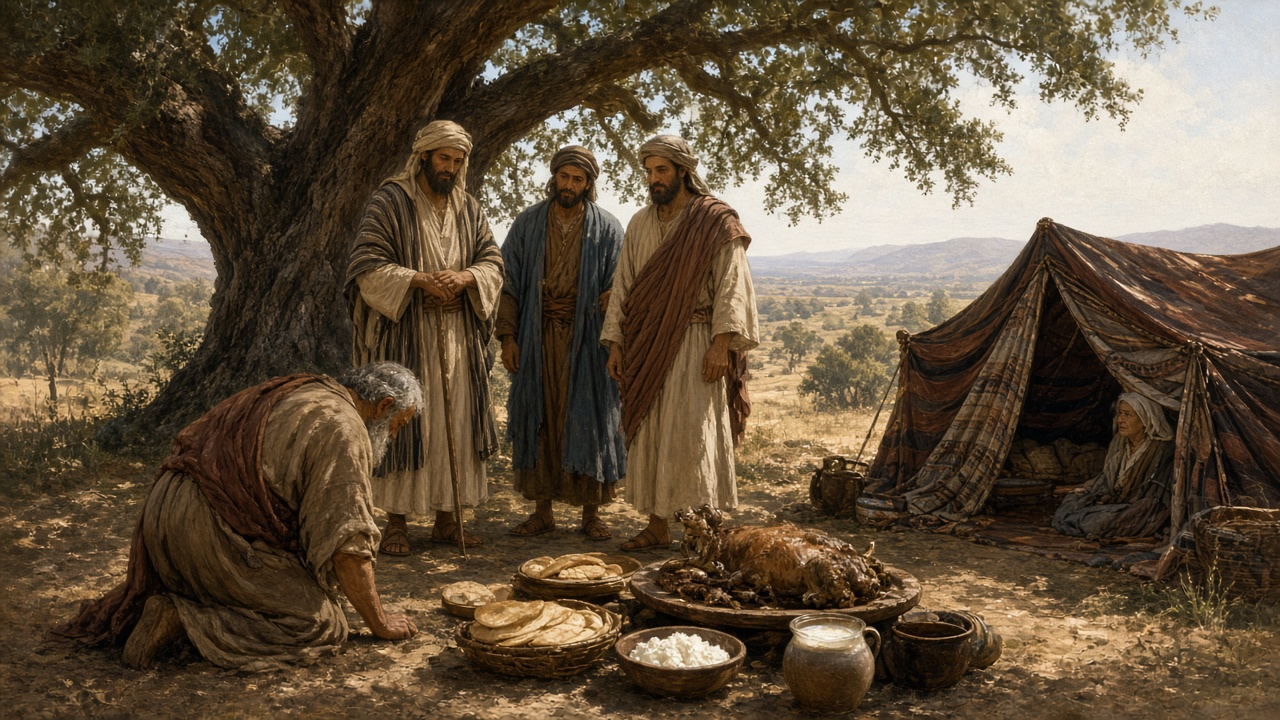
1Lao esa, Abraham leo deka no hau ineꞌ ra sia Mamre, LAMATUALAIN natudꞌu Ao na neu e sia naa. Dudꞌui na taꞌo ia: Faiꞌ naa, mafeoꞌ a seli, de Abraham endoꞌ haꞌi anin mia lalaat mataꞌ. 2Ana botiꞌ mata na ma, nita atahori telu rambariiꞌ sia naa. Boe ma, ana nelaꞌ soru se, de sendeꞌ lululangga na, 3nae, “Ama nggare! Mete ma bisa na, amaꞌ se tuli au lalaat ngga dei. Onaꞌ mae minu akaꞌ a oe hieꞌ o, malole. 4Amaꞌ se hahae sia hau mafoꞌ ia, dei fo au denu ana kara haꞌi oe fo safe ei mara. 5Ma au uu sadꞌia nanaat fee amaꞌ se, fo maꞌadere baliꞌ, fo feꞌe lao mikindoo na. Au umuhoꞌo bisa uhao amaꞌ se.”
Ara rataa rae, “Malole. Makasi. Hai tuli.”
6Abraham nelaꞌ nisiꞌ lalaat, de nafadꞌe Sara nae, “Lailai! Haꞌi mala tarigu maloleꞌ sak esa, fo tao roti.”
7Basa ma nelaꞌ nisiꞌ sapi nara, de paꞌa nala sapi ana mbarunaꞌ esa, ma denu ate na tati, de tunu-nasu e. 8Boe ma ana neu haꞌi susu, keju, ma sisi naa, de nendi fee fuiꞌ ra. Ara raa ma, ana nambariiꞌ sia hau huu na, de mete-seꞌu se.
9Boe ma ara ratane rae, “Abraham! Sao ma Sara, sia bee?
Ana nataa nae, “Sia lalaat rala.”
10Boe ma esa mia teluꞌ se olaꞌ nae, “To mana nemaꞌ ia, Au baliꞌ. Leleꞌ naa, sao ma Sara bꞌonggi ana touꞌ esa ena.”
Ara olaꞌ taꞌo naa ma, Sara rena mia lelesu a seriꞌ. 11Leleꞌ naa, Abraham no Sara lasiꞌ ena, ma Sara o nda afiꞌ hambu fula na sa ena. 12Ana rena ara olaꞌ taꞌo naa ma, ana mali sia rala na, ma duꞌa nae, “Awe! Umulasi helaꞌ a rui ngga onaꞌ ia, ma sao ngga o mana masaloeꞌ ena. Naa taꞌo bee hai feꞌe hii dadꞌi masao feuꞌ, fo sangga anaꞌ fai?”
13Basa de LAMATUALAIN natane Abraham nae, “Taꞌo bee de Sara mali? Ana duꞌa nae saa fo Au olaꞌ ia, nda dadꞌi sa, huu eni lasiꞌ ena, do? 14Au ia, LAMATUALAIN! Nda hambu saa fo Au nda tao alaꞌ sa! Misinedꞌa malolole, e! Mete ma Au baliꞌ too mana nemaꞌ ia, Sara bꞌonggi ana touꞌ esa ena.”
15Sara rena taꞌo naa ma, namatau. De ana nafanii nae, “Au nda mali sa ma!”
Te Lamatualain nataa nae, “Ho mali tebꞌe ma!”
Abraham kokoe Lamatualain fo afiꞌ huku-doki atahori Sodꞌom ra
16Basa ma, fuiꞌ ka teluꞌ ra rae risiꞌ kamboꞌ Sodꞌom, de Abraham no se losa dalaꞌ taladꞌa na. Mia naa, ara bisa rita Sodꞌom. 17Basa ma LAMATUALAIN duꞌa sia rala na nae, “Au ae tao ulutu kambo Sodꞌom, te malole lenaꞌ, Au dui Abraham, 18huu tititi-nonosi nara boe ramaheta, ma dadꞌi leo manaseliꞌ. Ma ana o dadꞌi papala-babꞌanggiꞌ soaꞌ neu basa leo sia raefafoꞌ a. 19Au here ala e, fo nanori ana nara ro atahori feaꞌ ra, fo tungga rakandoo LAMATUALAIN dala Na ma rasodꞌa no ndoo-tetuꞌ. Mete ma ara tao taꞌo naa, Au tao utetu hehelu-fufuli Ngga o Abraham.”
20Boe ma LAMATUALAIN nafadꞌe Abraham nae, “Taꞌo ia! Au rena atahori ra fale rala nara, huu atahori kambo Sodꞌom no Gomora deꞌulaka nara, seli tebꞌe ena. 21Naa de, Au onda, fo ita no mata Ngga, basa saa fo Au renaꞌ a, tebꞌe, do, hokoꞌ. Mete ma hokoꞌ, Au musi bubꞌuluꞌ.”
22LAMATUALAIN feꞌe olaꞌ no Abraham ma, fuiꞌ ka ruaꞌ ra laoꞌ rakandoo risiꞌ Sodꞌom. 23Abraham neu deka-deka no Lamatualain, de kokoe nae, “Taꞌo bee? Amaꞌ nae tao nalutu atahori maloleꞌ ro atahori deꞌulakaꞌ lao esaꞌ, do? 24Mete ma hambu atahori maloleꞌ lima nulu sia kamboꞌ naa, Amaꞌ feꞌe mae tao mulutu basa atahori ra, do? Do, Amaꞌ nda tao mulutu kamboꞌ naa sa, huu sira? 25Amaꞌ afiꞌ tao taꞌo naa! Afiꞌ losa atahori maloleꞌ ra o mate boe, huu Amaꞌ nae nalutu atahori deꞌulakaꞌ ra. Amaꞌ dadꞌi mana maꞌetuꞌ sia lalai no raefafoꞌ ia. Amaꞌ o bubꞌuluꞌ naa nda matetuꞌ sa.”
26LAMATUALAIN nataa nae, “Mete ma Au hambu atahori maloleꞌ lima nulu sia Sodꞌom, Au nda hukun kamboꞌ naa sa, huu sira.”
27Boe ma Abraham olaꞌ seluꞌ nae, “Amaꞌ, oꞌe ambon, au ae olaꞌ mbei fai. Au ia, atahori nggoaꞌ, nda uhine saa-saa saꞌ boe. 28Onaꞌ nda hambu atahori maloleꞌ losa lima nulu sa, te akaꞌ a haa nulu lima, naa taꞌo bee? Mete ma kuran atahori lima, naa Amaꞌ feꞌe mae tao mulutu kamboꞌ naa, do?”
Lamatualain nataa nae, “Mete ma Au hambu atahori maloleꞌ haa nulu lima sia naa, Au nda tao ulutu e sa.”
29Abraham feꞌe kokoe seluꞌ nae, “Mete ma hambu akaꞌ a atahori haa nulu, naa taꞌo bee, Amaꞌ?”
Nataa nae, “Mete ma hambu atahori haa nulu, Au nda hukun se sa.”
30Abraham kokoe nakandooꞌ a nae, “Amaꞌ afiꞌ mumunasa, te mete ma akaꞌ a atahori maloleꞌ telu nulu a, naa taꞌo bee?”
Nataa nae, “Mete ma hambu telu nulu, Au nda hukun se sa.”
31Basa ma Abraham naloe seluꞌ nae, “Amaꞌ afiꞌ mumunasa, te au utane seluꞌ mbei fai. Mete ma akaꞌ a atahori rua nulu, naa taꞌo bee?”
Nataa nae, “Mete ma hambu atahori rua nulu, Au nda tao ulutu kamboꞌ naa sa.”
32Boe ma Abraham tatana oꞌola na nae, “Amaꞌ! Au olaꞌ lao esa fai, te afiꞌ mumunasa au, o! Mete ma akaꞌ a atahori maloleꞌ sanahulu a, naa taꞌo bee?”
Nataa nae, “Mete ma hambu atahori maloleꞌ sanahulu sia naa, Au nda tao ulutu kamboꞌ naa sa.”
33LAMATUALAIN olaꞌ basa ma, Ana lao nakandoo. Boe ma, Abraham baliꞌ.
Did you know?
Visitors at Mamre and a Plea for Sodom
- In Genesis 18, the LORD appeared to Abraham by the Oaks of Mamre in the heat of the day, while Abraham sat at the entrance of his tent. Mamre was an Amorite chief in alliance with Abraham. Abraham ran to meet three men, bowed to the ground, offered them water for their feet and rest under the tree, and then set before them bread, a tender and choice calf, curds, and milk.Sources: the Bible text itself · Mamre
- Sarah, Abraham’s wife, is given the sense “Princess” in Easton's Bible Dictionary (1897), which says the name was given when it was announced that she would be the mother of the promised child. In Genesis 18 the LORD said he would return in about a year and Sarah would have a son, though both were already old and she had passed the age of childbearing. She laughed to herself and, because she was afraid, denied that she had laughed.Sources: Sarah · the Bible text itself
- Sodom, a city in the vale of Siddim, and Gomorrah, one of the five cities of that plain, are named together in Genesis 18 because of the great outcry against their grievous sin. Easton's Bible Dictionary (1897) says the cities of that plain probably stood close together near the northern end of what is now the Dead Sea, and explains Sodom and Gomorrah as “Burning; the walled” and “Submersion.” Two of the men went toward Sodom, while Abraham stayed and asked the LORD to spare the city for the sake of the righteous, lowering the number from fifty to ten.Sources: Sodom · Gomorrah · the Bible text itself
Notes written with AI assistance from open sources (Theographic Bible Metadata, CC BY-SA 4.0; Easton’s Bible Dictionary, public domain) and reviewed before publishing.
Credits and license for this translation
Rote Dela Alkitab
Genesis and the New Testament in the Rote Dela language of Indonesia
Kejadian dan Perjanjian Baru dalam bahasa Rote Dela
copyright © 2016 Unit Bahasa dan Budaya
Language: Rote Dela (Dela-Oenale)
Translation by: Wycliffe Bible Translators
This translation is made available to you under the terms of the
Creative Commons Attribution Share-Alike license 4.0.
You have permission to share and redistribute this Bible translation in any format and to make reasonable revisions and adaptations of this translation, provided that:
You include the above copyright and source information.
If you make any changes to the text, you must indicate that you did so in a way that makes it clear that the original licensor is not necessarily endorsing your changes.
If you redistribute this text, you must distribute your contributions under the same license as the original.
Pictures included with Scriptures and other documents on this site are licensed just for use with those Scriptures and documents.
For other uses, please contact the respective copyright owners.
Note that in addition to the rules above, revising and adapting God's Word involves a great responsibility to be true to God's Word. See Revelation 22:18-19.
2022-03-11
Source: http://ebible.org/row/ · eBible.org