Micah 1
Biblica® Open Nova Bíblia Viva 2007 · Tap a verse to see its cross-references.
About this book
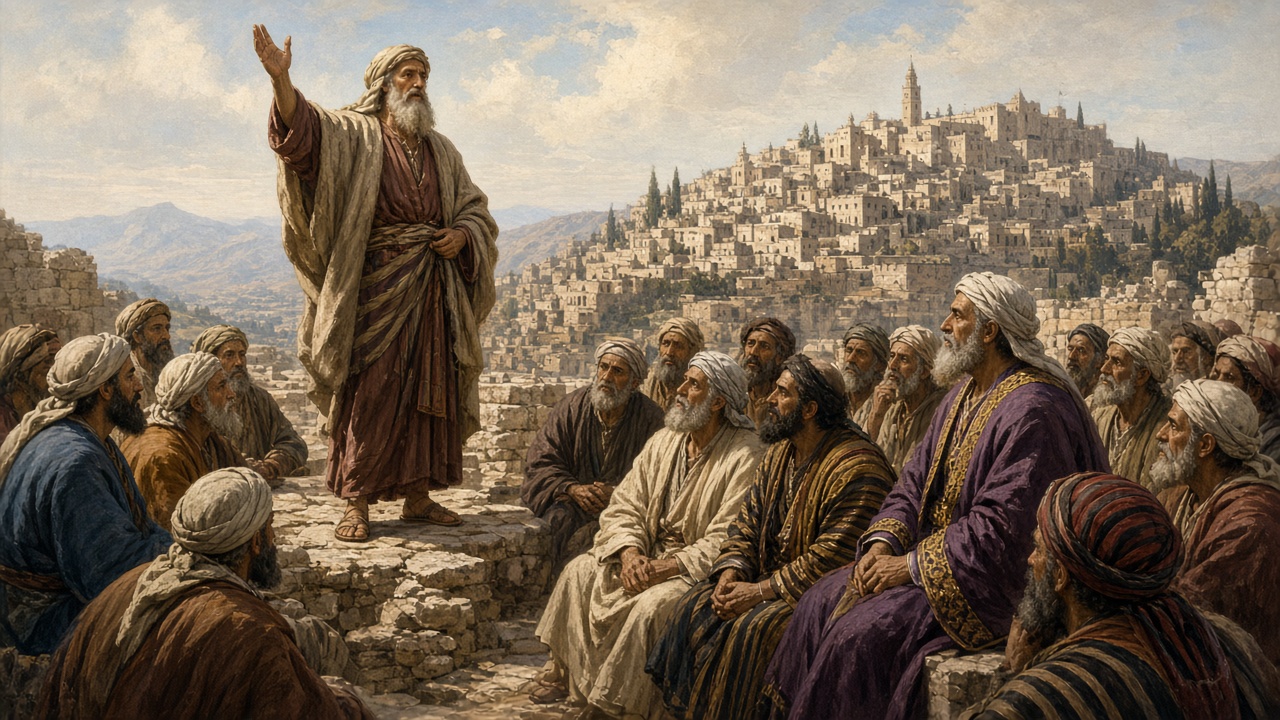
About Micah
- According to the superscription, as Easton's Bible Dictionary (1897) records it, Micah exercised his office in the reigns of Jotham, Ahaz, and Hezekiah. Easton offers two ways of reckoning that ministry: from the beginning of Jotham's reign to the end of Hezekiah's (B.C. 759-698), about fifty-nine years, or from Jotham's death to Hezekiah's accession (B.C. 743-726), only sixteen years.Sources: Easton: Micah, Book of
- Easton's entry on Micah calls him the Morasthite, to distinguish him from Micaiah the son of Imlah. It describes him as a prophet of Judah, a contemporary of Isaiah, and a native of Moresheth of Gath, and notes that very little is known of the circumstances of his life.Sources: Micah
- The kings named in the superscription ruled Judah in succession. Easton says that Jotham, son of Uzziah, reigned in the fear of God and prospered; that Ahaz turned to idolatry and appealed to Tiglath-pileser of Assyria against Rezin of Damascus and Pekah of Israel; and that Hezekiah, Ahaz's son, carried out a reformation to abolish idolatry in Judah, including worship of the bronze serpent.Sources: Jotham · Ahaz · Hezekiah
- Easton's Bible Dictionary (1897) places the book sixth among the so-called minor prophets and describes three sections, each opening with a rebuke, "Hear ye," and closing with a promise: chapters 1-2; chapters 3-5, addressed especially to the princes and heads of the people; and chapters 6-7, in which Jehovah is represented as holding a controversy with his people. The whole concludes with a song of triumph over the great deliverance the Lord will achieve for his people.Sources: Easton: Micah, Book of
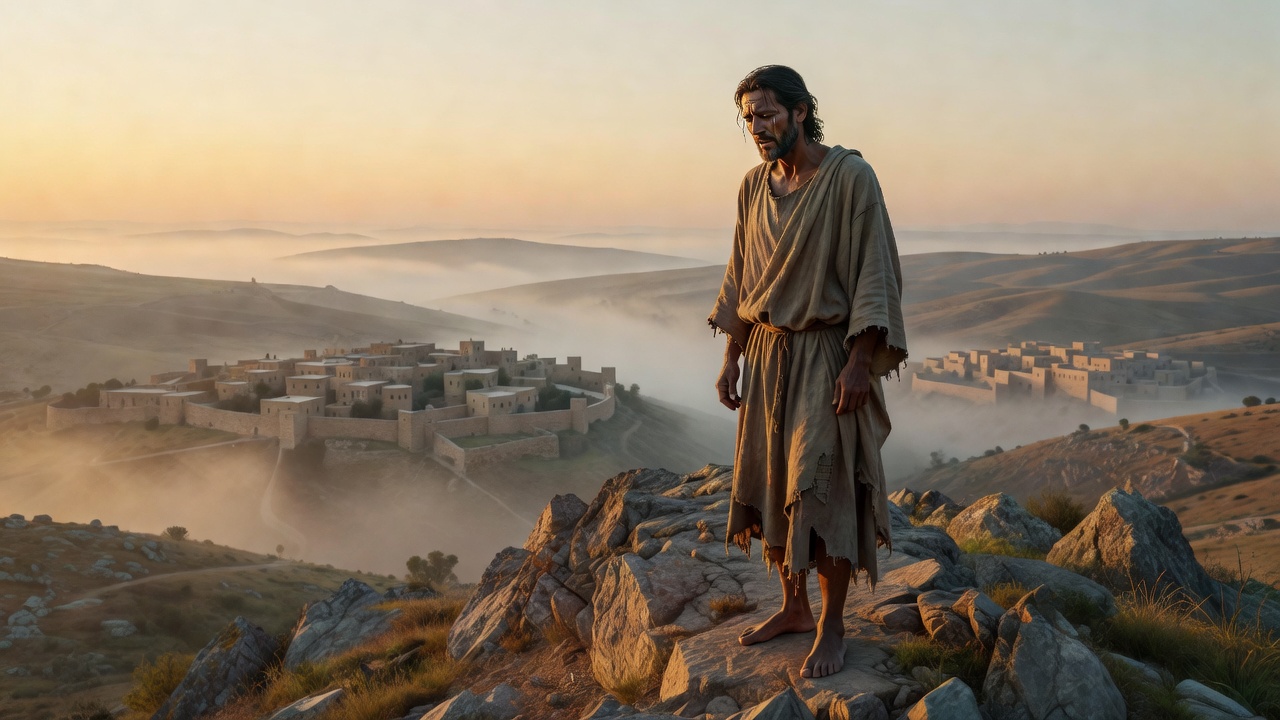
- Easton notes that the book opens with words also spoken by Micaiah the son of Imlah: "Hearken, O people, every one of you." He records that the prediction in Micah 5:2 about the place where Christ should be born is quoted in Matthew 2:6, and lists further links: Micah 5:2 with John 7:42, Micah 7:6 with Matthew 10:21, 35-36, and the closing verse, Micah 7:20, with the song of Zacharias in Luke 1:72-73.Sources: Easton: Micah, Book of
Notes written with AI assistance from open sources (Theographic Bible Metadata, CC BY-SA 4.0; Easton’s Bible Dictionary, public domain) and reviewed before publishing.
O juízo vindouro
1Estas são as mensagens que o Senhor transmitiu a Miqueias, que vivia na cidade de Moresete, durante os reinados de Jotão, Acaz e Ezequias, reis de Judá. As mensagens eram endereçadas tanto a Samaria quanto a Jerusalém, e foram entregues a Miqueias em forma de visões.
2Atenção! Ouçam todos os povos da terra, pois o Senhor, o Soberano, em seu santo templo, fez acusações contra vocês!
3Vejam! Ele se aproxima! Deixa o seu trono no céu e vem à terra, andando sobre os lugares mais altos da terra. 4Eles se dissolvem sob seus pés e escorrem para os vales como cera derretida diante do fogo, como a água da chuva desce pela encosta de um morro.
5E por que tudo isso acontece? Por causa dos pecados de Jacó e da transgressão de Israel. Qual é o pecado de Jacó? Não é Samaria? E quem é o responsável por haver um altar idólatra em Judá? Acaso não é Jerusalém?
6“Por isso, farei toda a cidade de Samaria virar um monte de entulho, um campo aberto, um lugar para plantar videiras! Derrubarei as muralhas e torres, farei seus alicerces aparecerem, e rolarei suas pedras morro abaixo. 7Todas as imagens talhadas serão esmigalhadas. Seus templos de ídolos, bem enfeitados, construídos com as ofertas dos adoradores, serão todos queimados”.
Choro e lamento
8Por isso, eu vou chorar e lamentar, uivando como um chacal e chorando como uma avestruz andando à noite nas areias do deserto. Vou andar nu e descalço em sinal de sofrimento e vergonha! 9Porque a ferida do meu povo é profunda demais para ser curada. O Senhor está às portas de Jerusalém, pronto para puni-la. 10Pobre cidade de Gate! Chorem, homens de Baca. Moradores de Bete-Le-Afra, arrastem-se na poeira por causa de sua angústia e vergonha. 11Lá vão os habitantes de Safir, levados como escravos, nus, descalços e envergonhados. Os moradores de Zaanã não têm coragem de sair dos muros da cidade. Os moradores de Bete-Ezel estão em prantos porque a sua proteção foi tirada! 12O povo de Marote espera em vão por dias melhores, mas aquele que os espera só encontra amargura, pois o Senhor está em posição de combate contra Jerusalém.
13Depressa! Usem seus carros mais rápidos e fujam, habitantes de Laquis! Porque vocês foram a primeira cidade a dar início ao pecado da cidade de Sião e a seguir Israel no pecado de adoração de ídolos. Depois disso, todas as cidades de Israel começaram a seguir o seu exemplo. 14Por isso darão presentes de despedida a Moresete de Gate. A cidade de Aczibe enganou os reis de Israel, prometendo ajuda que não podia dar. 15Vocês, moradores de Maressa, serão um prêmio dado a seus inimigos. Aquele que é a glória de Israel vai chegar a Adulão.
16Rapem a cabeça e chorem por causa de seus filhinhos, que dão tanta alegria a vocês. Fiquem calvos como a águia porque eles serão tirados à força de suas mãos e serão levados para o exílio.
Did you know?
Judgment on Samaria and Jerusalem
- Micah was a prophet from the town of Moresheth in Judah who ministered during the reigns of kings Jotham, Ahaz, and Hezekiah. His opening message pronounces impending divine judgment on both Samaria, the capital of the northern kingdom of Israel, and Jerusalem, the capital of Judah.Sources: Micah · the Bible text itself
- The chapter includes a poetic lament over several settlements in the Judean foothills and low country, such as Lachish, Zaanan, and Beth-le-aphrah (meaning house of dust, where inhabitants are told to roll in dust). Micah warns that the devastation reaching Samaria would advance directly to the gates of Jerusalem.Sources: Beth-le-aphrah · the Bible text itself
Notes written with AI assistance from open sources (Theographic Bible Metadata, CC BY-SA 4.0; Easton’s Bible Dictionary, public domain) and reviewed before publishing.
Places in this chapter
- Jerusalem · 31.777, 35.234 · verses 1, 5, 9, 12
- Samaria · 32.276, 35.195 · verses 1, 5, 6, 9
- Lachish · Today: Tell ed Duweir · 31.565, 34.849 · verse 13
- Zion · Today: Jerusalem · 31.777, 35.234 · verse 13
- Mareshah · Today: Tel Maresha · 31.593, 34.898 · verse 15
Only places identified with high confidence are shown (90% or more according to the scholarly sources compiled by OpenBible). Period map: DARE (Digital Atlas of the Roman Empire), CC BY 4.0; modern map: © OpenStreetMap contributors; places: OpenBible.info (CC BY 4.0).
Credits and license for this translation
Biblica® Open Nova Bíblia Viva 2007
Portuguese: Biblica® Open Nova Bíblia Viva 2007 (Bible)
copyright © 2007, 2010 Biblica, Inc.
Language: Português
Dialect: Brazil
Contributor: Biblica, Inc.
Biblica® Open Nova Bíblia Viva™
Copyright © 2007, 2010 by Biblica, Inc.
“Biblica” é uma marca registrada na Oficina de Patentes e Marcas dos Estados Unidos por Biblica, Inc. Usado com permissão.
“Biblica” is a trademark registered in the United States Patent and Trademark Office by Biblica, Inc. Used with permission.
――――――
Creative Commons license
This work is made available under the Creative Commons Attribution-ShareAlike 4.0 International License (CC BY-SA). To view a copy of this license, visit https://creativecommons.org/licenses/by-sa/4.0 or send a letter to Creative Commons, PO Box 1866, Mountain View, CA 94042, USA.
You have permission to copy and distribute this Work, as long as you do not change it and you keep the title as it is. Changing or translating this Work will create a derivative work. When you publish this derivative work, you must list what changes you have made where people can see them, such as on a website. You must also show where the original Work is from: “The original Work by its copyright holders is available for free at www.biblica.com and open.bible .”
Notice of copyright must appear on the title or copyright page of the work as follows:
Biblica® Open Nova Bíblia Viva™
Copyright © 2007, 2010 by Biblica, Inc.
“Biblica” é uma marca registrada na Oficina de Patentes e Marcas dos Estados Unidos por Biblica, Inc. Usado com permissão.
“Biblica” is a trademark registered in the United States Patent and Trademark Office by Biblica, Inc. Used with permission.
You must also make your derivative work available under the same license (CC BY-SA).
If you would like to notify Biblica, Inc. regarding your translation of this work, please contact us at https://open.bible/#feedback .
This translation is made available to you under the terms of the
Creative Commons Attribution Share-Alike license 4.0.
You have permission to share and redistribute this Bible translation in any format and to make reasonable revisions and adaptations of this translation, provided that:
You include the above copyright and source information.
If you make any changes to the text, you must indicate that you did so in a way that makes it clear that the original licensor is not necessarily endorsing your changes.
If you redistribute this text, you must distribute your contributions under the same license as the original.
Pictures included with Scriptures and other documents on this site are licensed just for use with those Scriptures and documents.
For other uses, please contact the respective copyright owners.
Note that in addition to the rules above, revising and adapting God's Word involves a great responsibility to be true to God's Word. See Revelation 22:18-19.
2025-05-20
Section headings adapted from the Berean Standard Bible (public domain); they are not part of this translation’s text.
Source: http://ebible.org/poronbv/ · eBible.org