Jonah 1
Biblica® Open Nova Bíblia Viva 2007 · Tap a verse to see its cross-references.
About this book
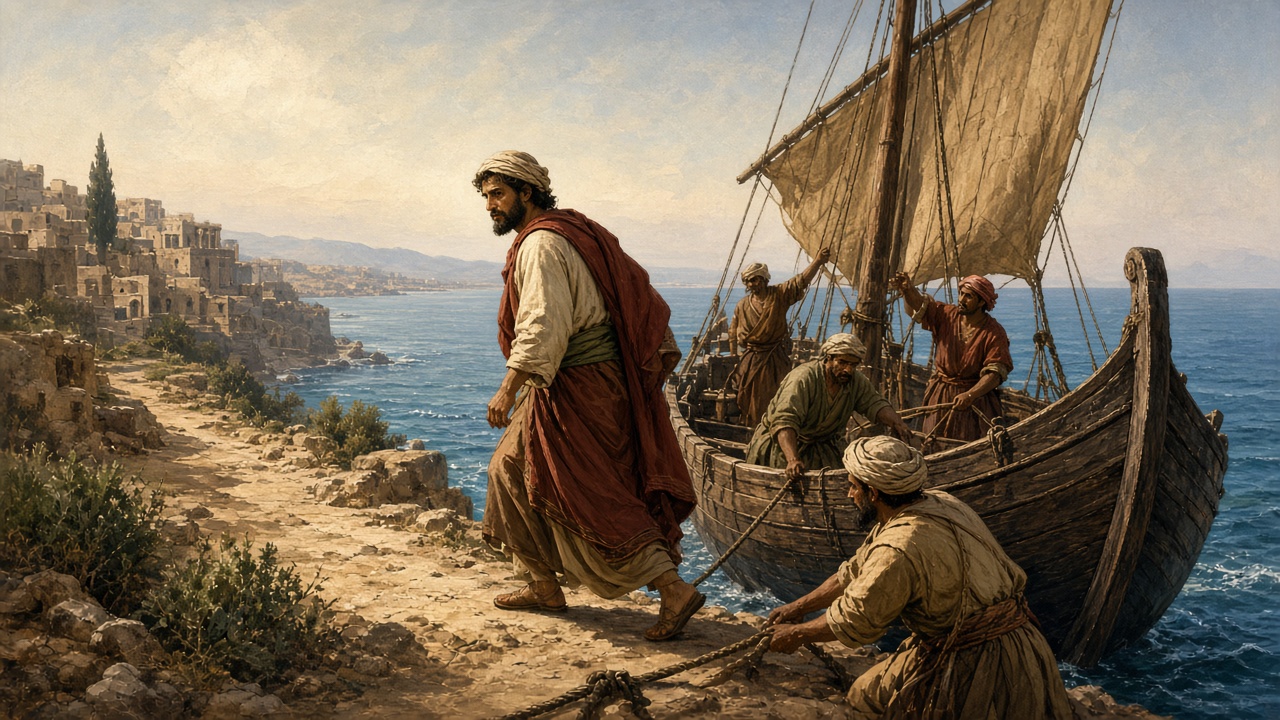
About Jonah
- Jonah, whose name means “a dove,” was the son of Amittai of Gath-hepher and a prophet of Israel. Easton's Bible Dictionary (1897) holds that he wrote the book himself. His ministry is placed very early in the reign of Jeroboam II: he was contemporary with Hosea and Amos, or possibly earlier, and so may have been the oldest of the prophets whose writings survive.Sources: Jonah · Amittai · Easton: Jonah, Book of
- The book professes to tell what actually happened to the prophet. Some critics have read it as a parable or allegory rather than history, because miracle is so prominent and the form is narrative rather than prophecy, or because they deny miracles altogether. Easton's Bible Dictionary (1897) instead treats it as history, attaching great weight to the mention of Jonah in Matthew 12:39-40 and Luke 11:29.Sources: Easton: Jonah, Book of
- Jonah was commissioned to go to Nineveh, described as a great and populous city and the flourishing capital of the Assyrian empire, but he sailed from Joppa, Judea's chief seaport, to flee toward Tarshish. Where Tarshish lay is disputed: some place it in the east, on the Indian coast, some identify it with Carthage, and Easton's dictionary takes it to be a Phoenician port in Spain.Sources: Easton: Jonah, Book of · Nineveh · Joppa · Tarshish
- Easton's outline has four movements: the divine commission, disobedience, and punishment; Jonah's prayer and deliverance; a second commission, the Ninevites' repentance, and God's sparing mercy; and Jonah's anger at that mercy, followed by a rebuke. The same dictionary notes that Nineveh was spared for more than a century after his mission.Sources: Easton: Jonah, Book of
- As a prophet of Israel, Jonah foretold the restoration of the kingdom's ancient borders. A biographical note presents him both as a missionary to Nineveh and as a type of the Son of man. The book of Nahum is taken up almost entirely with denunciations of that city, and Zephaniah also predicts its destruction.Sources: Jonah · Nineveh
Notes written with AI assistance from open sources (Theographic Bible Metadata, CC BY-SA 4.0; Easton’s Bible Dictionary, public domain) and reviewed before publishing.
Jonas foge da presença do Senhor
1O Senhor enviou esta mensagem a Jonas, filho de um homem chamado Amitai:
2“Apronte-se e vá à grande cidade de Nínive e anuncie a seus habitantes esta mensagem do Senhor: ‘Vou destruir esta cidade por causa de sua grande maldade: seus pecados são tão horríveis que chegaram até a minha presença!’ ”
3Jonas, porém, preferiu fugir da presença do Senhor. Foi até o mar, ao porto de Jope, onde encontrou um navio que ia para Társis. Comprou sua passagem e embarcou para se esconder do Senhor.
A grande tempestade
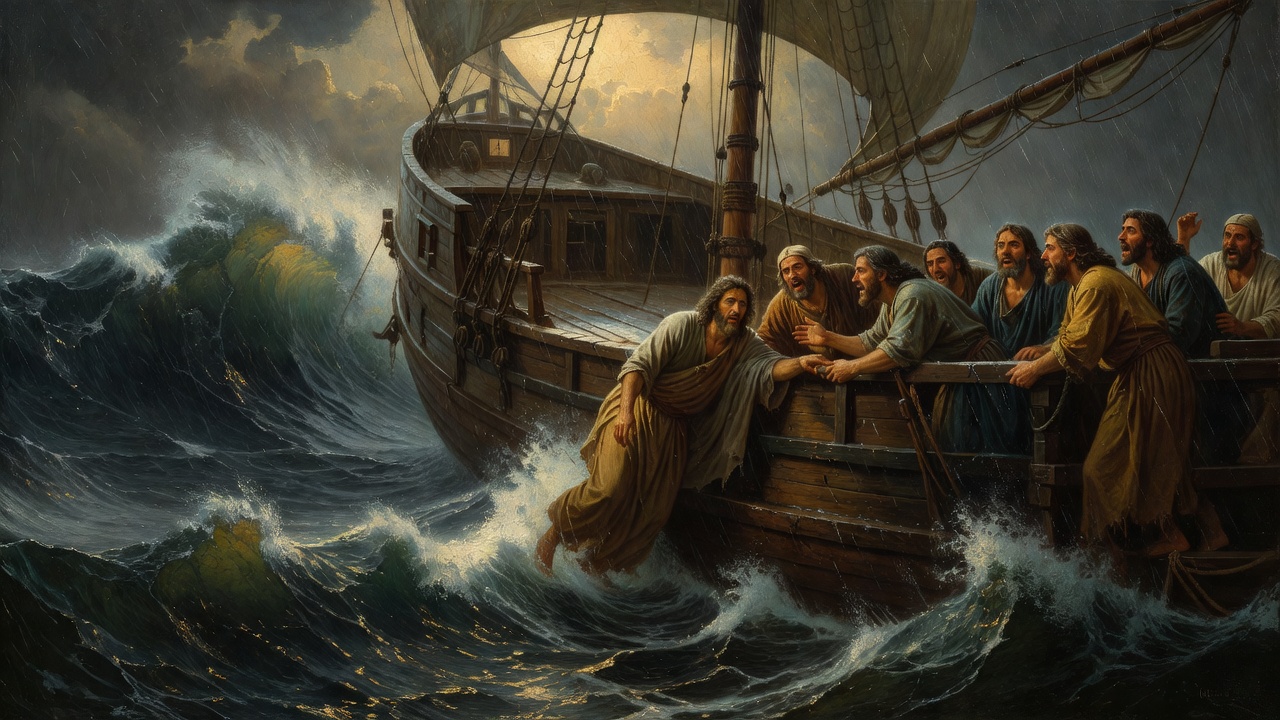
4Mas, durante a viagem, de repente, o Senhor fez soprar um forte vento que agitou o mar e formou uma grande tempestade, tão violenta que o navio estava quase se partindo ao meio. 5Com muito medo, os marinheiros, desesperados, gritavam pedindo ajuda aos próprios deuses. Para o navio ficar mais leve, começaram a jogar a carga ao mar. Enquanto tudo isso acontecia, Jonas, que havia descido ao porão, dormia tranquilamente. 6O capitão do navio desceu para falar com ele. “O que há com você?”, gritou. “Como é que você fica dormindo numa hora dessas? Levante-se e fale com o seu Deus, para ver se ele tem piedade de nós e não nos deixa morrer!”
7Enquanto isso, os marinheiros decidiram tirar a sorte para ver quem havia ofendido os deuses e provocado aquela tremenda tempestade. Lançaram a sorte, e a sorte caiu sobre Jonas!
8“O que foi que você fez”, perguntaram, “para provocar essa tempestade que está quase nos destruindo? Quem é você? Qual é a sua profissão? De onde você vem? Qual é sua terra e a que povo você pertence?”
9Jonas respondeu: “Eu sou hebreu; adoro ao Senhor, o Deus dos céus, que fez a terra e o mar”.
10Então Jonas contou aos marinheiros que estava fugindo do Senhor. Quando os marinheiros ouviram isso, ficaram apavorados e gritaram: “Mas por que você fez uma coisa dessas?”
Jonas é lançado ao mar
11“O que vamos fazer com você para a tempestade parar?”, pois o mar estava ficando cada vez mais agitado.
12“Joguem-me ao mar”, disse Jonas, “e ele ficará calmo de novo. Eu sei que sou o culpado dessa horrível tempestade”.
13Enquanto isso, os marinheiros remavam com todas as suas forças, tentando alcançar a terra, mas não conseguiam. Era impossível lutar contra a tempestade, porque o mar tinha ficado ainda mais violento! 14Então fizeram uma oração ao Senhor, o Deus de Jonas. “Ó Senhor”, pediram, “não nos mate por causa do pecado deste homem; não nos condene pela morte de um inocente, porque essa tempestade caiu sobre ele por razões que o Senhor mesmo sabe”. 15Depois disso, agarraram Jonas e o lançaram ao mar enfurecido, e a tempestade se aquietou! 16Os marinheiros ficaram espantados, sentindo ao mesmo tempo respeito pelo Senhor. Eles ofereceram sacrifícios a ele e lhe fizeram promessas.
17Mas o Senhor tinha levado até aquele lugar um grande peixe para engolir Jonas. E durante três dias e três noites, Jonas ficou dentro do peixe.
Did you know?
Jonah Flees from the Lord
- Jonah, the son of Amittai from Gath-hepher, is also recorded in 2 Kings 14:25 as a prophet active in the northern kingdom of Israel during the reign of Jeroboam II. God instructed him to travel east to Nineveh, the prominent and populous capital of the Assyrian empire, to preach against its wickedness.Sources: Jonah · Amittai · Nineveh · the Bible text itself
- Rather than traveling northeast overland to Nineveh, Jonah journeyed down to the Mediterranean seaport of Joppa to board a ship for Tarshish. Tarshish is traditionally identified as a Phoenician trading port located far to the west in southern Spain, representing the exact opposite direction.Sources: Joppa · Tarshish · the Bible text itself
- The sailors aboard the cargo ship came from polytheistic backgrounds, each calling out to his own deity during the violent tempest. After throwing the ship's cargo overboard to lighten the vessel, they turned to the ancient practice of casting lots to determine who was responsible for the calamity.Sources: the Bible text itself
Notes written with AI assistance from open sources (Theographic Bible Metadata, CC BY-SA 4.0; Easton’s Bible Dictionary, public domain) and reviewed before publishing.
Places in this chapter
Only places identified with high confidence are shown (90% or more according to the scholarly sources compiled by OpenBible). Period map: DARE (Digital Atlas of the Roman Empire), CC BY 4.0; modern map: © OpenStreetMap contributors; places: OpenBible.info (CC BY 4.0).
Credits and license for this translation
Biblica® Open Nova Bíblia Viva 2007
Portuguese: Biblica® Open Nova Bíblia Viva 2007 (Bible)
copyright © 2007, 2010 Biblica, Inc.
Language: Português
Dialect: Brazil
Contributor: Biblica, Inc.
Biblica® Open Nova Bíblia Viva™
Copyright © 2007, 2010 by Biblica, Inc.
“Biblica” é uma marca registrada na Oficina de Patentes e Marcas dos Estados Unidos por Biblica, Inc. Usado com permissão.
“Biblica” is a trademark registered in the United States Patent and Trademark Office by Biblica, Inc. Used with permission.
――――――
Creative Commons license
This work is made available under the Creative Commons Attribution-ShareAlike 4.0 International License (CC BY-SA). To view a copy of this license, visit https://creativecommons.org/licenses/by-sa/4.0 or send a letter to Creative Commons, PO Box 1866, Mountain View, CA 94042, USA.
You have permission to copy and distribute this Work, as long as you do not change it and you keep the title as it is. Changing or translating this Work will create a derivative work. When you publish this derivative work, you must list what changes you have made where people can see them, such as on a website. You must also show where the original Work is from: “The original Work by its copyright holders is available for free at www.biblica.com and open.bible .”
Notice of copyright must appear on the title or copyright page of the work as follows:
Biblica® Open Nova Bíblia Viva™
Copyright © 2007, 2010 by Biblica, Inc.
“Biblica” é uma marca registrada na Oficina de Patentes e Marcas dos Estados Unidos por Biblica, Inc. Usado com permissão.
“Biblica” is a trademark registered in the United States Patent and Trademark Office by Biblica, Inc. Used with permission.
You must also make your derivative work available under the same license (CC BY-SA).
If you would like to notify Biblica, Inc. regarding your translation of this work, please contact us at https://open.bible/#feedback .
This translation is made available to you under the terms of the
Creative Commons Attribution Share-Alike license 4.0.
You have permission to share and redistribute this Bible translation in any format and to make reasonable revisions and adaptations of this translation, provided that:
You include the above copyright and source information.
If you make any changes to the text, you must indicate that you did so in a way that makes it clear that the original licensor is not necessarily endorsing your changes.
If you redistribute this text, you must distribute your contributions under the same license as the original.
Pictures included with Scriptures and other documents on this site are licensed just for use with those Scriptures and documents.
For other uses, please contact the respective copyright owners.
Note that in addition to the rules above, revising and adapting God's Word involves a great responsibility to be true to God's Word. See Revelation 22:18-19.
2025-05-20
Section headings adapted from the Berean Standard Bible (public domain); they are not part of this translation’s text.
Source: http://ebible.org/poronbv/ · eBible.org