Jeremiah 1
Biblica® Open Nova Bíblia Viva 2007 · Tap a verse to see its cross-references.
About this book
About Jeremiah
- Easton's Bible Dictionary (1897) presents Jeremiah, son of Hilkiah, a priest of Anathoth, as one of the greater prophets, called to that office while still young, in the thirteenth year of Josiah (628 B.C.). It says his prophecies cover about thirty years and are not recorded in chronological order, and that no one knows when or how the book took its present form. The same entry supposes that, after an interval in Egypt, Jeremiah added three further sections.Sources: Easton: Jeremiah, Book of · Jeremiah
- Easton's Bible Dictionary (1897) says Jeremiah left his native Anathoth for Jerusalem, where he assisted Josiah's reformation, and that he mourned Josiah's death as a national calamity. It dates Jehoiakim's eleven-year reign to 610–599 B.C.: Pharaoh Necho had deposed Jehoahaz and set Eliakim on the throne under the name Jehoiakim, and at the beginning of that reign the people's enmity against Jeremiah broke out in bitter persecution. After the Chaldeans defeated Egypt at Carchemish, the king of Egypt took no further part in Jewish politics.Sources: Jeremiah · Jehoiakim
- Zedekiah, the third son of Josiah, was the last king of Judah. Nebuchadnezzar placed him on the throne as successor to Jehoiachin and changed his name from Mattaniah to Zedekiah; the kingdom was then tributary to Nebuchadnezzar, and Jeremiah was his counsellor. After Jerusalem was destroyed, Nebuchadnezzar left Gedaliah to govern the country as his tributary at Mizpah, some four miles northwest of the city, where about three months later Ishmael killed Gedaliah and the Jews who were with him.Sources: Zedekiah · Gedaliah · Mizpah
- Easton's Bible Dictionary (1897) describes the book as twenty-three separate sections arranged in five books: an introduction, reproofs of the sins of the Jews, a review of the nations, sections picturing hopes of better times, and a conclusion, with historical appendices. It notes the frequent repetition of the same words, phrases, and images. It also records that the Septuagint differs sharply in arrangement and in other details, and omits about 2,700 words.Sources: Easton: Jeremiah, Book of
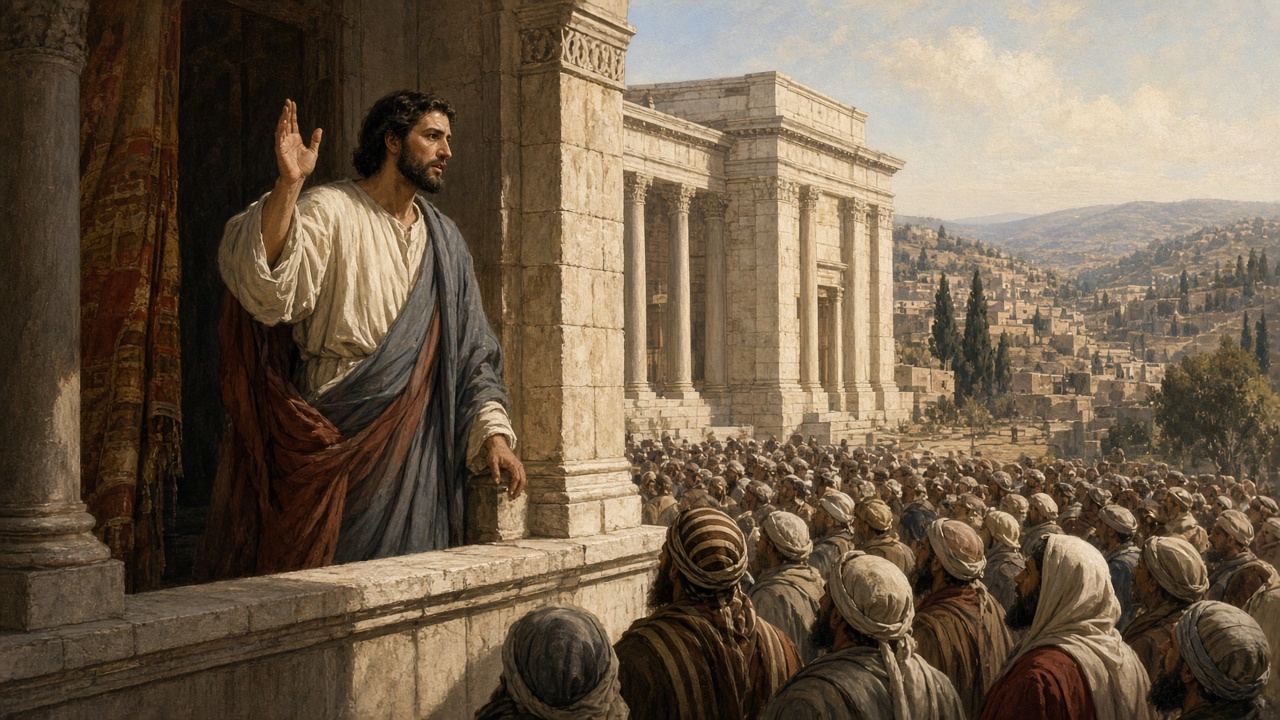
- Baruch, of the tribe of Judah, was Jeremiah's secretary. Jeremiah dictated to him prophecies about the Babylonian invasion and the captivity; in the fourth year of Jehoiakim, Baruch read them to the people from a window in the temple, then to the king's counsellors and to the king himself. After hearing part of the roll, Jehoiakim cut it with a penknife and threw it into the fire of the winter parlour where he was sitting.Sources: Baruch
Notes written with AI assistance from open sources (Theographic Bible Metadata, CC BY-SA 4.0; Easton’s Bible Dictionary, public domain) and reviewed before publishing.
A vocação de Jeremias
1Estas são as palavras de Jeremias, filho de Hilquias. Ele era um dos sacerdotes da cidade de Anatote, na terra de Benjamim. 2Jeremias recebeu a primeira mensagem no décimo terceiro ano do reinado de Josias, filho de Amom, rei de Judá. 3Deus lhe deu outras mensagens durante o reinado de Jeoaquim, filho de Josias, rei de Judá, e em várias outras ocasiões, até o quinto mês do décimo primeiro ano do reinado de Zedequias, filho de Josias, rei de Judá. Foi então que Jerusalém foi destruída, e os moradores da cidade foram levados para o exílio como escravos.
4O Senhor me disse:
5“Eu já o conhecia antes de você ser formado no ventre de sua mãe. Antes do seu nascimento, eu já havia separado e escolhido você para ser o meu profeta às nações”.
6Então eu respondi: “Ah, Soberano Senhor! Eu não sou capaz de falar; não passo de uma criança!”
7“Não diga que você é muito jovem”, respondeu o Senhor, “porque você irá aonde eu o enviar e falará tudo o que eu mandar. 8Você não precisa ter medo deles, pois eu, o Senhor, estarei com você para livrá-lo”.
9Depois disso, o Senhor tocou minha boca com a sua mão e disse: “Veja, eu estou colocando as minhas palavras na sua boca! 10Eu estou lhe dando poder sobre nações e reinos, para arrancar e derrubar, para destruir e arrasar, para construir e plantar”.
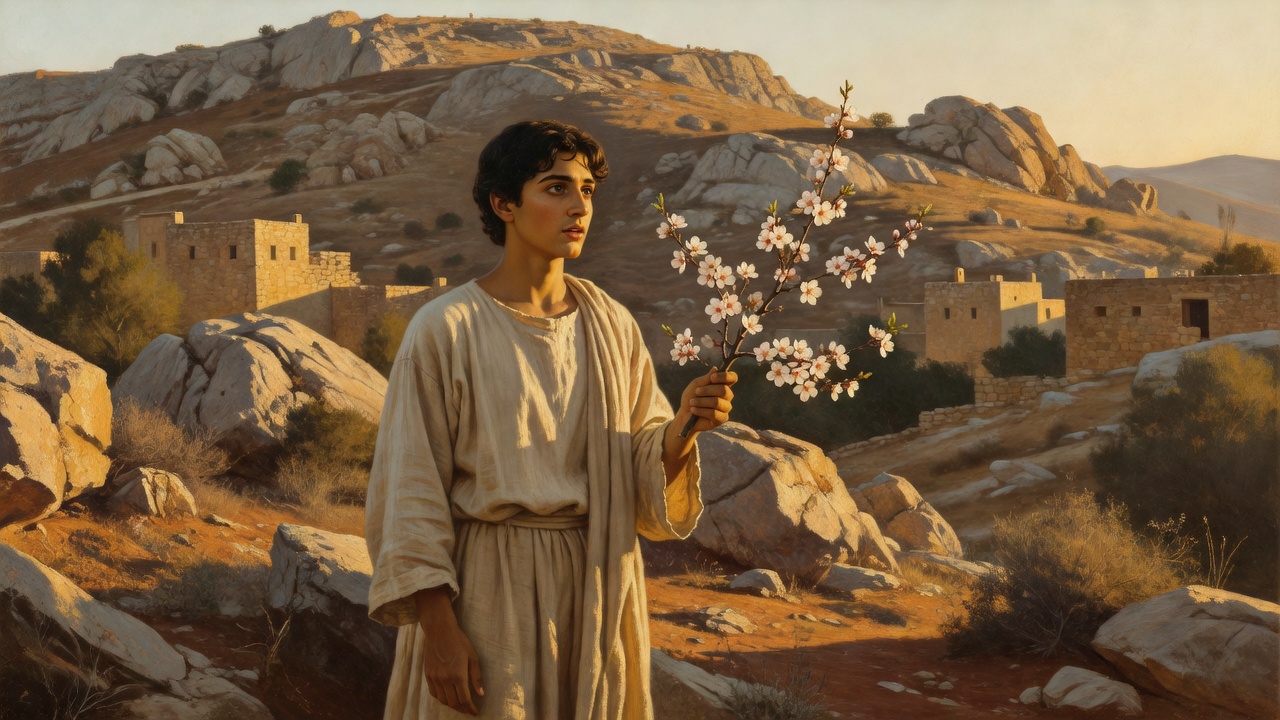
11O Senhor falou comigo e perguntou: “O que você está vendo, Jeremias?”
Eu respondi: “Estou vendo um ramo de amendoeira”.
12O Senhor me disse: “Exatamente. Isso significa que eu estou vigiando para que a minha palavra se cumpra”.
13O Senhor falou comigo novamente, e me perguntou: “E agora, Jeremias, o que você está vendo?”
E eu respondi: “Vejo uma panela fervendo. A boca dessa panela está inclinada do Norte para cá”.
14O Senhor me disse: “Do Norte virá o terrível castigo sobre o povo desta terra. 15Estou convocando todas as nações dos reinos do Norte. Eles virão a Jerusalém, colocarão os seus tronos diante de suas portas e ao longo dos muros da cidade. Eles farão isso em todas as cidades de Judá. 16Assim eu vou dar ao meu povo o castigo que havia prometido por todas as suas maldades e por terem me abandonado, queimando incenso a outros deuses, adorando ídolos que eles mesmos fizeram!
17“Vamos, Jeremias! Levante-se, vista-se e saia para anunciar ao povo tudo que eu ordenar. Não tenha medo deles, senão eu mesmo farei você se apavorar na presença deles. 18Eu hoje tornei você fortalecido; você não será destruído pelos ataques deles. Eu faço de você uma cidade fortificada, uma coluna de ferro e um muro de bronze. 19Eles lutarão contra você, mas não conseguirão vencê-lo, pois eu estou com você e o livrarei”, diz o Senhor.
Did you know?
The Call and Commission of Jeremiah
- Jeremiah was the son of Hilkiah, belonging to a family of priests living in Anathoth, a priestly town located in the territory of the tribe of Benjamin near Jerusalem.Sources: Jeremiah · Anathoth · the Bible text itself
- Jeremiah received his prophetic calling in the thirteenth year of the reign of King Josiah of Judah, and his ministry spanned several decades through the reigns of Jehoiakim and Zedekiah until the exile of Jerusalem.Sources: Jeremiah · Zedekiah · the Bible text itself
- His commissioning included two symbolic visions: an almond branch, signifying that God is actively watching over his word to accomplish it, and a boiling pot tilting from the north, portraying approaching foreign invaders against Judah.Sources: the Bible text itself
Notes written with AI assistance from open sources (Theographic Bible Metadata, CC BY-SA 4.0; Easton’s Bible Dictionary, public domain) and reviewed before publishing.
Places in this chapter
Only places identified with high confidence are shown (90% or more according to the scholarly sources compiled by OpenBible). Period map: DARE (Digital Atlas of the Roman Empire), CC BY 4.0; modern map: © OpenStreetMap contributors; places: OpenBible.info (CC BY 4.0).
Credits and license for this translation
Biblica® Open Nova Bíblia Viva 2007
Portuguese: Biblica® Open Nova Bíblia Viva 2007 (Bible)
copyright © 2007, 2010 Biblica, Inc.
Language: Português
Dialect: Brazil
Contributor: Biblica, Inc.
Biblica® Open Nova Bíblia Viva™
Copyright © 2007, 2010 by Biblica, Inc.
“Biblica” é uma marca registrada na Oficina de Patentes e Marcas dos Estados Unidos por Biblica, Inc. Usado com permissão.
“Biblica” is a trademark registered in the United States Patent and Trademark Office by Biblica, Inc. Used with permission.
――――――
Creative Commons license
This work is made available under the Creative Commons Attribution-ShareAlike 4.0 International License (CC BY-SA). To view a copy of this license, visit https://creativecommons.org/licenses/by-sa/4.0 or send a letter to Creative Commons, PO Box 1866, Mountain View, CA 94042, USA.
You have permission to copy and distribute this Work, as long as you do not change it and you keep the title as it is. Changing or translating this Work will create a derivative work. When you publish this derivative work, you must list what changes you have made where people can see them, such as on a website. You must also show where the original Work is from: “The original Work by its copyright holders is available for free at www.biblica.com and open.bible .”
Notice of copyright must appear on the title or copyright page of the work as follows:
Biblica® Open Nova Bíblia Viva™
Copyright © 2007, 2010 by Biblica, Inc.
“Biblica” é uma marca registrada na Oficina de Patentes e Marcas dos Estados Unidos por Biblica, Inc. Usado com permissão.
“Biblica” is a trademark registered in the United States Patent and Trademark Office by Biblica, Inc. Used with permission.
You must also make your derivative work available under the same license (CC BY-SA).
If you would like to notify Biblica, Inc. regarding your translation of this work, please contact us at https://open.bible/#feedback .
This translation is made available to you under the terms of the
Creative Commons Attribution Share-Alike license 4.0.
You have permission to share and redistribute this Bible translation in any format and to make reasonable revisions and adaptations of this translation, provided that:
You include the above copyright and source information.
If you make any changes to the text, you must indicate that you did so in a way that makes it clear that the original licensor is not necessarily endorsing your changes.
If you redistribute this text, you must distribute your contributions under the same license as the original.
Pictures included with Scriptures and other documents on this site are licensed just for use with those Scriptures and documents.
For other uses, please contact the respective copyright owners.
Note that in addition to the rules above, revising and adapting God's Word involves a great responsibility to be true to God's Word. See Revelation 22:18-19.
2025-05-20
Section headings adapted from the Berean Standard Bible (public domain); they are not part of this translation’s text.
Source: http://ebible.org/poronbv/ · eBible.org