Esther 1
Biblica® Open Nova Bíblia Viva 2007 · Tap a verse to see its cross-references.
About this book
About Esther
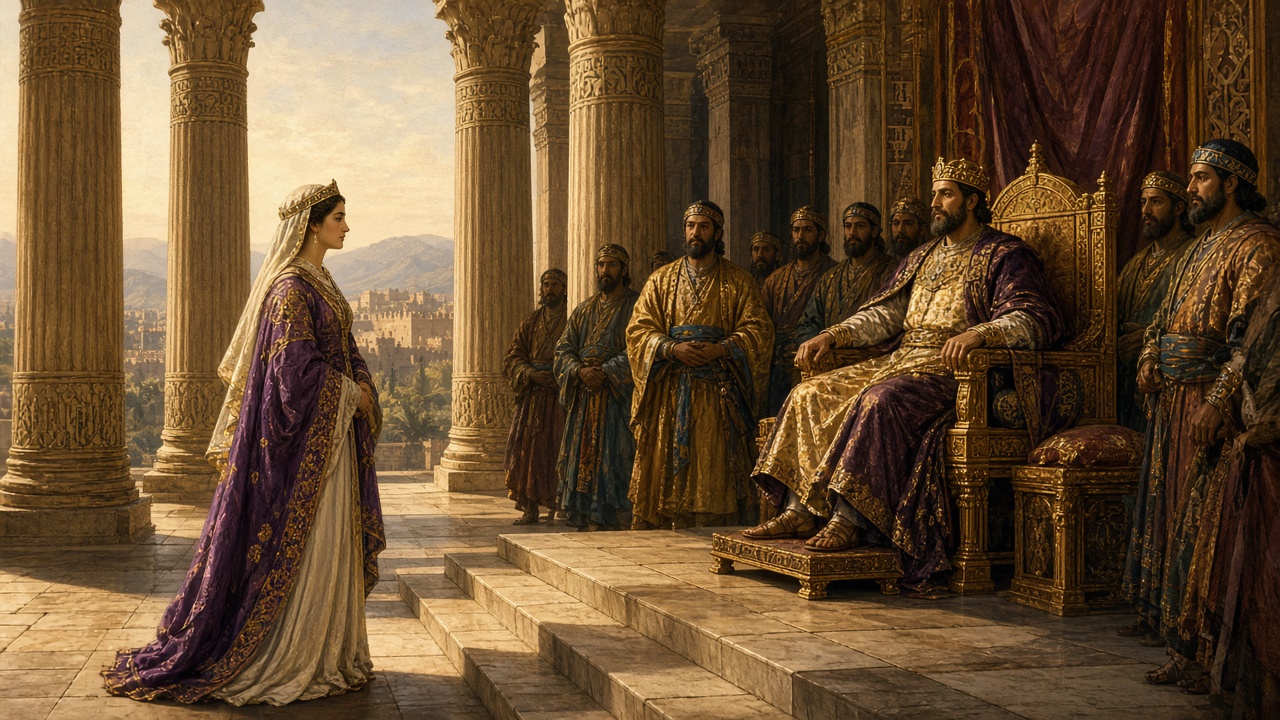
- Easton's Bible Dictionary (1897) places the deliverance recorded in Esther about fifty-two years after the Return, in the year of the battles of Plataea and Mycale (B.C. 479). It identifies Ahasuerus, in all probability, with Xerxes, son of Darius Hystaspes, who succeeded his father in B.C. 485 and reigned twenty-one years (B.C. 486–465). In the Septuagint the name Artaxerxes occurs for Ahasuerus.Sources: Easton: Esther · Ahasuerus
- The story is set in the Persian empire of Ahasuerus, who ruled Persia, Media, and Babylonia from India to Ethiopia. Most of the events take place at Susa, called Shushan in the palace, once the capital of Elam and now the ruins of Shush, east of the Tigris. Esther's family had not used the permission Cyrus gave the exiles to return to Jerusalem; she lived there with her cousin Mordecai, who held an office in the king's household.Sources: Ahasuerus · Susa · Easton: Esther
- After Ahasuerus divorced Vashti because she refused to appear in the banqueting hall of the palace, he chose Esther as his queen. Haman the Agagite, his vizier, was then given power to kill the Jews throughout the empire; Esther's intervention averted that catastrophe, and Haman was hanged on the gallows he had prepared for Mordecai. The Jews established the annual feast of Purim in memory of their deliverance.Sources: Easton: Esther · Vashti · Haman
- Esther was a Benjamite Jewess, the daughter of Abihail, whose Hebrew name Hadassah means myrtle; the name Esther is a Syro-Arabian modification of the Persian word satarah, which means a star. Haman, the son of Hammedatha, is called an Agagite, which the sources take to suggest descent from the royal family of the Amalekites, described as the bitterest enemies of the Jews.Sources: Easton: Esther · Haman · Hammedatha
Notes written with AI assistance from open sources (Theographic Bible Metadata, CC BY-SA 4.0; Easton’s Bible Dictionary, public domain) and reviewed before publishing.
O grande banquete de Assuero
1Foi no terceiro ano do reinado do rei Xerxes, imperador de um reino muito grande, formado por cento e vinte e sete províncias, que se estendia da Índia até a Etiópia. 2Naquela época, o rei Xerxes reinava em seu trono na cidade de Susã. 3No terceiro ano do seu reinado, ele promoveu um grande banquete a todos os governadores, auxiliares e oficiais do exército, e eles vieram de todas as partes da Pérsia e da Média.
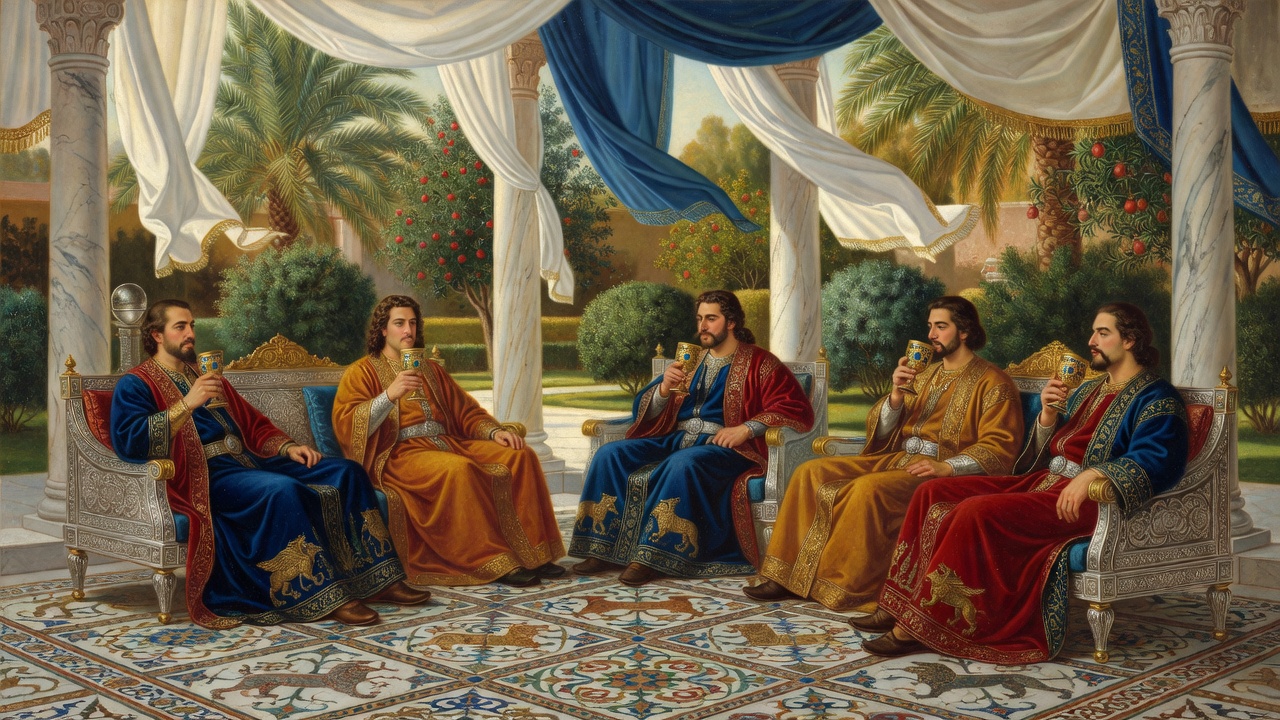
4A comemoração durou seis meses, e ele mostrou a imensa riqueza de seu reino e a glória da sua majestade. 5Quando terminou a comemoração, o rei deu um banquete especial para todos, desde o mais rico ao mais pobre. Foram sete dias de festas realizadas no jardim interno do palácio. 6Os enfeites do jardim eram verdes, brancos e azuis, amarrados com fitas de um pano vermelho muito caro conhecido como púrpura, e essas fitas estavam ligadas por argolas de prata que ficavam presas em colunas de mármore. Havia bancos feitos de ouro e de prata colocados nos pisos de mármore nas cores preta, vermelha, branca e amarela, e outras pedras preciosas. 7Pela generosidade do rei, as bebidas eram servidas em copos de ouro de diversos modelos, e também havia muito vinho fabricado especialmente para o rei. 8Todos tinham a liberdade de beber o quanto quisessem, pois o rei tinha dado ordens aos oficiais para deixarem que cada pessoa se servisse à vontade.
A recusa da rainha Vasti
9Na mesma ocasião, a rainha Vasti deu uma festa para as mulheres que estavam no palácio do rei Xerxes.
10No sétimo dia, quando o rei Xerxes já estava alegre por causa do vinho, chamou os sete ajudantes particulares que o serviam. Os nomes desses ajudantes eram: Meumã, Bizta, Harbona, Bigtá, Abagta, Zetar e Carcas. 11Ele deu ordens a esses ajudantes para trazerem a rainha Vasti, e ela devia usar a coroa real. Ele queria mostrar a todo o povo e aos seus súditos a beleza dela, pois a rainha era de fato uma mulher muito bonita. 12Mas quando os ajudantes falaram com a rainha sobre a ordem do rei, ela se recusou a ir. O rei ficou furioso e indignado.
A rainha Vasti é deposta
13Como era costume, o rei primeiro consultou os homens mais inteligentes, porque não fazia nada sem o conselho deles. Esses homens tinham muita sabedoria. Sabiam bem quando as coisas deviam ser feitas e conheciam as leis e a justiça da Pérsia. 14O rei tinha confiança no que eles diziam. Seus nomes eram Carsena, Setar, Adamata, Társis, Meres, Marsena e Memucã; eles eram sete nobres da Pérsia e da Média. Eram amigos pessoais do rei e tinham acesso direto ao rei. Eles eram os mais importantes do reino.
15O rei lhes perguntou: “De acordo com a lei, o que deve ser feito à rainha Vasti? Qual o castigo que a lei determina para uma rainha que não quer obedecer às ordens do rei, transmitidas por seus ajudantes?”
16Então Memucã respondeu na presença do rei e dos outros: “A rainha Vasti não ofendeu somente o rei, mas também todos os oficiais e cidadãos de todas as províncias do reino. 17Pois agora todas as mulheres vão começar a desrespeitar os seus maridos quando elas souberem o que a rainha Vasti fez, e dirão: ‘O rei Xerxes ordenou que a rainha Vasti fosse à sua presença, mas ela não foi’. 18Hoje mesmo, antes de terminar este dia, as nossas próprias mulheres vão ficar sabendo o que a rainha fez e vão começar a falar do mesmo jeito a nós, os maridos; isso provocará desrespeito e discussão.
19“Se o rei estiver de acordo, que se passe um decreto da parte do rei, uma lei dos medos e dos persas que não pode ser mudada. Essa lei deve dizer que a rainha Vasti nunca mais poderá se apresentar diante do rei Xerxes; além disso, deverá ser escolhida outra rainha que seja melhor do que ela. 20Quando este decreto real for anunciado em todo o seu grande reino, todos os maridos, qualquer que seja a sua posição, vão ser respeitados pelas suas mulheres!”
21O rei e os ajudantes aceitaram de bom grado o conselho, e por isso ele colocou em prática a proposta de Memucã. 22Ele enviou cartas para todas as províncias do reino. As cartas eram enviadas a cada província e a cada povo em sua própria língua, e determinavam que cada homem devia dirigir a sua própria casa e a autoridade dele devia ser respeitada.
Did you know?
The King's Banquet and Vashti's Defiance
- King Ahasuerus is widely identified with Xerxes I (reigned 486–465 BC), who ruled an empire stretching across 127 provinces from the Indus region to Cush (Ethiopia). Most of the events recorded in the Book of Esther take place in the royal citadel of Susa.Sources: Ahasuerus · Susa · India · the Bible text itself
- In his third year, the king held a 180-day display of his kingdom's splendor, followed by a seven-day feast in the palace garden court in Susa. The lavish courtyard was decorated with fine linen hangings and gold and silver couches arranged on an elaborate mosaic floor of costly stones.Sources: the Bible text itself · Susa
- When Queen Vashti refused to appear before the king and his guests, the counselor Memucan advised issuing an unalterable decree under the laws of Persia and Media to depose her. Official letters announcing the decision were sent to all imperial provinces, each written in its own script and language.Sources: Memucan · Vashti · the Bible text itself
Notes written with AI assistance from open sources (Theographic Bible Metadata, CC BY-SA 4.0; Easton’s Bible Dictionary, public domain) and reviewed before publishing.
Places in this chapter
- Ethiopia · 16.935, 33.751 · verse 1
- India · 23.994, 67.431 · verse 1
- Susa · Today: Shush · 32.189, 48.258 · verses 2, 5
- Media · 34.806, 48.516 · verses 3, 14, 18, 19
- Persia · 34.806, 48.516 · verses 3, 14, 18, 19
Only places identified with high confidence are shown (90% or more according to the scholarly sources compiled by OpenBible). Period map: DARE (Digital Atlas of the Roman Empire), CC BY 4.0; modern map: © OpenStreetMap contributors; places: OpenBible.info (CC BY 4.0).
Credits and license for this translation
Biblica® Open Nova Bíblia Viva 2007
Portuguese: Biblica® Open Nova Bíblia Viva 2007 (Bible)
copyright © 2007, 2010 Biblica, Inc.
Language: Português
Dialect: Brazil
Contributor: Biblica, Inc.
Biblica® Open Nova Bíblia Viva™
Copyright © 2007, 2010 by Biblica, Inc.
“Biblica” é uma marca registrada na Oficina de Patentes e Marcas dos Estados Unidos por Biblica, Inc. Usado com permissão.
“Biblica” is a trademark registered in the United States Patent and Trademark Office by Biblica, Inc. Used with permission.
――――――
Creative Commons license
This work is made available under the Creative Commons Attribution-ShareAlike 4.0 International License (CC BY-SA). To view a copy of this license, visit https://creativecommons.org/licenses/by-sa/4.0 or send a letter to Creative Commons, PO Box 1866, Mountain View, CA 94042, USA.
You have permission to copy and distribute this Work, as long as you do not change it and you keep the title as it is. Changing or translating this Work will create a derivative work. When you publish this derivative work, you must list what changes you have made where people can see them, such as on a website. You must also show where the original Work is from: “The original Work by its copyright holders is available for free at www.biblica.com and open.bible .”
Notice of copyright must appear on the title or copyright page of the work as follows:
Biblica® Open Nova Bíblia Viva™
Copyright © 2007, 2010 by Biblica, Inc.
“Biblica” é uma marca registrada na Oficina de Patentes e Marcas dos Estados Unidos por Biblica, Inc. Usado com permissão.
“Biblica” is a trademark registered in the United States Patent and Trademark Office by Biblica, Inc. Used with permission.
You must also make your derivative work available under the same license (CC BY-SA).
If you would like to notify Biblica, Inc. regarding your translation of this work, please contact us at https://open.bible/#feedback .
This translation is made available to you under the terms of the
Creative Commons Attribution Share-Alike license 4.0.
You have permission to share and redistribute this Bible translation in any format and to make reasonable revisions and adaptations of this translation, provided that:
You include the above copyright and source information.
If you make any changes to the text, you must indicate that you did so in a way that makes it clear that the original licensor is not necessarily endorsing your changes.
If you redistribute this text, you must distribute your contributions under the same license as the original.
Pictures included with Scriptures and other documents on this site are licensed just for use with those Scriptures and documents.
For other uses, please contact the respective copyright owners.
Note that in addition to the rules above, revising and adapting God's Word involves a great responsibility to be true to God's Word. See Revelation 22:18-19.
2025-05-20
Section headings adapted from the Berean Standard Bible (public domain); they are not part of this translation’s text.
Source: http://ebible.org/poronbv/ · eBible.org