Daniel 1
Biblica® Open Nova Bíblia Viva 2007 · Tap a verse to see its cross-references.
About this book
About Daniel
- Jews place the book of Daniel in the Hagiographa, the division called Khethubim in Hebrew. The book itself presents Daniel as its writer. Easton's Bible Dictionary (1897) notes that the book's genuineness has been much disputed.Sources: Easton: Daniel, Book of
- The historical chapters treat the period of the captivity. Easton calls Daniel the historian of that time, whose narrative fills out the Chronicles sketch: Nebuchadnezzar carried the survivors to Babylon, where they served him and his sons until the reign of the kingdom of Persia. A notice of Cyrus dates the fall of Babylon to his army in 538 B.C., on the night of Belshazzar's feast; Belshazzar is called the last king of Babylon, and the city stood on the Euphrates.Sources: Easton: Daniel, Book of · Cyrus · Belshazzar · Babylon
- The book consists of two distinct parts. The first six chapters are chiefly historical, and the remaining six are chiefly prophetic, consisting of three visions and one longer prophetic communication.Sources: Easton: Daniel, Book of
- One notable feature is its language. Certain portions, Daniel 2:4 and chapter 7, are written in Chaldee, while the Hebrew portions have a close affinity with the later books of the Old Testament, especially Ezra. The writer passes from one language to the other as the subject requires.Sources: Easton: Daniel, Book of
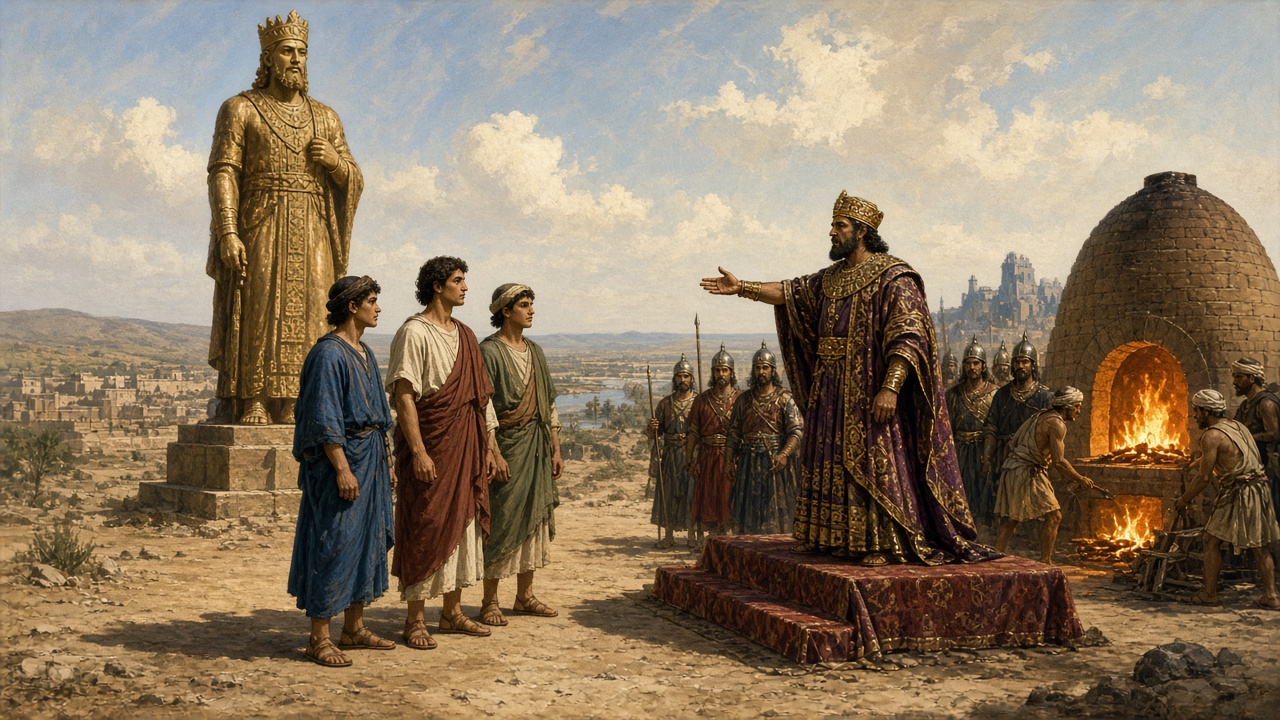
- Nebuchadnezzar gave Daniel a Chaldean name meaning "Beltis protect the king!" Hananiah was given the Chaldean name Shadrach, "Aku's command," and Azariah, of the royal family of Judah, was given the name Abed-nego. Meshach, one of the three Hebrew youths trained with Daniel in Babylon, was later promoted to the rank of the Magi.Sources: Daniel · Shadrach · Azariah · Meshach
Notes written with AI assistance from open sources (Theographic Bible Metadata, CC BY-SA 4.0; Easton’s Bible Dictionary, public domain) and reviewed before publishing.
Daniel Levado para a Babilônia
1No terceiro ano do reinado de Jeoaquim em Judá, Nabucodonosor, rei da Babilônia, atacou Jerusalém com o seu grande exército e cercou a cidade. 2O Senhor deu a Nabucodonosor uma grande vitória sobre Jeoaquim, rei de Judá e, quando ele voltou para a Babilônia, levou alguns dos vasos sagrados que havia no templo de Deus e os colocou na casa do seu deus, na terra de Sinear.
3Lá, ele mandou Aspenaz, chefe dos oficiais do palácio real, escolher alguns rapazes entre os judeus que haviam sido presos em Jerusalém — rapazes da família real e das famílias ricas e importantes de Judá. 4Eles deveriam aprender a língua, os costumes e a ciência dos caldeus. “Escolha rapazes fortes, sem defeitos físicos, com boa saúde e de boa aparência”, disse o rei; “eles devem ter boa instrução, boa cultura geral e ser capacitados para viverem no palácio real”. 5O próprio rei escolheu a comida que devia ser dada aos jovens — tudo do bom e do melhor, da própria despensa do rei, vinhos e carnes. Eles deveriam se alimentar dessa comida por três anos. Quando terminasse o treinamento, passariam a servir o rei.
6Entre os escolhidos estavam Daniel, Hananias, Misael e Azarias, todos eles da tribo de Judá. 7Mas Aspenaz, o chefe do pessoal do palácio, deu aos quatro rapazes outros nomes: o nome de Daniel passou a ser Beltessazar; o de Hananias, Sadraque; o de Misael, Mesaque; o de Azarias, Abede-Nego.
A Fidelidade de Daniel
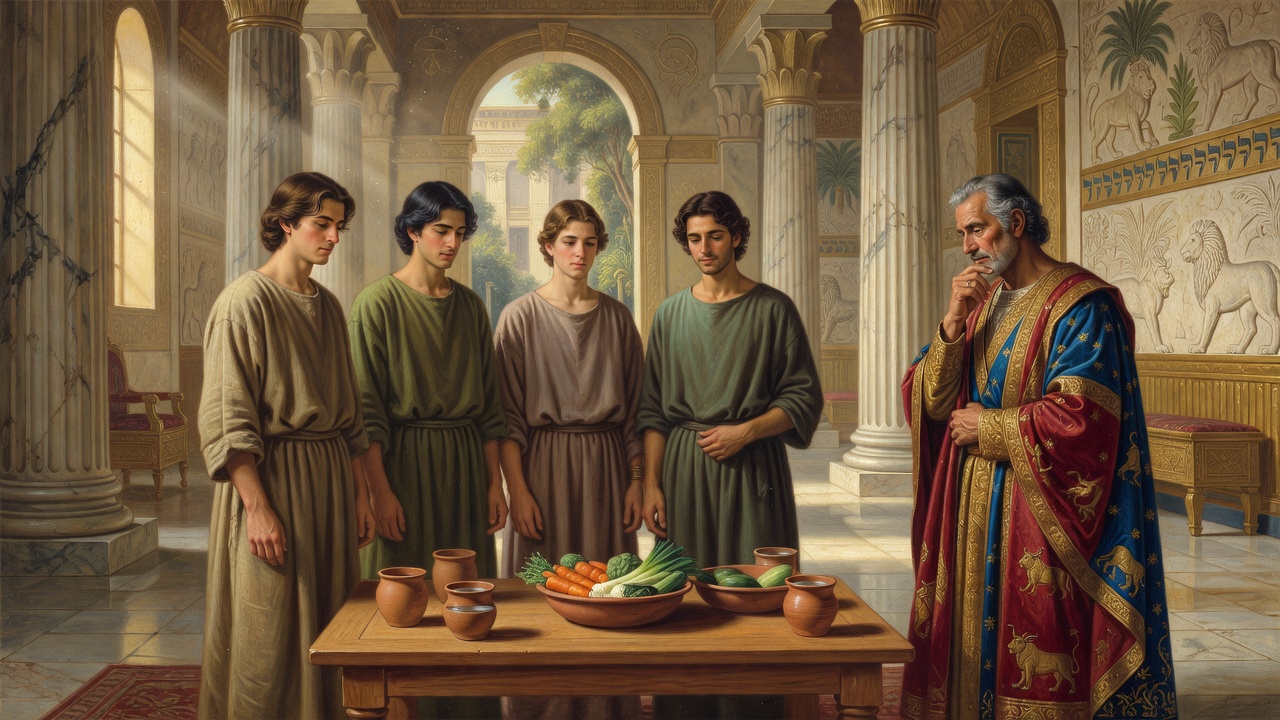
8Daniel decidiu firmemente que nunca iria comer a comida ou beber os vinhos que o rei tinha dado a eles, porque eram coisas proibidas para os judeus. Ele pediu ao chefe dos oficiais permissão para comer outros alimentos. 9Sem Daniel saber, Deus tinha colocado no coração do supervisor uma simpatia e bondade por ele. 10Apesar disso, Aspenaz ficou alarmado com a sugestão e disse a Daniel:
“Eu tenho medo do rei! Ele já determinou o que vocês devem comer. Se o rei os vir magros e fracos em comparação com os outros rapazes da sua idade, vai mandar cortar a minha cabeça porque não obedeci às ordens que ele me deu!”
11Daniel procurou o mordomo que o chefe dos oficiais tinha indicado para cuidar dele e de Hananias, de Misael e Azarias, e disse: 12“Peço que o senhor faça uma experiência com os seus servos durante dez dias: Não nos dê nada além de legumes para comer e água para beber. 13Quando terminarem os dez dias, compare a nossa aparência com a dos outros rapazes que comem a comida fina dada pelo rei, e decida se deveremos continuar com a nossa dieta de legumes e água ou não”. 14O mordomo acabou concordando com a sugestão deles por dez dias.
15Dez dias depois, Daniel e seus três amigos estavam com melhor aparência, mais fortes e saudáveis que os rapazes que haviam comido das comidas finas dadas pelo rei! 16Depois disso, o mordomo só lhes deu legumes e água, deixando de lado a comida especial e o vinho dado pelo rei.
A Sabedoria de Daniel
17Deus deu aos quatro rapazes sabedoria e inteligência para aprenderem toda a cultura e a ciência de sua época. Além disso, Deus deu a Daniel uma capacidade especial para interpretar os significados dos sonhos e visões.
18Quando os três anos de treinamento terminaram, o chefe dos empregados levou todos os rapazes diante do rei Nabucodonosor, conforme as ordens que tinha recebido. 19O rei conversou longamente com cada um deles, mas nenhum dos rapazes o impressionou tanto quanto Daniel, Hananias, Misael e Azarias. Por isso, eles passaram a servir o rei. 20Em todos os assuntos que exigiam conhecimento e capacidade de julgar, o rei descobriu que os conselhos daqueles quatro rapazes eram melhores que os dos magos e astrólogos do seu reino.
21Daniel continuou no palácio real até o primeiro ano do reinado de Ciro.
Did you know?
Faithfulness in the Babylonian Court
- Nebuchadnezzar selected handsome and educated young men from the Judean nobility to undergo three years of training in the language and literature of the Chaldeans (Dan 1:3–5). As part of their court integration, the chief official assigned them Babylonian names: Daniel became Belteshazzar, Hananiah became Shadrach, Mishael became Meshach, and Azariah became Abednego.Sources: the Bible text itself · Daniel · Shadrach · Azariah
- Rather than consume the assigned royal food and wine, Daniel requested a ten-day dietary test consisting solely of vegetables and water (Dan 1:8, 12). The steward overseeing their diet permitted the trial, and at the end of ten days, the four Hebrew youths appeared healthier and better nourished than those eating the king's fare.Sources: the Bible text itself · Melzar
- The opening chapter concludes by noting that Daniel continued until the first year of King Cyrus (Dan 1:21). Cyrus was the Persian ruler who conquered Babylon and later issued the decree allowing the Jewish captives to return home.Sources: the Bible text itself · Cyrus
Notes written with AI assistance from open sources (Theographic Bible Metadata, CC BY-SA 4.0; Easton’s Bible Dictionary, public domain) and reviewed before publishing.
Places in this chapter
- Babylon · 32.543, 44.422 · verses 1, 3
- Jerusalem · 31.777, 35.234 · verse 1
- Shinar · Today: Babylonia · 32.543, 44.422 · verse 2
- Chaldea · 30.962, 46.104 · verse 4
Only places identified with high confidence are shown (90% or more according to the scholarly sources compiled by OpenBible). Period map: DARE (Digital Atlas of the Roman Empire), CC BY 4.0; modern map: © OpenStreetMap contributors; places: OpenBible.info (CC BY 4.0).
Credits and license for this translation
Biblica® Open Nova Bíblia Viva 2007
Portuguese: Biblica® Open Nova Bíblia Viva 2007 (Bible)
copyright © 2007, 2010 Biblica, Inc.
Language: Português
Dialect: Brazil
Contributor: Biblica, Inc.
Biblica® Open Nova Bíblia Viva™
Copyright © 2007, 2010 by Biblica, Inc.
“Biblica” é uma marca registrada na Oficina de Patentes e Marcas dos Estados Unidos por Biblica, Inc. Usado com permissão.
“Biblica” is a trademark registered in the United States Patent and Trademark Office by Biblica, Inc. Used with permission.
――――――
Creative Commons license
This work is made available under the Creative Commons Attribution-ShareAlike 4.0 International License (CC BY-SA). To view a copy of this license, visit https://creativecommons.org/licenses/by-sa/4.0 or send a letter to Creative Commons, PO Box 1866, Mountain View, CA 94042, USA.
You have permission to copy and distribute this Work, as long as you do not change it and you keep the title as it is. Changing or translating this Work will create a derivative work. When you publish this derivative work, you must list what changes you have made where people can see them, such as on a website. You must also show where the original Work is from: “The original Work by its copyright holders is available for free at www.biblica.com and open.bible .”
Notice of copyright must appear on the title or copyright page of the work as follows:
Biblica® Open Nova Bíblia Viva™
Copyright © 2007, 2010 by Biblica, Inc.
“Biblica” é uma marca registrada na Oficina de Patentes e Marcas dos Estados Unidos por Biblica, Inc. Usado com permissão.
“Biblica” is a trademark registered in the United States Patent and Trademark Office by Biblica, Inc. Used with permission.
You must also make your derivative work available under the same license (CC BY-SA).
If you would like to notify Biblica, Inc. regarding your translation of this work, please contact us at https://open.bible/#feedback .
This translation is made available to you under the terms of the
Creative Commons Attribution Share-Alike license 4.0.
You have permission to share and redistribute this Bible translation in any format and to make reasonable revisions and adaptations of this translation, provided that:
You include the above copyright and source information.
If you make any changes to the text, you must indicate that you did so in a way that makes it clear that the original licensor is not necessarily endorsing your changes.
If you redistribute this text, you must distribute your contributions under the same license as the original.
Pictures included with Scriptures and other documents on this site are licensed just for use with those Scriptures and documents.
For other uses, please contact the respective copyright owners.
Note that in addition to the rules above, revising and adapting God's Word involves a great responsibility to be true to God's Word. See Revelation 22:18-19.
2025-05-20
Section headings adapted from the Berean Standard Bible (public domain); they are not part of this translation’s text.
Source: http://ebible.org/poronbv/ · eBible.org