Colossians 1
Biblica® Open Nova Bíblia Viva 2007 · Tap a verse to see its cross-references.
About this book
About Colossians
- Easton's Bible Dictionary (1897) presents the Epistle to the Colossians as written by Paul at Rome during his first imprisonment there, probably in the spring of A.D. 57 or, as some think, in 62, and soon after the Epistle to the Ephesians. It says the letter followed news that had reached him about the inner life of the church there.Sources: Easton: Colossians, Epistle to the
- Colossae was a city of Phrygia on the Lycus, a tributary of the Maeander, about twelve miles above Laodicea and near the great road from Ephesus to the Euphrates, which gave it some mercantile importance. The Colossae entry says Paul does not appear to have visited the city when he wrote, and that Epaphras has been concluded to be the founder of the church. Paul calls Epaphras his dear fellow-servant and a faithful minister of Christ, and Epaphras was with him at Rome when the letter was written.Sources: Colossae · Epaphras
- Easton says the object was to counteract false teaching: a large part answers those who tried to combine Oriental mysticism and asceticism with Christianity, promising a higher spiritual life and a deeper insight into the world of spirits, and the mention of the new moon and sabbath days is taken to show Judaizing teachers as well. The doctrinal part is the first two chapters, with the main theme in chapter 2: a warning not to be drawn away from the one in whom, Easton writes, all the fulness of the Godhead dwelt, the head of all spiritual powers and of the body of which they were members. The practical part, chapters 3 and 4, urges duties that flow from those teachings, including minding things above and putting on the new man.Sources: Easton: Colossians, Epistle to the
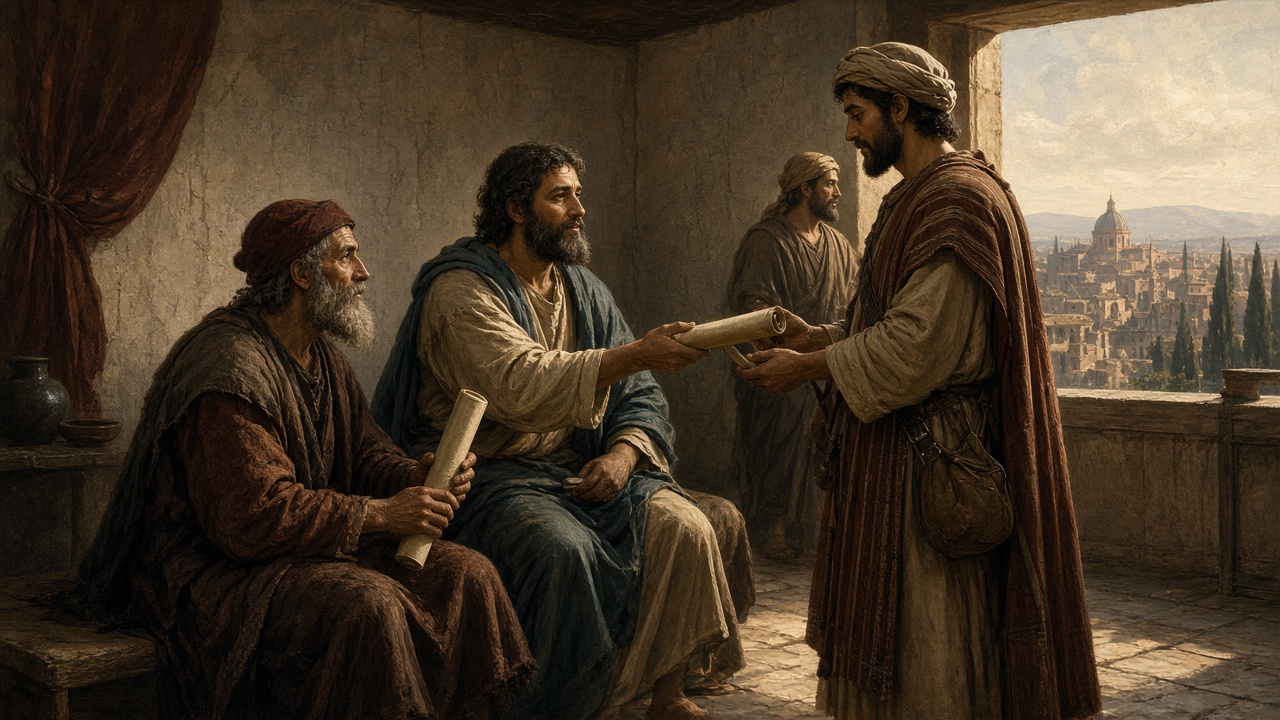
- Tychicus, an Asiatic Christian called a faithful minister, was the bearer of the letter, as he was also of the letters to the Ephesians and to Philemon, and he was to tell the church of the apostle's condition. Easton notes that, after friendly greetings, Paul asks them to exchange this letter with the one he had sent to the neighbouring church of Laodicea, and that there is a remarkable resemblance between this epistle and the one to the Ephesians.Sources: Easton: Colossians, Epistle to the · Tychicus
Notes written with AI assistance from open sources (Theographic Bible Metadata, CC BY-SA 4.0; Easton’s Bible Dictionary, public domain) and reviewed before publishing.
Saudação de Paulo e Timóteo
1Paulo, escolhido por Deus para ser apóstolo de Cristo Jesus, e o irmão Timóteo,
2aos santos e fiéis irmãos em Cristo da cidade de Colossos:
Que a graça e paz de nosso Pai e do Senhor Jesus Cristo estejam com vocês.
Ação de graças e oração
3Todas as vezes que oramos por vocês, sempre damos graças a Deus, o Pai de nosso Senhor Jesus Cristo, 4pois temos ouvido falar da fé que vocês têm em Cristo Jesus e do amor para com o seu povo, 5e que vocês estão aguardando com ansiedade as alegrias do céu, e têm estado sempre assim desde que o evangelho lhes foi anunciado a primeira vez. 6O mesmo evangelho que chegou até vocês está frutificando pelo mundo todo e transformando vidas em toda parte, tal como mudou a de vocês, desde o dia em que ouviram e compreenderam a graça e conheceram a verdade.
7Epafras, nosso mui amado companheiro de trabalho, foi quem lhes levou esse evangelho. Ele é um servo de Jesus Cristo e está aqui em lugar de vocês para nos ajudar. 8Foi ele quem nos contou acerca do grande amor que vocês têm no Espírito. 9Assim, desde que ouvimos falar a respeito de vocês, não deixamos de orar por vocês e pedir a Deus que os ajude a compreender o que ele deseja que vocês façam, e que os torne sábios nas coisas espirituais, 10a fim de que a maneira de vocês viverem sempre agrade ao Senhor e o glorifique, para que vocês sempre façam pelos outros coisas boas e agradáveis, crescendo no conhecimento de Deus.
11Estamos orando também para que vocês sejam cheios da sua gloriosa e poderosa força, de tal maneira que possam continuar avançando com perseverança, paciência e com alegria, 12e sejam sempre agradecidos ao Pai, que nos fez dignos de participar de todas as coisas maravilhosas que pertencem àqueles que vivem no reino da luz. 13Porque ele nos resgatou das trevas e nos trouxe para o reino do seu Filho amado, 14que comprou a nossa liberdade com o seu sangue e perdoou todos os nossos pecados.
A supremacia do Filho
15Ele é a semelhança perfeita do Deus invisível. Ele já existia antes de Deus criar qualquer coisa, 16pois nele foram criadas todas as coisas no céu e na terra, as coisas que podemos ver e as que não podemos; o mundo espiritual com seus tronos e reinos, seus governantes e suas autoridades: todas as coisas foram criadas por ele e para ele. 17Ele existia antes que tudo o mais começasse e é o seu poder que sustém todas as coisas. 18Ele é a cabeça do corpo que é a igreja; ele é o princípio e o primeiro a levantar dentre os mortos, de modo que ele é primeiro em tudo; 19porque Deus queria que a plenitude estivesse em seu Filho.
20Foi por meio do seu Filho que Deus reconciliou consigo todas as coisas, no céu e na terra, pois a morte de Cristo na cruz trouxe para todos a paz com Deus através de seu sangue. 21Isso inclui vocês, que antes estavam separados de Deus. Vocês eram inimigos dele e o odiavam, e estavam separados dele pelos seus maus pensamentos e ações; 22contudo, agora ele fez vocês voltarem a ser seus amigos por meio do seu próprio corpo, através da morte, e agora, como resultado, Cristo trouxe vocês à presença do próprio Deus, e vocês permanecem firmes diante dele, nada mais havendo contra vocês, isto é, livres de qualquer acusação. 23A única condição é que vocês creiam inteiramente na verdade, ficando firmes e seguros nela, fortes no Senhor, convictos do evangelho de que Jesus morreu por vocês, e nunca vacilando na confiança nele como Salvador. Esta é a notícia maravilhosa que chegou a cada um de vocês e agora está se espalhando pelo mundo inteiro. E eu, Paulo, me tornei ministro deste evangelho.
Os sofrimentos de Paulo pela igreja
24Entretanto, parte do meu trabalho é sofrer por vocês; estou alegre, pois estou ajudando a completar o resto dos sofrimentos de Cristo pelo seu corpo, a igreja.
25Deus me enviou para ajudar a sua igreja e para revelar seu plano secreto a vocês. 26Porque através de séculos e gerações passadas ele guardou esse mistério. Porém, agora finalmente foi do seu agrado revelá-lo àqueles que o amam e vivem para ele; 27e as riquezas e a glória do seu plano são também para vocês, os gentios. E este é o mistério: Cristo no coração de vocês é a esperança da glória.
28E assim, aonde quer que vamos, falamos de Cristo a todos quantos ouvirem, admoestando-os e ensinando-os com toda a sabedoria. Queremos ser capazes de apresentar a Deus cada um deles, aperfeiçoado por causa daquilo que Cristo fez em favor de cada um deles. 29Esta é a minha obra, para a qual eu me esforço, lutando conforme a sua força que atua poderosamente em mim.
Did you know?
The Preeminence of Christ and the Church at Colossae
- Colossae was a city of Phrygia on the Lycus, a tributary of the Maeander, about twelve miles above Laodicea and near the great road from Ephesus to the Euphrates, and therefore of some mercantile importance. Easton's Bible Dictionary (1897) notes that Paul does not appear to have visited the city when he wrote this letter, which fits his saying that he had heard of their faith and love, and that in the letter to Philemon he hopes to visit once delivered from imprisonment.Sources: Colossae · the Bible text itself
- The Colossians had learned the gospel from Epaphras, whom Paul calls a beloved fellow servant and a faithful minister of Christ, and who also informed them of their love in the Spirit. Easton's Bible Dictionary (1897) describes Epaphras as a distinguished disciple and probably the founder of that church, and concludes that he was with Paul at Rome when this letter was written; in the letter to Philemon, Paul calls him a fellow-prisoner.Sources: Epaphras · Colossae · the Bible text itself
- The greeting names Timothy, our brother, together with Paul. Easton's Bible Dictionary (1897) describes him as a young disciple whose name means honouring God, a companion on many of Paul's journeys, with a Greek father and with a mother and grandmother, Eunice and Lois, mentioned for their piety.Sources: Timotheus · the Bible text itself
Notes written with AI assistance from open sources (Theographic Bible Metadata, CC BY-SA 4.0; Easton’s Bible Dictionary, public domain) and reviewed before publishing.
Places in this chapter
- Colossae · 37.787, 29.260 · verse 2
Only places identified with high confidence are shown (90% or more according to the scholarly sources compiled by OpenBible). Period map: DARE (Digital Atlas of the Roman Empire), CC BY 4.0; modern map: © OpenStreetMap contributors; places: OpenBible.info (CC BY 4.0).
Credits and license for this translation
Biblica® Open Nova Bíblia Viva 2007
Portuguese: Biblica® Open Nova Bíblia Viva 2007 (Bible)
copyright © 2007, 2010 Biblica, Inc.
Language: Português
Dialect: Brazil
Contributor: Biblica, Inc.
Biblica® Open Nova Bíblia Viva™
Copyright © 2007, 2010 by Biblica, Inc.
“Biblica” é uma marca registrada na Oficina de Patentes e Marcas dos Estados Unidos por Biblica, Inc. Usado com permissão.
“Biblica” is a trademark registered in the United States Patent and Trademark Office by Biblica, Inc. Used with permission.
――――――
Creative Commons license
This work is made available under the Creative Commons Attribution-ShareAlike 4.0 International License (CC BY-SA). To view a copy of this license, visit https://creativecommons.org/licenses/by-sa/4.0 or send a letter to Creative Commons, PO Box 1866, Mountain View, CA 94042, USA.
You have permission to copy and distribute this Work, as long as you do not change it and you keep the title as it is. Changing or translating this Work will create a derivative work. When you publish this derivative work, you must list what changes you have made where people can see them, such as on a website. You must also show where the original Work is from: “The original Work by its copyright holders is available for free at www.biblica.com and open.bible .”
Notice of copyright must appear on the title or copyright page of the work as follows:
Biblica® Open Nova Bíblia Viva™
Copyright © 2007, 2010 by Biblica, Inc.
“Biblica” é uma marca registrada na Oficina de Patentes e Marcas dos Estados Unidos por Biblica, Inc. Usado com permissão.
“Biblica” is a trademark registered in the United States Patent and Trademark Office by Biblica, Inc. Used with permission.
You must also make your derivative work available under the same license (CC BY-SA).
If you would like to notify Biblica, Inc. regarding your translation of this work, please contact us at https://open.bible/#feedback .
This translation is made available to you under the terms of the
Creative Commons Attribution Share-Alike license 4.0.
You have permission to share and redistribute this Bible translation in any format and to make reasonable revisions and adaptations of this translation, provided that:
You include the above copyright and source information.
If you make any changes to the text, you must indicate that you did so in a way that makes it clear that the original licensor is not necessarily endorsing your changes.
If you redistribute this text, you must distribute your contributions under the same license as the original.
Pictures included with Scriptures and other documents on this site are licensed just for use with those Scriptures and documents.
For other uses, please contact the respective copyright owners.
Note that in addition to the rules above, revising and adapting God's Word involves a great responsibility to be true to God's Word. See Revelation 22:18-19.
2025-05-20
Section headings adapted from the Berean Standard Bible (public domain); they are not part of this translation’s text.
Source: http://ebible.org/poronbv/ · eBible.org