Acts 1
Biblica® Open Nova Bíblia Viva 2007 · Tap a verse to see its cross-references.
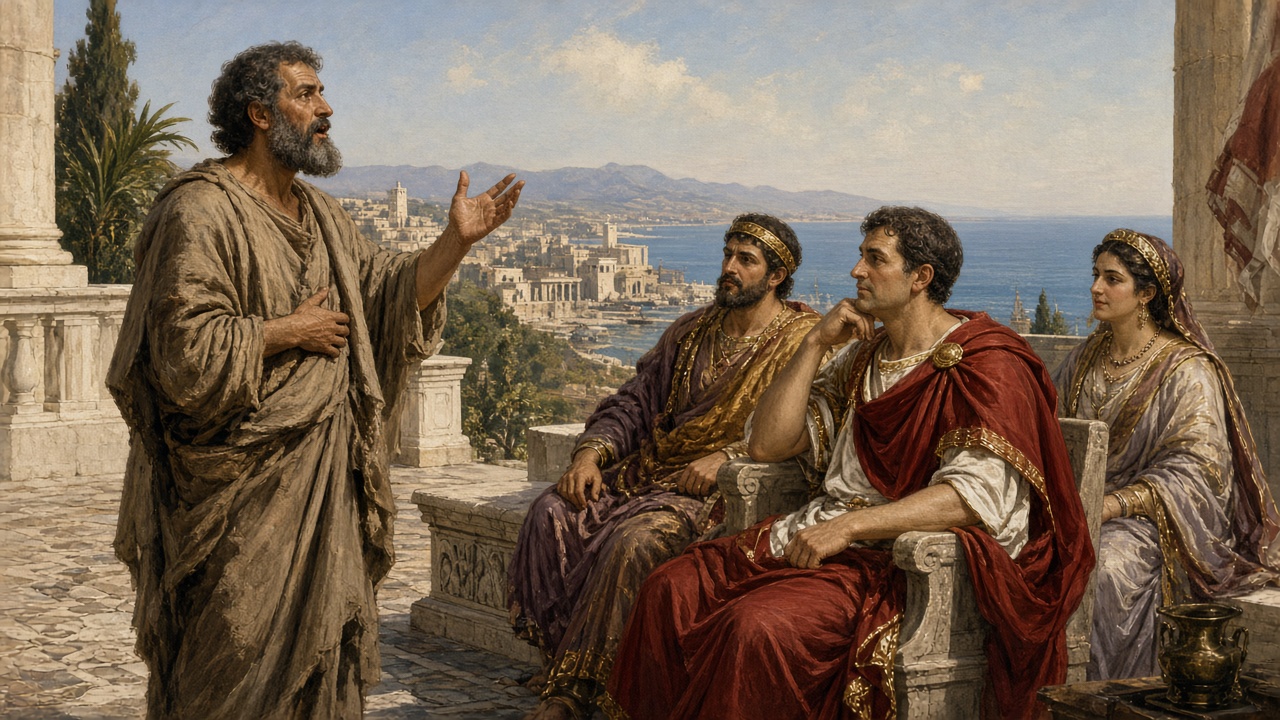
About this book
About Acts
- Ancient tradition, which Easton's Bible Dictionary (1897) calls uniform, attributes Acts to Luke, the "beloved physician," although the writer never names himself. Easton notes that the style and the words and phrases shared by Luke's Gospel and Acts support that view. Easton says the narrator first appears at Acts 16:11, later travels with Paul, including at Rome, and wrote much of that history from personal observation, drawing on Paul's instruction for what lay beyond his own experience.Sources: Easton: Acts of the Apostles
- Easton's Bible Dictionary (1897) dates the writing no earlier than A.D. 61 or 62, because the narrative extends to the close of the second year of Paul's first imprisonment at Rome.Sources: Easton: Acts of the Apostles
- Antioch in Syria, on the river Orontes about sixteen miles from the Mediterranean and some three hundred miles north of Jerusalem, is described as ranking third, after Rome and Alexandria, among the cities of the Roman empire. Christianity was introduced there early, and the name "Christian" was first applied in that city to those who professed the faith. Caesarea, built by Herod the Great on the Mediterranean shore and the seat of the Roman procurators of Judea, is where Festus, successor of Felix in A.D. 60, heard the prisoner Paul and sent him to Rome after Paul appealed to Caesar.Sources: Antioch (Syria) · Caesarea · Portius Festus
- Easton presents Acts as the sequel to Luke's Gospel: that Gospel ends with Jesus taken up from his disciples into heaven, and the opening of Acts expands those closing words. He describes the book as continuing the history of the church after the ascension and as illustrating the gospel preached among all nations, "beginning at Jerusalem." In his account it is only a book of beginnings, a history of the founding of churches and a cycle of "representative events," and it follows Peter and Paul rather than all the apostles.Sources: Easton: Acts of the Apostles
- The book was early called "The Acts," "The Gospel of the Holy Ghost," and "The Gospel of the Resurrection." Easton observes that the later title "Acts of the Apostles" is broader than the contents, since John is noticed only three times and all that is recorded of James, the son of Zebedee, is his execution by Herod.Sources: Easton: Acts of the Apostles
Notes written with AI assistance from open sources (Theographic Bible Metadata, CC BY-SA 4.0; Easton’s Bible Dictionary, public domain) and reviewed before publishing.
Prólogo
1No meu primeiro livro eu relatei a você, Teófilo, a respeito da vida e dos ensinos de Jesus, 2e de como ele foi elevado para o céu depois de dar aos seus apóstolos as instruções por meio do Espírito Santo. 3Durante os 40 dias depois do seu sofrimento ele apareceu aos apóstolos diversas vezes, provando para eles de muitas maneiras que realmente estava vivo. Nessas ocasiões falou a eles a respeito do Reino de Deus. 4Num desses encontros, enquanto comia com eles, deu-lhes esta ordem: “Não saiam de Jerusalém até que o Espírito Santo venha sobre vocês em cumprimento da promessa do Pai, conforme eu disse a vocês. 5Pois, na verdade, João batizou com água, mas vocês serão batizados com o Espírito Santo dentro de poucos dias”.
A ascensão de Jesus
6Então lhe perguntaram: “É agora que o Senhor vai restaurar o Reino para o povo de Israel?”
7“Não cabe a vocês saber a ocasião ou as datas que o Pai determinou pela sua própria autoridade”, respondeu ele. 8“Mas quando o Espírito Santo descer sobre vocês, receberão poder para serem minhas testemunhas tanto em Jerusalém como em toda a Judeia e Samaria e até nos confins da terra”.
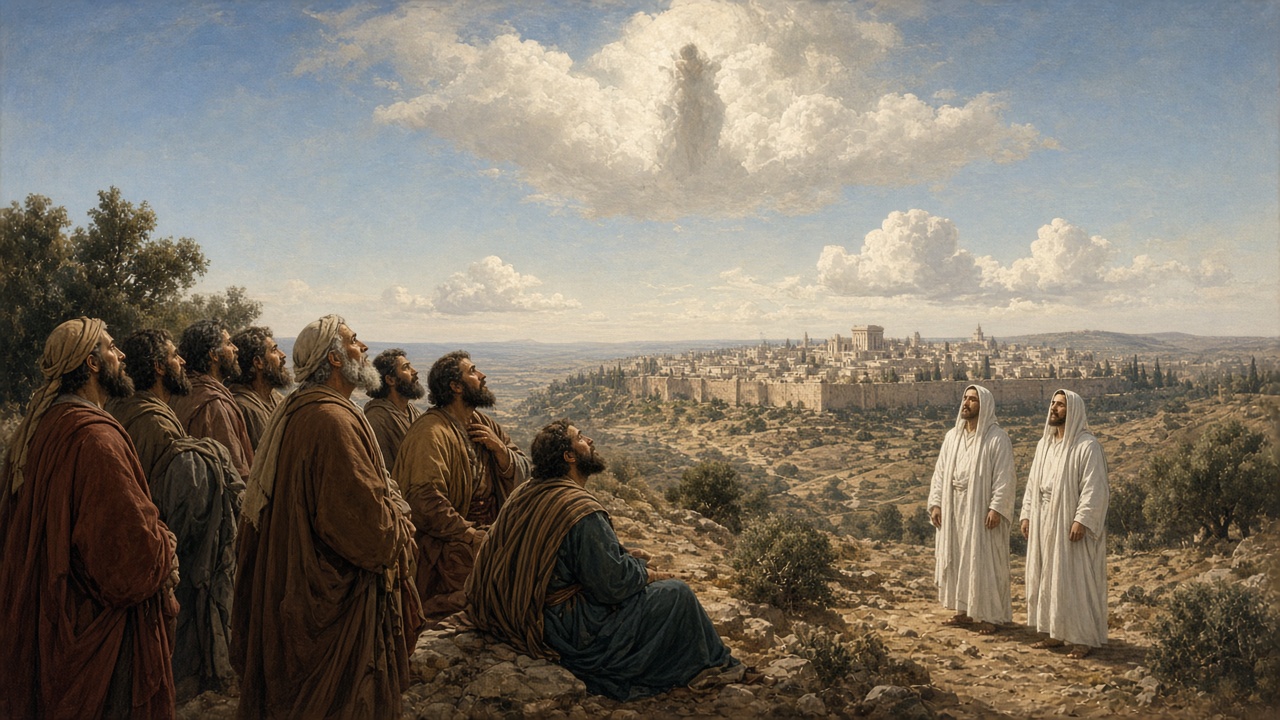
9Depois de ter falado isso, ele foi elevado ao céu e desapareceu numa nuvem, enquanto todos olhavam para ele. 10Eles ficaram com os olhos fixos no céu enquanto Jesus subia. De repente, dois homens vestidos de branco apareceram ali diante deles 11e lhes disseram: “Homens da Galileia, por que vocês estão olhando para o céu? Esse Jesus, que estava com vocês e que foi elevado ao céu, voltará do mesmo modo que vocês o viram subir!”
Matias é escolhido para o lugar de Judas
12Eles estavam no monte das Oliveiras quando isto aconteceu, de modo que caminharam cerca de um quilômetro de volta para Jerusalém. 13Quando chegaram, subiram ao cômodo do andar superior da casa onde se reuniam. Esta é a lista dos que se achavam presentes ali: Pedro, João, Tiago e André; Filipe, Tomé, Bartolomeu e Mateus; Tiago, filho de Alfeu, Simão, também chamado “o zelote”, e Judas, filho de Tiago. 14Todos estes perseveravam em oração com as mulheres, com Maria, a mãe de Jesus, e com os irmãos de Jesus.
15Durante esse tempo, num dia em que cerca de 120 pessoas estavam presentes, Pedro se levantou entre os irmãos, 16dizendo o seguinte: “Irmãos, era necessário que se cumprissem as Escrituras a respeito de Judas, guiando a multidão para prender Jesus, pois isso foi profetizado há muito tempo pelo Espírito Santo, por meio do rei Davi. 17Judas era um de nós, escolhido para ser apóstolo tal como nós fomos”.
18Com o dinheiro que ele recebeu pelo seu pecado, foi comprado um campo. O próprio Judas, na sua queda, rebentou-se, e suas entranhas se esparramaram. 19A notícia da morte dele espalhou-se rapidamente no meio do povo de Jerusalém, e puseram no lugar o nome de Aceldama, que quer dizer, “Campo de Sangue”.
20Pedro continuou: “Porque está escrito no Livro dos Salmos:
‘Que a sua casa fique deserta, sem ninguém morando nela’. E ainda: ‘Que o trabalho dele seja entregue para um outro fazer’.
21“Portanto, nós devemos escolher agora um outro para ocupar o lugar de Judas e unir-se a nós. Escolhamos alguém que tenha estado constantemente conosco enquanto o Senhor Jesus viveu entre nós, 22desde o batismo de João até o dia em que Jesus foi elevado do nosso meio para o céu, alguém que tenha sido testemunha da ressurreição de Jesus”.
23A assembleia mencionou dois homens: José, chamado Barsabás, também conhecido como Justo, e Matias. 24Então todos eles oraram para que fosse escolhido o homem certo. “Ó Senhor”, disseram, “o Senhor conhece todos os corações; mostre-nos qual destes dois homens o Senhor escolheu 25como apóstolo para substituir o ministério que Judas abandonou quando foi para o lugar que merecia”.
26Depois lançaram sortes, e Matias foi escolhido e tornou-se apóstolo como os outros onze.
Did you know?
Waiting in Jerusalem after the Ascension
- This chapter opens as a sequel: the writer tells Theophilus that his first book covered all that Jesus began to do and to teach until the day he was taken up to heaven. Easton's Bible Dictionary (1897) says Luke dedicated both that Gospel and Acts to Theophilus, a name meaning "lover of God," and describes him as a Christian, probably a Roman, of whom nothing else is known. From the title "most excellent," the same title Paul uses for the governors Felix and Festus, the dictionary reports that it has been concluded he was a person of rank, perhaps a Roman officer.Sources: Theophilus · the Bible text itself
- Jesus tells the apostles they will be his witnesses in Jerusalem, in all Judea and Samaria, and to the ends of the earth, and the two men in white address them as "men of Galilee." In the Roman period Judea was the southernmost of the three divisions of Palestine, distinguished from Galilee and Samaria, though the name was sometimes used for the whole land, and it was part of the province of Syria. Galilee, called Galil by the Jews, had long been known as "Galilee of the Gentiles" because its original inhabitants remained there.Sources: the Bible text itself · Judea · Galilee
- Peter says Judas, one of their number, became a guide for those who arrested Jesus and then abandoned his place in the ministry. Acts records that with the reward for his wickedness Judas bought a field, fell headlong, and died there, and that the people of Jerusalem called that field Akeldama, "Field of Blood," in their own language. Easton's Bible Dictionary identifies that language as Aramaic, notes that the field had previously been called the potter's field and was set aside as a burial place for strangers, and places it on a narrow level terrace on the south face of the valley of Hinnom.Sources: the Bible text itself · Akeldama
Notes written with AI assistance from open sources (Theographic Bible Metadata, CC BY-SA 4.0; Easton’s Bible Dictionary, public domain) and reviewed before publishing.
Places in this chapter
- Jerusalem · 31.777, 35.234 · verses 4, 8, 12, 13, 19
- Judea · Today: Judea 1 · 31.777, 35.234 · verse 8
- Samaria · Today: Samaria 2 · 32.276, 35.195 · verse 8
- Galilee · 32.760, 35.527 · verse 11
- Mount of Olives · 31.778, 35.246 · verse 12
Only places identified with high confidence are shown (90% or more according to the scholarly sources compiled by OpenBible). Period map: DARE (Digital Atlas of the Roman Empire), CC BY 4.0; modern map: © OpenStreetMap contributors; places: OpenBible.info (CC BY 4.0).
Credits and license for this translation
Biblica® Open Nova Bíblia Viva 2007
Portuguese: Biblica® Open Nova Bíblia Viva 2007 (Bible)
copyright © 2007, 2010 Biblica, Inc.
Language: Português
Dialect: Brazil
Contributor: Biblica, Inc.
Biblica® Open Nova Bíblia Viva™
Copyright © 2007, 2010 by Biblica, Inc.
“Biblica” é uma marca registrada na Oficina de Patentes e Marcas dos Estados Unidos por Biblica, Inc. Usado com permissão.
“Biblica” is a trademark registered in the United States Patent and Trademark Office by Biblica, Inc. Used with permission.
――――――
Creative Commons license
This work is made available under the Creative Commons Attribution-ShareAlike 4.0 International License (CC BY-SA). To view a copy of this license, visit https://creativecommons.org/licenses/by-sa/4.0 or send a letter to Creative Commons, PO Box 1866, Mountain View, CA 94042, USA.
You have permission to copy and distribute this Work, as long as you do not change it and you keep the title as it is. Changing or translating this Work will create a derivative work. When you publish this derivative work, you must list what changes you have made where people can see them, such as on a website. You must also show where the original Work is from: “The original Work by its copyright holders is available for free at www.biblica.com and open.bible .”
Notice of copyright must appear on the title or copyright page of the work as follows:
Biblica® Open Nova Bíblia Viva™
Copyright © 2007, 2010 by Biblica, Inc.
“Biblica” é uma marca registrada na Oficina de Patentes e Marcas dos Estados Unidos por Biblica, Inc. Usado com permissão.
“Biblica” is a trademark registered in the United States Patent and Trademark Office by Biblica, Inc. Used with permission.
You must also make your derivative work available under the same license (CC BY-SA).
If you would like to notify Biblica, Inc. regarding your translation of this work, please contact us at https://open.bible/#feedback .
This translation is made available to you under the terms of the
Creative Commons Attribution Share-Alike license 4.0.
You have permission to share and redistribute this Bible translation in any format and to make reasonable revisions and adaptations of this translation, provided that:
You include the above copyright and source information.
If you make any changes to the text, you must indicate that you did so in a way that makes it clear that the original licensor is not necessarily endorsing your changes.
If you redistribute this text, you must distribute your contributions under the same license as the original.
Pictures included with Scriptures and other documents on this site are licensed just for use with those Scriptures and documents.
For other uses, please contact the respective copyright owners.
Note that in addition to the rules above, revising and adapting God's Word involves a great responsibility to be true to God's Word. See Revelation 22:18-19.
2025-05-20
Section headings adapted from the Berean Standard Bible (public domain); they are not part of this translation’s text.
Source: http://ebible.org/poronbv/ · eBible.org