2 Timothy 1
Biblica® Open Nova Bíblia Viva 2007 · Tap a verse to see its cross-references.
About this book
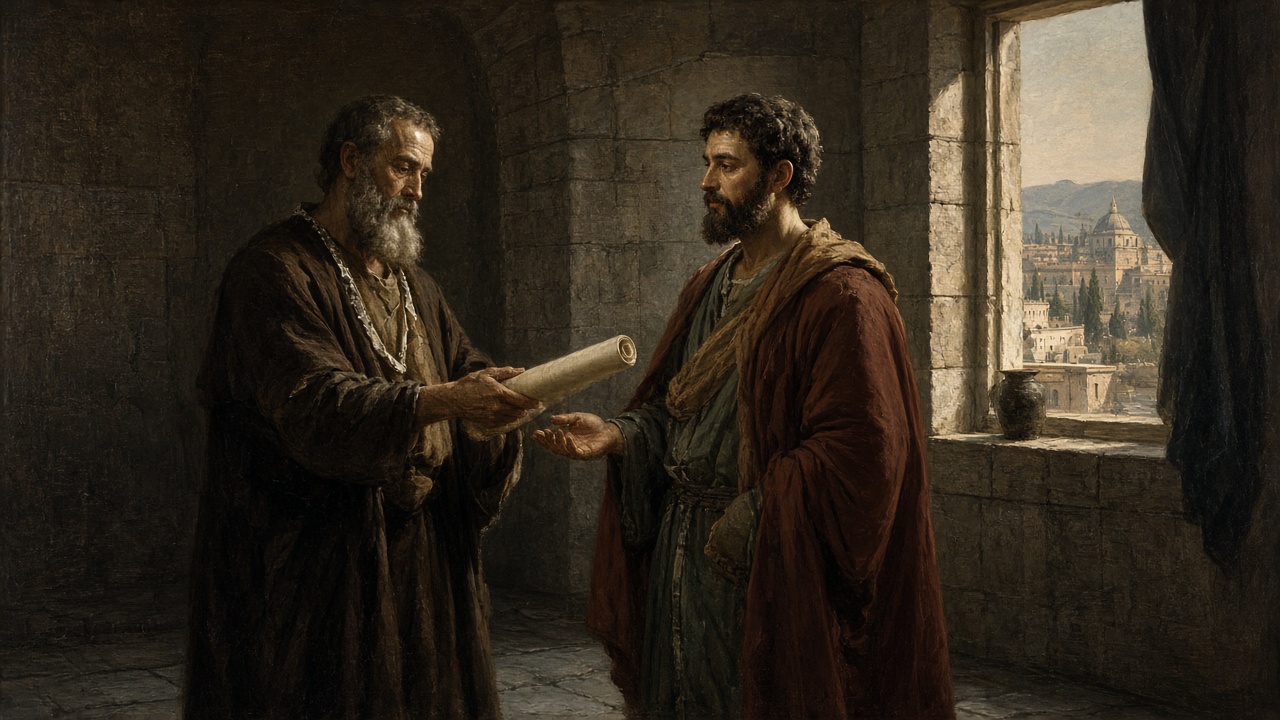
About 2 Timothy
- Easton's Bible Dictionary (1897) says the Second Epistle to Timothy was probably written a year or so after the first, from Rome, where Paul was a prisoner for a second time. It was sent to Timothy by the hands of Tychicus.Sources: Easton: Timothy, Second Epistle to
- According to Easton, Paul writes from that second imprisonment expecting that the time of his departure is at hand, and he asks Timothy to come before winter and bring Mark. When the New Testament was written, Rome was noted for its wealth and luxury and had an estimated population of 1,200,000, half of whom were slaves.Sources: Easton: Timothy, Second Epistle to · Rome
- Easton says Paul exhorts Timothy, whom he calls his son, to diligence and steadfastness, to patience under persecution, and to a faithful discharge of all the duties of his office, with the solemnity of one about to appear before the Judge of the living and the dead.Sources: Easton: Timothy, Second Epistle to
- Timothy was a young disciple who probably lived at Lystra, a town of Lycaonia in Asia Minor, and his father was a Greek. His mother Eunice and his grandmother Lois are mentioned as eminent for their piety, and Paul commends Lois for her faith. Paul called Timothy his own son in the faith, circumcised him so that he might conciliate the Jews, and took him as a companion.Sources: Timotheus · Lois · Lystra
- During Paul's second imprisonment at Rome, Phygellus, a Christian of Asia, and Hermogenes, once his fellow-worker in Asia Minor, turned away from him, probably because of the perils they faced. Asia here denotes proconsular Asia, the Roman province in the western part of Asia Minor, of which Ephesus was the capital. Onesiphorus, an Ephesian Christian, showed Paul great kindness in Rome and often refreshed him, and Paul expresses a warm interest in him and his household.Sources: Phygellus · Hermogenes · Onesiphorus · Asia
Notes written with AI assistance from open sources (Theographic Bible Metadata, CC BY-SA 4.0; Easton’s Bible Dictionary, public domain) and reviewed before publishing.
Saudação de Paulo a Timóteo
1Paulo, apóstolo de Jesus Cristo, enviado por Deus para falar, por toda parte, a homens e mulheres, a respeito da vida que ele lhes prometeu por meio da fé em Jesus Cristo,
2a Timóteo, meu amado filho.
Que Deus, o Pai, e Cristo Jesus, nosso Senhor, derramem a sua graça, misericórdia e paz sobre você.
Fidelidade em meio à perseguição
3Como sou grato a Deus por você! Oro todos os dias por você e muitas vezes durante as longas noites suplico ao meu Deus por vocês. Ele é o Deus de meus antepassados e o meu único propósito é servi-lo com a consciência limpa.
4Como estou ansioso por vê-lo de novo! Como eu ficaria feliz com isso, pois me recordo das suas lágrimas quando nos separamos.
5Lembro-me da sua fé não fingida, tal como ocorreu com a sua mãe Eunice e sua avó Lóide; e estou certo de que esta mesma fé continua em você.
6Assim sendo, quero lembrá-lo de conservar viva a chama do dom de Deus que você recebeu quando coloquei minhas mãos sobre a sua cabeça. 7Pois o Espírito que Deus nos deu não é de covardia, mas de poder, de amor e de equilíbrio. 8Por isso, nunca tenha medo de falar do nosso Senhor aos outros, nem de que eles saibam que eu sou seu amigo, muito embora eu esteja aqui na prisão por causa de Cristo. Você deve estar pronto a sofrer comigo de acordo com o poder de Deus, pois ele lhe dará forças no sofrimento.
9Foi ele quem nos salvou e nos escolheu para o seu santo trabalho, não porque merecêssemos, mas porque esse era o seu plano muito antes do princípio do mundo: mostrar o seu amor e a sua graça para conosco por meio de Cristo Jesus. 10E agora ele tornou isso bem claro para nós, mediante a vinda do nosso Salvador Jesus Cristo, que quebrou o poder da morte e nos mostrou o caminho da vida eterna por meio da confiança nele. 11E Deus me escolheu para ser seu pregador e apóstolo e mestre.
12É por isso que eu estou sofrendo aqui na prisão e não estou envergonhado disso, pois conheço aquele em quem confio e tenho certeza de que ele é capaz de guardar em segurança tudo quanto lhe confiei até o dia da sua volta.
Retendo a sã doutrina
13Agarre-se firmemente ao modelo de verdade que eu lhe ensinei, especialmente no tocante à fé e ao amor que Cristo Jesus lhe oferece. 14Conserve bem a capacidade que Deus lhe concedeu e que você recebeu por meio do Espírito Santo que mora em nós.
15Como você sabe, todos os santos que vieram da província da Ásia me abandonaram, inclusive Fígelo e Hermógenes. 16Que o Senhor abençoe Onesíforo e toda a sua família, pois ele me visitou e me animou muitas vezes. Suas visitas me revigoraram como um sopro de ar fresco, e ele nunca se envergonhou por eu estar na prisão. 17De fato, quando ele veio a Roma, procurou por toda parte, tentando encontrar-me, e finalmente conseguiu. 18Que o Senhor dê a ele uma bênção especial no dia da volta de Cristo. E você sabe, melhor do que eu lhe posso contar, quanto ele me ajudou em Éfeso.
Did you know?
Faith without shame
- Paul addresses Timothy as his beloved child and recalls the sincere faith that first lived in Timothy’s grandmother Lois and his mother Eunice. Easton's Bible Dictionary (1897) describes Timothy as a young disciple who accompanied Paul on many journeys and whom the apostle regarded as his own son in the faith; it adds that nothing is known of his father except that he was a Greek, and that Timothy probably lived at Lystra.Sources: Timotheus · Lois · the Bible text itself
- Paul writes that everyone in the province of Asia has deserted him, including Phygelus and Hermogenes. Easton's Bible Dictionary (1897), which spells the first name Phygellus, calls him a Christian of Asia who turned away from Paul during what the dictionary describes as Paul’s second imprisonment at Rome, and says that nothing more is known of him; it calls Hermogenes a former fellow-worker in Asia Minor who abandoned Paul along with Phygellus, probably because of the dangers they faced. The dictionary explains that “Asia” is used in the New Testament to denote proconsular Asia, a Roman province in western Asia Minor whose capital was Ephesus.Sources: Phygellus · Hermogenes · Asia · the Bible text itself
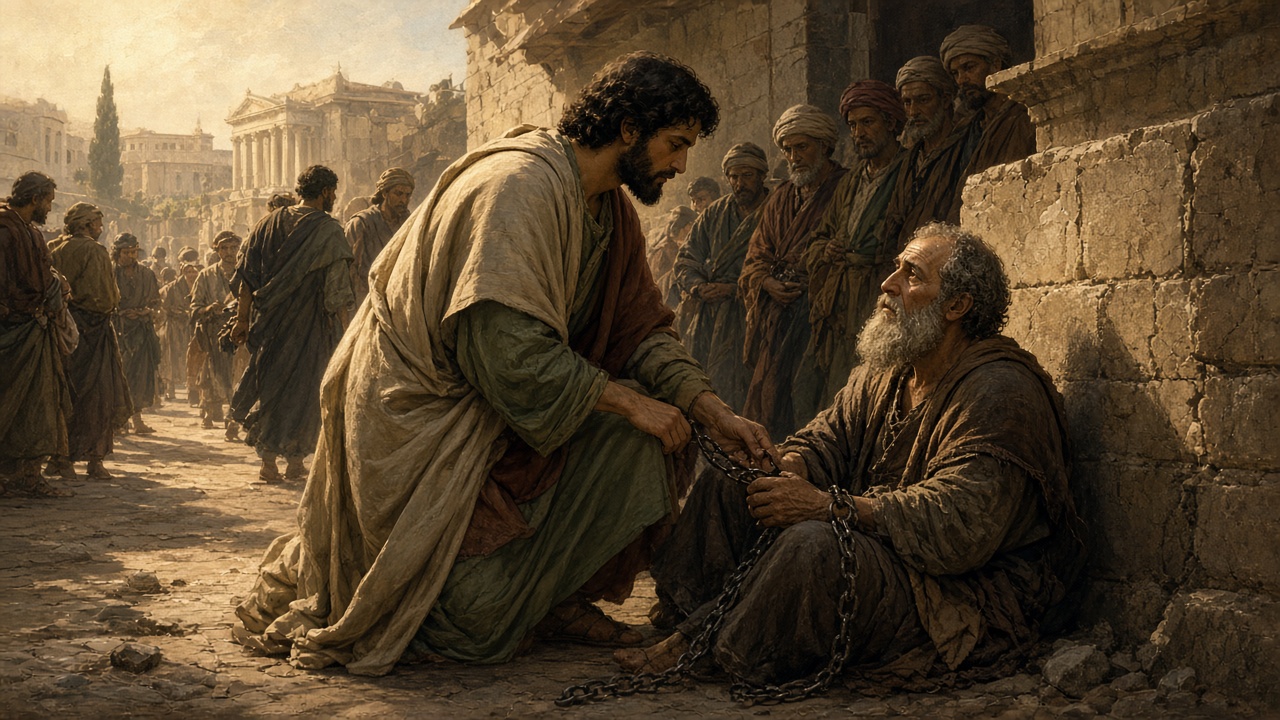
- Onesiphorus, an Ephesian Christian whose name Easton's Bible Dictionary (1897) explains as “bringing profit,” often refreshed Paul and was not ashamed of his chains. When he arrived in Rome he searched diligently until he found Paul, and Paul also recalls how much Onesiphorus had served him in Ephesus.Sources: Onesiphorus · the Bible text itself
Notes written with AI assistance from open sources (Theographic Bible Metadata, CC BY-SA 4.0; Easton’s Bible Dictionary, public domain) and reviewed before publishing.
Places in this chapter
Only places identified with high confidence are shown (90% or more according to the scholarly sources compiled by OpenBible). Period map: DARE (Digital Atlas of the Roman Empire), CC BY 4.0; modern map: © OpenStreetMap contributors; places: OpenBible.info (CC BY 4.0).
Credits and license for this translation
Biblica® Open Nova Bíblia Viva 2007
Portuguese: Biblica® Open Nova Bíblia Viva 2007 (Bible)
copyright © 2007, 2010 Biblica, Inc.
Language: Português
Dialect: Brazil
Contributor: Biblica, Inc.
Biblica® Open Nova Bíblia Viva™
Copyright © 2007, 2010 by Biblica, Inc.
“Biblica” é uma marca registrada na Oficina de Patentes e Marcas dos Estados Unidos por Biblica, Inc. Usado com permissão.
“Biblica” is a trademark registered in the United States Patent and Trademark Office by Biblica, Inc. Used with permission.
――――――
Creative Commons license
This work is made available under the Creative Commons Attribution-ShareAlike 4.0 International License (CC BY-SA). To view a copy of this license, visit https://creativecommons.org/licenses/by-sa/4.0 or send a letter to Creative Commons, PO Box 1866, Mountain View, CA 94042, USA.
You have permission to copy and distribute this Work, as long as you do not change it and you keep the title as it is. Changing or translating this Work will create a derivative work. When you publish this derivative work, you must list what changes you have made where people can see them, such as on a website. You must also show where the original Work is from: “The original Work by its copyright holders is available for free at www.biblica.com and open.bible .”
Notice of copyright must appear on the title or copyright page of the work as follows:
Biblica® Open Nova Bíblia Viva™
Copyright © 2007, 2010 by Biblica, Inc.
“Biblica” é uma marca registrada na Oficina de Patentes e Marcas dos Estados Unidos por Biblica, Inc. Usado com permissão.
“Biblica” is a trademark registered in the United States Patent and Trademark Office by Biblica, Inc. Used with permission.
You must also make your derivative work available under the same license (CC BY-SA).
If you would like to notify Biblica, Inc. regarding your translation of this work, please contact us at https://open.bible/#feedback .
This translation is made available to you under the terms of the
Creative Commons Attribution Share-Alike license 4.0.
You have permission to share and redistribute this Bible translation in any format and to make reasonable revisions and adaptations of this translation, provided that:
You include the above copyright and source information.
If you make any changes to the text, you must indicate that you did so in a way that makes it clear that the original licensor is not necessarily endorsing your changes.
If you redistribute this text, you must distribute your contributions under the same license as the original.
Pictures included with Scriptures and other documents on this site are licensed just for use with those Scriptures and documents.
For other uses, please contact the respective copyright owners.
Note that in addition to the rules above, revising and adapting God's Word involves a great responsibility to be true to God's Word. See Revelation 22:18-19.
2025-05-20
Section headings adapted from the Berean Standard Bible (public domain); they are not part of this translation’s text.
Source: http://ebible.org/poronbv/ · eBible.org