2 Samuel 1
Biblica® Open Nova Bíblia Viva 2007 · Tap a verse to see its cross-references.
About this book
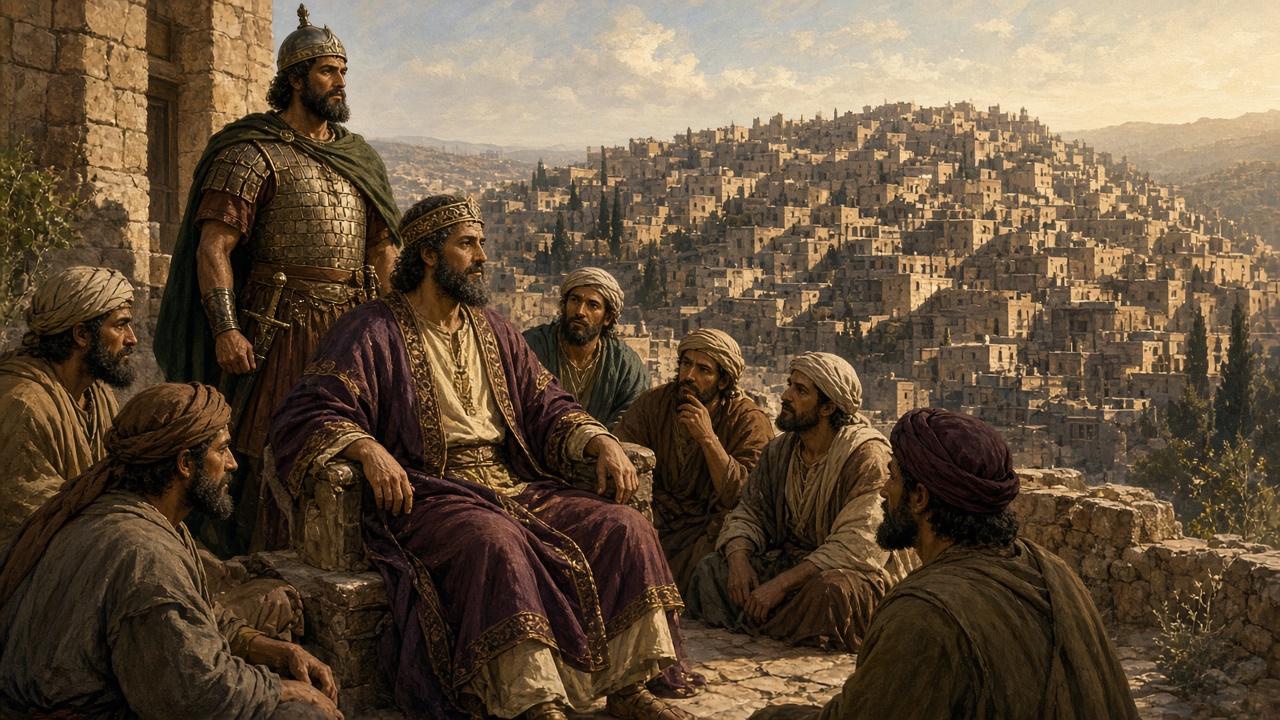
About 2 Samuel
- Easton's Bible Dictionary (1897) says the books of Samuel were probably written by Samuel, Gad, and Nathan. According to that entry, Samuel penned the first twenty-four chapters of the first book; Gad, David's companion, continued the history, and Nathan completed it, probably arranging the whole. The entry gives no date of writing, but says Second Samuel covers perhaps fifty years, the reign of David.Sources: Easton: Samuel, Books of
- After Saul's death, David was made king over Judah and reigned in Hebron, while Abner, commander of Saul's army, had Ish-bosheth proclaimed king. Ish-bosheth reigned at Mahanaim, beyond the Jordan, and a state of war existed between the two kings. Joab, captain of the host throughout David's reign, led the assault on the fortress on Mount Zion in Jerusalem and for that service was raised to the rank of prince of the king's army.Sources: Abner · Mahanaim · Joab · Jerusalem
- Easton describes 2 Samuel as a history of David's reign, mainly in its political aspects: over Judah in chapters 1-4, and over all Israel in chapters 5-24. The last four chapters are treated as a sort of appendix, recording various events but not in chronological order. The books are not complete histories; frequent gaps appear because, in Easton's view, their aim is the gradual development of the kingdom of God rather than a full account of each reign.Sources: Easton: Samuel, Books of
- The Septuagint translators regarded the books of Samuel and of Kings as one continuous history, which they divided into four books called the Books of the Kingdom. The Vulgate followed this division but named them the Books of the Kings, so the books called First and Second Samuel in modern Protestant versions were the First and Second Books of Kings. Easton also notes that the account of David's sin in the matter of Bathsheba, in 2 Samuel 11:2-12:29, is omitted from the corresponding passage in 1 Chronicles 20.Sources: Easton: Samuel, Books of
Notes written with AI assistance from open sources (Theographic Bible Metadata, CC BY-SA 4.0; Easton’s Bible Dictionary, public domain) and reviewed before publishing.
Davi é informado da morte de Saul
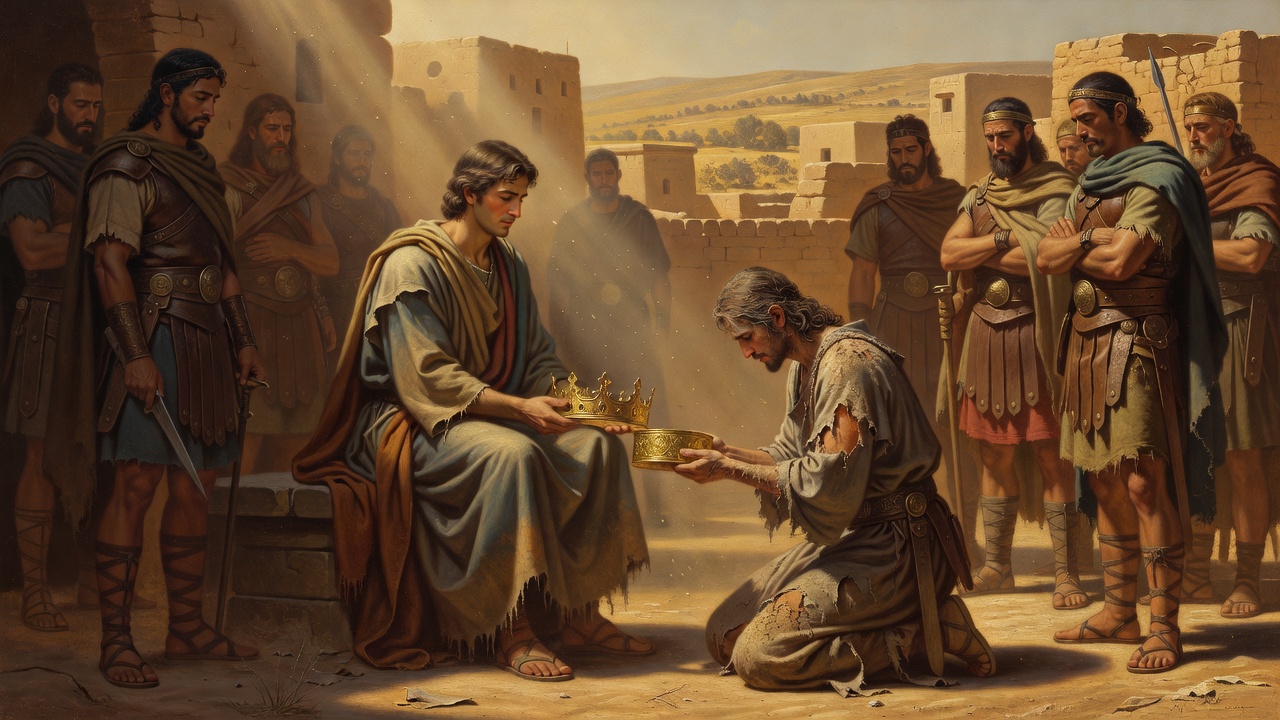
1Depois da morte de Saul, Davi voltou a Ziclague após a vitória sobre os amalequitas. 2Três dias mais tarde, veio um homem do exército israelita com as roupas rasgadas e terra sobre a cabeça, como sinal de tristeza. Ele inclinou-se diante de Davi com o rosto no chão, como sinal de respeito.
3“De onde vem você?”, Davi perguntou.
“Eu escapei do acampamento israelita”, o homem respondeu.
4“O que foi que aconteceu?”, Davi perguntou. “Diga-me como foi a batalha”.
E o homem respondeu: “Todo o nosso exército fugiu. Muitos homens estão mortos e feridos no campo, e Saul e seu filho Jônatas foram mortos”.
5Então Davi perguntou ao homem que havia trazido a notícia: “Como é que você sabe que eles estão mortos?”
6“Porque eu estava no monte Gilboa e vi que Saul estava apoiado sobre sua lança, e os carros inimigos e seus cavaleiros estavam chegando cada vez mais perto dele, cercando-o por todos os lados. 7Quando ele me viu, chamou-me para junto dele, e eu disse: ‘Aqui estou, senhor!’ ”
8“Quem é você?”, ele perguntou. “Um amalequita”, respondi.
9“Venha cá e mate-me”, ele pediu, “pois estou numa terrível angústia de morte!”
10“Então eu me aproximei e o matei, porque sabia que ele não tinha condições de sobreviver. Depois tomei a sua coroa e uma das suas pulseiras para trazer aqui ao meu senhor”.
11Então Davi e seus homens rasgaram as suas vestes em sinal de tristeza quando ouviram a notícia. 12Eles lamentaram, choraram e jejuaram o dia todo por Saul e por seu filho Jônatas, pelo exército do Senhor e pelo povo do Senhor, que morreram naquele dia à espada.
13Em seguida, Davi perguntou ao jovem que havia trazido a notícia: “De onde é você?”
E ele respondeu: “Sou filho de um estrangeiro, um amalequita”.
14“Por que você matou o rei escolhido do Senhor?”, perguntou Davi.
15Então Davi disse a um dos seus soldados: “Mate esse homem!” E o soldado atacou e matou o amalequita.
16Davi havia dito ao amalequita: “Você morre por sua própria condenação, pois você mesmo confessou que matou o rei escolhido do Senhor”.
O lamento de Davi por Saul e Jônatas
17Davi chorou muito, e mais tarde escreveu um hino triste para Saul e Jônatas, 18e ordenou que o hino fosse ensinado aos homens de Judá. Este lamento está registrado no Livro de Jasar.
19“Ó Israel, o seu esplendor e alegria estão mortos sobre os montes;
heróis poderosos caíram!
20Não contem essas notícias em Gate, nem anunciem nas ruas de Ascalom,
para que não se alegrem as filhas dos filisteus,
para que as nações que adoram deuses falsos não riam em triunfo.
21Ó montes de Gilboa, não caia orvalho nem chuva sobre vocês,
nem haja plantação de cereais nas suas encostas.
Pois ali os escudos dos guerreiros valentes foram profanados,
bem como o escudo do poderoso Saul, que perdeu seu brilho.
22Do sangue dos feridos, da carne dos valentes o arco de Jônatas nunca recuou,
e a espada de Saul nunca falhou.
Eles nunca voltavam das batalhas com as mãos vazias.
23Como Saul e Jônatas eram amados e estimados!
Eles estiveram juntos na vida e na morte.
Eram mais velozes do que as águias, mais fortes do que os leões.
24Mas agora, ó filhas de Israel, chorem por Saul.
Ele vestia vocês com finas roupas e ornamentos dourados.
25Esses poderosos heróis caíram no meio da batalha.
Jônatas foi morto lá nas montanhas.
26Como eu choro por você, meu irmão Jônatas;
Quanto eu o estimava!
E o seu amor por mim era mais precioso do que o amor de mulheres!
27Os guerreiros valentes caíram! As suas armas foram destruídas”.
Did you know?
David Laments Saul and Jonathan
- David ordered that the people of Judah be taught his lament for Saul and Jonathan, referred to as the Song of the Bow. This poetic dirge was recorded in the Book of Jashar, an ancient collection of songs celebrating notable Israelite leaders and events.Sources: Jasher · the Bible text itself
- In his lament, David pleaded that the disaster not be proclaimed in Gath or in the streets of Ashkelon, two prominent Philistine cities. He mourned that news of the defeat on Mount Gilboa would cause the daughters of the Philistines to celebrate over Israel's fallen leaders.Sources: Gath · Ashkelon · the Bible text itself
- David received the report of Saul's death while residing at Ziklag, a town in the Negeb that had been given to him by the Philistine king of Gath. The messenger brought Saul's royal crown and armlet directly to David after the battle on Mount Gilboa.Sources: Ziklag · the Bible text itself
Notes written with AI assistance from open sources (Theographic Bible Metadata, CC BY-SA 4.0; Easton’s Bible Dictionary, public domain) and reviewed before publishing.
Places in this chapter
- Mount Gilboa · 32.434, 35.414 · verses 6, 21
- Ashkelon · Today: Tel Ashkelon · 31.664, 34.546 · verse 20
Only places identified with high confidence are shown (90% or more according to the scholarly sources compiled by OpenBible). Period map: DARE (Digital Atlas of the Roman Empire), CC BY 4.0; modern map: © OpenStreetMap contributors; places: OpenBible.info (CC BY 4.0).
Credits and license for this translation
Biblica® Open Nova Bíblia Viva 2007
Portuguese: Biblica® Open Nova Bíblia Viva 2007 (Bible)
copyright © 2007, 2010 Biblica, Inc.
Language: Português
Dialect: Brazil
Contributor: Biblica, Inc.
Biblica® Open Nova Bíblia Viva™
Copyright © 2007, 2010 by Biblica, Inc.
“Biblica” é uma marca registrada na Oficina de Patentes e Marcas dos Estados Unidos por Biblica, Inc. Usado com permissão.
“Biblica” is a trademark registered in the United States Patent and Trademark Office by Biblica, Inc. Used with permission.
――――――
Creative Commons license
This work is made available under the Creative Commons Attribution-ShareAlike 4.0 International License (CC BY-SA). To view a copy of this license, visit https://creativecommons.org/licenses/by-sa/4.0 or send a letter to Creative Commons, PO Box 1866, Mountain View, CA 94042, USA.
You have permission to copy and distribute this Work, as long as you do not change it and you keep the title as it is. Changing or translating this Work will create a derivative work. When you publish this derivative work, you must list what changes you have made where people can see them, such as on a website. You must also show where the original Work is from: “The original Work by its copyright holders is available for free at www.biblica.com and open.bible .”
Notice of copyright must appear on the title or copyright page of the work as follows:
Biblica® Open Nova Bíblia Viva™
Copyright © 2007, 2010 by Biblica, Inc.
“Biblica” é uma marca registrada na Oficina de Patentes e Marcas dos Estados Unidos por Biblica, Inc. Usado com permissão.
“Biblica” is a trademark registered in the United States Patent and Trademark Office by Biblica, Inc. Used with permission.
You must also make your derivative work available under the same license (CC BY-SA).
If you would like to notify Biblica, Inc. regarding your translation of this work, please contact us at https://open.bible/#feedback .
This translation is made available to you under the terms of the
Creative Commons Attribution Share-Alike license 4.0.
You have permission to share and redistribute this Bible translation in any format and to make reasonable revisions and adaptations of this translation, provided that:
You include the above copyright and source information.
If you make any changes to the text, you must indicate that you did so in a way that makes it clear that the original licensor is not necessarily endorsing your changes.
If you redistribute this text, you must distribute your contributions under the same license as the original.
Pictures included with Scriptures and other documents on this site are licensed just for use with those Scriptures and documents.
For other uses, please contact the respective copyright owners.
Note that in addition to the rules above, revising and adapting God's Word involves a great responsibility to be true to God's Word. See Revelation 22:18-19.
2025-05-20
Section headings adapted from the Berean Standard Bible (public domain); they are not part of this translation’s text.
Source: http://ebible.org/poronbv/ · eBible.org