1 Timothy 1
Biblica® Open Nova Bíblia Viva 2007 · Tap a verse to see its cross-references.
About this book
About 1 Timothy
- Easton's Bible Dictionary (1897) presents this letter as written by Paul to Timothy, a young disciple and traveling companion whom Paul called his own son in the faith. Timothy's mother, Eunice, and grandmother, Lois, are noted for their piety, and his father was a Greek; he probably lived at Lystra, where Paul took him as a companion and had him circumcised in order to conciliate the Jews. The name Timothy means Honouring God.Sources: Easton: Timothy, First Epistle to · Timotheus
- Easton's Bible Dictionary (1897) dates the letter probably to about A.D. 66 or 67. It places the writing in Macedonia, probably at Philippi or some other city in that region, and not at Laodicea, named in a closing subscription, because the letter speaks of Paul as having left Ephesus for Macedonia. Easton sets this in the interval between Paul's first and second imprisonments, when Paul probably revisited places of his earlier work in Greece and Asia and then went on to Macedonia, having left Timothy behind in Ephesus.Sources: Easton: Timothy, First Epistle to
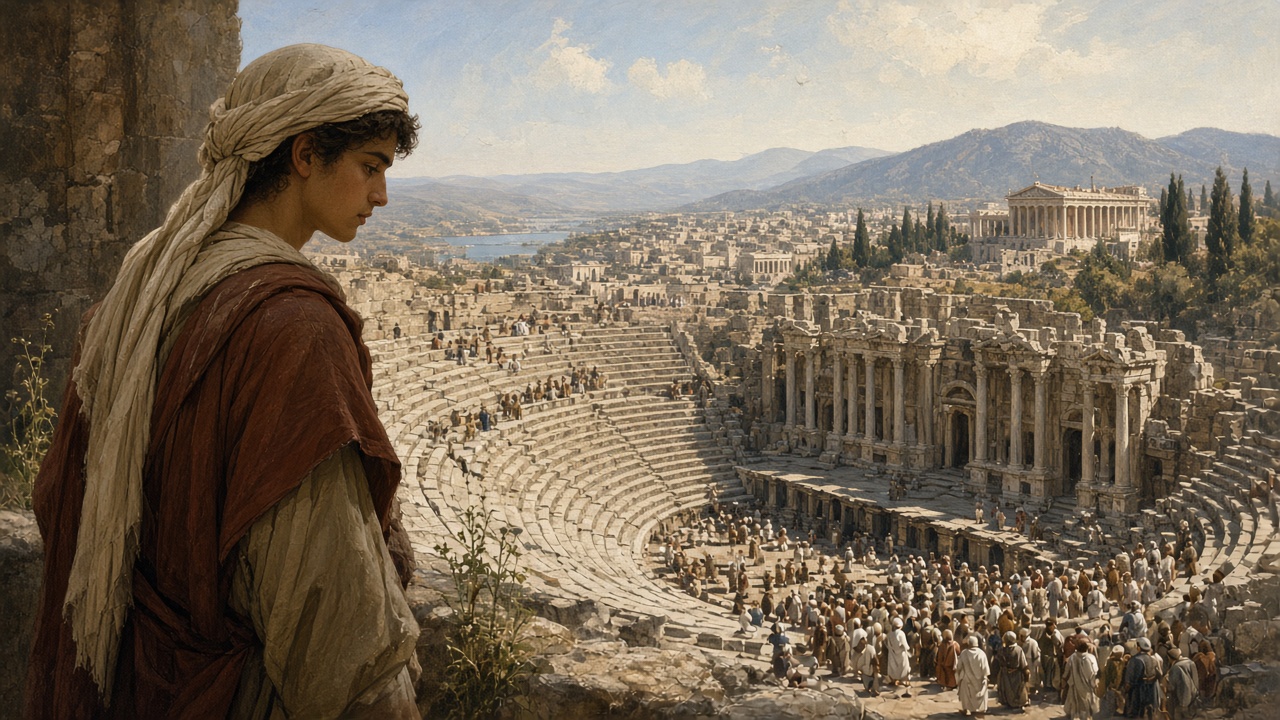
- Ephesus, where Timothy remained, was the capital of proconsular Asia, the western part of Asia Minor. In Roman times it was called the first and greatest metropolis of Asia, and it was famed for the Temple of Diana and for a theatre open to the sky, the largest in the world, capable of holding fifty thousand spectators. Macedonia, from which the dictionary says the letter was sent, was a Roman province north of Greece, governed by a propraetor with the title of proconsul.Sources: Easton: Timothy, First Epistle to · Ephesus · Macedonia
- According to Easton's Bible Dictionary (1897), the letter consists mainly of counsel to Timothy about the worship and organization of the church and the responsibilities of its various members, and of an exhortation to remain faithful in maintaining the truth amid surrounding errors.Sources: Easton: Timothy, First Epistle to
- Easton's Bible Dictionary (1897) identifies Alexander as a coppersmith who, with Hymenaeus and others, promoted certain teachings about the resurrection, which the dictionary calls heresies. It says that he made shipwreck of faith and of a good conscience, and that Paul excommunicated him, with reference to 1 Timothy 1:20.Sources: Alexander
Notes written with AI assistance from open sources (Theographic Bible Metadata, CC BY-SA 4.0; Easton’s Bible Dictionary, public domain) and reviewed before publishing.
Saudação de Paulo a Timóteo
1Paulo, apóstolo de Jesus Cristo, enviado por Deus, nosso Salvador, e por Jesus Cristo, nossa única esperança,
2a Timóteo, meu verdadeiro filho na fé.
Que Deus, nosso Pai, e Jesus Cristo, nosso Senhor, lhe mostrem a sua graça, misericórdia, e paz.
Advertência contra os falsos mestres
3Como lhe disse quando viajei para a Macedônia, espero que você fique aí em Éfeso, e procure impedir os homens que estão ensinando doutrinas falsas. 4Ponha fim aos mitos e fábulas deles, e à ideia que eles têm de valorizar genealogias, gerando questões e discussões em vez de ajudarem o povo a aceitar o plano de Deus, que é pela fé. 5O meu alvo é que todos os cristãos daí sejam cheios do amor que provém de um coração puro, e que suas mentes sejam limpas e a sua fé seja sincera.
6Mas esses mestres perderam essa ideia salutar e gastam seu tempo discutindo e falando tolices. 7Querem tornar-se famosos como mestres das leis, quando não têm a menor ideia do que tais leis realmente nos mostram. 8Sabemos que as leis são boas, quando utilizadas de acordo com a intenção divina; 9mas não foram feitas para nós, a quem Deus salvou; são para os pecadores que odeiam a Deus, que têm coração rebelde, que praguejam e blasfemam, que matam seus pais e suas mães e que cometem homicídio, 10para os que praticam a imoralidade sexual e os homossexuais, para os raptores, os mentirosos e todos os outros que fazem coisas que se opõem ao verdadeiro ensinamento. 11Esse verdadeiro ensinamento é o evangelho glorioso do nosso bendito Deus, de quem eu sou mensageiro.
A graça do Senhor para com Paulo
12Sou muito grato a Cristo Jesus, nosso Senhor, por ter me escolhido para ser um de seus mensageiros, e por ter me dado forças para ser fiel a ele, 13embora eu costumasse zombar do nome de Cristo. Persegui o seu povo, causando-lhe todo o mal que podia. Mas Deus teve misericórdia de mim, porque eu não sabia o que estava fazendo, pois naquele tempo ainda não conhecia a Cristo. 14Como nosso Senhor foi bom, pois me mostrou como confiar nele e obter a plenitude do amor de Cristo Jesus!
15Esta afirmação é verdadeira, e como eu anseio que todo o mundo conheça isto: que Cristo Jesus veio ao mundo para salvar os pecadores — e eu sou o maior de todos! 16Mas Deus teve misericórdia de mim, de tal maneira que Cristo Jesus pôde usar-me como exemplo para mostrar a todos como ele é paciente até mesmo com o pior dos pecadores, a fim de que os outros compreendam que eles também podem crer e ter a vida eterna. 17Ao Rei eterno, o Deus único, imortal e invisível — a ele sejam dadas a honra e glória para todo o sempre. Amém.
18Agora, Timóteo, meu filho, esta é a minha instrução a você de acordo com as profecias já proferidas a seu respeito: Seja um bom combatente nas batalhas do Senhor. 19Mantenha-se firme na sua fé e conserve sempre a consciência limpa, fazendo aquilo que você sabe que está certo. Porque alguns desobedeceram à consciência e fizeram deliberadamente o que sabiam que estava errado e por isso perderam a fé em Cristo. 20Himeneu e Alexandre são dois exemplos disto. Tive que entregá-los a Satanás para serem castigados para aprenderem a não blasfemar mais.
Did you know?
Timothy's Charge in Ephesus
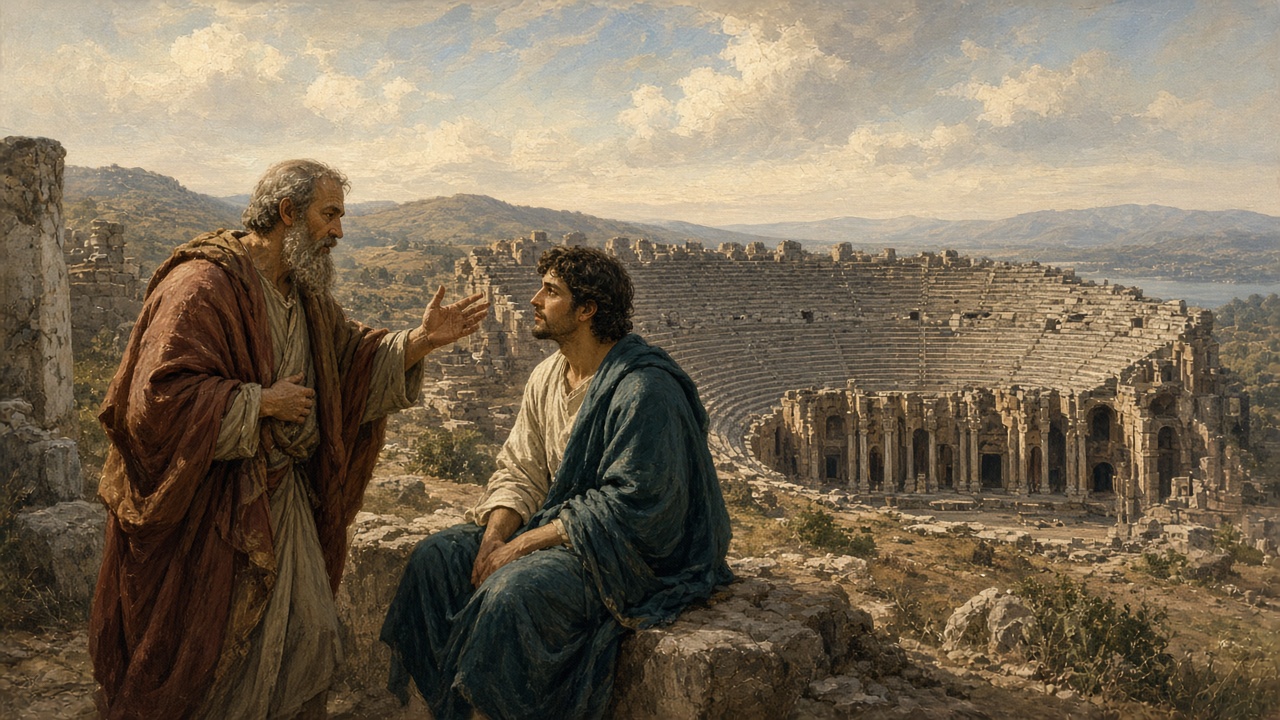
- As he departed for Macedonia, Paul urged Timothy to stay in Ephesus and instruct certain men not to teach false doctrines or devote themselves to myths and endless genealogies. Ephesus was the capital of proconsular Asia, the western part of Asia Minor, and in Roman times bore the title of the first and greatest metropolis of Asia. Macedonia was a Roman province lying north of Greece.Sources: the Bible text itself · Ephesus · Macedonia
- Paul addresses Timothy as his true child in the faith. The name Timotheus means honouring God. Easton's Bible Dictionary (1897) describes him as a young disciple and companion on many of Paul's journeys, the son of a Greek father, whom Paul regarded as his own son in the faith.Sources: the Bible text itself · Timotheus
- The chapter names Hymenaeus and Alexander among those who rejected faith and a good conscience and so shipwrecked their faith; Paul says he has handed them over to Satan to be taught not to blaspheme. Easton's Bible Dictionary (1897) identifies Alexander as a coppersmith who, with Hymenaeus and others, shipwrecked faith and a good conscience, and describes this act as an excommunication, comparing it with 1 Corinthians 5:5. Satan means adversary or accuser, and in the New Testament the name is used interchangeably with the devil.Sources: the Bible text itself · Alexander · Satan
Notes written with AI assistance from open sources (Theographic Bible Metadata, CC BY-SA 4.0; Easton’s Bible Dictionary, public domain) and reviewed before publishing.
Places in this chapter
Only places identified with high confidence are shown (90% or more according to the scholarly sources compiled by OpenBible). Period map: DARE (Digital Atlas of the Roman Empire), CC BY 4.0; modern map: © OpenStreetMap contributors; places: OpenBible.info (CC BY 4.0).
Credits and license for this translation
Biblica® Open Nova Bíblia Viva 2007
Portuguese: Biblica® Open Nova Bíblia Viva 2007 (Bible)
copyright © 2007, 2010 Biblica, Inc.
Language: Português
Dialect: Brazil
Contributor: Biblica, Inc.
Biblica® Open Nova Bíblia Viva™
Copyright © 2007, 2010 by Biblica, Inc.
“Biblica” é uma marca registrada na Oficina de Patentes e Marcas dos Estados Unidos por Biblica, Inc. Usado com permissão.
“Biblica” is a trademark registered in the United States Patent and Trademark Office by Biblica, Inc. Used with permission.
――――――
Creative Commons license
This work is made available under the Creative Commons Attribution-ShareAlike 4.0 International License (CC BY-SA). To view a copy of this license, visit https://creativecommons.org/licenses/by-sa/4.0 or send a letter to Creative Commons, PO Box 1866, Mountain View, CA 94042, USA.
You have permission to copy and distribute this Work, as long as you do not change it and you keep the title as it is. Changing or translating this Work will create a derivative work. When you publish this derivative work, you must list what changes you have made where people can see them, such as on a website. You must also show where the original Work is from: “The original Work by its copyright holders is available for free at www.biblica.com and open.bible .”
Notice of copyright must appear on the title or copyright page of the work as follows:
Biblica® Open Nova Bíblia Viva™
Copyright © 2007, 2010 by Biblica, Inc.
“Biblica” é uma marca registrada na Oficina de Patentes e Marcas dos Estados Unidos por Biblica, Inc. Usado com permissão.
“Biblica” is a trademark registered in the United States Patent and Trademark Office by Biblica, Inc. Used with permission.
You must also make your derivative work available under the same license (CC BY-SA).
If you would like to notify Biblica, Inc. regarding your translation of this work, please contact us at https://open.bible/#feedback .
This translation is made available to you under the terms of the
Creative Commons Attribution Share-Alike license 4.0.
You have permission to share and redistribute this Bible translation in any format and to make reasonable revisions and adaptations of this translation, provided that:
You include the above copyright and source information.
If you make any changes to the text, you must indicate that you did so in a way that makes it clear that the original licensor is not necessarily endorsing your changes.
If you redistribute this text, you must distribute your contributions under the same license as the original.
Pictures included with Scriptures and other documents on this site are licensed just for use with those Scriptures and documents.
For other uses, please contact the respective copyright owners.
Note that in addition to the rules above, revising and adapting God's Word involves a great responsibility to be true to God's Word. See Revelation 22:18-19.
2025-05-20
Section headings adapted from the Berean Standard Bible (public domain); they are not part of this translation’s text.
Source: http://ebible.org/poronbv/ · eBible.org