1 Corinthians 1
Biblica® Open Nova Bíblia Viva 2007 · Tap a verse to see its cross-references.
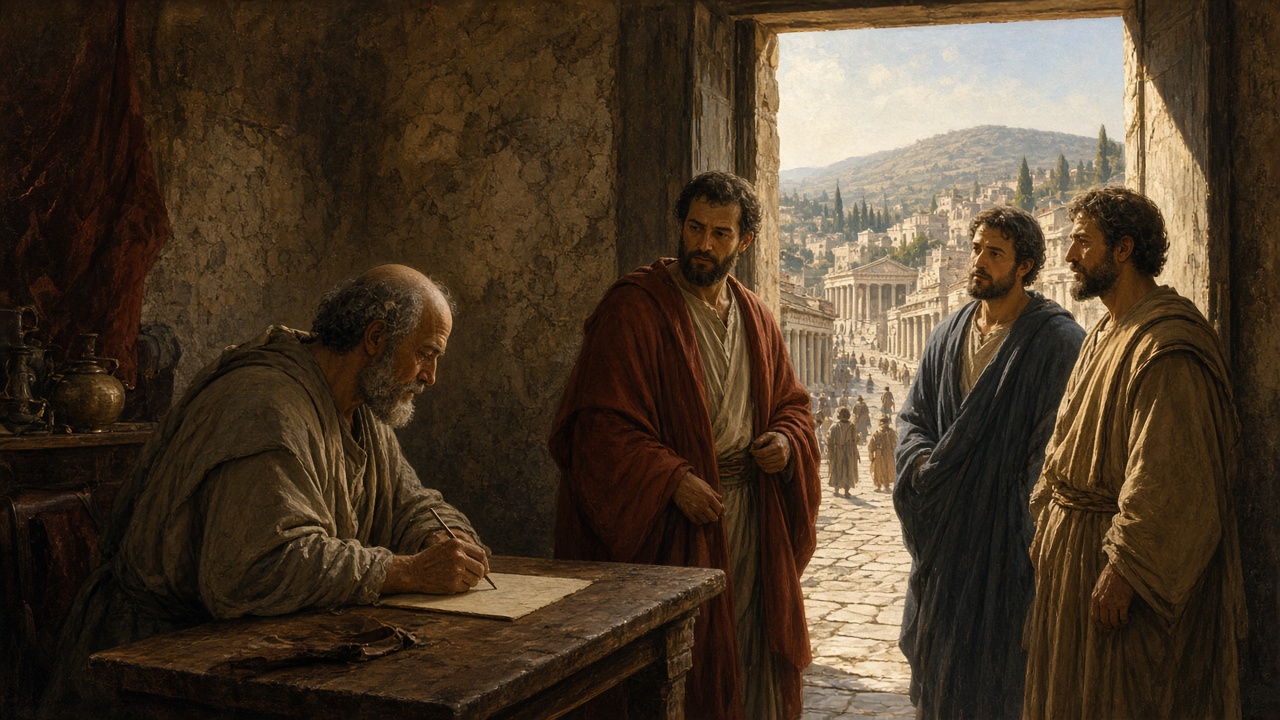
About this book
About 1 Corinthians
- Easton's Bible Dictionary (1897) presents the First Epistle to the Corinthians as a letter of the apostle Paul, written from Ephesus, the capital of proconsular Asia, about the time of the Passover in the third year of his stay there, probably in A.D. 57, when he planned to visit Macedonia and then return to Corinth.Sources: Easton: Corinthians, First Epistle to the · Ephesus
- Corinth lay on the isthmus linking the Peloponnesus to the mainland of Greece, about forty-eight miles west of Athens. The city known in the New Testament had been rebuilt about a century after the Romans destroyed the ancient city in 146 B.C., was settled by a colony of freedmen from Rome, and became the seat of government for southern Greece, the province of Achaia; it was noted for its wealth and for the luxurious and immoral habits of its people.Sources: Corinth · Achaia
- According to Easton, news of abuses and contentions reached Paul first from Apollos, then from a letter the Corinthians had written him, from members of the household of Chloe, and from Stephanas and two friends who visited him. Stephanas was a member of the church at Corinth, and his household was among those Paul had baptized; Apollos, a Jew of Alexandria who had worked in Corinth, had disciples there who were strongly attached to him. Paul wrote to check the factious spirit, correct erroneous opinions, and remedy disorderly practices, and Easton thinks Titus and an unnamed brother probably carried the letter.Sources: Easton: Corinthians, First Epistle to the · Apollos · Stephanas
- Easton divides the letter into four parts: the divisions and party strife among the Corinthians (chapters 1-4); notorious cases of immorality (chapters 5-6); questions of doctrine and of Christian ethics raised by their communications, especially abuses in the celebration of the Lord's Supper (chapters 7-14); and a defense of the resurrection of the dead, which some among them had questioned, followed by general instructions, notices, and greetings (chapters 15-16).Sources: Easton: Corinthians, First Epistle to the
- The subscription in the Authorized Version erroneously states that the letter was written at Philippi; Easton traces that error to a mistranslation of 1 Corinthians 16:5. He also notes that Paul described the writing as done out of much affliction and pressure of heart, and with streaming eyes.Sources: Easton: Corinthians, First Epistle to the
Notes written with AI assistance from open sources (Theographic Bible Metadata, CC BY-SA 4.0; Easton’s Bible Dictionary, public domain) and reviewed before publishing.
Saudações de Paulo e Sóstenes
1Paulo, escolhido por Deus para ser apóstolo de Cristo, e o irmão Sóstenes,
2à igreja de Deus que está na cidade de Corinto, aos separados em Cristo Jesus para serem santos, juntamente com todos os que, em toda parte, invocam o nome de Jesus Cristo, Senhor deles e nosso também:
3Que a graça e a paz de Deus, nosso Pai, e do Senhor Jesus Cristo estejam com vocês!
Ações de graças
4Nunca deixo de agradecer ao meu Deus por vocês por causa da graça que ele tem dado a vocês por meio de Jesus Cristo. 5Ele os enriqueceu em tudo e os ajudou a testificar dele, e deu-lhes uma compreensão total da palavra; 6o que eu lhes disse que Cristo podia fazer por vocês foi confirmado entre vocês! 7Agora vocês desfrutam de toda a graça e todas as bênçãos, de modo que não falta nenhum dom espiritual a vocês, e vocês têm todo o poder para executar a vontade dele durante este período de espera pela volta de nosso Senhor Jesus Cristo. 8E ele garante, até o fim, que vocês serão considerados isentos de qualquer pecado ou culpa naquele dia quando ele voltar. 9Certamente Deus é fiel, e foi ele quem os convidou a essa maravilhosa comunhão com seu Filho Jesus Cristo, nosso Senhor.
Divisões na igreja
10Queridos irmãos, suplico-lhes em nome do nosso Senhor Jesus Cristo que parem essas discussões entre vocês. Que haja verdadeira harmonia, a fim de que não apareçam divisões na igreja. Eu lhes imploro que tenham o mesmo modo de pensar, unidos na mente e nas intenções. 11Meus irmãos, alguns que moram na casa de Cloe me contaram a respeito das discussões e contendas entre vocês. 12Uns estão dizendo: “Eu sou seguidor de Paulo”. Outros dizem que estão do lado de Apolo ou de Pedro; e outros ainda que só eles são os verdadeiros seguidores de Cristo. 13Por acaso Cristo foi dividido em várias partes? Será que eu, Paulo, fui crucificado pelos seus pecados? Foram vocês batizados em nome de Paulo? 14Dou graças a Deus por não ter batizado nenhum de vocês, a não ser Crispo e Gaio. 15Porque agora ninguém pode dizer que foi batizado em meu nome. 16Ah, sim! Batizei a família de Estéfanas. E não me recordo de ter batizado mais alguém. 17Pois Cristo não me enviou para batizar, mas para pregar o evangelho; e até minha pregação parece simples, pois não prego com palavras de sabedoria humana, com receio de esvaziar o poder grandioso que há na mensagem da cruz de Cristo.
A mensagem da cruz
18Sei perfeitamente bem como parece loucura, àqueles que estão perdidos, quando ouvem a mensagem da cruz. Nós, porém, que somos salvos, reconhecemos que esta mensagem é o próprio poder de Deus. 19Pois está escrito:
“A sabedoria dos seus sábios se desvanecerá, e o entendimento dos que são instruídos será rejeitado”. 20Então, onde estão esses sábios, esses eruditos, esses brilhantes comentaristas das grandes questões desta era? Deus fez com que todos eles parecessem ridículos, e mostrou que a sua sabedoria é loucura. 21Deus, em sua sabedoria, providenciou para que o mundo nunca encontrasse a Deus através da sabedoria humana. E então ele se manifestou e salvou todos quantos creram em sua mensagem — essa mesma que o mundo considera loucura. 22Parece absurda para os judeus, porque eles desejam sinais miraculosos como prova de que o que está sendo pregado é verdadeiro; e é loucura para os gentios, porque eles creem somente naquilo que concorde com a sua filosofia e lhes pareça sábio. 23Por isso, quando pregamos o Cristo crucificado, os judeus se ofendem e os gentios afirmam que tudo isso é um disparate. 24Deus, porém, abriu os olhos dos que foram chamados para a salvação, tanto judeus como gentios, para verem que Cristo é o grandioso poder de Deus para salvá-los; o próprio Cristo é o centro do sábio plano de Deus para a salvação deles. 25Esse plano de Deus, chamado de “loucura”, é bem mais sábio do que o plano mais sábio do homem mais sábio, e a fraqueza de Deus é muito mais forte do que a força do homem.
A sabedoria de Deus
26Observem entre vocês mesmos, queridos irmãos, que poucos de vocês que foram chamados eram sábios de acordo com os padrões humanos, poucos eram poderosos ou de nobre nascimento. 27Pelo contrário, Deus deliberadamente escolheu valer-se de ideias que o mundo considera loucura para envergonhar aqueles indivíduos que o mundo considera sábios e grandes e escolheu o que o mundo acha fraco para envergonhar o que é forte. 28Ele escolheu o que é insignificante e desprezado pelo mundo, e que não é levado em conta absolutamente para nada, e o utilizou para reduzir a nada aqueles que o mundo considera grandes, 29para que ninguém, em parte alguma, se vanglorie na presença de Deus. 30Porque é exclusivamente por iniciativa de Deus que vocês têm essa vida por meio de Cristo Jesus. Jesus se tornou sabedoria de Deus para nós, ou seja, justiça, santidade e salvação. 31Tal como se diz nas Escrituras: “Se alguém quiser se gloriar, que se glorie somente no Senhor”.
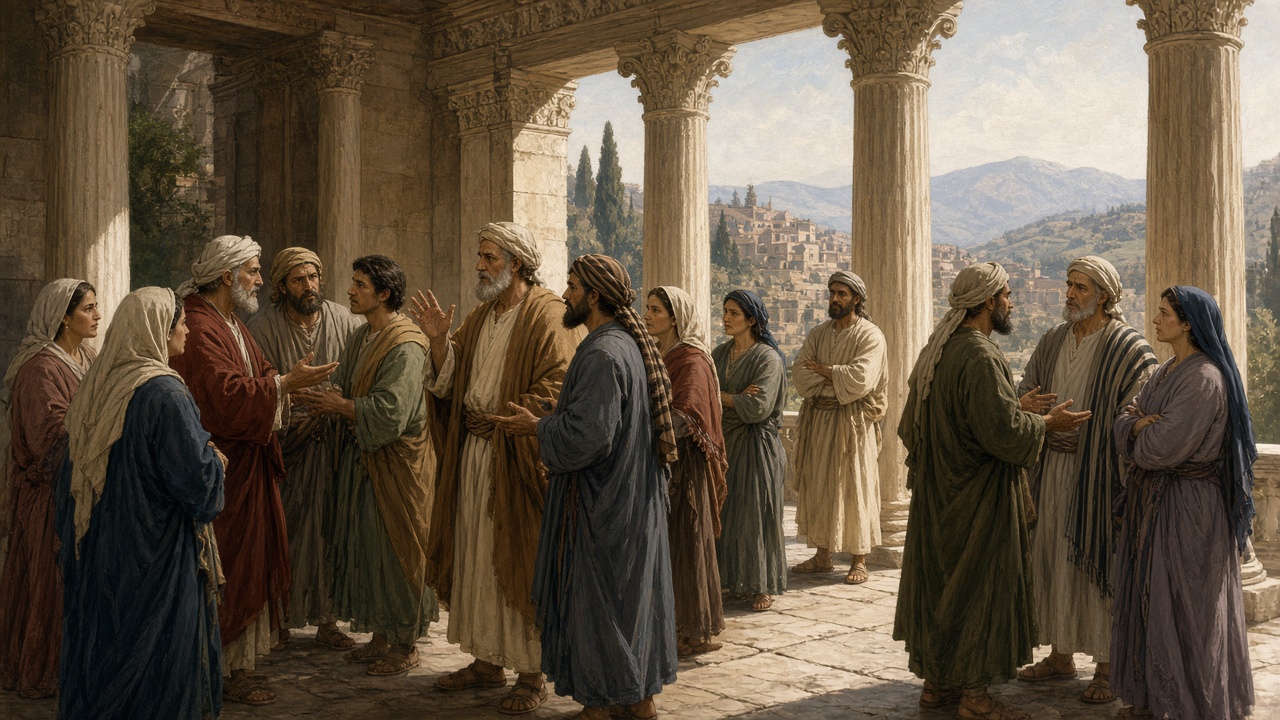
Did you know?
Divisions and the Cross in Corinth
- Corinth, the city addressed in this letter, stood on the isthmus joining the Peloponnesus to the mainland of Greece, about forty-eight miles west of Athens. The Romans destroyed the ancient city in 146 B.C.; the Corinth of the New Testament was a new city, rebuilt about a century later and settled by a colony of freedmen from Rome. Under Roman rule it was the seat of government for southern Greece, or Achaia, and was noted for its wealth.Sources: Corinth · the Bible text itself
- Paul writes that some from Chloe's household had informed him of quarrels, with people claiming to follow Paul, Apollos, Cephas, or Christ. Chloe was a Christian woman, and nothing else is known of her. Apollos, a Jew from Alexandria, eloquent and well versed in the Scriptures, went on to Corinth after Aquila and Priscilla instructed him in Ephesus, and there he helped water the seed Paul had sown.Sources: Chloe · Apollos · the Bible text itself
- Paul thanks God that he baptized only Crispus and Gaius, and also the household of Stephanas, so that no one could say they had been baptized in his name. Crispus, chief of the synagogue at Corinth, was converted and baptized with his family; Stephanas was a member of that church whose household Paul baptized. Christ, Paul says, sent him not to baptize but to preach the gospel, not with words of wisdom, lest the cross of Christ be emptied of its power.Sources: Crispus · Stephanas · the Bible text itself
Notes written with AI assistance from open sources (Theographic Bible Metadata, CC BY-SA 4.0; Easton’s Bible Dictionary, public domain) and reviewed before publishing.
Places in this chapter
- Corinth · 37.906, 22.879 · verse 2
Only places identified with high confidence are shown (90% or more according to the scholarly sources compiled by OpenBible). Period map: DARE (Digital Atlas of the Roman Empire), CC BY 4.0; modern map: © OpenStreetMap contributors; places: OpenBible.info (CC BY 4.0).
Credits and license for this translation
Biblica® Open Nova Bíblia Viva 2007
Portuguese: Biblica® Open Nova Bíblia Viva 2007 (Bible)
copyright © 2007, 2010 Biblica, Inc.
Language: Português
Dialect: Brazil
Contributor: Biblica, Inc.
Biblica® Open Nova Bíblia Viva™
Copyright © 2007, 2010 by Biblica, Inc.
“Biblica” é uma marca registrada na Oficina de Patentes e Marcas dos Estados Unidos por Biblica, Inc. Usado com permissão.
“Biblica” is a trademark registered in the United States Patent and Trademark Office by Biblica, Inc. Used with permission.
――――――
Creative Commons license
This work is made available under the Creative Commons Attribution-ShareAlike 4.0 International License (CC BY-SA). To view a copy of this license, visit https://creativecommons.org/licenses/by-sa/4.0 or send a letter to Creative Commons, PO Box 1866, Mountain View, CA 94042, USA.
You have permission to copy and distribute this Work, as long as you do not change it and you keep the title as it is. Changing or translating this Work will create a derivative work. When you publish this derivative work, you must list what changes you have made where people can see them, such as on a website. You must also show where the original Work is from: “The original Work by its copyright holders is available for free at www.biblica.com and open.bible .”
Notice of copyright must appear on the title or copyright page of the work as follows:
Biblica® Open Nova Bíblia Viva™
Copyright © 2007, 2010 by Biblica, Inc.
“Biblica” é uma marca registrada na Oficina de Patentes e Marcas dos Estados Unidos por Biblica, Inc. Usado com permissão.
“Biblica” is a trademark registered in the United States Patent and Trademark Office by Biblica, Inc. Used with permission.
You must also make your derivative work available under the same license (CC BY-SA).
If you would like to notify Biblica, Inc. regarding your translation of this work, please contact us at https://open.bible/#feedback .
This translation is made available to you under the terms of the
Creative Commons Attribution Share-Alike license 4.0.
You have permission to share and redistribute this Bible translation in any format and to make reasonable revisions and adaptations of this translation, provided that:
You include the above copyright and source information.
If you make any changes to the text, you must indicate that you did so in a way that makes it clear that the original licensor is not necessarily endorsing your changes.
If you redistribute this text, you must distribute your contributions under the same license as the original.
Pictures included with Scriptures and other documents on this site are licensed just for use with those Scriptures and documents.
For other uses, please contact the respective copyright owners.
Note that in addition to the rules above, revising and adapting God's Word involves a great responsibility to be true to God's Word. See Revelation 22:18-19.
2025-05-20
Section headings adapted from the Berean Standard Bible (public domain); they are not part of this translation’s text.
Source: http://ebible.org/poronbv/ · eBible.org