Acts 21
Iyo New Testament · Tap a verse to see its cross-references.
Polko Yerusalem owero waŋgowore uyaró
1Asa norendo uni ŋu yorotoro waŋgowore toŋero roneneŋo uyarero Kos noko mosowímo ŋuno uyaretowó. Ko saraŋoníqo Rotes noko mosowímo ŋuno uyaro rotoro windi tapémo Patara yendémo ŋuno uyaretowó. 2Yendémo ŋuno waŋgo ka Ponisia mirako uyareweya qu seqaro qenero ŋuwore toŋetowó. 3Uyareyate Saipras noko mosowí ŋu kandenani tesina yoní qenero takaro, yate-yate Siria mira takaro Tair yendémo ŋuno uyaretowó. Waŋgo simburí ŋundo situwi se rotowero tiní ŋuno oŋgurí. 4Yendémo ŋuno Yesu koro iŋo-iŋo rewero unipareyó kumi yiyato ŋundo Yuqapo Pol ŋande miraŋgurí, “Ke Yerusalem ma owero.” Ŋunde ŋuroko naru kande saŋiyoro irisa ŋunde ŋuno yoratowó. 5Asa ko naru ŋu kini tiníqo, nore yendé ŋu rotowero tatoqo, Anutu koro uni ŋuya pare-simóyemboya, nore norero yendé rotoro windi sumeyoro potoruku rero hariri tatowó. 6Hariri tato kini tiní, imemoŋgo toŋi, yero nimiraŋgurí, ko, ime yuri, yero waŋgo saŋano otowó, ko pitu ko ene norotoro yayemo toŋeŋgurí.
Akapasko ye-ye mande ka yaró
7Asa ko nore waŋgowore Tair yendé rotoro, yate Tolemes yendémo ŋuno uyaretowó. Ŋuno uni topotoya kosa meté yatowó, ko nore kosa kanata na ŋuya yatowó. 8Ko saraŋoníqo, Tolemes ŋu rotoro nore Sisaria yendémo ŋuno uyaro miti mande yesowowero uni ŋu, Filipko yano oro eneya yatowó. Ŋuko uni kande saŋiyoro irisako asá yerewí uni samaka yereyaŋgo ŋuro qu ka. 9Eneŋo nambo-simó keta nimí kini qundo ye-ye mande yeyaŋgo.
10Asa Sisaria ŋuno naru kumi ŋuno yato, ye-ye uni ka, owí Akapas, ene Judia mira rotoro Sisaria umburó. 11Umburo noreno mahero Polko utó newondímo kusiyoyara ŋu rero eneŋombo eneŋo khe kandí kusiyaró. Kusiyoro ŋande yaró, “Yuqa Surumímbo ŋande yete, ‘Juda uni Yerusalem yoteŋgo ŋundo utó ŋaro simburí rero ŋande kusiyowaŋgo, ko rero uni wini meyowo kumi kandeyemo rotowaŋgo.’”
12Yiní iŋoro noreya yendé unipare ŋuya Pol kondé, “Yerusalem ma owero,” yatowó. 13Quko Polko mande topé yaró, “Ye do karo tendoro no newondene rambaruruwoyoteŋgo? No Yerusalem ŋuno kusi nerewaŋgope ma nuroyi khumowano, peka. Enina, Uni Parámi Yesu koro owí hokowero khe ŋu howewano.” 14Ŋunde yiníqo, nore iŋo-iŋoyó rohoréŋowero mepémo kini tero mande ŋu rotato. Ŋande yatowó, “Uni Parámimboro nuŋgurí tunoqiní.”
Polko Yerusalem ŋuno oró
15Naru ŋu kini tiníqo, situwinani roŋgaruworo Yerusalem ŋuno otowó. 16Oro Sisaria yendémboro iŋo-iŋo rewero unipare kumi noreya oro Nasonko yano norotaŋgurí. Nason ŋuko Saipras noko mosowí moŋgo qu, Yesu koro iŋo-iŋo uni korete qu ka.
17Asa Yerusalem otowó quno uni topo ŋuno qundo noreŋo niŋgu-niŋgu taŋgurí. 18Saraŋoníqo, Pol noreya Jems qenewero otowó. Oto huru-huru koro tapá uni soso Jems koya yaŋgurí. 19Ŋuno oro Polko kosa meté yero yimiraró, ko eneŋombo meté roneneŋoro o soso Anutuko khoyómo uni wini meyowo qu keweroyemo taró ŋuro yaró.
20Ŋunde yiníqo, iŋoro Anutu owí hokaŋgurí. Ko ŋande miraŋgurí, “Topo, qeno. Juda uni qambu horé qundo iŋondutu taŋgurí, ko uni soso ŋundo hutuŋo mande howewero ŋuro kondé iŋoyoteŋgo. 21Quko uni kumimbo keŋo ŋande yimiroyi iŋaŋgurí, “Ko Polko Juda uni kumi uni wini meyowo keweroyemo yoteŋgo qu rowore yerero Mosesko hutuŋo mande qu howewero soré yereyote. Ene ŋande yeyote, ‘Ye simóyemboro koweye ma toŋowero. Ko otete komo qu ma howewero.’ 22Nore date tewato? Juda iŋondutu uni ŋundo keto mahe ŋuro hamó iŋowaŋgo.
23“Asa otete ka kimiratoka ŋunde te qembe. Uni nimí kini ŋano yoteŋgo qundo komo oka tewero quro Anutu koya mande kusiyaŋgurí. 24Ke uni ŋu yorero ye soso Anutu toŋímo sara tunoqewero otete ŋu ti qembe. Ŋunde teya keto eneŋo o qa-qa te inowero qu kimoyikata huye toŋowaŋgo. Ke ŋunde tiqota unipare soso iŋowaŋgo, uni kumimbo kota mande keya yaŋgurí na. Ŋande iŋowaŋgo, keko hutuŋo mande howeyote, yero iŋowaŋgo. 25Asa uni wini meyowomboro iŋondutu unipare quro norendo komo mande kusiyoro sokome ka ratowó. Ŋande yimiratowó, ko unindo nú-qare ka uroyi khumoní rero anutu kota-kota o te yunaŋgurí ŋu ma newero, ko sitú ma newero, ko unindo númbowe puŋeye kusiyi khumoní ŋu ŋuya ma newero, ko se simbururu ma tewero.”
26Asa ko saraŋoníqo, Polko uni ŋu yorero eneya Anutu toŋímo sara tunoqewero otete ŋu taŋgurí. Ŋunde teroqo Ya Surumímo oro piŋa mande ka o qa-qa uni yimitoro ŋande yaró, do naru kano murí tewero naruyó ŋu kini teweya, ko do naru kano uni soso ŋundo o qa-qa Anutu te inowaŋgo ŋuro yimiraró.
Unindo Pol Ya Surumímo towaŋgurí
27Asa murí tewero naru kande saŋiyoro irisa kini tewero taró quno ŋuno Juda uni Esia noŋgo qu kumimbo Pol Ya Surumímo qeneŋgurí. Qenero unipare qambu ŋu iŋo-iŋoye kape tiní Pol toworo 28ŋande neke kiwaŋgurí, “Ye Israel uni, nore samaka niri! Uni ŋando mira soso ŋuno mande rondaqe unipare yunoyote, ko mandí muko noreŋo wininani, hutuŋo mandenani, ko Ya Surumínani ŋaro yesaráŋoyote. Ŋu naŋge kini. Kini, enendo Grik uni ŋuya yorero Ya Surumímo ŋano arero Ya meté horé ŋa riní Anutu toŋímo pusú teyote.” 29Ŋunde yaŋgurí, dokoro komo Grik uni ka Efesus noŋgo qu, owí Tiropimus, Pol koya yendémo yiyaŋgurí, ko ŋande ye iŋaŋgurí, ko Polko uni ŋu re Ya Surumímo ariri, yero iŋaŋgurí.
30Asa ŋunde yero kiwi Yerusalem uni soso iŋoro yukuworo kheŋgeŋoro mahe kopaŋgurí. Koporo Pol toworo rero Ya Surumímo rotoro yendémo uŋgurí. Ko waka ta Ya Surumí ŋuro mako qu tuŋaŋgurí. 31Pol toworo uroyiqo, Rom koro kuma unindoro uni kembé ŋundo Yerusalem soso iŋo-iŋoye kape taró ŋuro piŋa mande iŋaró. 32Ŋunde ŋuro waka ta uni kembémbo kuma unindoro sopo-sopo kumimboya uniyemboya yorero kheŋgeŋo uyaŋgurí. Uyari unipareto yiyoro Pol utoyaŋgo ŋu rotaŋgurí.
33Uni kembé ŋundo kutaqemo mahero Pol toworo kuma uniyó yimira, kato utó kondémbo irisa kusiyi, ye yimiraró. Yero unipare ŋande osese yereró, “Ŋa dani ka? Do ka taró?” 34Yiní unipare qambu keweroyemo uni kumimbo mande ka yero nekaŋgurí, ko uni kumimbo mande meyowo yaŋgurí. Niri-niri qambu tiqo, kuma uni ŋundo o hamó qene iŋowero mepémo kini taró. Ŋunde ŋuro kuma uni yimironí Pol re toworo kuma unindo ya quroko owero taŋgurí. 35Pol oro ya piri saŋano owero tiní unipare qambu ŋundo, uratoka khumoní, yero kuma kondé ti owero rukusuwoní kuma unindo re korowo oŋgurí. 36Kowe unipare parámi ŋu yohowero oro ene mande kondé ŋande yaŋgurí, “Urika khumoní!”
Polko mande ka uni qambu yimiraró
37Asa Pol kuma unindo yayemo owero teroqota kuma unindoro uni kembé ŋu ŋande kirayaró, “Meté mande ka keya yewe teteno?”
Yiní yaró, “Date koro? Keto Grik mandewore yete. 38Noko, ke peka Isip uni ŋu, yero iŋoyoteno, soŋga komo kuma riní otoqoní uni saŋgirí 4,000 uni sukepo yutoyoteŋgo qu yorero mira wimbímo uyareŋgurí.”
39Ko Polko yaró, “Noko Juda uni ka, Tarsus yendé Silisia mirako qu ka. Yendéne muko owí parámi moré. Ai, no unipare mande yunowero iŋoteno.”
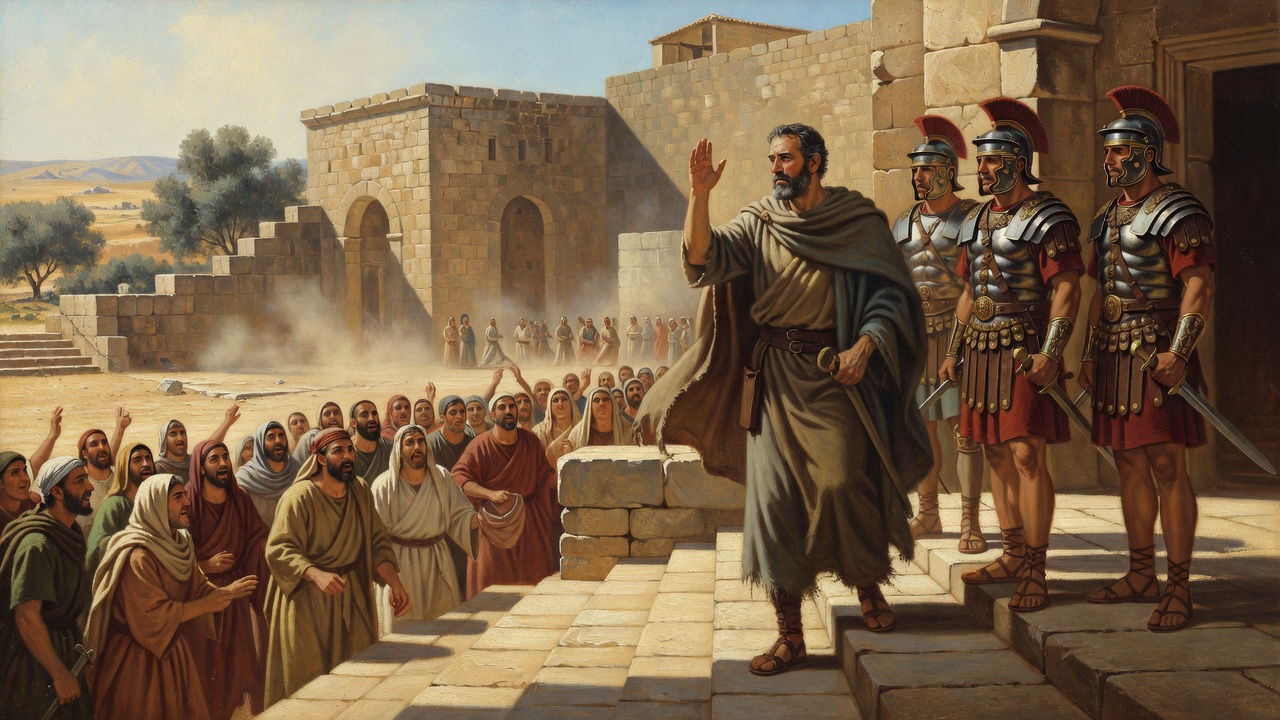
40Uni kembé ŋundo meté yiníqo, Pol mako piŋo saŋano ŋuno kaŋero kandímbo naŋge rokó-rokó taró. Ŋunde ŋuro soso maŋgoye kusiyoyi Polko Hibru mandewore mande yaró. Ŋande yaró,
Did you know?
Paul's Journey to Jerusalem and Temple Arrest
- In Caesarea, the prophet Agabus delivered a vivid symbolic warning by taking Paul's belt and binding his own hands and feet. He foretold that the Jewish leaders in Jerusalem would bind Paul and deliver him into the hands of the Gentiles.Sources: Agabus · the Bible text itself
- During his journey, Paul stayed in Caesarea at the home of Philip the evangelist, one of the original Seven chosen to serve the early church in Jerusalem. Philip had four unmarried daughters who possessed the gift of prophecy.Sources: Phillip the Evangelist · the Bible text itself
- The violent riot that resulted in Paul's Roman arrest was sparked when Jews from the province of Asia assumed that Paul had brought Trophimus, a Gentile Christian from Ephesus, into the sacred temple courts.Sources: Trophimus · the Bible text itself
Notes written with AI assistance from open sources (Theographic Bible Metadata, CC BY-SA 4.0; Easton’s Bible Dictionary, public domain) and reviewed before publishing.
Places in this chapter
- Cos · Today: Kos · 36.815, 27.110 · verse 1
- Patara · 36.260, 29.314 · verse 1
- Phoenicia · 33.271, 35.196 · verse 2
- Cyprus · 35.000, 33.000 · verses 3, 16
- Syria · Today: Syria 2 · 33.511, 36.306 · verse 3
- Tyre · 33.271, 35.196 · verses 3, 7
- Jerusalem · 31.777, 35.234 · verses 4, 11, 12, 13, 15, 17, 18, 21, 31
- Ptolemais · Today: Acre · 32.921, 35.069 · verse 7
- Caesarea · Today: Caesarea Maritima · 32.500, 34.892 · verses 8, 16
- Judea · Today: Judea 1 · 31.777, 35.234 · verse 10
- Asia · 38.400, 28.300 · verse 27
- Ephesus · 37.939, 27.341 · verse 29
- Cilicia · 36.913, 34.892 · verse 39
- Tarsus · 36.913, 34.892 · verse 39
Only places identified with high confidence are shown (90% or more according to the scholarly sources compiled by OpenBible). Period map: DARE (Digital Atlas of the Roman Empire), CC BY 4.0; modern map: © OpenStreetMap contributors; places: OpenBible.info (CC BY 4.0).
Credits and license for this translation
Iyo New Testament
The New Testament in the Iyo Language of Papua New Guinea
Nupela Testamen long tokples Iyo long Niugini
copyright © 2009 Wycliffe Bible Translators, Inc.
Language: Iyo
Translation by: Wycliffe Bible Translators
This translation is made available to you under the terms of the
Creative Commons Attribution-Noncommercial-No Derivatives license 4.0.
You may share and redistribute this Bible translation or extracts from it in any format, provided that:
You include the above copyright and source information.
You do not sell this work for a profit.
You do not change any of the words or punctuation of the Scriptures.
Pictures included with Scriptures and other documents on this site are licensed just for use with those Scriptures and documents.
For other uses, please contact the respective copyright owners.
2025-05-15
Source: http://png.bible/nca/ · eBible.org