Acts 20
Iyo New Testament · Tap a verse to see its cross-references.
Polko Masedonia, Grik mirawore khendo uyaró
1Asa kuma ŋu kini tiníqo, Polko Yesu koro iŋo-iŋo rewero unipareyó neko yiriní maheŋgurí. Mahi newondeye rukisoyoro, ime yuri yero, Masedonia mirako owero yoroto toŋeró. 2Toŋero Masedonia ŋuwore ŋuno khímbo yate mande parámi yero newondeye rukisoyaró. Ko imemoŋgo yate Grik mirako uró. 3Uro yoní kombo kapusa ŋunde kini taró. Yate-yate waŋgowore Siria mirako uyarewero taró, ko Juda uni kumimbo mande kusiyoro, uratoka khumoní, yero taŋgurí. Ŋunde ŋuro Pol rohoréŋoro Masedonia pitu ko oró. 4Uni Pol koya toŋeŋgurí ŋuko ŋandiro: Sopater, Pirus naŋuní, ŋuko Beria yendé moŋgo qu; Arisitakus koya Sekundus koya, irisa ŋuko Tesalonaika yendé moŋgo qu; Gaius, Deripe yendé moŋgo qu, ŋuya Timoti; Tikikus koya Tiropimus koya, irisa ŋuko Esia mira parámi moŋgo qu. 5Asa uni ŋundo koretero oro Tiroas yendémo ŋuno nore sopo nereŋgurí. 6Quko norendo Bret Yisiyó Moré Kini ŋuro o ne-ne ŋu kini tiníqota Filipai yendé rotoro windi tapé moŋgo toŋetowó. Ko waŋgowore karóŋoro naru kandeka ŋunde kini tiní windi tapémo mahero Tiroas ŋuno otowó. Noreko naru kande saŋiyoro irisa Tiroas ŋuno yatowó.
Polko Yutikas riní pitu ko otoqaró
7Asa sonda naru korete quno nore uniparetoya bret romboŋero o kopo natowó. Polko, kuyepo toŋewano, yero mande yeyuri, yate suwo kewero taró. 8Ya kopoyatowó quno ŋuno wasa koreko ŋuno suru qambu yora. 9Ko simó keta ka, owí muko Yutikas, enendo wituko kunditeyaró. Asa Pol mande watí yeyoní Yutikas kupo tero etewero taró. Yate ete khumaró, ko wituwore kore koŋgo hamó rokaráŋo nokono uró. Uníqo, unindo, kindo khumote, ye iŋaŋgurí. 10Ko Pol uro simó keta ŋuro saŋano etero pisiyoro yimiraró, “Ye ma yukuwowero. Ŋako toŋí yote.” 11Ŋunde yero rotoro pitu ko oro bret romboŋero re naró. Ko mande piru saŋga sowe tero yeyoní, oro saraŋaró. Saraŋoní Pol roto toŋeró. 12Ko simó keta ŋu toŋí yoní re towo toŋero newondeyemo niŋgu-niŋgu parámi taŋgurí.
Polko Efesus huru-huru koro tapá uni rukiso yereró
13Asa nore koretero uro waŋgowore uyarero Asos yendémo oro Pol sopatowó. Dokoro koretero Pol eneŋombo ŋande yaró, “Nondo khendo Asos owero iŋoteno.” 14Asa yate Polko Asos ŋuno mahiníqo, rero waŋgowore Mitilini yendémo ŋuno uyaretowó. 15Uyaro etato saraŋoní uyareyate Kios noko mosowí andusina ŋuno windi tapémo roto etatowó. Saraŋoníqo, Samos noko mosowímo uyaro etato saraŋoní, yate windi tapémo Miletus yendémo uyaretowó. 16Pol komo iŋo-iŋoyómo Efesus yendé takawano, yero iŋo kusiyaró. Ene naru parámi Esia mira parámimo ŋuno yowero piyimiŋoro waka ta toŋewero iŋaró. Ŋu mepémo tiníqo, Pentikos o ne-ne naruko ŋuno Yerusalem yowano, peka, ye iŋaró.
17Asa Miletus ŋuno Polko mande riní Efesus yendémo oní huru-huru koro tapá uni neko yiriní maheŋgurí. 18Uni ŋu eneno mahiqo, ŋande yimiraró, “Ye no naru rokóŋoro Esia mirako no yeya date yoranowó ŋuro iŋomukoteŋgo. 19Nondo owéne rewe umbuní tendoro Uni Parámimboro kho qu teyanowó. Quko naru qambuko Juda unindo nori umbuwero mande kusiyoyi quhurí parámi korowanowó. 20Ko nondo ye samaka yerewero quro mande ka yero kama soreyanowó. Kini, yendé kewero ŋuya ya enemo-enemo ŋuya mande rondaqe yunoyanowó. 21Naru rokóŋoro nondo Juda unino, Grik unino mande yesoworo ŋande yimiranowó, norendo Anutusina mahero newonde rohoré teya Uni Paráminani Yesu koro iŋondutu tato.
22“Asa iŋoyi, itakako Yuqapo kusi niriní no Yerusalem owé teteno. Ŋuno do ka nono tunoqeweya qu, no kama iŋoteno. 23Ŋandiro naŋge iŋoteno, ko yendé soso toŋeyano quno ŋunoko Yuqa Surumímbo ŋande nimitoyara, ko kusi-kusiko nondowoyi quhurí parámi korowowano. 24Quko nondo yoto-yotone kondé toworo ŋu parámi yero kama iŋoteno. Kini, khe howewe kini teweya, yero iŋoteno, ko Yesu Uni Parámimbo kho nunaró ŋu tewe kini teweya, yero iŋoteno. Kho ŋuko mande yero Anutu koro samaka-samaka tuwó ŋuro miti mandeyó yewero kho qu.
25“Asa iŋoyi, komo no ye keweroyewore Anutuko unipareyó wiri yereyote naruyó ŋuro yesowo yimitoyanowó. Quko no itakako iŋoteno, imemoŋgo yendo umu-kembane pitu ko kama qenewaŋgo. 26Ŋunde ŋuro itaka ŋande yimiroteno, ye ka khumowaŋgo quro potó ŋuko neneŋo kini. 27Dokoro nondo Anutu koro iŋondutuyó soso ŋu yesoworo yimiranowó. 28Ye koweye meté sopoyuri. Ko Yuqa Surumímbo Anutu koro huru-huru soso yore yeŋo kandeyemo rotaró ŋu ŋuya meté sopo yereyuri. Dokoro eneŋo naŋunímboro sitúŋombo kimo yereró. 29No iŋoteno, yoroto toŋewano qunoko, isa saŋgirí qundo ye keweroyemo mahero unipare rambaruru yerewaŋgo. 30Ko uni topoye kumi yeŋo keweroye moŋgo otoqoro mande kota yero unipare kaná yerero yowosowaŋgo. 31Ŋunde ŋuro ye kondé sopo yereyuri qembe. Ŋande iŋoyuri qembe, kumima naru kapusa qunoko kosa suwo nondo tendo-tendoro oresaka mande ye yimitoyanowó.
32“Kowe itakako ye yorero Uni Parámi kandímo yorotoro eneŋo samaka-samaka tuwó ŋuro mande kusuŋoyómo yorototeno. Samaka-samaka tuwó ŋundo meté wimbu re yunoweya, ko o meté qu Anutuko unipare soso rokó yereró ŋu siyowaŋgo qu siyoro yunoweya. 33Nondo uni karo silwayó, golyó, tuwiyó quro qene nuŋgu ka kama tanowó. 34Yeŋombo iŋoteŋgo, neneŋombo kho towanowó ŋuro tero otoro tukuni teroqo neneŋombo o siyoyanowó, ko nondo uni noya yoteto ŋu ŋuya samaka yereyanowó. 35O soso tanowó ŋundoko ŋande witú yereró, asa yendo kho kondé tero uni wimbuye moré kini ŋu samaka yerewaŋgo. Yesu Uni Parámi eneŋombo yaró ŋuro iŋato. Ŋande yaró, ‘Ko uni ka oka topé moŋgo siyoweya quko puriŋo ka reweya, peka. Quko uni ka oka topé inoweya ŋuko puriŋo parámi ka hamó reweya.’”
36Polko mande ŋu yiní kini tiní potoruku tero tapá uni ŋuya hariri taŋgurí. 37Ŋu kini tiní soso tendoro Pol towo pisiyoro mutó inaŋgurí. 38Komo Polko yaró, “Yeko no umu-kembane kama qenewaŋgo,” ŋunde ŋuro newonde surumí parámi taŋgurí. Ko rero waŋgo saŋano rotaŋgurí.
Did you know?
Farewell on the way to Jerusalem
- Leaving Troas, Paul sent his companions ahead by ship and walked to Assos along the Roman road. Assos was a seaport of Proconsular Asia in Mysia, on the north shore of the Gulf of Adramyttium; the walk was about 20 miles, the sea route about 30, and the island of Lesbos lay about 7 miles offshore.Sources: the Bible text itself · Assos
- Paul sailed past Ephesus to avoid spending time in the province of Asia—the Roman province in western Asia Minor, with Ephesus as its capital—because he hoped, if possible, to reach Jerusalem by the day of Pentecost. He stopped at Miletus, a seaport and the ancient capital of Ionia about 36 miles south of Ephesus, and summoned the elders of the Ephesian church.Sources: the Bible text itself · Asia · Miletus
- Seven men traveled with him: Sopater of Berea, Aristarchus and Secundus of Thessalonica, Gaius of Derbe, Timothy, and Tychicus and Trophimus from Asia. Aristarchus of Thessalonica later shared Paul’s imprisonment in Rome, and Trophimus, an Ephesian, accompanied him on this part of the journey and was with him in Jerusalem.Sources: the Bible text itself · Aristarchus · Trophimus
Notes written with AI assistance from open sources (Theographic Bible Metadata, CC BY-SA 4.0; Easton’s Bible Dictionary, public domain) and reviewed before publishing.
Places in this chapter
- Macedonia · 41.600, 22.540 · verses 1, 3, 6
- Greece · 37.972, 23.727 · verse 2
- Syria · Today: Syria 2 · 33.511, 36.306 · verse 3
- Asia · 38.400, 28.300 · verses 4, 16, 18
- Berea · Today: Veria · 40.518, 22.200 · verse 4
- Thessalonica · Today: Thessaloniki · 40.638, 22.946 · verse 4
- Troas · Today: Alexandria Troas · 39.752, 26.159 · verses 5, 6
- Philippi · 41.012, 24.285 · verse 6
- Assos · 39.491, 26.337 · verses 13, 14
- Mitylene · Today: ancient theater at Mitylene · 39.110, 26.547 · verse 14
- Chios · 38.373, 26.137 · verse 15
- Miletus · 37.531, 27.276 · verses 15, 17
- Samos · 37.750, 26.833 · verse 15
- Trogyllium · Today: Cape Mycale · 37.659, 27.003 · verse 15
- Ephesus · 37.939, 27.341 · verses 16, 17
- Jerusalem · 31.777, 35.234 · verses 16, 22
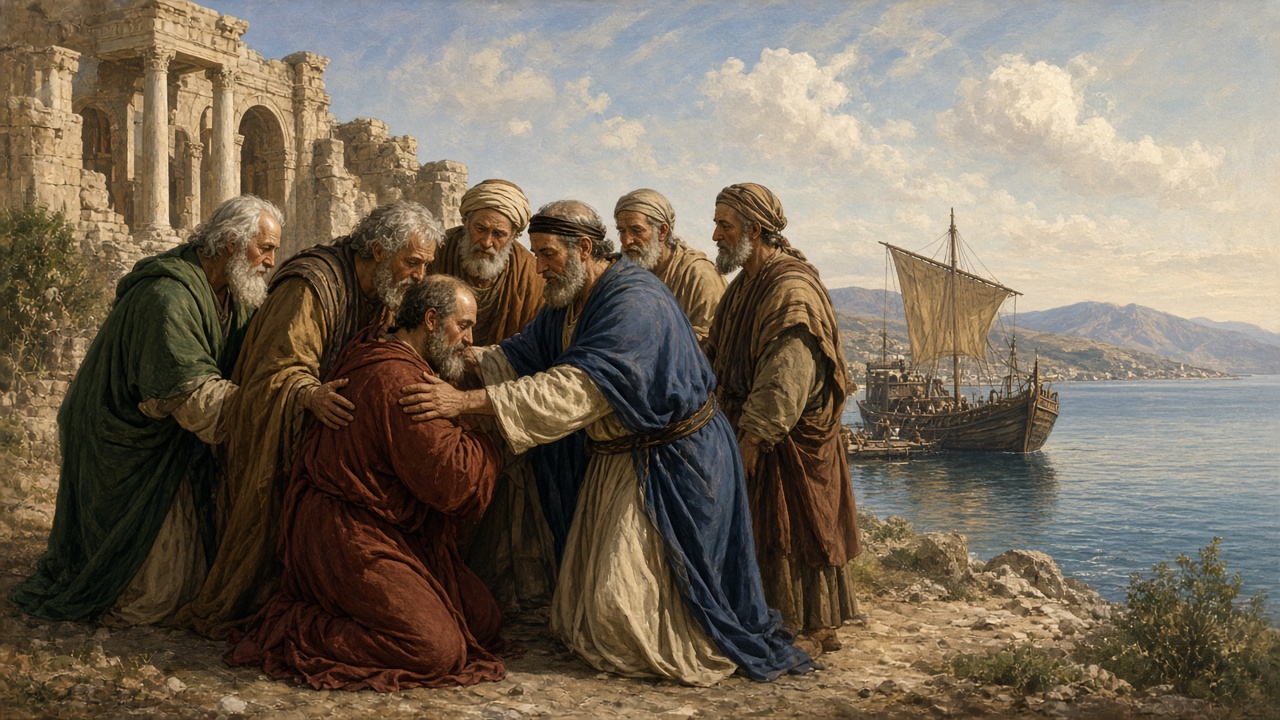
Only places identified with high confidence are shown (90% or more according to the scholarly sources compiled by OpenBible). Period map: DARE (Digital Atlas of the Roman Empire), CC BY 4.0; modern map: © OpenStreetMap contributors; places: OpenBible.info (CC BY 4.0).
Credits and license for this translation
Iyo New Testament
The New Testament in the Iyo Language of Papua New Guinea
Nupela Testamen long tokples Iyo long Niugini
copyright © 2009 Wycliffe Bible Translators, Inc.
Language: Iyo
Translation by: Wycliffe Bible Translators
This translation is made available to you under the terms of the
Creative Commons Attribution-Noncommercial-No Derivatives license 4.0.
You may share and redistribute this Bible translation or extracts from it in any format, provided that:
You include the above copyright and source information.
You do not sell this work for a profit.
You do not change any of the words or punctuation of the Scriptures.
Pictures included with Scriptures and other documents on this site are licensed just for use with those Scriptures and documents.
For other uses, please contact the respective copyright owners.
2025-05-15
Source: http://png.bible/nca/ · eBible.org