Song of Songs 7
Godɨn Eghaghanim: Akar Gavgavir Dɨkɨrɨzir Ghurim ko Igiam · Tap a verse to see its cross-references.
Gumazir igiamɨn onger akam
1O kɨ ifongezir amizim, nɨ bar amizir igharazibagh afira,
egha mati atrivimɨn guivim.
Nɨ dagarir asuaba aghuizɨ,
nɨn dagarimning bar aghungi.
Nɨn oghɨriamningɨn ganganimning, bar dera,
mati nedazir mamning, fofozir gumazim dagɨar aghuimɨn aning aghore.
2Nɨn overapanim,
mati itarir mam, me wainɨn dɨpam ko pauran isɨngtɨzim verezɨ, an a gizɨfa.
Nɨn navim bar dera,
mati witɨn pozir mam, me akɨmarir aghuaribar an kuruke.
3Nɨn otemning bar dera,
mati asɨzir dian atiar aghuarir pumuning.
4Nɨn fɨragharim bar dera,
mati tauan ruarir ghurghurim.
Nɨn damazimning bar dera,
mati dɨpar akarer muziarir Hesbonɨn nguibar ekiamɨn tiar akamɨn boroghɨn itimning.
Nɨn atinim bar dera,
mati Lebanon geghuvir gumazibar tauan ruarim.
Me an ikiava, Damaskusɨn nguibar ekiam geghufi.
5Nɨn dapanim nɨn namnam gisɨn ikia bar dera,
mati atrivimɨn dapanir asuam,
egha mati Karmelɨn Mɨghsɨar orazim.
Nɨn dapanir arɨzir gɨrakɨrangɨn guraghav itim, pigha ruaragha bar deragha taghtasi,
mati atrivimɨn inir aghuim.
Egh nɨn dapanarɨzir kam,
atrivim damutɨ, a nɨ gakuegh, nɨn kalabuziar gumazimɨn mɨn otogham.
6O nan amizir kɨ ifongezim, nɨ amizir bar dirim.
Kɨ bar nɨ gifonge,
ezɨ nɨn biziba bar na gamima,
kɨ bar akonge.
7Nɨn ruarim bar dera,
mati iruem voroghɨra tughav iti.
Ezɨ nɨn otemning,
mati iruer foroziamning.
8Kɨ ghaze, kɨ iruer kamɨn mavanang,
egh an dagheba iniam.
Kɨ nɨn otemningɨn gari,
aning mati wainɨn orozaghar ovɨzir avɨriba itimning.
Ezɨ nɨn akamɨn otivir mughuriam,
mati ter ovɨzir mughuriar aghuim itim.
9Nɨ nan torima bar dera,
mati wainɨn bar aghuim, nan amizimɨn akatorimɨn amɨraghavɨra emɨri.
Nɨ nan tora,
mati ga uaning inigha akua wainɨn isɨngtɨzim api.
Amizir igiamɨn onger akam
10Nan roroar gumazir kɨ bar ifongezim,
kɨ an amuim,
ezɨ a bar na gifonge.
11O nan roroar gumazir kɨ bar ifongezim,
nɨ na ko izɨ.
Ga dɨmagarimɨn ruarimɨn mangɨ,
egh nguibar dozibar ikɨ dakuam.
12Egh mɨzaraghara dɨkavigh mangɨ
wainɨn ikarɨzir azenibar ganam.
Dar atiba ko akɨmariba ti oneghama?
Egh uaghan pomigranetɨn ovɨzir aghuiba ber temebar ganam,
dar akɨmariba ti onez, o puvatɨ?
Ga wainɨn azenir kamɨn ikɨ,
egh kɨ uabɨ isɨ nɨ danɨng kamaghɨn nɨn akagham,
kɨ bar nɨ gifonge.
13O nan roroar gumazir kɨ bar ifongezim,
kɨ temer ovɨzir aghuiba ini,
ter ovɨzir kaba e dav gɨa ghaze, amiziba an ovɨziba isa akavsiar arazim gamua da apima,
dar mughuriam gumazim damutɨ, an amuim ko daku, egh boriba batam,
kɨ da isa tiar akamɨn boroghɨn da atɨ,
eghtɨ nɨ dar amam.
Kɨ fomɨra maba ini,
egha maba kɨ datɨrɨghɨra da ini.
Kɨ uan ifongiam isa nɨ baghavɨra anetɨ.
Egh ga ter ovɨzir kamɨn mughuriam ini ga uan ifongiam damutɨ, a dɨkavam.
Did you know?
Poetry of Love and Landscape
- The poem describes the woman's beauty using prominent landmarks of the region. Her eyes are compared to the calm pools of Heshbon near the gate of Bath-rabbim east of the Jordan, while her profile is likened to a majestic tower in the mountain range of Lebanon overlooking Damascus.Sources: the Bible text itself · Heshbon · Bath-rabbim · Lebanon
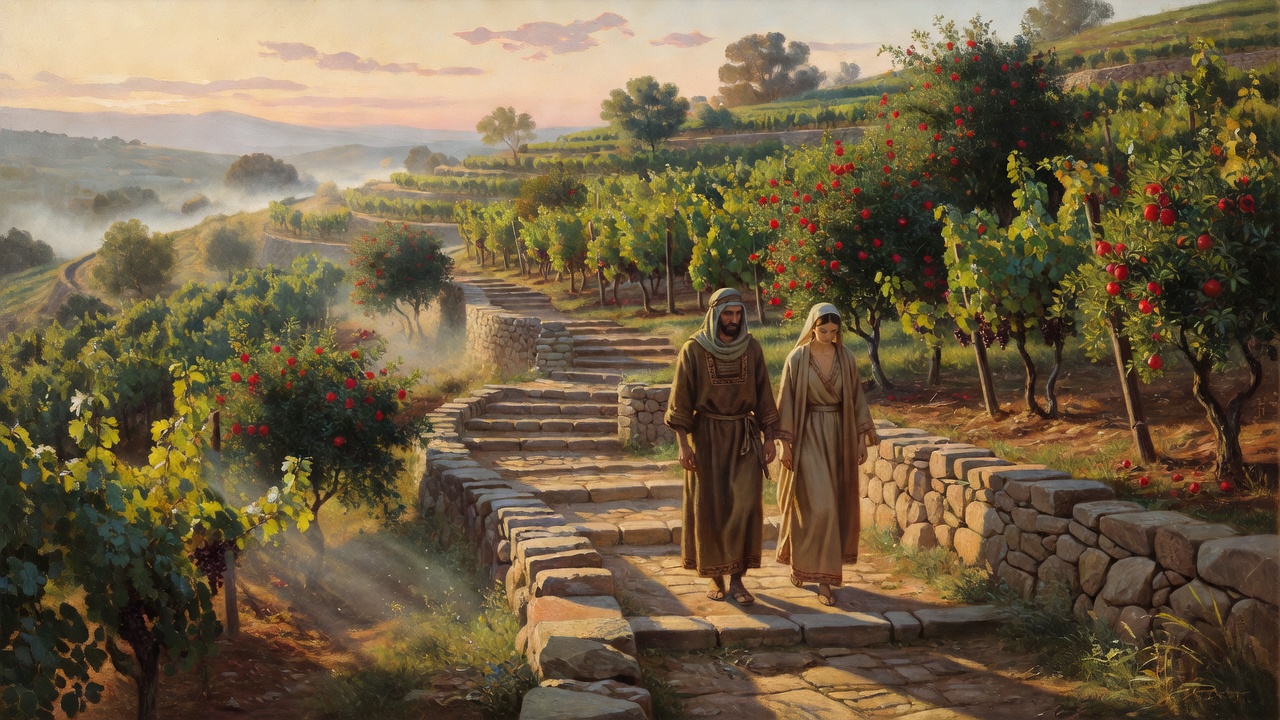
- The chapter concludes with an invitation to the countryside during the renewal of spring. The lovers seek out budding grapevines, blooming pomegranates, and fragrant mandrakes, reflecting the close connection in ancient Hebrew poetry between romantic intimacy and the vitality of the natural world.Sources: the Bible text itself
Notes written with AI assistance from open sources (Theographic Bible Metadata, CC BY-SA 4.0; Easton’s Bible Dictionary, public domain) and reviewed before publishing.
Places in this chapter
- Bath-rabbim · Today: in Tell Hesban · 31.801, 35.809 · verse 4
- Damascus · 33.511, 36.306 · verse 4
- Lebanon · 33.540, 35.584 · verse 4
- Mount Carmel · 32.672, 35.023 · verse 5
Only places identified with high confidence are shown (90% or more according to the scholarly sources compiled by OpenBible). Period map: DARE (Digital Atlas of the Roman Empire), CC BY 4.0; modern map: © OpenStreetMap contributors; places: OpenBible.info (CC BY 4.0).
Credits and license for this translation
Godɨn Eghaghanim: Akar Gavgavir Dɨkɨrɨzir Ghurim ko Igiam
The Holy Bible in the Aruamu language of Madang Province, Papua New Guinea, 2020 Edition
Buk Baibel long tokples Aruamu long Madang Provins long Niugini long 2020
copyright © 2020 Pioneer Bible Translators
Language: Aruamu
Translation by: Pioneer Bible Translators
Contributor: The Seed Company
GOD'S STORY in the Aruamu Language of Papua New Guinea
This translation is made available to you under the terms of the
Creative Commons Attribution Share-Alike license 4.0.
You have permission to share and redistribute this Bible translation in any format and to make reasonable revisions and adaptations of this translation, provided that:
You include the above copyright and source information.
If you make any changes to the text, you must indicate that you did so in a way that makes it clear that the original licensor is not necessarily endorsing your changes.
If you redistribute this text, you must distribute your contributions under the same license as the original.
Pictures included with Scriptures and other documents on this site are licensed just for use with those Scriptures and documents.
For other uses, please contact the respective copyright owners.
Note that in addition to the rules above, revising and adapting God's Word involves a great responsibility to be true to God's Word. See Revelation 22:18-19.
2025-05-15
Source: http://png.bible/msy2020/ · eBible.org