Matthew 11
Abureni NT Portions · Tap a verse to see its cross-references.
1Igiel bho̠ A̠zizo̠s na̠ a̠kikiom d̠iobh na̠ i̠wal ogbo atu̠ghan d̠o̠yo̠ awe̠le̠ bho̠, sa̠ i̠na ad̠u̠a ma̠ i̠se̠, ka̠ atu̠ghu̠me̠ni̠ agba ma̠ ib̠eb̠i asu̠gbagba bho̠ d̠a̠ re̠ma ya̠ itua̠n bho̠.
A̠zizo̠s na̠ Azo̠n Owurmamu̠m bho̠
2Igiel bho̠ Azo̠n aro̠ d̠a̠ ikoli amu̠gho̠n i̠di̠ar ya̠ Akrai̠st na̠ a̠gir bho̠, sa̠ a̠ruom ogbo atu̠ghan d̠o̠yo̠ ma̠ o̠gi̠, 3ka̠ opura̠n o̠yo̠ ma̠a̠, “Anwa o̠ni̠ wa̠ na̠ a̠ru bho̠ ke̠re̠, bo̠d̠o̠ ka̠ i̠yar ogon opa̠n o̠ni̠?”
4Sa̠ A̠zizo̠s awo̠ran awa ma̠a̠, “I̠gi̠e̠ ka̠ e̠gba ma̠ enigha̠ ma̠ Azo̠n i̠di̠ar ya̠ inyin na̠ o̠bi̠gh bho̠, sekina̠ ya̠ inyin na̠ o̠mu̠gho̠n bho̠. 5Ogbo ya̠ ikpom a̠rid̠ien bho̠, na̠ e̠bi̠gh esi, a̠rukula̠ bho̠ na̠ erile, ogbo ya̠ na̠ e̠nwe̠r asu̠nwe̠r ekid̠igh bho̠ na̠ okoko o̠b̠ab̠alame̠ni̠, remua̠ bho̠ na̠ e̠mu̠gho̠n abar, imumugh a̠nwunom na̠ ob̠egion, sa̠ na̠ o̠gba ma̠ ib̠eb̠i asu̠gbagba bho̠ na̠ onigha̠ ma̠ ronyigoiny bho̠. 6Itutumeni e̠ro̠ enigha̠ ma̠ i̠na o̠ni̠ wa̠ o̠tu̠n d̠o̠ ma̠ rogir ya̠ ami̠ na̠ a̠gir bho̠ a̠ghel ami̠.”
7Igiel bho̠ awa na̠ e̠d̠u̠a bho̠, sa̠ A̠zizo̠s ake̠ ma̠ o̠gba i̠di̠ar ya̠ igboloma̠ ma̠ Azo̠n owurma̠mu̠m bho̠ onigha̠ o̠lo̠gh a̠nwunom bho̠ ma̠a̠: “Inyin u̠gi̠ d̠a̠ e̠sala bho̠, ka̠ inyin u̠ru̠ru̠an o̠bi̠gh ere? Ikpoko ya̠ na̠ eduka̠ d̠a̠ o̠fe̠gu̠ ke̠re̠? 8Ku̠gba ma o̠ku̠a d̠o̠, ka̠ inyin u̠ru̠ru̠an ka̠ o̠bi̠gh o̠ni̠ ola̠ na̠ a̠bura̠ ma̠ ibura̠ e̠no̠gho̠man ke̠re̠? Iloghome ma̠ ogbo ya̠ na̠ ebura̠ ma̠ ibura̠ e̠no̠gho̠man, na̠ erugh d̠a̠ rogigo Aru̠li̠le̠ma! 9Ya̠a̠, inyin u̠tu̠n ka̠ o̠bi̠gh ere o̠gi̠? Owil ke̠re̠? Yii, owil ga̠i, ya̠a̠ ami̠ na̠ agba na̠ a̠nigha̠ inyin ma̠a̠, o̠ni̠ ola̠ a̠pu ma̠ owil. 10Onon o̠ni̠ wa̠ u̠ge̠ ugboloma̠ bho̠ ma̠a̠:
“ ‘Ami̠ ta̠ a̠ruom o̠ni̠ a̠duom d̠ami̠ ma̠ od̠ia̠ o̠gi̠ kisa̠ anwa ta̠ a̠ru,
ma̠ o̠tu̠ghu̠man eten d̠oyom ob̠a̠ra̠.’
11Ya̠gia̠ga̠i, ami̠ na̠ agba na̠ a̠nigha̠ inyin ma̠a̠, d̠a̠ ogbo ya̠ anwani̠ i̠maragi̠ bho̠, o̠ni̠ ola̠ abu̠gh a̠pu ma̠ Azo̠n owurmamu̠m bho̠ ta̠ omite d̠o̠; ya̠a̠ o̠ni̠ wa̠ aki̠r a̠pu d̠a̠ irileghom ote̠nai̠ny bho̠, abu̠gh a̠pu i̠na.” 12Ob̠eton d̠a̠ amu̠m ta̠ Azo̠n owurmamu̠m bho̠ ra̠ o̠te̠i̠ i̠se̠n, irileghom ote̠nai̠ny na̠ asu̠ ma̠ onyen o̠kparakpar agu̠o̠, sa̠ i̠kparakpar a̠nwunom ku̠ku̠m na̠ ewia̠n na̠ e̠te̠i̠. 13Kisa̠ Azo̠n ta̠ a̠ru, eb̠la̠ a̠riwil bho̠ ewa̠ sa̠ oloko bho̠ eka̠ agba a̠gboloma̠ ma̠ irileghom bho̠. 14Sa̠, ku̠gba ma̠a̠ inyin ta̠ o̠da ma̠ asu̠gbagba d̠ami̠ obhin, bha̠ ima̠ra̠ ma̠a̠, i̠na I̠lai̠za wa̠ a̠riwil bho̠ iwa̠ ma̠a̠ ta̠ a̠ru bho̠. 15“Wa̠nwuna̠ ma̠ a̠to, anagha o!”
16“I̠se̠n, ka̠ ta̠ obhin amu̠m onon atu̠o̠m ere? Awa od̠i ma̠ agu̠o̠ i̠gbara anwi̠i̠ny, ya̠ od̠i ma̠ a̠dila̠de d̠a̠ egbolom a̠b̠ua̠, sa̠ odi na̠ a̠kele ma̠ odi ma̠a̠:
17“‘I̠yar upughe ma̠ od̠od̠ue onigha̠ inyin,
ya̠a̠ inyin u̠ghe̠r d̠o̠ ma̠ i̠gba,
I̠yar u̠mo̠r aso̠r ekulom,
ya̠a̠ inyin u̠ku̠nu̠ d̠o̠.’
18Azo̠n a̠ru bho̠, na̠ od̠e d̠o̠ ma̠ ed̠ia̠n, na̠ o̠d̠a d̠o̠ ma̠ a̠min nyen, sa̠ inyin u̠gba ma̠a̠: ‘Eru na̠ ab̠am.’ 19O̠nyi̠ ta̠ O̠ni̠ a̠ru bho̠, na̠ a̠d̠e na̠ ad̠a, sa̠ inyin na̠ o̠gba ma̠a̠, ‘I̠bi̠ghe̠ ma̠ o̠d̠o̠gho̠d̠o̠gh na̠ o̠d̠a ma̠ a̠min onon, wa̠ na̠ a̠rologha̠n igun ma̠ otua̠-ebhugh na̠ id̠ighi ma̠ i̠karabh bho̠.’ Yaa̠, od̠ighi i̠di̠ar o̠ni̠ na̠ eleriom eloghom abar o̠ni̠ bho̠.”
A̠zizo̠s A̠sugi ma̠ Re̠ma ya̠ Otiba̠ra̠ d̠o̠ bho̠
20D̠a̠ obhel obha̠, sa̠ A̠zizo̠s ake̠ ma̠ osugi re̠ma ya̠ i̠na a̠gir ibom ilologia̠n bho̠, ezin bho̠ awa ima̠ra̠ d̠o̠ ma̠ otiba̠ra̠. 21“Ekulom inyin a̠nwunom A̠kora̠zin! Ekulom inyin a̠nwunom Abe̠tsai̠da! Ezin bho̠, ilologia̠n ya̠ ugir unigha̠ inyin bho̠ ma̠ ugir onigha̠ ma̠ Ataya na̠ Asi̠do̠n nab̠o̠, awa ka̠ i̠lo̠gi̠an akapa i̠ku̠nu̠, sa̠ ka̠ ibhugha̠ ma̠ i̠ru̠ru̠ etiba̠ra̠ ka̠ ob̠om igiel. 22O̠ku̠a eka̠, ami̠ na̠ agba na̠ a̠nigha̠ inyin ma̠a̠, ta̠ okpon igbirigbir Ataya na̠ Asi̠do̠n opu inyin d̠a̠ a̠d̠a̠ma̠ osobh ase̠ bho̠. 23Ya̠a̠, inyin a̠nwunom Akapanu̠m, ta̠ o̠bu̠ghu̠me̠ni̠ inyin d̠a̠ ote̠nai̠ny ke̠re̠? E̠nyi̠, ta̠ orobh inyin osoroni d̠a̠ ekud̠um a̠de imumugh bho̠. Ezin bho̠, ilologia̠n ya̠ ugir unigha̠ inyin bho̠, ma̠a̠ ugir d̠a̠ e̠ma Aso̠do̠m nab̠o̠, e̠ma bho̠ ka̠ i̠ro̠ ate̠i̠ a̠didon. 24O̠ku̠a eka̠, ami̠ na̠ agba na̠ a̠nigha̠ inyin ma̠a̠, ta̠ okpon igbirigbir a̠nwunom Aso̠do̠m opu inyin d̠a̠ a̠d̠a̠ma̠ osobh ase̠ bho̠.”
Tue D̠ami̠ ra̠ A̠sira̠ ma̠ Epobh
25D̠a̠ onin obhel obha̠, sa̠ A̠zizo̠s a̠fugh ma̠a̠, “Ami̠ na̠ ase̠bh anwa O̠we̠de̠ Wa̠nwuna̠ ma̠ ote̠nai̠ny na̠ a̠de. Ezin bho̠ anwa i̠wo̠gi̠o̠m i̠nye̠n iloghodi̠ar bho̠ sekina̠ iloghod̠ire bho̠, sa̠ anwa ileriom kuma̠ ogbo ya̠ olei d̠o̠ ma̠ i̠d̠iar bho̠. 26Ya̠ga̠i, a̠sora̠n O̠we̠de̠. Ezin bho̠, a̠d̠igh anwa ma̠ ologi ma̠ o̠to̠ oguri o̠ku̠a.
27“O̠we̠de̠ d̠ami̠ na̠ a̠nigha̠ ami̠ ma̠ eb̠la̠ i̠di̠ar. O̠ni̠ ola̠ a̠loghom O̠nyi̠ bho̠ bo̠, a̠ten O̠we̠de̠ bho̠. Obha̠ agu̠o̠ o̠ni̠ ola̠ a̠loghom O̠we̠de̠ bho̠ o̠ro̠ d̠o̠, a̠ten O̠nyi̠ bho̠, na̠ a̠nwunom ya̠ O̠nyi̠ bho̠ ato̠ ma̠ obhin O̠we̠de̠ bho̠ oleriom.
28“Itue d̠ami̠, eb̠la̠ inyin ya̠ a̠ruzu na̠ edughogh, sa̠ a̠dol na̠ e̠ne̠mu̠o̠m bho̠, sa̠ ami̠ ta̠ a̠nigha̠ inyin osira̠ epobh. 29Ib̠etone ma̠ a̠dol d̠a̠ ami̠ ma̠ erol, ma̠ e̠tu̠ghan d̠a̠ agu̠o̠ d̠ami̠, ezin bho̠ ami̠ o̠ni̠ ola̠ inwuna̠ ma̠ ologi ekima̠ na̠ ozuruna̠ eghoi, sa̠ reloghoma̠n a̠ruzu d̠inyin ta̠ e̠ro̠ na̠ ekima̠. 30Ezin bho̠ o̠tu̠o̠no̠m ami̠ ob̠ub̠ura̠n abar, sa̠ a̠dol d̠ami̠ a̠bhobhogh.”
Did you know?
John's question and the cities that did not repent
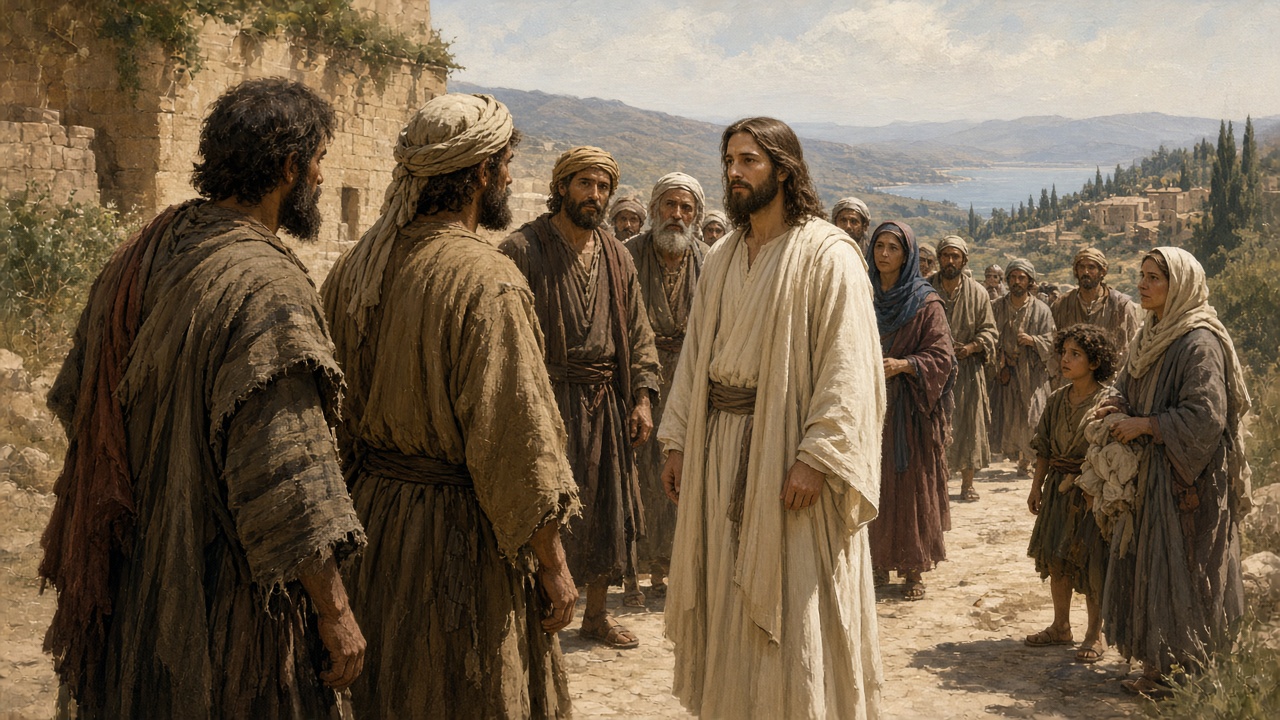
- From prison, John sent his disciples to ask whether Jesus was the one who was to come. Jesus told the crowds that John was more than a prophet—the messenger sent ahead to prepare the way—and, if they were willing to accept it, the Elijah who was to come. A Bible dictionary calls John the forerunner and says his mission was already the subject of prophecy, citing Isaiah 40:3 and Malachi 3:1; it also introduces Elijah as the Elias of the New Testament.Sources: the Bible text itself · John the Baptist · Elijah
- Jesus then denounced Chorazin, Bethsaida, and Capernaum, where most of his miracles had been performed, because they did not repent. A dictionary identifies Chorazin with modern Kerazeh, about two and a half miles up the Wady Kerazeh from Capernaum, and says that Capernaum, absent from the Old Testament, became Jesus' own city after he left Nazareth. It places Bethsaida on the east side of the lake, two miles up the Jordan in Gaulonitis, enlarged by Philip the tetrarch and named Julias after the emperor's daughter, though some have supposed there was only one Bethsaida, near where the Jordan enters the lake.Sources: the Bible text itself · Chorazin · Capernaum · Bethsaida
- He set those cities against Tyre and Sidon, which he said would have repented long ago in sackcloth and ashes, and against Sodom, which he said would have remained to this day. Sidon, on the Mediterranean coast about twenty-five miles north of Tyre, was the oldest Phoenician city there and the mother city of Tyre. A dictionary says the commerce of the whole world was gathered into Tyre's warehouses, and that Sodom, in the vale of Siddim, was destroyed by fire from heaven so completely that no trace of it has been found.Sources: the Bible text itself · Sidon · Tyre · Sodom
Notes written with AI assistance from open sources (Theographic Bible Metadata, CC BY-SA 4.0; Easton’s Bible Dictionary, public domain) and reviewed before publishing.
Places in this chapter
- Galilee · 32.760, 35.527 · verse 1
- Sidon · Today: Sandikli archaeological site in Sidon · 33.561, 35.372 · verses 21, 22
- Tyre · 33.271, 35.196 · verses 21, 22
Only places identified with high confidence are shown (90% or more according to the scholarly sources compiled by OpenBible). Period map: DARE (Digital Atlas of the Roman Empire), CC BY 4.0; modern map: © OpenStreetMap contributors; places: OpenBible.info (CC BY 4.0).
Credits and license for this translation
Abureni NT Portions
Abureni: Abureni NT Portions (New Testament)
copyright © 2022 Luke Initiative for Scripture Translationand The Seed Company
Language: (Abureni)
Contributor: The Seed Company
This translation is made available to you under the terms of the
Creative Commons Attribution Share-Alike license 4.0.
You have permission to share and redistribute this Bible translation in any format and to make reasonable revisions and adaptations of this translation, provided that:
You include the above copyright and source information.
If you make any changes to the text, you must indicate that you did so in a way that makes it clear that the original licensor is not necessarily endorsing your changes.
If you redistribute this text, you must distribute your contributions under the same license as the original.
Pictures included with Scriptures and other documents on this site are licensed just for use with those Scriptures and documents.
For other uses, please contact the respective copyright owners.
Note that in addition to the rules above, revising and adapting God's Word involves a great responsibility to be true to God's Word. See Revelation 22:18-19.
2025-07-02
Source: http://ebible.org/mgj/ · eBible.org