Matthew 10
Abureni NT Portions · Tap a verse to see its cross-references.
A̠zizo̠s Aso̠n a̠d̠iobh na̠ i̠wal Ogbo-ogir D̠o̠yo̠
1Sa̠ A̠zizo̠s a̠kokod̠i d̠iobh na̠ i̠wal ogbo atu̠ghan d̠o̠yo̠, sa̠ a̠nigha̠ awa ma̠ a̠limon ola̠ ebhin oze i̠karabh aru̠mu̠gh o̠si̠ghe̠gi̠ na̠ okoko a̠d̠ien kerekere rasu̠nwe̠r na̠ kerekere a̠d̠ien ali̠gam a̠ruzu.
2I̠nye̠n bha̠ a̠rid̠ien a̠d̠iobh na̠ i̠wal ogbo ogir bho̠. O̠pu̠r bho̠ bha̠ Asai̠mo̠n, wa̠ ubhelegi ma̠ A̠pita̠ bho̠, na̠ Anduru umor d̠o̠yo̠, na̠ A̠zemsi o̠nyi̠ ta̠ Aze̠bidi na̠ Azo̠n umor d̠o̠yo̠, 3A̠filip na̠ Abatolomio, Ato̠mo̠si̠ na̠ Amatiu ogun ma̠ otua̠ ebhugh bho̠, A̠zemsi o̠nyi̠ ta̠ Ali̠fi̠o̠s na̠ Atadi̠o̠s, 4Asai̠mo̠n wa̠ A̠kenan bho̠, na̠ A̠zuda̠s o̠nyi̠ ta̠ I̠skari̠o̠t, wa̠ ra̠ a̠wol I̠na bho̠.
A̠zizo̠s a̠nigha̠ ma̠ a̠limon a̠d̠iobh na̠ i̠wal bho̠ ma̠ o̠ke̠ ogir
5D̠iobh na̠ i̠wal i̠nye̠n bha̠ ya̠ A̠zizo̠s a̠nigha̠ ma̠ a̠limon sa̠ a̠du a̠mutiom bho̠. Kisa̠ i̠na a̠du awa a̠mutiom, i̠na a̠kikiom awa a̠fugh ma̠a̠: “O̠ni̠ ka̠ o̠gi̠ d̠a̠ Ibhebhia̠n bho̠, ka̠ od̠igh nyen d̠a̠ e̠ma Asameria̠. 6Ya̠a̠ i̠gi̠e̠ ku̠ d̠a̠ ro̠nana ebhugh Izre̠l ya̠ na̠ ebhe bho̠. 7I̠gi̠e̠ ka̠ ob̠om okpokpo ma̠a̠: ‘Irileghom ote̠nai̠ny na̠ a̠tua̠n.’ 8Ikoko ma̠ ogbo asu̠nwe̠r, ib̠egione ma̠ imumugh a̠nwunom, i̠b̠ab̠alame̠ni̠ ma̠ ogbo ya̠ na̠ e̠nwe̠r asu̠nwe̠r ekid̠igh, ize ma̠ a̠ruru ma̠ e̠si̠ghe̠gi̠. Inyin u̠te̠i̠ i̠kpo̠, inigha̠ nyen i̠kpo̠.
9“O̠ni̠ ka̠ o̠b̠ar na̠ okpoki, bo̠d̠o̠ o̠ni̠ ka̠ o̠kpo̠a ma̠ o̠kara ikpoki d̠inyin, 10a̠d̠igh e̠kpa e̠gi̠, bo̠d̠o̠ akapa onwegina̠, bo̠d̠o̠ agbaka bo̠d̠o̠ okpeti i̠ki̠ani̠. O̠ni̠ ogir bho̠ akpe̠ ma̠ o̠te̠i̠ ed̠ia̠n ogir d̠o̠yo̠. 11Ke̠ma ke̠ma ola̠ inyin ud̠igh, ipura̠ne ma̠ wa̠ a̠sora̠n d̠a̠ e̠ma bho̠ ma̠ esul e̠ro̠ ma̠ i̠se̠ tu̠tu̠n inyin ta̠ o̠d̠u̠a. 12Id̠ighe ma̠ ebheleguma̠ ma̠ a̠nwunom ya̠ od̠i d̠a̠ otu bho̠. 13Sa̠ ku̠gba ma̠ a̠nwunom ya̠ od̠i d̠a̠ otu bho̠ a̠d̠ighom inyin, bha̠ ekima̠ d̠inyin a̠d̠igh d̠a̠ otu bho̠. Ya̠a̠ ku̠gba ma̠ awa id̠ighom d̠o̠ inyin, bha̠ ekima̠ d̠inyin a̠mula̠ aro̠ na̠ inyin. 14Ku̠gba ma̠a̠ o̠ni̠ na̠ o̠da d̠o̠ inyin a̠bhin, bo̠d̠o̠ na̠ o̠nagha d̠o̠ ma̠ atu̠ghu̠me̠ni̠ d̠inyin, bha̠ ikpukpu ma̠ ibhugh d̠a̠ e̠b̠ab̠a a̠sike d̠inyin ma̠ esorogi d̠a̠ otu bho̠ bo̠d̠o̠ d̠a̠ e̠ma bho̠ ma̠ eten e̠d̠u̠a. 15Ya̠gia̠ga̠i, Ami̠ na̠ agba na̠ a̠nigha̠ inyin ma̠a̠, d̠a̠ a̠d̠a̠ma̠ osobh ase̠ bho̠, ta̠ okpon igbirigbir Aso̠do̠m na̠ A̠gomora opu ma̠ e̠ma obha̠.
16“Iloghome! Ami̠ na̠ a̠du inyin na̠ a̠mutiom na̠ a̠limon, ma̠ agu̠o̠ ro̠nana d̠a̠ esa̠d̠io i̠gagaman i̠nam. O̠ku̠a a̠d̠ighi be̠le̠ni̠, inwuna̠ ma̠ eloghom abar ma̠ agu̠o̠ i̠karabh i̠di̠ar, ya̠a̠ ikima̠ ma̠ agu̠o̠ rukur osege. 17Iloghoma̠ne ma̠a̠; a̠nwunom ta̠ eb̠ologh inyin e̠gi̠o̠m d̠a̠ ri̠gada ase̠ d̠a̠ re̠ma bho̠, sa̠ ta̠ e̠gu̠ro̠gh inyin d̠a̠ ru̠gala d̠awa. 18Sa̠ ta̠ edin ami̠ ebhin inyin e̠gi̠o̠m Aru̠li̠le̠ma, na̠ ogbo aru̠mu̠ rebhugh bho̠, sa̠ obha̠ ta̠ a̠mutiom e̠ti̠ti̠gha ola̠ inyin ta̠ o̠gba ma̠ ib̠eb̠i asu̠gbagba bho̠ onigha̠ awa, na̠ ogbo ya̠ ologhom d̠o̠ ma̠ A̠zib̠a̠ bho̠. 19Ya̠a̠ igiel ib̠eton inyin unigha̠ awa, o̠ni̠ ko o̠nyo̠gho̠ghan egboloma̠ ma̠ agu̠o̠ o̠gba o̠nu̠, bo̠d̠o̠ iya̠ o̠gba, ezin bho̠ ta̠ onigha̠ inyin onin obhel obha̠ ma̠ iya̠ o̠gba. 20Ezin bho̠, inyin na̠ agu̠o̠ ko ofugh d̠o̠, ya̠a̠ E̠mu̠gh ta̠ O̠we̠de̠ d̠inyin ta̠ awo̠l d̠a̠ aru̠nu̠ d̠inyin agba. 21Sa̠ umor ta̠ a̠wol umor ma̠ agu̠o̠ ola̠ ta̠ ogigh, sa̠ o̠we̠de̠ ta̠ a̠wol o̠nyi̠, sa̠ anwi̠i̠ny ta̠ ewia̠n ro̠we̠de̠ ma̠ o̠ze̠gi̠ awa. 22Sa̠ ko̠ni̠ ko̠ni̠ ta̠ a̠din a̠d̠ien d̠ami̠ alo̠gh inyin a̠d̠ien, ya̠a̠ o̠ni̠ wa̠ a̠ne ka̠ ate̠i̠ d̠a̠ ekunuguma̠ bho̠ ta̠ a̠ten. 23Sa̠ obhel ola̠ na̠ ogbikimeni inyin d̠a̠ odi e̠ma, bha̠ ighile ma̠ e̠gi̠ d̠a̠ opa̠n e̠ma. Ya̠gia̠ga̠i, ami̠ na̠ agba na̠ a̠nigha̠ inyin ma̠a̠, inyin ka̠ orue d̠o̠ orile d̠a̠ re̠ma Izre̠l e̠b̠e̠i̠, kisa̠ O̠nyi̠ ta̠ O̠ni̠ ta̠ a̠ru. 24O̠ni̠ atu̠ghan na̠ opu d̠o̠ ma̠ o̠ni̠ atu̠ghu̠me̠ni̠ d̠o̠yo̠, obha̠ agu̠o̠ e̠bana opu d̠o̠ ma̠ wa̠nwuna̠ i̠na bho̠. 25A̠sora̠n o̠ni̠ atu̠ghan bho̠ ma̠ o̠ro̠ ka̠ o̠ni̠ atu̠ghu̠me̠ni̠ d̠o̠yo̠, na̠ e̠bana bho̠ ma̠ o̠ro̠ ka̠ wa̠nwuna̠ d̠o̠yo̠. Ku̠gba ma̠a̠ na̠ obhelegi ma̠ wa̠nwuna̠ ma̠ otu bho̠ ma̠ Abe̠lzibul, ere wa̠ ka̠ obhelegi d̠o̠ ma̠ eghun otu d̠o̠yo̠ ma̠ a̠d̠ien ola̠ a̠gurom a̠pu ma̠ o̠ku̠a bho̠?
O̠ni̠ wa̠ akpe̠ ma̠ oghil bho̠
26“O̠ku̠a a̠d̠ighi be̠le̠ni̠, ko oghil awa, ezin bho̠ abar ola̠ ukpegi ola̠ ko omite d̠o̠ ma̠ e̠ma bo̠, bo̠d̠o̠ ola̠ odi d̠a̠ e̠wo̠gi̠na ola̠ ko ologhom d̠o̠ bo̠. 27Abar ola̠ ami̠ i̠gba inigha̠ inyin d̠a̠ azi̠m, bha̠ i̠gba ma̠ emutiom d̠a̠ e̠b̠alab̠al, sa̠ abar ola̠ ami̠ ibhobhola̠ inigha̠ inyin d̠a̠ a̠to, ib̠ome ma̠ okpokpo ma̠ e̠gba ma̠ e̠sasaragi̠ d̠a̠ anyu̠ a̠rutu. 28Ko oghil ogbo ya̠ na̠ egigh ipulupul ozu bho̠, ya̠a̠ ko orue d̠o̠ egigh eloghoma̠n ozu bho̠. Ya̠a̠, kpe̠le̠me̠ni̠, ighile ku ma̠ wa̠ ta̠ a̠rue api̠e̠gi̠ ma̠ eloghoma̠n ozu bho̠, na̠ ipulupul ozu bho̠, d̠a̠ e̠banya bho̠. 29Uwol d̠o̠ ma̠ i̠wal ro̠gi̠e̠ ta̠ egule ma̠ ape̠ni̠ ke̠re̠? Ku̠ku̠m eka̠, odi i̠se̠ na̠ omel d̠o̠ d̠a̠ a̠de ma̠ ola̠ O̠we̠de̠ d̠inyin ko ologhom d̠o̠. 30Ya̠a̠, ikpo asi̠ghal e̠mu̠ d̠inyin bho̠ eka̠ A̠zib̠a̠ a̠loghom o̠nu̠ o̠wal bho̠. 31O̠ku̠a a̠d̠ighi be̠le̠ni̠, o̠ni̠ ko oghil a̠rugugu; inyin ulei abar opu, ma̠ o̠lo̠gh ro̠gi̠e̠ ta̠ egule.
O̠gba Akrai̠st Onigha̠ A̠nwunom
32“O̠ni̠ ola̠ agba ami̠ a̠mutiom d̠a̠ a̠misigh a̠nwunom, obha̠ agu̠o̠ ami̠ ta̠ agba ani̠ i̠na a̠mutiom d̠a̠ a̠misigh O̠we̠de̠ d̠ami̠ wa̠ od̠i d̠a̠ ote̠nai̠ny bho̠. 33Ya̠a̠, o̠ni̠ ola̠ aku̠a ami̠ d̠a̠ a̠misigh a̠nwunom, obha̠ agu̠o̠ ami̠ ta̠ aku̠a ani̠ i̠na d̠a̠ a̠misigh O̠we̠de̠ d̠ami̠ wa̠ od̠i d̠a̠ ote̠nai̠ny bho̠.”
Ekima̠ d̠o̠ ya̠a̠ alapogidi
34“O̠ni̠ ko o̠ru̠ru̠an ma̠a̠, ami̠ iru ra̠ omutiom ekima̠ onigha̠ e̠mara̠nwunom onon, ya̠a̠ ami̠ ibhin alapogidi a̠ru. 35Ezin bho̠, ami̠ iru ma̠ o̠bagi̠o̠n,
“ ‘O̠nyi̠ ta̠ a̠wia̠n o̠we̠de̠,
sa̠ o̠nyani̠ ta̠ a̠wia̠n onweni,
sa̠ o̠yo̠go̠-o̠nyani̠ ta̠ a̠wia̠n o̠yo̠go̠-onweni,
36sa̠ ogbo a̠ghisia̠n o̠ni̠ ta̠ e̠lo̠gh a̠d̠ien o̠ni̠ bho̠.’
37“O̠ni̠ ola̠ a̠tula̠n onweni bo̠d̠o̠ o̠we̠de̠ a̠pu ami̠, na̠ o̠kpe̠ d̠o̠ ma̠ o̠ro̠ o̠ni̠ i̠tu̠o̠no̠m d̠ami̠. Sa̠ ola̠ a̠tula̠n o̠nyani̠ o̠nyi̠ bo̠d̠o̠ olobhiri o̠nyi̠ d̠o̠yo̠ a̠pu ami̠ eka̠, na̠ o̠kpe̠ d̠o̠ ma̠ o̠ro̠ o̠ni̠ i̠tu̠o̠no̠m d̠ami̠. 38Sa̠ o̠ni̠ ola̠ orol d̠o̠ ma̠ e̠mi̠gi̠re̠ni̠an oriren d̠o̠yo̠ atu̠o̠no̠m ami̠, o̠kpe̠ d̠o̠ ma̠ o̠ro̠ o̠ni̠ i̠tu̠o̠no̠m d̠ami̠. 39O̠ni̠ wa̠ a̠kighom a̠ghud̠um d̠o̠yo̠ bho̠, ta̠ a̠robh a̠ghud̠um d̠o̠yo̠. Ya̠a̠ o̠ni̠ wa̠ atu̠n ami̠ a̠robh a̠ghud̠um d̠o̠yo̠ bho̠, ta̠ ate̠i̠ a̠ghud̠um.”
Amu̠kpe̠ O̠da Akrai̠st Obhin
40“O̠ni̠ ola̠ ada inyin a̠bhin, bha̠ ada ami̠ a̠bhin. Sa̠ o̠ni̠ ola̠ ada ami̠ a̠bhin, ada ma̠ o̠ni̠ wa̠ a̠ruom ami̠ bho̠ a̠bhin nyen. 41O̠ni̠ ola̠ ada ma̠ owil a̠bhin d̠a̠ ebula̠ agu̠o̠ aro̠ ma̠ owil bho̠, ta̠ ate̠i̠ a̠d̠ien amu̠kpe̠ ya̠ owil na̠ ate̠i̠ bho̠. Sa̠ o̠ni̠ ola̠ ada ma̠ ob̠eb̠i o̠ni̠ a̠bhin d̠a̠ ebula̠ agu̠o̠ aro̠ ma̠ ob̠eb̠i o̠ni̠ bho̠, ta̠ ate̠i̠ a̠d̠ien amu̠kpe̠ ya̠ ob̠eb̠i o̠ni̠ na̠ ate̠i̠ bho̠. 42Ya̠gia̠ga̠i, ami̠ na̠ agba na̠ a̠nigha̠ inyin ma̠a̠, o̠ni̠ ola̠ a̠nigha̠ ma̠ odi o̠ni̠ atu̠ghan d̠ami̠ wa̠ aki̠r a̠pu bho̠ eka̠ ma̠ okpa̠ko eb̠ob̠okum amu̠m, ko o̠we̠le̠ d̠o̠ ma̠ o̠te̠i̠ amu̠kpe̠ d̠o̠yo̠.”
Did you know?
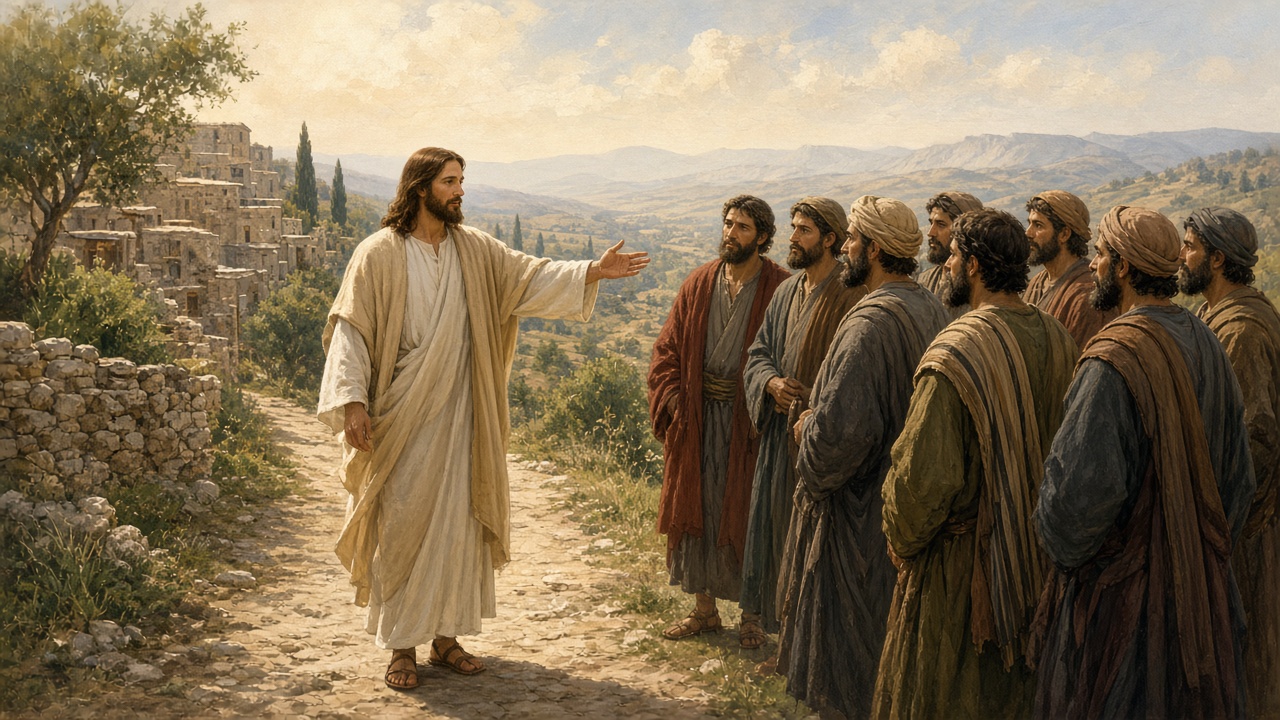
The Twelve Sent on Mission
- Simon, called Peter, and his brother Andrew—the first pair named among the twelve—were fishermen from Bethsaida, on the western coast of the Sea of Galilee. James and John, listed next, were sons of Zebedee, a Galilean fisherman who had his own boats and hired servants.Sources: the Bible text itself · Simon Peter · Andrew · Zebedee
- Matthew, identified in the list as the tax collector, was the son of Alphaeus and had formerly been known as Levi; he collected taxes at Capernaum, and the name Matthew means “gift of God.” Thomas, named beside him, was also called Didymus, the Greek equivalent of the Hebrew name, meaning “twin.” Bartholomew means “son of Tolmai” and is generally supposed to have been the same person as Nathanael.Sources: the Bible text itself · Matthew · Thomas · Bartholomew
- Jesus warns that the day of judgment will be more bearable for Sodom and Gomorrah than for a town that refuses the twelve apostles. Easton's Bible Dictionary (1897) describes those cities of the plain of Siddim as destroyed by fire and proverbial for wickedness, and places them, probably close together, near the northern end of what is now the Dead Sea.Sources: the Bible text itself · Sodom · Gomorrah
Notes written with AI assistance from open sources (Theographic Bible Metadata, CC BY-SA 4.0; Easton’s Bible Dictionary, public domain) and reviewed before publishing.
Credits and license for this translation
Abureni NT Portions
Abureni: Abureni NT Portions (New Testament)
copyright © 2022 Luke Initiative for Scripture Translationand The Seed Company
Language: (Abureni)
Contributor: The Seed Company
This translation is made available to you under the terms of the
Creative Commons Attribution Share-Alike license 4.0.
You have permission to share and redistribute this Bible translation in any format and to make reasonable revisions and adaptations of this translation, provided that:
You include the above copyright and source information.
If you make any changes to the text, you must indicate that you did so in a way that makes it clear that the original licensor is not necessarily endorsing your changes.
If you redistribute this text, you must distribute your contributions under the same license as the original.
Pictures included with Scriptures and other documents on this site are licensed just for use with those Scriptures and documents.
For other uses, please contact the respective copyright owners.
Note that in addition to the rules above, revising and adapting God's Word involves a great responsibility to be true to God's Word. See Revelation 22:18-19.
2025-07-02
Source: http://ebible.org/mgj/ · eBible.org