Luke 3
Abureni NT Portions · Tap a verse to see its cross-references.
Azo̠n Owurmamu̠m bho̠ asam eten bho̠
1Oleghemeni a̠d̠iobh na̠ ogho ala wa̠ A̠siza̠ A̠tiberi̠o̠s, o̠li̠le̠ma A̠rom, na̠ a̠rileghom ebhugh bho̠, Apo̠nti̠o̠s Apai̠let aro̠ ma̠ o̠li̠la ebhugh A̠zudia̠, sa̠ E̠ro̠d na̠ a̠rileghom Agalili, odi a̠bin ebhugh bho̠, ya̠a̠ umor d̠o̠yo̠ A̠filip sa̠ na̠ a̠rileghom Ituria̠ na̠ Atrakonitis, odi a̠bin ebhugh bho̠, sa̠ Ali̠sani̠as na̠ a̠rileghom A̠bilene, odi a̠bin ebhugh bho̠. 2D̠a̠ obhel obha̠, Anas na̠ Akai̠afas i̠ro̠ ma̠ ogbo aru̠mu̠ rokur bho̠, sa̠ o̠nu̠o̠kpe̠ ta̠ A̠zib̠a̠ ate̠i̠ Azo̠n o̠nyi̠ ta̠ Azakaraya d̠a̠ e̠ghana. 3I̠na a̠rile ma̠ eb̠la̠ eghighira̠ O̠bhi̠i̠y Azo̠dan agba ma̠ asu̠gbagba otiba̠ra̠ d̠a̠ i̠karabh, na̠ owura̠ amu̠m oleriom ma̠ awa na̠ etiba̠ra̠ d̠a̠ i̠karabh d̠awa e̠te̠i̠ o̠we̠le̠man i̠karabh d̠a̠ agu̠o̠ ta̠ A̠zib̠a̠, 4ma̠ agu̠o̠ u̠ge̠ d̠a̠ a̠d̠ire ta̠ Ai̠zaya owil bho̠ ma̠a̠:
“Okoroko o̠ni̠ na̠ a̠si na̠ a̠mite d̠a̠ e̠ghana bho̠ ma̠a̠,
‘I̠tu̠ghu̠mane̠ ma̠ eten ta̠ Wa̠nwuna̠ bho̠ ma̠ eguri,
ma̠ eselegi ma̠ reten bho̠ ma̠ enigha̠ i̠na.
5Kerekere ogugua̠ ta̠ ob̠a̠la̠me̠ni̠,
kerekere igu na̠ egugum ta̠ ogbo o̠de̠bhe̠me̠ni̠.
Sa̠ reten ya̠ ib̠eb̠elegia̠n bho̠ ta̠ oselegi,
sa̠ ta̠ otulugi ma̠ rigbogolo reten bho̠.
6Sa̠ eb̠la̠ a̠nwunom d̠a̠ ra̠dede bho̠ ta̠ ebi̠gh itenemeni ta̠ A̠zib̠a̠.’ ”
7Igiel bho̠ eb̠olob̠ol a̠nwunom na̠ eru d̠a̠ Azo̠n ma̠ agu̠o̠ ola̠ i̠na ta̠ a̠wur awa ma̠ amu̠m bho̠, sa̠ Azo̠n a̠fugh a̠nigha̠ awa ma̠a̠, “Inyin anwi̠i̠ny i̠bho̠ru̠bho̠ru̠ i̠karabh i̠di̠ar! A̠nyen a̠kikiom inyin oghil o̠d̠u̠a d̠a̠ ibom i̠gam ta̠ A̠zib̠a̠ ya̠ na̠ eru bho̠? 8Imume ma̠ itu otiba̠ra̠ d̠a̠ i̠karabh. Ya̠a̠ o̠ni̠ ko o̠ro̠ ma̠ i̠se̠ ma̠ efugh enigha̠ ma̠ a̠ruzu d̠inyin ma̠a̠, ‘I̠yar unwuna̠ ma̠ obom o̠we̠de̠ a̠ko Ebraham.’ Ya̠a̠, ami̠ na̠ agba na̠ a̠nigha̠ inyin ma̠a̠, A̠zib̠a̠ ta̠ a̠rue a̠d̠ighi ma̠ ola̠ ikputu i̠nye̠n ta̠ eten anwi̠i̠ny enigha̠ ma̠ Ebraham. 9Na̠ oguri ma̠ u̠do̠ d̠a̠ igbolo iriren bho̠, ma̠ agu̠o̠ ola̠ kerekere oriren ola̠ omum d̠o̠ ma̠ ib̠eb̠i imuma̠ sa̠ ta̠ ogu okoton, orobh o̠lo̠gh d̠a̠ anya bho̠.”
10Sa̠ a̠nwunom bho̠ ipura̠n i̠na ma̠a̠, “O̠ku̠a ka̠ i̠yar ta̠ od̠ighi eka̠?”
11Sa̠ Azo̠n awo̠ran awa ma̠a̠, “I̠na o̠ni̠ wa̠ a̠nwuna̠ ma̠ i̠wal rakapa bho̠ a̠nigha̠ ma̠ odi ma̠ o̠ni̠ wa̠ onwuna̠ d̠o̠ bho̠. I̠na o̠ni̠ wa̠ a̠nwuna̠ ma̠ ed̠ia̠n bho̠ eka̠ aru̠gi̠ a̠nigha̠ ma̠ ogbo ya̠ o̠te̠i̠ d̠o̠ bho̠.”
12Igun ma̠ otua̠-ebhugh bho̠ eka̠ eru ma̠ agu̠o̠ ola̠ ta̠ owur awa ma̠ amu̠m. Sa̠ awa ipura̠n ma̠a̠, “O̠ni̠ a̠tu̠ghu̠me̠ni̠, i̠yar ta̠ od̠ighi eka̠?”
13Sa̠ i̠na awo̠ran awa ma̠a̠, “O̠ni̠ ko obhin epeleni ma̠ agu̠o̠ usobh otua̠ bho̠,” 14Sa̠ idi iweme̠gham bho̠ ipura̠n i̠na ma̠a̠, “Ya̠a̠ i̠yar ka̠ eka̠, i̠yar ta̠ od̠ighi eka̠?”
I̠na awo̠ran ma̠a̠, “O̠ni̠ ko oghum okpoki d̠a̠ agu̠o̠ o̠ni̠ ma̠ ebhin; o̠ni̠ ko obhin d̠a̠ igunugha̠ ma̠ eb̠ologiom a̠nwunom abar nyen, ikpoki ya̠ na̠ o̠kpe̠ inyin bho̠ elegha̠n inyin.”
15A̠nwunom bho̠ i̠ro̠ na̠ egon Witenemeni bho̠, sa̠ awa na̠ e̠ru̠ru̠an d̠a̠ rologi d̠awa ku̠gba ma̠ Azo̠n Witenemeni bho̠. 16Azo̠n awo̠ran eb̠la̠ awa ma̠a̠, “Ami̠ na̠ a̠bhin amu̠m na̠ a̠wur inyin; ya̠a̠, o̠ni̠ ola̠ a̠nwuna̠ ma̠ a̠limon a̠pu ami̠ na̠ a̠ru. I̠na o̠ni̠ ola̠ a̠dila̠de d̠ami̠ olei d̠o̠ ma̠ o̠ko̠gi̠o̠n id̠id̠igh ragbaka d̠o̠yo̠. I̠na ta̠ a̠bhin E̠mu̠gh E̠tu̠tu̠ bho̠ na̠ anya a̠wur inyin. 17I̠na na̠ a̠sibh okporoma̠ d̠o̠yo̠ d̠a̠ agu̠o̠, ma̠ obhin ozeghe, okokod̠i i̠bu̠kpa bho̠ od̠ighom d̠a̠ esi eko d̠o̠yo̠ oguri. Sa̠ i̠na ta̠ ab̠i̠r esi ogir bho̠ a̠kpo ma̠ ibhobho bho̠ alo̠gh d̠a̠ anya wa̠ od̠im d̠o̠ bho̠.” Ozeghe ikpo ed̠ia̠n ya̠ od̠i ka̠ i̠bu̠kpa|alt="Winowing grains" src="Horace Knowles" size="col" loc="Luke 3:17" copy="HK00097" ref="3:17" 18Azo̠n a̠bhin a̠d̠izo ro̠nu̠ o̠kpe̠ ya̠ o̠ku̠a a̠kikiom a̠nwunom bho̠, sa̠ agba ma̠ ib̠eb̠i asu̠gbagba bho̠ a̠nigha̠ awa.
19D̠a̠ obhel onon, Azo̠n agam a̠nigha̠ ma̠ E̠ro̠d o̠li̠la ebhugh Agalili, ezin bho̠ i̠na akpakpa ma̠ E̠ro̠di̠as ani̠ umor d̠o̠yo̠ a̠bhin, na̠ d̠a̠ ebula̠ eb̠la̠ ipa̠n i̠karabh ya̠ i̠na a̠gir. 20E̠ro̠d a̠din o̠ku̠a adu̠o̠m Azo̠n d̠a̠ ikoli, sa̠ a̠bhin i̠karabh i̠nye̠n ab̠aram d̠a̠ eb̠la̠ i̠karabh d̠o̠yo̠ iyed̠i.
Owura̠ amu̠m ta̠ A̠zizo̠s
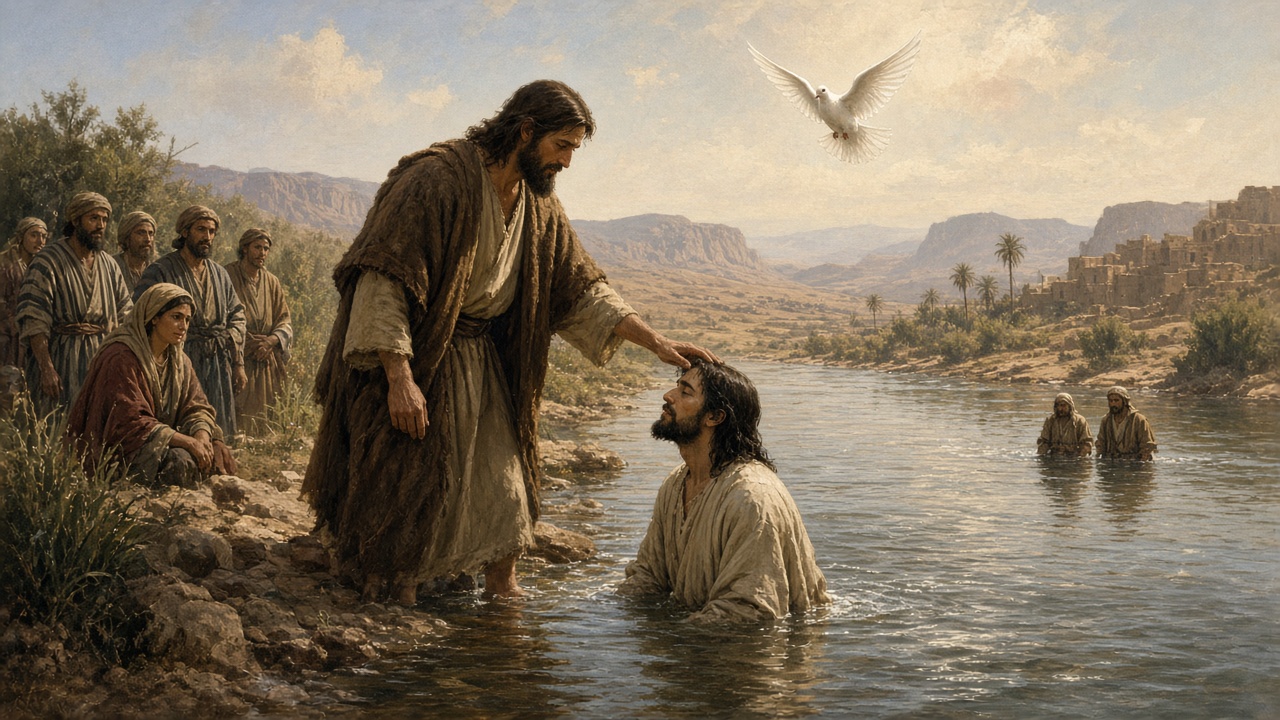
21D̠a̠ obhel wa̠ na̠ owur eb̠la̠ a̠nwunom amu̠m bho̠, sa̠ uwur ani̠ ma̠ A̠zizo̠s. Sa̠ d̠a̠ igiel bho̠ i̠na na̠ a̠siseiny bho̠, sa̠ ote̠nai̠ny bho̠ a̠gurona̠. 22Sa̠ E̠mu̠gh E̠tu̠tu̠ bho̠ a̠sor a̠ru d̠a̠ i̠pulupul ozu ma̠ agu̠o̠ okur osege, sa̠ okoroko ad̠u̠a d̠a̠ ote̠nai̠ny a̠ru ma̠a̠: “Anwa o̠nyi̠ d̠ami̠, wa̠ ami̠ itula̠n ibom bho̠, wa̠ ologi d̠ami̠ na̠ a̠bhon na̠ a̠ni̠gha̠ bho̠.”
Igba̠iny ro̠we̠de̠ ta̠ A̠zizo̠s
23A̠zizo̠s na̠ a̠lei agu̠o̠ a̠d̠usubh d̠iobh ala d̠a̠ obhel bho̠ i̠na ake̠ ma̠ ogir d̠o̠yo̠ bho̠. A̠nwunom iloghom i̠na ma̠ i̠na o̠nyi̠ ta̠ A̠zose̠fu̠, a̠wa̠ i̠ru̠ru̠an o̠ku̠a.
A̠zose̠fu̠ o̠nyi̠ ta̠ E̠li̠.
24E̠li̠ o̠nyi̠ ta̠ Amatat.
Amatat o̠nyi̠ ta̠ A̠livai̠. A̠livai̠ o̠nyi̠ ta̠ Ame̠lki̠.
Ame̠lki̠ o̠nyi̠ ta̠ Azana. Azana o̠nyi̠ ta̠ A̠zose̠fu̠.
25A̠zose̠fu̠ o̠nyi̠ ta̠ Amatatayas. Amatatayas o̠nyi̠ ta̠ Emo̠si̠.
Emo̠si̠ o̠nyi̠ ta̠ Anahu̠m. Anahu̠m o̠nyi̠ ta̠ Esili.
Esili o̠nyi̠ ta̠ Anagayi̠. 26Anagayi̠ o̠nyi̠ ta̠ Amat.
Amat o̠nyi̠ ta̠ Amatatayas. Amatatayas o̠nyi̠ ta̠ A̠semeiny.
A̠semeiny o̠nyi̠ ta̠ A̠zose̠fu̠. A̠zose̠fu̠ o̠nyi̠ ta̠ A̠zuda̠.
27A̠zuda̠ o̠nyi̠ ta̠ Azo̠anan. Azo̠anan o̠nyi̠ ta̠ Are̠sa.
Are̠sa o̠nyi̠ ta̠ A̠zorobabe̠l. A̠zorobabe̠l o̠nyi̠ ta̠ Ase̠lati̠e̠l.
Ase̠lati̠e̠l o̠nyi̠ ta̠ A̠neri. 28A̠neri o̠nyi̠ ta̠ Ame̠lki̠.
Ame̠lki̠ o̠nyi̠ ta̠ Adi̠. Adi̠ o̠nyi̠ ta̠ A̠kosam.
A̠kosam o̠nyi̠ ta̠ E̠lmadam. E̠lmadam o̠nyi̠ ta̠ E̠r.
29E̠r o̠nyi̠ ta̠ A̠zosu̠a. A̠zosu̠a o̠nyi̠ ta̠ E̠li̠eza̠.
E̠li̠eza̠ o̠nyi̠ ta̠ A̠zorim. A̠zorim o̠nyi̠ ta̠ Amatat.
Amatat o̠nyi̠ ta̠ A̠livai̠. 30A̠livai̠ o̠nyi̠ ta̠ A̠simio̠n.
A̠simio̠n o̠nyi̠ ta̠ A̠zuda̠. A̠zuda̠ o̠nyi̠ ta̠ A̠zose̠fu̠.
A̠zose̠fu̠ o̠nyi̠ ta̠ A̠zonam. A̠zonam o̠nyi̠ ta̠ E̠li̠aki̠m.
31E̠li̠aki̠m o̠nyi̠ ta̠ A̠melea̠. A̠melea̠ o̠nyi̠ ta̠ Ame̠na.
Ame̠na o̠nyi̠ ta̠ Amatata. Amatata o̠nyi̠ ta̠ A̠netan.
A̠netan o̠nyi̠ ta̠ A̠devidi. 32A̠devidi o̠nyi̠ ta̠ Aze̠si̠.
Aze̠si̠ o̠nyi̠ ta̠ Obe̠di̠. Obe̠di̠ o̠nyi̠ ta̠ A̠boa̠z.
A̠boa̠z o̠nyi̠ ta̠ Asalmo̠n. Asalmo̠n o̠nyi̠ ta̠ Anaso̠n.
33Anaso̠n o̠nyi̠ ta̠ Ami̠nadab.
Ami̠nadab o̠nyi̠ ta̠ Admin. Admin o̠nyi̠ ta̠ Arni̠.
Arni̠ o̠nyi̠ ta̠ E̠zro̠n. E̠zro̠n o̠nyi̠ ta̠ Ape̠re̠zi̠.
Ape̠re̠zi̠ o̠nyi̠ ta̠ A̠zuda̠. 34A̠zuda̠ o̠nyi̠ ta̠ A̠zeko̠pu̠.
A̠zeko̠pu̠ o̠nyi̠ ta̠ Azi̠ki̠. Azi̠ki̠ o̠nyi̠ ta̠ Ebraham.
Ebraham o̠nyi̠ ta̠ Ate̠ra. Ate̠ra o̠nyi̠ ta̠ Anaho̠.
35Anaho̠ o̠nyi̠ ta̠ Ase̠ru̠g. Ase̠ru̠g o̠nyi̠ ta̠ A̠rewu.
A̠rewu o̠nyi̠ ta̠ Ape̠le̠g. Ape̠le̠g o̠nyi̠ ta̠ E̠be̠r.
E̠be̠r o̠nyi̠ ta̠ Ase̠la. 36Ase̠la o̠nyi̠ ta̠ Akayi̠nan.
Akayi̠nan o̠nyi̠ ta̠ Afakzad. Afakzad o̠nyi̠ ta̠ Ase̠m.
Ase̠m o̠nyi̠ ta̠ A̠nua̠. A̠nua̠ o̠nyi̠ ta̠ Alame̠k.
37Alame̠k o̠nyi̠ ta̠ Ame̠tuse̠la. Ame̠tuse̠la o̠nyi̠ ta̠ E̠no̠k.
E̠no̠k o̠nyi̠ ta̠ Azare̠d. Azare̠d o̠nyi̠ ta̠ Ame̠halale̠l.
Ame̠halale̠l o̠nyi̠ ta̠ A̠kenan. 38A̠kenan o̠nyi̠ ta̠ Eno̠s.
Eno̠s o̠nyi̠ ta̠ Ase̠fu̠. Ase̠fu̠ o̠nyi̠ ta̠ Adam.
Adam o̠nyi̠ ta̠ A̠zib̠a̠.
Did you know?
John the Baptist prepares the way
- Luke sets John's preaching in the fifteenth year of Tiberius Caesar, the stepson of Augustus, who succeeded him in A.D. 14 and died in A.D. 37. Easton's Bible Dictionary (1897) notes that John began his public ministry in that year, and that Pontius Pilate, the sixth Roman procurator of Judea from A.D. 26 to 36, kept his headquarters at Caesarea during a term that covered the ministries of John and Jesus. Herod Antipas, a son of Herod, was then tetrarch of Galilee.Sources: the Bible text itself · Tiberius · Pontius Pilate · Herod Antipas
- The chapter dates these events during the high priesthood of both Annas and Caiaphas. Easton's Bible Dictionary (1897) records that Annas was high priest from A.D. 7 to 14 and was deposed by the Roman procurator, and that Caiaphas, who had married Annas's daughter, was raised to that office in A.D. 25. The same entry suggests that the Jews may still have regarded Annas as the lawful high priest, since Mosaic law held the office for life, and that he probably served with Caiaphas as president of the Sanhedrin or as the high priest's deputy.Sources: the Bible text itself · Annas
- John, son of Zechariah, was of priestly descent: his father was a priest of the course of Abia, and his mother, Elizabeth, belonged to the daughters of Aaron. Easton's Bible Dictionary (1897) notes that his mission was the subject of prophecy, including Isaiah's voice crying in the wilderness, and that his birth came six months before the birth of Jesus. In this chapter he preaches a baptism of repentance throughout the region around the Jordan, and Herod the tetrarch later imprisons him after John rebukes him over Herodias.Sources: the Bible text itself · John the Baptist
Notes written with AI assistance from open sources (Theographic Bible Metadata, CC BY-SA 4.0; Easton’s Bible Dictionary, public domain) and reviewed before publishing.
Places in this chapter
- Abilene · 33.627, 36.106 · verse 1
- Galilee · 32.760, 35.527 · verses 1, 19
- Ituraea · 33.400, 35.850 · verse 1
- Judea · Today: Judea 1 · 31.777, 35.234 · verse 1
- Trachonitis · Today: Lajat · 32.969, 36.455 · verse 1
- Jordan · Today: Jordan River · 31.761, 35.558 · verse 3
Only places identified with high confidence are shown (90% or more according to the scholarly sources compiled by OpenBible). Period map: DARE (Digital Atlas of the Roman Empire), CC BY 4.0; modern map: © OpenStreetMap contributors; places: OpenBible.info (CC BY 4.0).
Credits and license for this translation
Abureni NT Portions
Abureni: Abureni NT Portions (New Testament)
copyright © 2022 Luke Initiative for Scripture Translationand The Seed Company
Language: (Abureni)
Contributor: The Seed Company
This translation is made available to you under the terms of the
Creative Commons Attribution Share-Alike license 4.0.
You have permission to share and redistribute this Bible translation in any format and to make reasonable revisions and adaptations of this translation, provided that:
You include the above copyright and source information.
If you make any changes to the text, you must indicate that you did so in a way that makes it clear that the original licensor is not necessarily endorsing your changes.
If you redistribute this text, you must distribute your contributions under the same license as the original.
Pictures included with Scriptures and other documents on this site are licensed just for use with those Scriptures and documents.
For other uses, please contact the respective copyright owners.
Note that in addition to the rules above, revising and adapting God's Word involves a great responsibility to be true to God's Word. See Revelation 22:18-19.
2025-07-02
Source: http://ebible.org/mgj/ · eBible.org