Luke 2
Abureni NT Portions · Tap a verse to see its cross-references.
I̠mara ta̠ A̠zizo̠s
1D̠a̠ ra̠d̠a̠ma̠ i̠nye̠, sa̠ A̠siza̠ O̠go̠sto̠s alo̠gh oloko ma̠a̠, o̠wal eb̠la̠ a̠nwunom ya̠ od̠i d̠a̠ ekpukpu ebhugh A̠rom. 2(Onon o̠pu̠r o̠wal a̠nwunom wa̠ a̠mite d̠a̠ amu̠m igiel wa̠ Akwi̠ri̠ni̠o̠s na̠ a̠rileghom ebhugh A̠siria̠.) 3Sa̠ ko̠ni̠ko̠ni̠ a̠ten agi̠ d̠a̠ e̠ma d̠o̠yo̠ ma̠ ka̠ o̠ge̠ a̠d̠ien d̠o̠yo̠.
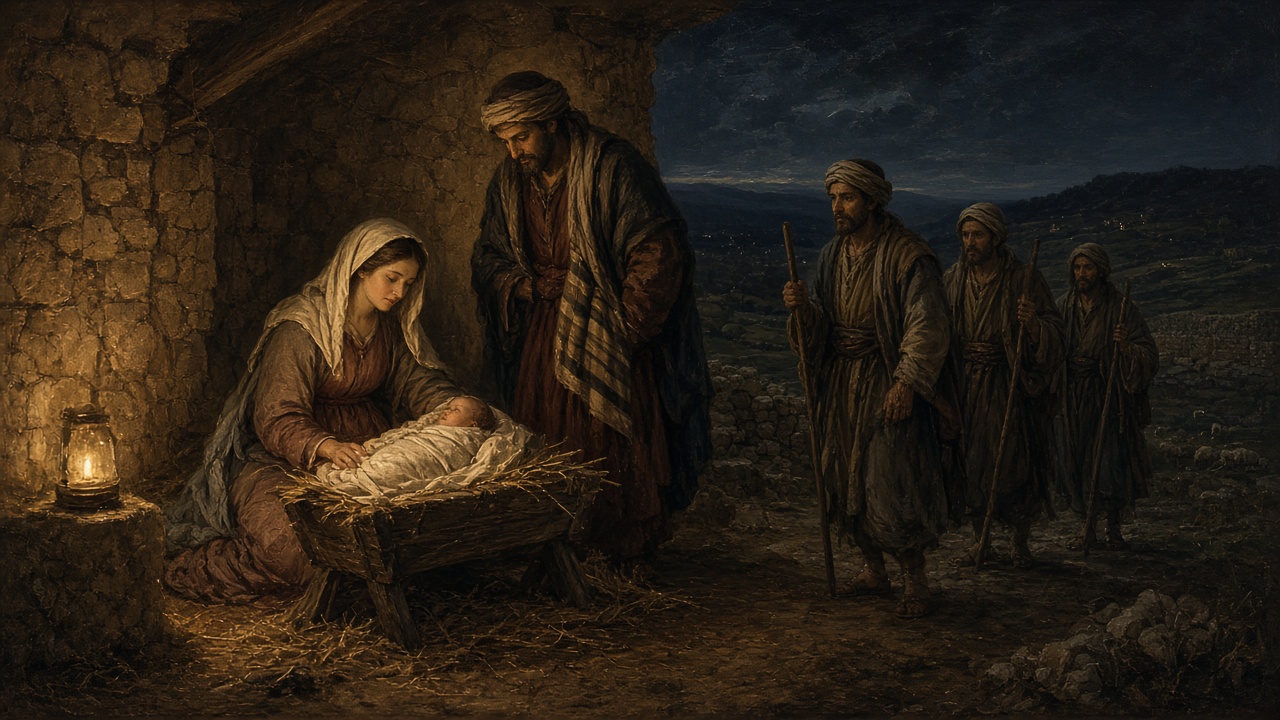
4Ebula̠ o̠ku̠a, sa̠ A̠zose̠fu̠ eka̠ ad̠u̠a d̠a̠ e̠ma Anazare̠t d̠a̠ Agalili a̠ten agi̠ d̠a̠ e̠ma Abe̠ti̠li̠he̠m wa̠ od̠i d̠a̠ A̠zudia̠ bho̠, ezin bho̠ i̠na ola̠ eghun otu ta̠ A̠devidi. 5I̠na ab̠ar na̠ A̠meri, wa̠ i̠na na̠ a̠sibh obhin ani̠ bho̠ a̠bhin agi̠ d̠a̠ o̠wal a̠nwunom bho̠, d̠a̠ obhel ola̠ eghun bho̠ na̠ a̠legha̠n. 6D̠a̠ agu̠o̠ awa od̠i ma̠ i̠se̠ bho̠ sa̠ eghun ta̠ A̠meri ake̠ ma̠ ogun. 7Sa̠ i̠na amar o̠kpana o̠nyi̠ d̠o̠yo̠, olobhiri. Sa̠ a̠bhin a̠rukpe a̠bhurugi i̠na, sa̠ amu̠ni̠e̠ni̠ i̠na d̠a̠ igba̠ ola̠ na̠ obhin na̠ o̠lo̠gh ed̠ia̠n na̠ onigha̠ ma̠ i̠nam, ezin bho̠ e̠kpe̠ na̠ o̠ro̠ d̠o̠ d̠a̠ otu esul bho̠.
Ikponom ro̠nana bho̠ na̠ itileduom ta̠ A̠zib̠a̠
8Ikponom ro̠nana e̠ro̠ d̠a̠ e̠sala i̠gho̠gho̠ ola̠ a̠tua̠n, na̠ ekponom i̠nam d̠awa ma̠ a̠d̠uga̠la̠n obha̠. Ikponom ro̠nana i̠ro̠ ma̠ a̠dila̠de na̠ ekponom i̠nam d̠awa ma̠ a̠d̠uga̠la̠n|alt="Shepherds sitting by fire watcing their flock at night" src="Louise Bass" size="col" loc="Luke 2:8" copy="LB00013" ref="2:8" 9Odi orileduom ta̠ A̠zib̠a̠ a̠mutuma̠ awa, sa̠ isosorogia̠n ta̠ Wa̠nwuna̠ amu̠o̠m awa ma̠ ola̠ a̠rugugu isibh awa. 10Ya̠a̠, orileduom ta̠ A̠zib̠a̠ bho̠ agba a̠nigha̠ awa ma̠a̠, “O̠ni̠ ko oghil a̠rugugu. Ami̠ ibhin ib̠eb̠i asu̠gbagba ibom a̠libhon ologi ya̠ ta̠ e̠ro̠ enigha̠ ma̠ eb̠la̠ a̠nwunom a̠ruom inyin. 11Na̠ o̠mar Witenemeni bho̠ onigha̠ inyin d̠a̠ e̠ma ta̠ A̠devidi ma̠ a̠didon. I̠na Akrai̠st Wa̠nwuna̠ bho̠. 12Onon ta̠ aro̠ ma̠ elegh a̠nigha̠ inyin: Inyin ta̠ o̠bi̠gh o̠nyi̠ ola̠ ubhin a̠rukpe ubhurugi, sa̠ u̠mu̠ni̠e̠ni̠ d̠a̠ igba̠ ola̠ na̠ obhin na̠ o̠lo̠gh ed̠ia̠n na̠ onigha̠ ma̠ i̠nam.”
13D̠a̠ awai̠, sa̠ o̠lo̠gh itileduom ta̠ A̠zib̠a̠ d̠a̠ ote̠nai̠ny iru ra̠ i̠b̠aragu̠ma ma̠ orileduom ta̠ A̠zib̠a̠ bho̠, sa̠ itutumeni ma̠ A̠zib̠a̠ na̠ efugh ma̠a̠,
14“Itutumeni e̠ro̠ enigha̠ ma̠ A̠zib̠a̠ wa̠ od̠i d̠a̠ ote̠nai̠ny wa̠ agi̠ ma̠ anyu̠ a̠pu bho̠,
ya̠a̠ ekima̠ aro̠ d̠a̠ a̠de onon a̠nigha̠ ma̠ ogbo ya̠ e̠ne̠ghe̠ d̠o̠yo̠ na̠ e̠te̠i̠ bho̠.”
15D̠a̠ obhel wa̠ itileduom ta̠ A̠zib̠a̠ bho̠ i̠we̠le̠ awa ibhun d̠a̠ ote̠nai̠ny bho̠, sa̠ ikponom ro̠nana bho̠ odi a̠fugh a̠nigha̠ ma̠ odi ma̠a̠, “Id̠ighi o̠gi̠ d̠a̠ Abe̠ti̠li̠he̠m ka̠ o̠bi̠gh abar onon wa̠ na̠ a̠mite bho̠, wa̠ Wa̠nwuna̠ na̠ agba a̠nigha̠ i̠yar bho̠.”
16Sa̠ awa inugia̠n i̠gi̠ sa̠ i̠bi̠gh A̠meri na̠ A̠zose̠fu̠ na̠ o̠nyi̠ bho̠, wa̠ awa i̠mu̠ni̠e̠ni̠ d̠a̠ igba̠ ola̠ na̠ obhin na̠ o̠lo̠gh ed̠ia̠n na̠ onigha̠ ma̠ i̠nam bho̠. 17Igiel bho̠ awa na̠ e̠bi̠gh o̠nyi̠ bho̠, sa̠ awa i̠gba i̠sasaragi̠ ma̠ i̠di̠ar ya̠ imite bho̠, na̠ iya̠ orileduom ta̠ A̠zib̠a̠ agba a̠gboloma̠ ma̠ o̠nyi̠ onon a̠nigha̠ awa bho̠. 18Sa̠ a̠d̠igh ilologia̠n eb̠la̠ ogbo ya̠ i̠mu̠gho̠n asu̠gbagba ya̠ ikponom ro̠nana bho̠ i̠gba inigha̠ awa bho̠.
19Ya̠a̠ A̠meri a̠bhin eb̠la̠ i̠di̠ar i̠nye̠n alo̠gh d̠a̠ ologi d̠o̠yo̠ a̠guri, sa̠ aru̠ru̠an ghan a̠gboloma̠. 20Ikponom ro̠nana bho̠ imula̠ iyel, sa̠ itutumeni ma̠ A̠zib̠a̠, sa̠ i̠bu̠ghu̠me̠ni̠ i̠na d̠a̠ eb̠la̠ i̠di̠ar ya̠ awa i̠mu̠gho̠n, sa̠ i̠bi̠gh bho̠, d̠a̠ agu̠o̠ u̠gba unigha̠ awa bho̠.
21Oleghemeni o̠bhabhanya a̠d̠a̠ma̠ i̠mara bho̠, d̠a̠ obhel ola̠ na̠ a̠lei oti ipo o̠nyi̠ bho̠, sa̠ ughol i̠na ma̠ A̠zizo̠s, a̠d̠ien wa̠ orileduom ta̠ A̠zib̠a̠ bho̠ a̠ghol kisa̠ umumor i̠na bho̠.
Ubhin A̠zizo̠s o̠gi̠ d̠a̠ Otu ta̠ A̠zib̠a̠
22Obhel wa̠ ate̠i̠ i̠ko̠l o̠b̠ab̠alame̠ni̠ ozu bho̠, d̠a̠ agu̠o̠ u̠ge̠ d̠a̠ oloko ta̠ A̠mozizi bho̠, sa̠ A̠zose̠fu̠ na̠ A̠meri ibhin i̠na i̠gi̠ d̠a̠ A̠zeruse̠le̠m ma̠ ob̠eton o̠yo̠ onigha̠ Wa̠nwuna̠ bho̠, 23(ma̠ agu̠o̠ u̠ge̠ d̠a̠ oloko ta̠ Wa̠nwuna̠ bho̠ ma̠a̠, “Kerekere o̠kpana olobhiri o̠nyi̠ ma̠ ta̠ ob̠eton onigha̠ ma̠ Wa̠nwuna̠.”) 24Sa̠ awa i̠gi̠ ka̠ i̠ko̠l i̠ko̠l o̠b̠ab̠alame̠ni̠ ozu, ma̠ agu̠o̠ u̠to̠ d̠a̠ oloko ta̠ Wa̠nwuna̠ bho̠. I̠di̠ar i̠ko̠l bho̠ bha̠ i̠wal ikpo rokur osege, bo̠d̠o̠ i̠wal ikubh rukpugh.
25D̠a̠ obhel obha̠, odi o̠ni̠ ola̠ ubhelegi ma̠ A̠simio̠n aro̠ d̠a̠ A̠zeruse̠le̠m, ma̠ ola̠ a̠rugh ado̠l igielake̠, sa̠ a̠nigha̠ ma̠ ozu d̠o̠yo̠ ma̠ A̠zib̠a̠. I̠na aro̠ na̠ a̠gon Witenemeni bho̠ ma̠ oru ra̠ otenemeni Izre̠l. E̠mu̠gh E̠tu̠tu̠ bho̠ aro̠ d̠a̠ ozu d̠o̠yo̠. 26E̠mu̠gh E̠tu̠tu̠ bho̠ agba a̠nigha i̠na ma̠ i̠na ko omugh d̠o̠, a̠ten ka̠ i̠na na̠ abi̠gh Witenemeni wa̠ A̠zib̠a̠ a̠gua̠n bho̠. 27E̠mu̠gh E̠tu̠tu̠ bho̠ a̠rileghom i̠na ka̠ a̠d̠ighom d̠a̠ ologi Otu ta̠ A̠zib̠a̠. Obha̠ onin obhel wa̠ A̠meri na̠ A̠zose̠fu̠ ibhin o̠gbara o̠nyi̠ A̠zizo̠s id̠igh bho̠, ma̠ omuzoghod̠iom i̠to̠to̠gi̠ oloko bho̠. 28Sa̠ A̠simio̠n a̠bube i̠na sa̠ a̠tutumeni ma̠ A̠zib̠a̠, sa̠ a̠fugh ma̠a̠:
29“Wa̠nwuna̠ ma̠ eb̠la̠ a̠limon bho̠,
d̠ighi ob̠a̠ra̠motu d̠oyom agi̠ d̠a̠ ekima̠, ma̠ agu̠o̠ anwa igua̠n bho̠.
30A̠rid̠ien d̠ami̠ na̠ e̠bi̠gh itenemeni d̠oyom,
31wa̠ anwa i̠to̠ iguri ma̠ agu̠o̠ ola̠ a̠nwunom eb̠la̠ ra̠dede ta̠ e̠bi̠gh bho̠:
32ma̠ o̠ro̠ e̠b̠alab̠al onigha̠ ogbo o̠ro̠ d̠o̠ ma̠ A̠zu bho̠, b̠o̠ka̠ awa eloghom itenemeni ta̠ A̠zib̠a̠, na̠ obhin edim onigha̠ a̠nwunom d̠oyom Izre̠l.”
33Ed̠igh ilologia̠n onweni na̠ o̠we̠de̠ ta̠ A̠zizo̠s o̠mu̠gho̠n i̠di̠ar ya̠ u̠gba̠ ugboloma̠ i̠na bho̠. 34Sa̠ A̠simio̠n a̠du ma̠ o̠gho̠r a̠tutumeni awa sa̠ a̠fugh a̠nigha̠ ma̠ A̠meri, onweni o̠nyi̠ bho̠ ma̠a̠: “A̠zib̠a̠ na̠ aso̠n o̠nyi̠ onon obhin emel na̠ ob̠etina̠ oruom a̠d̠izo a̠nwunom d̠a̠ Izre̠l, na̠ o̠ro̠ elegh ola̠ a̠nwunom ta̠ eghel. 35Sa̠ i̠ru̠ru̠an e̠wo̠gi̠na ya̠ od̠i d̠a̠ ologi a̠d̠izo ogbo bho̠ ta̠ eb̠ugh emite. Sa̠ anwa ta̠ aku̠nu̠ ma̠ e̠mi̠ i̠ku̠nu̠ ya̠ ta̠ e̠gu̠b̠an ka̠ alapa ogidi a̠gim ologi d̠oyom awo̠lo̠me̠ni̠.”
36Owil ani̠ ola̠ ubhelegi ma̠ Ana, o̠nyani̠ ta̠ Afanu̠e̠l d̠a̠ eghun ta̠ Asa eka̠ aro̠. I̠na a̠d̠um, akpo̠ zighizighi. I̠na awal ilom, sa̠ irugha̠n od̠ua̠l ala ku̠ku̠m, sa̠ owolom d̠o̠yo̠ a̠mugh. 37Sa̠ i̠na a̠ten ekpukele ani̠ ola̠ na̠ a̠d̠um i̠wal e̠wala na̠ inya̠ ala ma̠ igiel bho̠. I̠na na̠ o̠we̠le̠ d̠o̠ ma̠ o̠gi̠ ghan d̠a̠ Otu ta̠ A̠zib̠a̠ ka̠ ogir ogir, sa̠ aro̠ ma̠ i̠se̠ ako̠l ghan A̠zib̠a, a̠ne ma̠ o̠ko̠i̠, a̠siseiny a̠siseiny, a̠d̠uga̠la̠n na̠ etita̠n. 38D̠a̠ onin obhel obha̠, sa̠ i̠na agi̠ ka̠ ate̠i̠ awa, sa̠ a̠tutumeni ma̠ A̠zib̠a̠. Sa̠ agba a̠gboloma̠ ma̠ o̠nyi̠ bho̠ a̠nigha̠ ma̠ eb̠la̠ ogbo ya̠ na̠ egon itenemeni A̠zeruse̠le̠m.
39D̠a̠ obhel wa̠ A̠meri na̠ A̠zose̠fu̠ na̠ egir eb̠la̠ i̠di̠ar ya̠ Oloko ta̠ Wa̠nwuna̠ bho̠ ato̠ bho̠, sa̠ awa imula̠ iyel d̠a̠ e̠ma d̠awa Anazare̠t, d̠a̠ ebhugh Agalili. 40Sa̠ o̠nyi̠ bho̠ a̠bhobh na̠ alu̠kpo̠ a̠luzu, sa̠ eloghom abar imuzo d̠a̠ ozu d̠o̠yo̠, sa̠ e̠ne̠ghe̠ ta̠ A̠zib̠a̠ i̠ro̠ na̠ i̠na.
A̠zizo̠s na̠ ogbo atu̠ghu̠me̠ni̠ bho̠
41Kerekere ala o̠we̠de̠ na̠ onweni d̠o̠yo̠ i̠gi̠ghan d̠a̠ A̠zeruse̠le̠m ka̠ od̠e E̠yal Opel Oten. 42Igiel bho̠ i̠na na̠ a̠lei d̠iobh na̠ i̠wal ala bho̠, sa̠ awa i̠gi̠ d̠a̠ e̠yal bho̠ ma̠ agu̠o̠ od̠i d̠a̠ od̠ud̠ul bho̠. 43E̠yal bho̠ a̠ten, sa̠ awa na̠ emula̠, sa̠ A̠zizo̠s a̠sobha̠n aro̠ d̠a̠ A̠zeruse̠le̠m, ya̠a̠ awa iloghoma̠n d̠o̠. 44Awa na̠ erile ma̠ e̠mu̠ a̠d̠a̠ma̠ kisa̠ awa iloghoma̠n ma̠ i̠na bo̠ d̠a̠ esa̠d̠io d̠awa, ezin bho̠, awa i̠ru̠ru̠an ma̠ i̠na od̠i ani̠ d̠a̠ o̠lo̠gh d̠awa. Sa̠ awa i̠ke̠ ma̠ o̠bho̠ro̠ghan o̠yo̠ d̠a̠ rebu a̠ghisia̠n na̠ ra̠tologha̠n d̠awa. 45Agu̠o̠ awa o̠bi̠gh d̠o̠ i̠na bho̠, sa̠ awa imula̠ i̠gi̠ d̠a̠ A̠zeruse̠le̠m ka̠ o̠bho̠ro̠ghan o̠yo̠. 46I̠sar a̠d̠a̠ma̠ iten, kisa̠ awa i̠gi̠ ka̠ i̠bi̠gh i̠na d̠a̠ Otu ta̠ A̠zib̠a̠ d̠a̠ od̠i ma̠ a̠dila̠de, d̠a̠ esa̠d̠io ogbo atu̠ghu̠me̠ni̠. I̠na aro̠ na̠ anagha awa, na̠ a̠pura̠n ipupura̠n. 47Ilologia̠n ed̠igh eb̠la̠ ogbo ya̠ i̠mu̠gho̠n i̠na bho̠, d̠a̠ e̠mi̠ amu̠gho̠nyan na̠ awo̠yo̠ghan d̠o̠yo̠. 48Obhel awa i̠bi̠gh i̠na bho̠, sa̠ awa ib̠a̠gha̠gha̠. Sa̠ onweni d̠o̠yo̠ a̠fugh a̠nigha̠ i̠na ma̠a̠, “O o̠nyi̠ d̠ami̠, a̠mite eka̠ ka̠ anwa na̠ a̠d̠ighi i̠yar o̠ko̠no̠n? O̠we̠de̠ d̠oyom na̠ ami̠ na̠ obhin ekpoyogh ologi na̠ o̠bho̠ro̠ghan anwa kesikesi.”
49Sa̠ i̠na awo̠ran ma̠a̠, “Inyin u̠tu̠n ere na̠ o̠bho̠ro̠ghan ami̠? Inyin uloghom d̠o̠ ma̠ ami̠ ta̠ aro̠ d̠a̠ otu O̠we̠de̠ d̠ami̠, d̠u̠ko̠?” 50Ya̠a̠, awa i̠mu̠gho̠nyan d̠o̠ ma̠ abar wa̠ i̠na na̠ agba bho̠.
51Sa̠ i̠na a̠d̠igh na̠ awa a̠sor agi̠ d̠a̠ Anazare̠t, sa̠ anagha ma̠ o̠nu̠o̠kpe̠ d̠awa. Ya̠a̠, oweni d̠o̠yo̠ a̠koko ma̠ eb̠la̠ i̠di̠ar i̠nye̠n a̠guri ma̠ iya̠ eko d̠a̠ ologi d̠o̠yo̠. 52Sa̠ A̠zizo̠s a̠bhobh d̠a̠ eloghom abar na̠ d̠a̠ ozu, sa̠ ate̠i̠ e̠ne̠ghe̠ d̠a̠ agu̠o̠ ta̠ A̠zib̠a̠ na̠ o̠nyi̠o̠mo̠ro̠ni̠.
Did you know?
The Birth and Early Years of Jesus
- Luke places Jesus’ birth at the time of a decree from Caesar Augustus that a census be taken of the whole empire. Augustus was the cognomen of the first Roman emperor, C. Julius Caesar Octavianus; the title, meaning “majesty” or “venerable,” was first given by the senate. Luke calls this the first census while Quirinius was governor of Syria—Cyrenius being the Greek form of Publius Sulpicius Quirinus.Sources: the Bible text itself · Augustus · Cyrenius
- Joseph lived in Nazareth in Galilee, and he went up from there to Judea, to Bethlehem, the city of David, because he belonged to David’s house and line. Bethlehem lies in the hill country of Judah and was David’s own city: David, the eighth and youngest son of Jesse, was a citizen of Bethlehem. Mary, pledged to Joseph in marriage and expecting a child, traveled with him to register.Sources: the Bible text itself · Joseph (Mary's Husband) · Bethlehem · David
- When the time of purification required by the Law of Moses was complete, the parents brought the child to Jerusalem to present him to the Lord, offering a pair of turtledoves or two young pigeons. In the temple they met Simeon and Anna, a prophetess, daughter of Phanuel, of the tribe of Asher. She had been married for seven years and then was a widow to the age of eighty-four, and she never left the temple, worshiping night and day, fasting and praying.Sources: the Bible text itself · Anna
Notes written with AI assistance from open sources (Theographic Bible Metadata, CC BY-SA 4.0; Easton’s Bible Dictionary, public domain) and reviewed before publishing.
Places in this chapter
- Syria · Today: Syria 2 · 33.511, 36.306 · verse 2
- Bethlehem · 31.704, 35.208 · verses 4, 11, 15
- Galilee · 32.760, 35.527 · verses 4, 39
- Judea · Today: Judea 1 · 31.777, 35.234 · verse 4
- Nazareth · 32.702, 35.298 · verses 4, 39, 43, 51
- Jerusalem · 31.777, 35.234 · verses 22, 25, 38, 41, 42, 43, 45
Only places identified with high confidence are shown (90% or more according to the scholarly sources compiled by OpenBible). Period map: DARE (Digital Atlas of the Roman Empire), CC BY 4.0; modern map: © OpenStreetMap contributors; places: OpenBible.info (CC BY 4.0).
Credits and license for this translation
Abureni NT Portions
Abureni: Abureni NT Portions (New Testament)
copyright © 2022 Luke Initiative for Scripture Translationand The Seed Company
Language: (Abureni)
Contributor: The Seed Company
This translation is made available to you under the terms of the
Creative Commons Attribution Share-Alike license 4.0.
You have permission to share and redistribute this Bible translation in any format and to make reasonable revisions and adaptations of this translation, provided that:
You include the above copyright and source information.
If you make any changes to the text, you must indicate that you did so in a way that makes it clear that the original licensor is not necessarily endorsing your changes.
If you redistribute this text, you must distribute your contributions under the same license as the original.
Pictures included with Scriptures and other documents on this site are licensed just for use with those Scriptures and documents.
For other uses, please contact the respective copyright owners.
Note that in addition to the rules above, revising and adapting God's Word involves a great responsibility to be true to God's Word. See Revelation 22:18-19.
2025-07-02
Source: http://ebible.org/mgj/ · eBible.org