Ruth 1
Sei di Uka Ago Ruaka · Tap a verse to see its cross-references.
About this book
About Ruth
- The events are set in the days of the judges. A great famine led Elimelech, a man of the tribe of Judah and a kinsman of Boaz, to leave Bethlehem with his wife Naomi and their sons Mahlon and Chilion and settle in Moab, east of the Jordan and the Dead Sea. There Elimelech and both sons died.Sources: Elimelech · Moab · Mahlon · Chilion
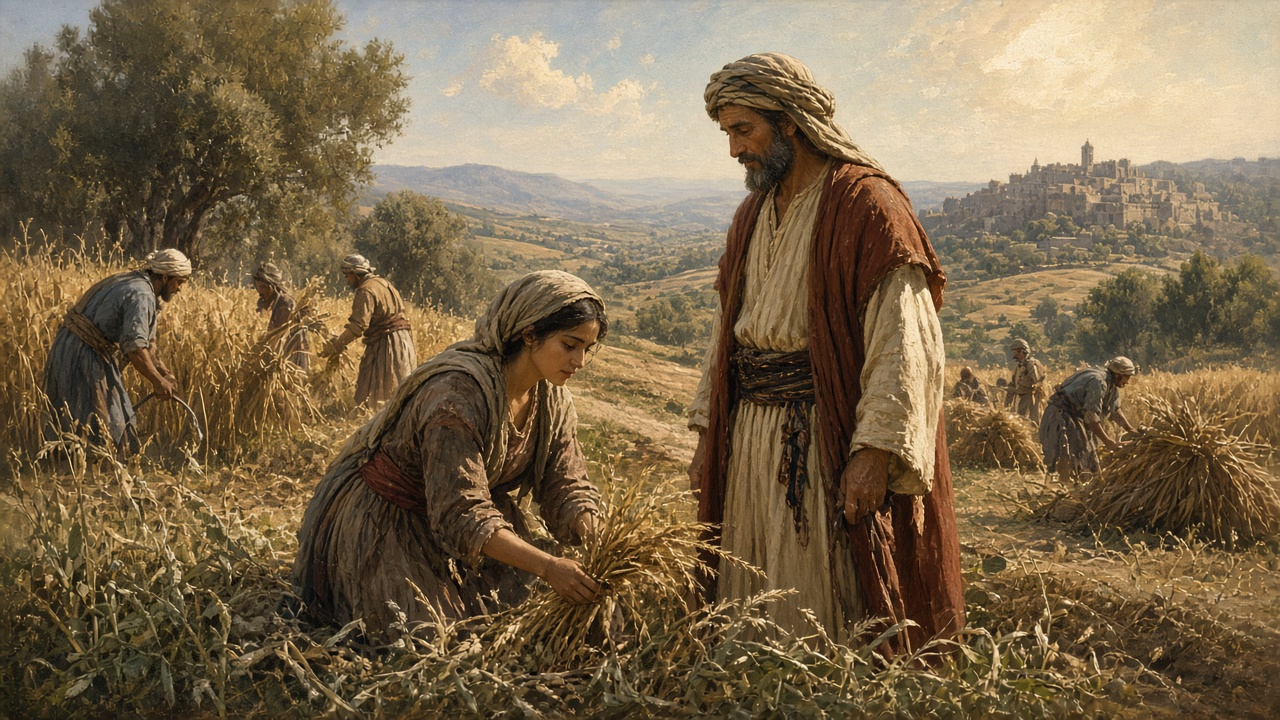
- Naomi then returned to Bethlehem with Ruth, a Moabite and the widow of Mahlon, who refused to leave her. Orpah, Chilion's widow, accompanied Naomi part of the way and then returned to Moab. In the valley east of the town, Ruth gleaned in the fields and was eventually married to Boaz, a wealthy relative.Sources: Easton: Ruth · Orpah · Bethlehem · Boaz
- Easton's Bible Dictionary (1897) says the story of the gleaner Ruth illustrates friendly relations between Boaz and his reapers, the land system, the way property was transferred, and the working of the Mosaic law for the relief of ruined families. By the levirate law, Boaz, a kinsman of Mahlon, took on the duty of marrying Ruth.Sources: Easton: Ruth · Boaz
- Ruth became the mother of Obed, the grandfather of David. The genealogy in Ruth 4:18-22 traces that line, and Matthew 1:5 includes Ruth, a Gentile, among the ancestors of Jesus. Easton also compares her with Tamar and Rahab, who likewise became ancestors of David.Sources: Easton: Ruth · Obed · Ruth
- Bethlehem, in the hill country of Judah, was originally called Ephrath; Ruth 1:2 calls it Bethlehem-Judah and its people Ephrathites. Easton's Bible Dictionary (1897) explains Ruth as meaning a friend, and Naomi as bitter or sad, a symbolic name she gave herself because of her misfortunes.Sources: Bethlehem · Ephrathah · Ruth · Naomi
Notes written with AI assistance from open sources (Theographic Bible Metadata, CC BY-SA 4.0; Easton’s Bible Dictionary, public domain) and reviewed before publishing.
Elimelech ini rema midasa Moab gaganiri roku reyadi
1Senagi senagi, mirona ituari ourefeidena vene tora amegamadiri, adabo minari negau niyo. Bethlehem amiye yokoi Judah ri, ini rema ma rumana mida remanusa, Moab gaganiri roku reyadi. Moab gaganiri roku reyadi.|src="Ruth1.1.tif" size="col" ref="1.1" 2Mina amiye di roka bi Elimelech ma ini rema di roka bi Naomi, ma ini mida remanu di roka bi Mahlon ma Chilion. Ina bi Ephrathah vene, Bethlehem taoni, Judah gagani vene. Ma disi Moab gaganiri amegamadi. 3Amegamadiri, Naomi di maruka Elimelech muyeyo, ma ini rumana mida remanusa amegamadi. 4Moab rema meyadi, ini roka bi Orpah ma Ruth. Lagani vana ufo amegamadiri, 5Mahlon ma Chilion ka muyeyadi ma Naomi bi maruka ma mida de inike amegamo.
Naomi ma Ruth Bethlehem ri dairiyadi
6Gabi Moab ri neideyo bi Varika amiye yaku amiye di rauna moyari aedesi iruku rau regamo. Naomi ini radini remanusa mina gagani ferei digi dogo reyadi. 7Ini radini remanusa, ini amegamadi sana feresi Judah gagani di ida moiyadi. 8Kamini Naomi yaku ini radini remanu rofu niyo, “Ya remanu yi nono di yavari dairigedi. Varika amiye buni tora gade ya rofu moi ogau rebigo, na rofu ma yi muyenari regamadi kana. 9Varika amiye ya remanu rofu yi gado variyaganedi rumana bouna ya mago.”
Kamini ina remanu fuka reyo ma rema remanu isaka nigasa 10niyadi, “Una bi yi vene rofu yasa gogo dairigifa.”
11Idu Naomi yaku niyo, “Dairifa nai vefa vene. Beika maina nasa baegedi? Ye nai rumana mida be moigida, ma yi maruka nigedi ba? 12Rautu dairifa, nai vefa vene. Na bi rumana moina rofu, kamini ugava niyaka. Gokai beika nai mokenari uka mokedo gua urusari maruka nufa mida evata rigida 13ma ina tora nigedi vonisi, ya bi ina tua de regedi. Ya bi na tua de resi de megedi ba? Ide, nai radiyaka, na rofu bi vegu gira tora, yi vegu kana de, ini adina Varika amiye na rofu gedu maro.”
14Mina neideyadiri dudusa isaka niyadi. Kamini Orpah yaku ini radini fuka resi yuata niyo, idu Ruth yaku ini radini moi gira reyo. 15Naomi yaku niyo, “Na ve kumo, yi nabore bi dairido ini vene ma ini sei rofu. Ini vegu kana re.”
16Idu Ruth nikabai reyo, “Ya feresi dairigida na ni guba ga re. Goidu digiya na ka digida, ma goidu amegiya na bi yasa amegida. Yi vene bi nai vene ma yi Sei bi nai Sei. Goidu digiya na digida; goidu amegiya na amegida. Yi vene bi nai vene...|src="Ruth1.6.tif" size="col" ref="1.16" 17Goinari muyegiya na ka muyegida, ma mironari na guri aegedi. Varika amiye yaku kaunava gira gira na maraine, muyena yaku maka una gaima rigo vonisi.”
18Naomi yaku Ruth veyori, bi inasa dina vata rego, mina resi dairiyainedi ni guba de reyo.
19Ye ina remanu disi Bethlehem ri okiyadi. Bethlehem okiyadiri, rautu vene vesi tururu reyadi ma rema vene yaku ago ni tona dudu niyadi, “Aee, mirona bi Naomi ba?”
20Ina vene rofu niyo, “Naomi vo nisi nai roka ga nifo, idu nai roka Marah nifo, adina Varika amiye Vava yaku nai vegu di ida moi gira reyo. 21Na bi gugura fore nufa diyaka, idu Varika amiye yaku notoka na moi dairiyo. Beika resi Naomi roka nidedi? Adina Varika amiye yaku esika na maro, Varika amiye Vava yaku no na fafau aeyo.”
22Ye Naomi, ini Moab radini Ruth ya ota risi Moab gagani feresi Bethlehem ri dairiyadi, barley ini butu butu rena di medari.
Did you know?
Naomi and Ruth Return to Bethlehem
- In the days when the judges ruled, famine forced Elimelech and his family from Bethlehem in the hill country of Judah to migrate to the land of Moab, east of the Dead Sea. After the deaths of Elimelech and her two sons, Naomi decided to return to Bethlehem when she heard that food was once again available in Judah.Sources: the Bible text itself · Bethlehem · Moab · Elimelech
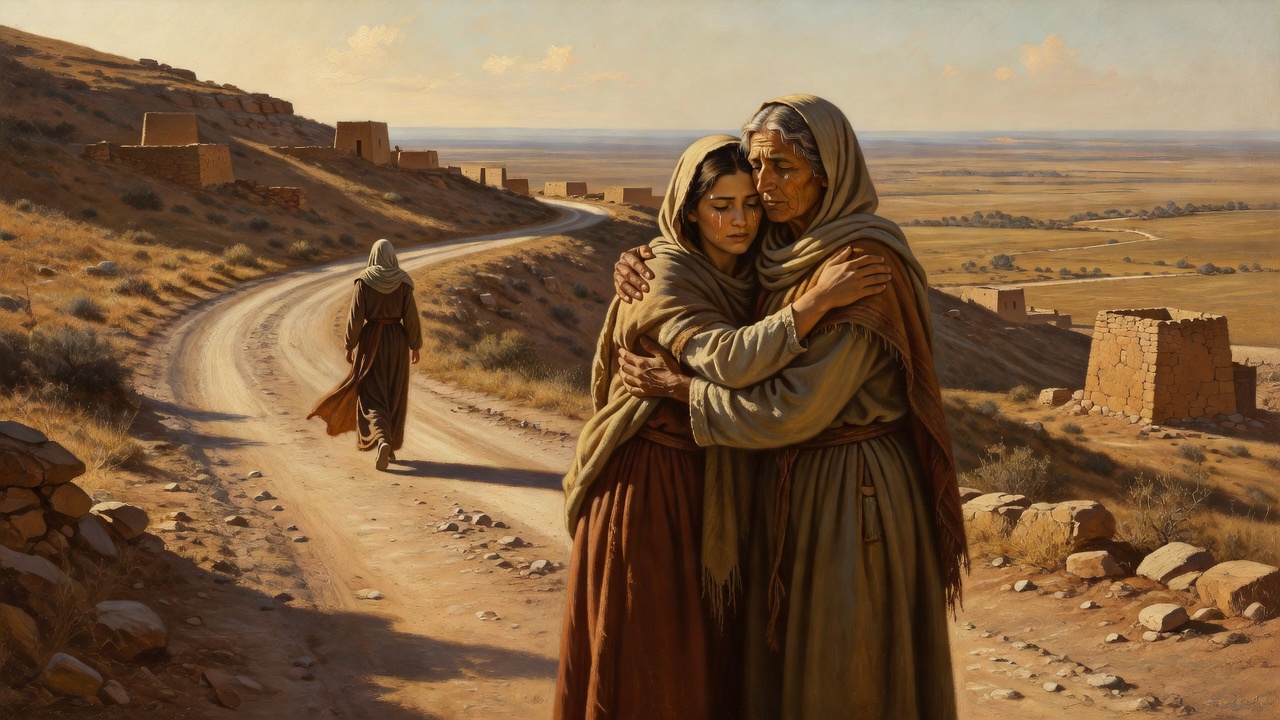
- While Orpah returned to her people and gods in Moab, Ruth clung to her mother-in-law and pledged loyalty to Naomi and her God. Ruth, a Moabite woman, traveled to Bethlehem and would later become an ancestor of King David.Sources: the Bible text itself · Ruth · Orpah
- Upon arriving in Bethlehem at the beginning of the barley harvest, Naomi asked the women of the city to call her Mara, meaning bitter, because she felt the Almighty had dealt bitterly with her. She had departed full with a husband and two sons, but returned empty after their deaths.Sources: the Bible text itself · Naomi
Notes written with AI assistance from open sources (Theographic Bible Metadata, CC BY-SA 4.0; Easton’s Bible Dictionary, public domain) and reviewed before publishing.
Places in this chapter
- Bethlehem · 31.704, 35.208 · verses 1, 2, 19, 22
- Moab · Today: Moab 1 · 31.181, 35.701 · verses 1, 2, 4, 6, 22
Only places identified with high confidence are shown (90% or more according to the scholarly sources compiled by OpenBible). Period map: DARE (Digital Atlas of the Roman Empire), CC BY 4.0; modern map: © OpenStreetMap contributors; places: OpenBible.info (CC BY 4.0).
Credits and license for this translation
Sei di Uka Ago Ruaka
Ruth and the New Testament in the Doromu-Koki Language of Papua New Guinea
Rut na Nupela Testamen long tokples Doromu-Koki long Niugini
copyright © 2011-2016 Wycliffe Bible Translators, Inc.
Language: Doromu-Koki
Translation by: Wycliffe Bible Translators
This translation is made available to you under the terms of the
Creative Commons Attribution-No Derivatives license 4.0.
You may share and redistribute this Bible translation or extracts from it in any format, provided that:
You include the above copyright and source information.
You do not make any derivative works that change any of the actual words or punctuation of the Scriptures.
Pictures included with Scriptures and other documents on this site are licensed just for use with those Scriptures and documents.
For other uses, please contact the respective copyright owners.
2017-03-15
Source: http://png.bible/kqc/ · eBible.org