John 12
Nhandejáry Nhe'ẽ · Tap a verse to see its cross-references.
Maria omohyakwã Hesu py
1Ha upéi katu oiko-ta aretegwasu páscoa héry va'e. Seis áry rire oiko-ta. Upe ramo Hesu ogwahẽ oho-vy Betânia tetã'i-my. Upe-py oiko Lázaro Hesu remimoingovekwe. 2Upe-py ogwahẽ rire Hesu, omongaru porã íxupe. Ha Marta ogweroja íxupe hemi'urã oiko-vy. Heta Hesu karu irũ. Ipa'ũ-my ave okaru Lázaro. 3Upe ramo Lázaro reindy Maria ogweru hyakwã porã tee va'e, nardo héry va'e. Hyru reheve peteĩ litro ogweru. Upe va'e hyakwã porã va'e hepy va'e. Upéi Maria onhohẽ Hesu py-rehe, omohyakwã-vy ipy. Upe rire ho'avuku-py oikyty ipy omokã hagwã. Ha ohasapa hyakwã. Ojohupa koty hyakwã. 4Upe-ma ramo he'i Judas Iscariotes, Hesu mombe'uharã ipyhyharã-pe:
5—Hepy eterei hyakwã va'e. Ma'erã nome'ẽi hepy-rehe ra'e? he'i. —Doze jasy omba'apo va'ekwe repy upe va'e. Ma'erã po nome'ẽi ra'e iporiahu va'e-pe hyakwã va'e repy? he'i mo'ã Judas hyakwã va'e-rehe.
6Ndaha'éiry ome'ẽse-gwi iporiahu va'e-pe. Imondaháry voi Judas. Pirapire ryru-rehe onhangareko va'e. Ha hyru-py oĩ va'e omonda monda oiko-vy va'e.
7Upe ramo he'i Hesu:
—Ani nde poxy teĩ Maria-rehe. Eheja taxe mohyakwã. Heko-rupi ha'e ou. Xe mohyakwãse rei amano e'ỹ ngatu. Upéa-gwi gweminhongatu omoĩ xe-rehe, he'i judeu rekoha-rehe. 8—Oiko meme pene pa'ũ-rupi iporiahu va'e kwéry. Peme'ẽse ramo, peme'ẽ va'erã íxupe kwéry. Xe ae ndaiko are mo'ãi pene pa'ũ-rupi, he'i upe pygwa-pe Hesu.
Judeu kwéry onhombo'e mbo'e-ma Lázaro-pe ave ojuka hagwã
9Ha upéi katu heta ijaty va'e, judeu kwéry va'e, ohendu Hesu oimeha Betânia tetã'i-my. Upéa-gwi oje'ói ohexa-vy. Lázaro-pe, Hesu remimoingovekwe rexa-vy ave oje'ói. 10Ha pa'i ruvixa kwéry katu oje'ói ohexa va'e ndojohu porãi:
—Heta judeu ko nanhane moirũvéi-ma, he'i. —Hemimoingovekwe-gwi ojehesa rerova-ma oiko-vy Hesu-rehe. Ojerovia-magwi, ojehesa rerova-ma hese, he'i Hesu-rehe Lázaro-rehe ave.
Upéa-gwi onhombo'e mbo'e-ma Lázaro-pe ave ojuka hagwã hikwái.
Ogwahẽ ou-vy Jerusalém tetã-my Hesu; mburika ári ogwahẽ ou-vy
12(y 17-18) Iko'ẽ-my heta oĩ ijaty va'e Jerusalém-my oho va'ekwe, páscoa aretegwasu-py oho va'ekwe. Upe ramo ohendu-ma Hesu rerakwã hikwái:
—Ogwahẽ-tama ou-vy Hesu, he'i ijaty va'e-pe Hesu rerakwã omombe'u-vy.
Upe-py oĩ Hesu rembiapo porã rexahare. Omoirũ ra'e Hesu-pe ohenói ramo Lázaro-pe oyta-gwi osẽ jevy hagwã. Omoingove jevy jave Lázaro-pe, omoirũ ra'e íxupe hikwái. Upéa-gwi omombe'u mbe'u herakwã. Ha upéi katu henduhare oho ohogwaitĩ-vy íxupe:
—Jahexa e'ỹ va'e opu'akaha-py ojapo kuri Hesu, he'i hese omombe'u-vy.
Upéa-gwi oho ohogwaitĩ-vy íxupe.
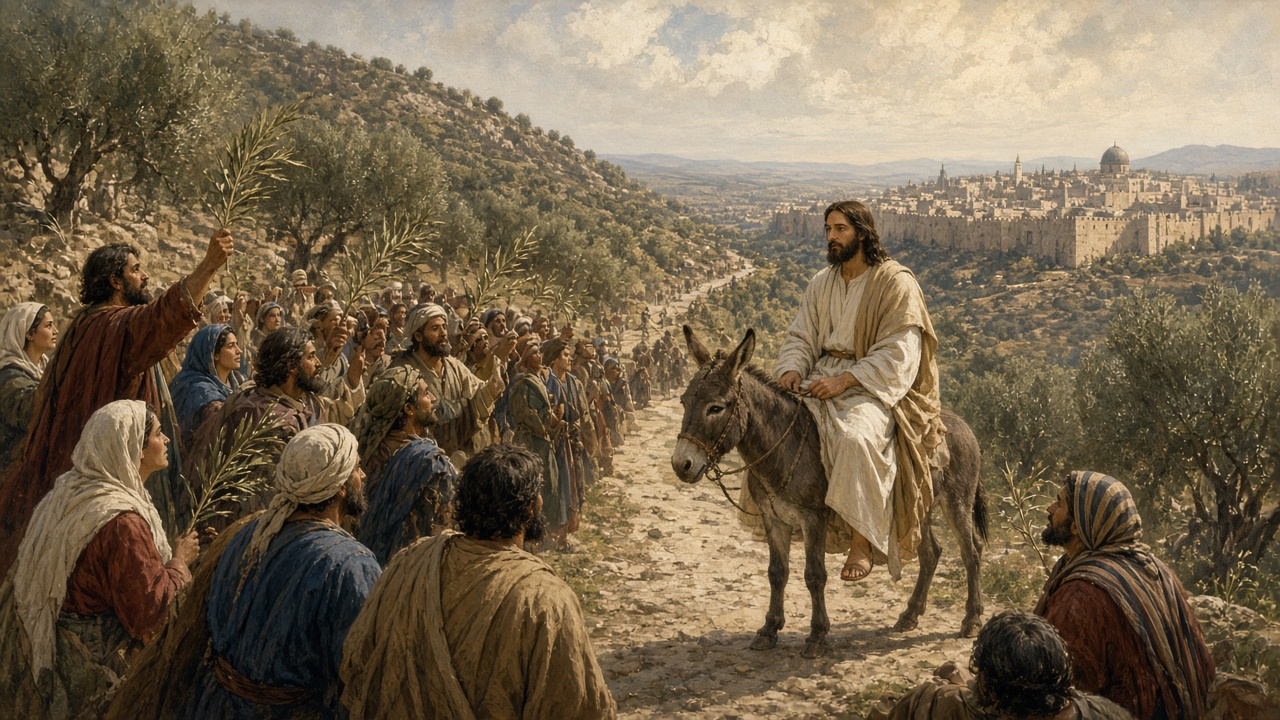
13Upe-ma ramo gwĩ henduhare oikytĩ heraha-vy pindo rogwe hakã reheve. Ohogwaitĩ-vy oho. He'i:
—Tonhemomba'egwasu katu Nhandejáry, he'i onhe'ẽ hatã-vy hikwái. —Nhandejáry réry-py ou va'e-pe tohovasa katu, he'i. —Nhande ruvixarã-pe tohovasa katu. Nhande Israel kwéry ruvixagwasurã-pe tohovasa, he'i Hesu-rehe onhe'ẽ hatã hatã-vy hikwái.
14Ha upéi katu Hesu ojohu gwenagwã mburika ra'y ojeupi hagwã hi'ári. Upéixa ete omombe'u va'ekwe Nhandejáry kwatia nhe'ẽ Hesu rehegwarã nhe'ẽ:
15“Ani pekyhyje teĩ, he'i Sião mygwa-pe, Pene ruvixagwasurã ko ogwahẽ-ma ou-vy mburika ári ou. Upéa-gwi ani pekyhyje teĩ”
he'i Nhandejáry nhe'ẽ Jerusalém pygwa-rehe.
16Upéixa voi he'i va'ekwe Nhandejáry kwatia nhe'ẽ Hesu rekorã omombe'u-vy. Ha hemimbo'e ndoikwaái voi ra'e Hesu rekorã rehegwa nhe'ẽ. Mburika ári oho ramo, mbava'e-pe po he'ise upe va'e ndoikwaáiry voi. Ha onhembotuvixa mba'e rire katu Hesu, oikove jevy rire katu, imandu'a jevy Nhandejáry kwatia nhe'ẽ-rehe hikwái. Hesu rekorã rehegwa nhe'ẽ-rehe imandu'a jevy hikwái. Upe ramo:
—Nhandejáry kwatia he'i hagwe-rami oiko nipo ra'e Hesu-pe. Hesu-pe jajapo va'ekwe, Nhandejáry nhe'ẽ-rupi jajapo nipo ra'e íxupe, he'i omombe'u ojóupe hemimbo'e kwéry.
Ha mburika ra'y ári ou jave omboete ete Hesu-pe ijaty aty va'e kwéry. 17(-) 19Ha fariseu kwéry:
—Erehexa pa? Enterove va'e ko ojehesa rerovapa-ma hese hikwái. Ha ojehesa rerova hagwã hese ndikatúi jajoko, he'i ojóupe fariseu kwéry.
“Orohexase Hesu-pe” he'i judeu e'ỹ va'e grego-py onhe'ẽ va'e
20Ha Jerusalém-py ogwahẽ ogwa'ẽ-vy heta eta va'ekwe aretegwasu mboeteha. Ipa'ũ-my oĩ ave gwĩ judeu e'ỹ va'e grego-py onhe'ẽ va'e. 21Upe ramo ou Filipe oĩ ha-py. Filipe Galiléia yvy pygwa voi. Betsaida tetã mygwa voi. Ha upéi:
—Mba'ejáry, orohexase Hesu-pe, he'i Filipe-pe.
Oporandu jevy jevy oho hagwã-rehe.
22Upe ramo oho omombe'u André-pe. Upéi mokõive oho omombe'u Hesu-pe. 23Inhe'ẽ ohendu ramo, he'i Hesu:
—Xe Nhande Ryke'y tee va'e. Ogwahẽ-ma anhemomba'egwasu ukaha óra, he'i. 24—Amombe'u-ta peẽ-my anhetegwa tee va'e. Xejehegwa amombe'u-ta trigo ra'ỹi rehegwa nhe'ẽ-rami. Trigo ra'ỹi nhanhotỹ va'e yvy-py henhói hagwã. Henhói e'ỹ ramo trigo ra'ỹi mante oĩ. Peteĩ mante oiko. Ha henhói ramo katu ndoikovéi-ma ha'ỹigwe. Ndoikovéi ójehe. Henhói ijagwyje hagwã, onhembohetave hagwã, he'i. 25—Upéixa ete gwekove-rehe hakate'ỹ va'e, ojehéte oiko va'e, onhehundipa rei va'erã hekove. Ndotopái va'erã gwekove repyrã. Ha gwakate'ỹ hagwã gwekove-rehe nopenái va'e katu ko yvy ári, omoĩ ngatu va'erã gwekove Nhandejáry ndive oiko opa e'ỹ reheve hagwã, he'i. 26—Xe rembigwái ramo oikose va'e gwive taxe moirũ katu, he'i. —Upéixa ramo xe aime ha-rupi, xe ndive oiko va'erã ave xe rembigwái. Xe rembigwái va'e gwive omboete va'erã íxupe xe Ru, he'i upe pygwa-pe Hesu.
Kurusu-rehe omanotaha omombe'u Hesu
27Ha upéi katu he'i jevy upe pygwa-pe Hesu:
—Ko'ánga katu ajepy'apy-ma xéjehe, he'i. —Ndaxe py'agwapyvéi-ma xéjehe. Mbava'e po ha'e-ta xe Ru-pe, ndaikwaái. Ha'e-ta para'e, Xe resende katu xe áry-py. Xe amano hagwã áry-py xe resende katu, ha'e-ta para'e. Nahániry. Xe resende katu, aipo nda'e mo'ãiry. Amano hagwã-ma agwahẽ aju-vy xe óra-py, he'i. 28—Tomomba'egwasu uka nde réry, he'i Gwu-pe.
Upe-ma ramo ohendu yváy-gwi onhe'ẽ va'e:
—Xe réry amomba'egwasu-ma kuri. Ãy amomba'egwasu jevy-ta, he'i upe pygwa-pe Túvy.
29Ha ijaty va'e ohendu ave onhe'ẽ va'e. Hyapu va'e-rami ae ohendu inhe'ẽ:
—Hyapu-ma. Osunu-ma, he'i mo'ã yváy pygwa nhe'ẽ rendu-vy hikwái.
Outro he'i:
—Nhandejáry rembigwái yváy pygwa omombe'u íxupe, he'i mo'ã onhe'ẽ va'ekwe-rehe.
30Upéixa ramo he'i Hesu:
—Ndaha'éiry xe-vy anho omombe'u va'ekwe. Peẽ-my ave omombe'u onhe'ẽ va'e, he'i. 31—Ãy ogwahẽ-ma ãygwa óra. Yvypóry-pe ahexa uka-tama hekoha vaiha. Ha yvypóry ruvixa-pe amosẽ-tama imondo-vy, he'i anháy ruvixa-rehe. 32—Ha xe ko, ko yvy-gwi xe rupi rire kurusu-rehe, anhemoirũ uka-ta entéro kente kwéry-pe, he'i ijaty va'e-pe Hesu.
33Upéa he'i kurusu-rehe omanotaha omombe'u-vy.
34Ha upéi he'i íxupe ijaty va'e kwéry:
—Nhandejáry kwatia nhe'ẽ, orohendu va'e, he'i no'ã-rami, “Nomanói va'erã Cristo. Oiko meme va'erã opa e'ỹ-rehe” he'i. Upéixa ramo ma'erã, “Ohupi va'erã omoĩ-vy ko yvy-gwi Nhande Ryke'y tee va'e-pe” ere kuri ore-vy? Kiva'e po ko Nhande Ryke'y tee va'e, ndoroikwaái, he'i íxupe hikwái.
35Upéi he'i Hesu:
—Sapy'a apombo'eve-ta ohesape va'e-rami. Ha upe rire katu, aha jevy-ma va'erã, he'i. —Pene pa'ũ-rupi xe aime jave, arakatu-rupi oiko va'e-rami tapeiko kena. Arakatu-rupi peiko ramo, ndapeikói va'erã hesapyso e'ỹ oiko va'e-rami. Pytũ-rupi oiko va'e gwive ndohexáiry gwaperã. 36Apohesape jave pejerovia katu xe-rehe. Upéixa peiko-ma va'erã arakatu-rupi meme oiko va'e-rami, he'i ijaty va'e-pe Hesu.
Judeu kwéry ndogweroviáiry Hesu nhe'ẽ
Onhe'ẽ oĩ-vy rire onhemo'ã-ma oho-vy Hesu. Ijaty va'e-gwi okanhy-ma oho-vy. 37Heta jahexa e'ỹ va'e gwive hexapyrã-rupi voi ojapo-ma. Ohexa jepe, ndojerovia etéi voi hese hikwái.
38Yma va'ekwe omoĩ kwatia-rehe. Hesu rekorã omoĩ va'ekwe Nhandejáry nhe'ẽ-py omombe'u va'ety héry va'e Isaías. Ohai va'ekwe no'ã-rami:
“Kiva'e po ogwerovia nhane remimombe'u, xe Járy? Kiva'e-pe po ohexa uka Nhandejáry ipu'akaha?”
he'i Nhandejáry nhe'ẽ. 39Upéa-gwi hembihaikwe-rami ndogweroviáiry ave Hesu nhe'ẽ hikwái.
Ohai jevy va'ekwe Isaías no'ã-rami:
40“Ogwerovia e'ỹ va'e-pe omoingo Nhandejáry pytũ-rupi. Inharandu porãrãgwe oipe'apa íxugwi. Upéa-rehe hesapyso e'ỹ va'e-rami oiko. Nahi'arandu porãi voi. Ndojeréi Nhandejáry-rehe omoirũ hagwã íxupe, Nhandejáry ombogwera hagwã íxupe kwéry”
he'i Nhandejáry nhe'ẽ. Upéixa ete ohai va'ekwe judeu rekorã Isaías amyrĩ. Upéa-gwi ohai hagwe-rami ndikatúi ojerovia Hesu-rehe hikwái.
41Ha Isaías upéte ojehexa uka va'ekwe Hesu rekoha. “Tuvixa mba'e” he'i Hesu rexa-vy. Upéa-gwi omoĩ va'ekwe kwatia-rehe Hesu rehegwarã.
42Judeu kwéry ndogweroviái ramo jepe, heta oĩ mburuvixa judeu va'e ojerovia joty hese. Ha atýra-py katu nomombe'úiry ojeroviaha. Ikyhyje fariseu kwéry-gwi. Nonhemosẽ ukaséi ojeporahéi haty haty-gwi. 43Onhemboete ukase ramo jepe Nhandejáry-pe, ojehexa uka porãse ave oiko-vy teko rei-pe. Upéa-gwi nomombe'úiry ojeroviaha atýra-py.
“Xe nhe'ẽ mbojevy va'e gwive, hekoha vai mombe'uharã oĩ ave íxupe” he'i Hesu
44Ha upéi katu onhe'ẽ hatã Hesu:
—Xe-rehe ojerovia tee va'e gwive ojerovia xe mbouhare-rehe ave. Ndaha'éiry xe-rehete anho ojerovia va'e, he'i. 45—Xe reko ohexa kwaa va'e gwive, xe mbouhare reko ohexa kwaa ave. 46Yvypóry kwéry-pe ahesape hagwã aju va'ekwe xe-rehe ojerovia tee va'e gwive oiko e'ỹ hagwã pytũ-rupi. 47Xe remimombe'u renduse e'ỹ va'e gwive, namombe'u mo'ãi íxupe hekoha vaiha. Ndajúi va'ekwe yvypóry rekoha vai mombe'u-vy. Aresende-vy ae aju va'ekwe, he'i. 48—Ha xe nhe'ẽ mbojevy va'e gwive, xe nhe'ẽ nohenduséi va'e gwive, oikwaa va'erã gwekoha vaiha. Xe aju jevytaha áry-py oikwaa va'erã gwembiapo vaikwe. Ãy xe remimombe'u nohenduséi-gwi ombohasa asy va'erã íxupe kwéry Nhandejáry, he'i.
49—Xe jehegwigwa namombe'úi va'e. Xe Ru nhe'ẽ ae amombe'u. Xe Ru xe mbouhare omombe'u xe-vy xe nhe'ẽrã. Xe remimombe'urã ave omombe'u xe-vy. Upéa-gwi xe aju jevytaha áry-py xe nhe'ẽ nohenduséi-gwi ojekwaapa va'erã íxupe hembiapo vaikwe. 50Ha xe Ru omombe'u va'e xe-vy xe nhe'ẽ katu ohendu va'e gwive amoingove va'erã íxupe Nhandejáry ndive opa e'ỹ reheve oiko hagwã. Xe jehegwigwa nhe'ẽ namombe'úi. Xe nhe'ẽrã xe Ru omombe'u va'ekwe ae amombe'u voi xe, he'i Hesu upe pygwa-pe.
Did you know?
The Anointing at Bethany and the Entry into Jerusalem
- Bethany, where Jesus arrived six days before the Passover, lay about two miles east of Jerusalem on the southeastern slope of the Mount of Olives, along the road to Jericho, and took its name from the palm trees that grew there. It was the home of Lazarus, whom Jesus had raised from the dead after four days in the tomb, and of his sisters Martha and Mary; the chief priests planned to kill Lazarus as well, because on his account many people were believing in Jesus.Sources: the Bible text itself · Bethany · Lazarus
- At a dinner where Martha served and Lazarus reclined at the table, Mary anointed Jesus' feet with about a pint of expensive perfume made of pure nard and wiped them with her hair, so the house was filled with the fragrance. Judas Iscariot, son of Simon, whose surname means a man of Kerioth, asked why it was not sold for three hundred denarii for the poor; he was a thief who, as keeper of the money bag, used to take from what was put into it, and he was going to betray Jesus.Sources: the Bible text itself · Judas Iscariot · Simon
- The next day the great crowd that had come for the feast took palm branches and went out to meet Jesus as he came to Jerusalem, seated on a young donkey, shouting praise to the King of Israel, as it is written of the Daughter of Zion. Zion was the southeastern hill of Jerusalem, where David built a citadel and a palace after taking it, so that it became the city of David. At first his disciples did not understand these things, but after Jesus was glorified they remembered that they had also been written about him.Sources: the Bible text itself · Zion
Notes written with AI assistance from open sources (Theographic Bible Metadata, CC BY-SA 4.0; Easton’s Bible Dictionary, public domain) and reviewed before publishing.
Places in this chapter
- Jerusalem · 31.777, 35.234 · verses 11, 12, 20
- Zion · Today: Jerusalem · 31.777, 35.234 · verse 15
- Galilee · 32.760, 35.527 · verse 21
Only places identified with high confidence are shown (90% or more according to the scholarly sources compiled by OpenBible). Period map: DARE (Digital Atlas of the Roman Empire), CC BY 4.0; modern map: © OpenStreetMap contributors; places: OpenBible.info (CC BY 4.0).
Credits and license for this translation
Nhandejáry Nhe'ẽ
New Testament in Kaiwá (BR:kgk:Kaiwá)
copyright © 2006 Wycliffe Bible Translators, Inc.
Language: Kaiwá
Translation by: Wycliffe Bible Translators, Inc.
Copyright Information
© 2006, Wycliffe Bible Translators, Inc. All rights reserved.
This translation text is made available to you under the
terms of the Creative Commons License: Attribution-Noncommercial-No Derivative Works.
( http://creativecommons.org/licenses/by-nc-nd/3.0/ )
In addition, you have permission to port the text to different file formats, as long as you
do not change any of the text or punctuation of the Bible.
You may share, copy, distribute, transmit, and extract portions
or quotations from this work, provided that you include the above copyright
information:
You must give Attribution to the work.
You do not sell this work for a profit.
You do not make any derivative works that change any of the actual words or punctuation of the Scriptures.
Permissions beyond the scope of this license may be
available if you contact
us with your request.
The New Testament
in Kaiwá
© 2006, Wycliffe Bible Translators, Inc. All rights reserved.
This translation is made available to you under the terms of the
Creative Commons Attribution-Noncommercial-No Derivatives license 4.0.
You may share and redistribute this Bible translation or extracts from it in any format, provided that:
You include the above copyright and source information.
You do not sell this work for a profit.
You do not change any of the words or punctuation of the Scriptures.
Pictures included with Scriptures and other documents on this site are licensed just for use with those Scriptures and documents.
For other uses, please contact the respective copyright owners.
2014-04-27
Source: http://ebible.org/kgkNT/ · eBible.org