Colossians 2
Nhandejáry Nhe'ẽ · Tap a verse to see its cross-references.
1Ko'ãy amombe'use peẽ-my xe rembiapo hatãha. Peẽ-my gwarã ajapoha amombe'use. Laodicéia tetã mygwa pegwarã ajapoha, xe rexa e'ỹ va'e gwive pegwarã ajapoha ave amombe'use ave. 2Amba'apo hatã voi peẽ-my gwarã-rehe penhembopy'a mbaraete hagwã, pejohayhu hagwã pende joja hagwã ojóupe. Amba'apo hatã pende-rehe pene arandu tee hagwã, “Hupigwa meme voi” peje hagwã Nhandejáry nhe'ẽ-rehe. Upéixa ramo peikwaa porãmba voi va'erã Nhandejáry remimombe'use peẽ-my. Hemimombe'u Cristo rehegwa nhe'ẽ voi. 3Ha Cristo katu ha'e anho mante oikwaa uka va'e nhande-vy. Nhandejáry arandu jaikwaa e'ỹ va'e gwive oikwaa uka va'e voi nhande-vy jaikwaa porãmba hagwã. Ha'e nhane mo'arandu Nhandejáry arandu porã porã ete-rupi jaikwaa porãmba hagwã. 4Upe ramo ha'e-ta peẽ-my: Ani pene mbotavy rei teĩ Cristo arandu e'ỹ mombe'u-vy. Oĩ imandu'a porã va'e hemimombe'u-rehe. Ha nomombe'u porãi. Omombe'u ra'anga anga rei ae oiko-vy. Ani pene mbotavy rei teĩ, ha'e peẽ-my. 5A-py xe aĩ ramo jepe, xe resa katu amondo meme joty pende ha-py. Xe mandu'a ramo mba'éixa pa peiko, xe avy'a. Peteĩxa perovia porã Cristo-pe. Peteĩxa ndapevái tape porã-gwi. Upe va'e-rehe xe mandu'a ramo, avy'a eterei voi.
Pemoirũ meme katu Cristo-pe
6Ha peẽ peje kuri Hesu Cristo-pe: “Nde ko xe ruvixa” peje kuri íxupe. Upéa-gwi pemoirũ meme katu íxupe. Ani peheja teĩ. 7Ijekokaha tee va'e ndo'ái va'e. Upéixa voi Cristo-pe perovia porã ramo, pende jekokaharã voi ha'e. Ndape'a rei reíry arã. Pende jekokaharã voi ha'e. Upéixa ramo pemoirũ meme katu íxupe pene mombaraeteve teve hagwã peho-vy, perovia porãve rãve hagwã íxupe. Orombo'e hagwe-rami, perovia katu íxupe. Petima porã porã katu ave Nhandejáry-pe peiko-vy. 8Xáke, oĩ ko pene mbotavyharã. Ani pene mbotavy teĩ. Cristo nhe'ẽ nomombe'úi va'e. Ha'e ae oarandu omombe'u arã. Omombe'u ra'anga anga rei va'erã peẽ-my. Oapuha rei-ma va'erã omombe'u peẽ-my. Teko rei nhe'ẽgwe omombe'u va'erã peẽ-my. Ko mundo járy Nhandejáry e'ỹ va'e kwéry nhe'ẽgwe rei omombe'u. Hekoha-rupi katu ani pejererova teĩ. 9Ha Cristo katu heko Nhandejáry reko-rami. Ha'e ramigwa voi. Oheteporu ramo jepe, ha'e-rami joty oĩ. Ndaha'éi hekoha ambue va'e. Ha'e ramigwa joty voi. 10Opaixagwa mburuvixa va'e-rehe gwive ipu'aka va'e. Gwĩ yváy pygwa va'e-rehe, gwĩ yvy arigwa va'e-rehe ave ipu'aka va'e voi ha'e. Omanda va'e gwive Járy ha'e. Enterove va'e ipo pygwa meme oĩ. Ha peẽ katu peiko-ma ramo hendive, pene moingo-ma voi gwekoha-rupi. Pene remikotevẽ gwive ome'ẽ-ma peẽ-my. 11Peẽ Nhandejáry javegwa voi. Yma va'ekwe judeu kwéry ha'e kwéry anho mante Nhandejáry re'ýi. Cristo-pe pemoirũ-gwi, peiko-ma Nhandejáry javegwa ramo. Ndapeikói ramo jepe judeu kwéry reko-rupi, peiko-ma Nhandejáry javegwa ramo. Yma va'ekwe pejapo peiko-vy pejapose va'e. Pene rembiapo porã-ta mo'ã va'ekwe. Pene rembiapo vai joty peiko-vy. Pejapose va'ekwe pejapo joty ra'e. Ha ko'ánga katu Cristo pene mombaraete-ma voi pene rembiapo porã meme hagwã. 12Cristo va'ekwe omano rire, hetekwe renda-py omoĩ hetekwe. Upe rire, oikove jevy. Ha peẽ penhemongarai uka kuri Hesu Cristo réry-py. Penhemongarai rire-ma peiko-ma peteĩxa hendive. Ãy katu peiko-ma Cristo ndive pemano va'ekwe vérami. Peikove jevy va'ekwe vérami peiko. Hesu omano rire va'ekwe, omoingove jevy íxupe Nhandejáry. Upe va'e nhe'ẽ pehendu ramo: “Imbaraete voi Nhandejáry” peje hese. Pejerovia-ma hese. 13Yma va'ekwe napeẽ-myi vérami va'ekwe onhe'ẽ. Heta pene rembiapo vai-gwi, napehendúiry voi va'ekwe. Nhandejáry he'i va'ekwe peikwaa e'ỹ va'ekwe. Napende járyi va'ekwe peẽ. Ha ko'ánga katu pene moingove-ma Cristo ndive peteĩxa peiko hagwã hendive. Nhane rembiapo vai va'ekwe gwive Nhandejáry omboykepa-ma nhandéhegwi. 14Yma va'ekwe Nhandejáry omoĩ va'ekwe kwatia-rehe nhane rembiaporã. Upe va'e nhe'ẽ ndajajapói ramo va'ekwe jepe, nanhane moingo asýiry joty. Cristo omano-gwi pe kurusugwasu-rehe, nanhane moingo asy mo'ãvéi-ma. Nhande reveha-rami omoĩ kurusu-rehe. Kurusu-rehe omano jave, omboykepa voi nhandéhegwi nhande reveha. Nanhane mbopaga ukáiry. 15Ha'e omano ramo kurusu-rehe, omosẽ opaixagwa ko mundo járy kwéry, yváy pygwa, yvy arigwa ave yvy'ãgwypóry, jaigwypóry ave. Gwĩ omanda va'e-pe gwive omosẽmba. Hexapyrã-rupi voi ohexa uka enterovéa-pe opu'akaveha-gwi nomandavéi gwĩ mburuvixa kwéry. Opyta otĩmba ete hikwái entero mburuvixa gwive yváy pygwa, yvy arigwa ave, yvy'ãgwypóry, jaigwypóry ave. Hekovía omanda mbaraeteve hese.
16Upéa-gwi anive pehendu teĩ gwĩ peẽ-my he'i va'e: “Upe va'e hi'upy e'ỹ” he'i “Naiporãi pemboete e'ỹ arete. Naiporãi pemboete e'ỹ jasy ra'y áry pytu'uha áry ave” he'i peẽ-my. Upe va'e nhe'ẽ anive pehendu teĩ upe va'e nhe'ẽ. 17Ha upe va'e nhe'ẽ gwive ndaha'éi Nhandejáry remimbota tee. Ndaha'éi ãy pegwarã. Upe va'e nhe'ẽ ranhe ogwahẽ nhande-vy. Ogwahẽ Cristo renonde rupigwa-rami. Imandu'aha ranhe ogwahẽ. Ha upe rire ae ogwahẽ ou-vy ha'e tee va'e ohexa uka hagwã nhande-vy anhetegwa va'e gwive. Upéa-gwi upe va'e nhe'ẽ ndaipokatuvéi-ma nhande-vy. 18Ani pehendu teĩ peẽ-my he'i va'e: “Peẽ ko ndapeikói va'e tekoha-rupi. Iporãve ereiko xe rekoha-rupi” he'i mo'ã. “Xe py'amirĩ voi. Xe kyhyje Nhandejáry-gwi. Upéa-gwi nanhemopeteĩry Nhandejáry-pe imboete-vy. Nhandejáry rembigwái kwéry-pe yváy pygwa va'e ae amboete ave” he'i mo'ã. Ani pehendu teĩ inhe'ẽ. Ixupéte ojehexa uka va'e omombe'u mbe'upa rei hikwái. Ikéra-py ohexa va'e omombe'u rei. Omombe'upa peẽ-my onhembotuvixa mba'ese-gwi mo'ã. Ha nonhembotuvixa mba'e teéiry. Ha'e ae oakã gwigwa omombe'u rei arã peẽ-my. Nhandejáry-pe oikwaa e'ỹ-gwi, Nhandejáry arandu katu nomombe'úi. 19Upe va'e nomoirũ teevéi-ma Hesu Cristo-pe. Upéa-gwi ha'e ae oarandu omombe'u. Cristo gwigwa arandu katu nomombe'úi. Nhane akã katu nhande rete mo'arandu va'e. Nhande rete omongakwaa va'e ave. Upéixa voi Cristo nhane mo'arandu va'e nhande rereko-vy. Nhande rete ojepota potapa ojóehe ombaraete hagwã. Upéixa ete voi Nhandejáry oipota nhande joja nhanhopytygwõ-vy nhane mbaraete hagwã.
Pemoĩ katu pende resa yváy pygwa-rehe
20Ha Hesu Cristo katu omano va'ekwe kurusu-rehe. Peteĩxa pemoirũ-gwi íxupe, peiko ãy pemano va'ekwe-rami ave. Upéa-gwi ndaipu'akavéi pende-rehe ko mundo járy Nhandejáry e'ỹ va'e kwéry va'e, yváy pygwa. Upéixa ramo, ani vyteri pehendu teĩ gwĩ omanda rei va'e nhe'ẽ, Cristo ndive peiko e'ỹ va'e-rami. No'ã-rami he'i va'e ko mundo járy kwéry omanda-vy: “Oĩ ja'u va'e. Oĩ ja'u e'ỹ va'e ave. Ani erehupi teĩ ja'u e'ỹ va'e. Ani eremboja jepe ne apekũ-rehe. Ani erepoko teĩ hese” he'i mo'ã. Ma'erã po pehendu upe va'e nhe'ẽ. Upéa rehegwa ja'u ramo, ndaiporivéi-ma, opa voi. Opa va'erã-rehe naiporãi nhamanda. 22Upéa rehegwa nde'íry Nhandejáry va'ekwe. Teko rei nhe'ẽ ae upéa nhe'ẽ. Upéa-py rei nhane mbo'e va'ekwe teko rei. 23Gwĩ pende-rehe omanda va'e hi'arandu porã vérami mo'ã. Ha nahi'arandu porãi: “Iporã katu ereiko ore rekoha-rupi” he'i mo'ã. “Ore py'amirĩ voi. Ore kyhyje Nhandejáry-gwi. Upéa-gwi noromopeteĩry imboete-vy Nhandejáry-pe. Nhandejáry rembigwái kwéry-pe yváy pygwa va'e ae oromboete meme ave” he'i mo'ã. “Iporã ore rekoha-rupi peiko” he'i mo'ã peẽ-my. “Iporã katu jareko asy nhande rete nhamboeteve hagwã Nhandejáry-pe” he'i mo'ã peẽ-my. Ani pehendu teĩ inhe'ẽ. Pene mbo'e ramo jepe, nahi'arandu porãi joty voi pene mbo'eháry. Inhe'ẽ nhahendu ramo katu, ndaipóiry joty inhe'ẽ. Ijapu voi. Inhe'ẽ nhahendu ramo ndajaiko porãi arã joty. Nanhane mombaraetéiry va'e inhe'ẽ nhane rembiapo vai e'ỹ hagwã, jajapo porã meme hagwã. Nainhe'ẽ pokatúiry voi. Inhe'ẽ rei va'e hikwái. Ani erehendu teĩ inhe'ẽ.
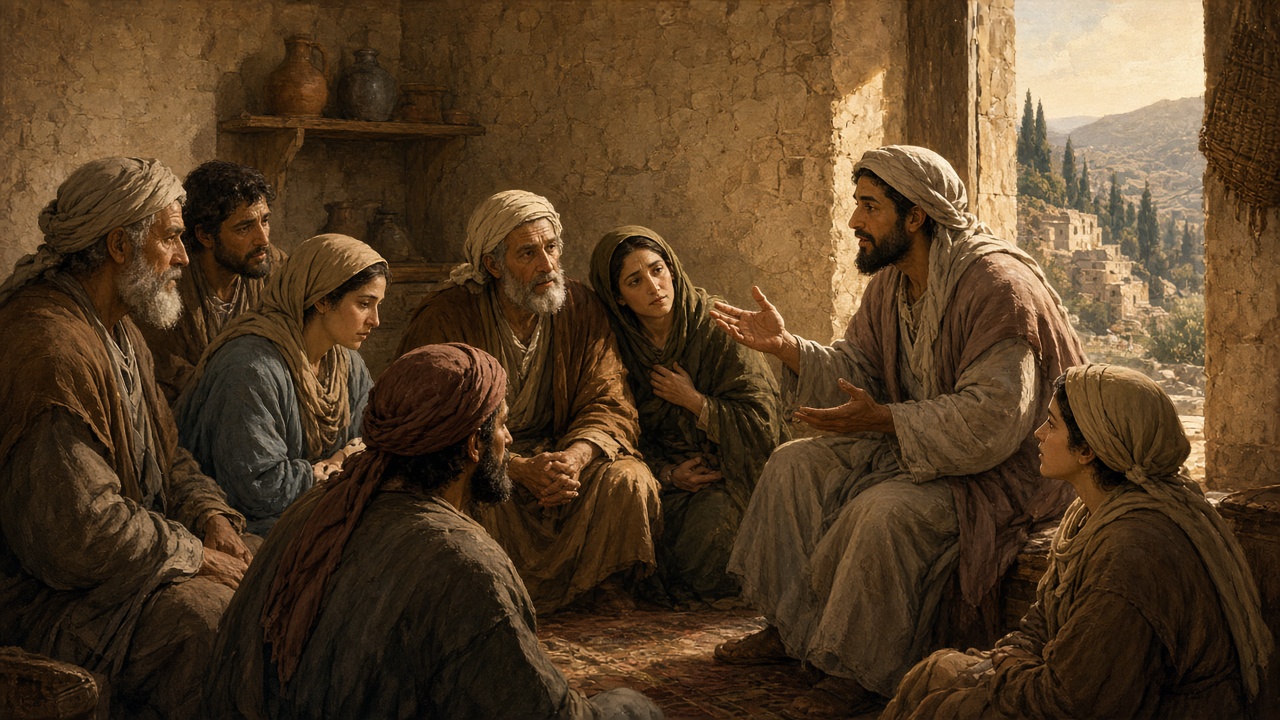
Did you know?
Fullness in Christ, Not Empty Teaching
- The writer says he is struggling for the readers, for those at Laodicea, and for all who have not met him face to face. Laodicea lay on the border of Phrygia and Lydia, on the banks of the Lycus, about forty miles east of Ephesus, and was one of the most important and flourishing cities of Asia Minor.Sources: the Bible text itself · Laodicea
- He warns them not to be taken captive by philosophy and empty deception based on human tradition and the spiritual forces of the world, and not to be deceived by smooth rhetoric.Sources: the Bible text itself
- The chapter also says they should not let anyone judge them by what they eat or drink, or by a feast, a New Moon, or a Sabbath—these are called a shadow of things to come—and should resist false humility, the worship of angels, and rules against handling, tasting, and touching that rest on human commands.Sources: the Bible text itself
Notes written with AI assistance from open sources (Theographic Bible Metadata, CC BY-SA 4.0; Easton’s Bible Dictionary, public domain) and reviewed before publishing.
Places in this chapter
- Laodicea · Today: Laodicea on the Lycus · 37.836, 29.108 · verse 1
Only places identified with high confidence are shown (90% or more according to the scholarly sources compiled by OpenBible). Period map: DARE (Digital Atlas of the Roman Empire), CC BY 4.0; modern map: © OpenStreetMap contributors; places: OpenBible.info (CC BY 4.0).
Credits and license for this translation
Nhandejáry Nhe'ẽ
New Testament in Kaiwá (BR:kgk:Kaiwá)
copyright © 2006 Wycliffe Bible Translators, Inc.
Language: Kaiwá
Translation by: Wycliffe Bible Translators, Inc.
Copyright Information
© 2006, Wycliffe Bible Translators, Inc. All rights reserved.
This translation text is made available to you under the
terms of the Creative Commons License: Attribution-Noncommercial-No Derivative Works.
( http://creativecommons.org/licenses/by-nc-nd/3.0/ )
In addition, you have permission to port the text to different file formats, as long as you
do not change any of the text or punctuation of the Bible.
You may share, copy, distribute, transmit, and extract portions
or quotations from this work, provided that you include the above copyright
information:
You must give Attribution to the work.
You do not sell this work for a profit.
You do not make any derivative works that change any of the actual words or punctuation of the Scriptures.
Permissions beyond the scope of this license may be
available if you contact
us with your request.
The New Testament
in Kaiwá
© 2006, Wycliffe Bible Translators, Inc. All rights reserved.
This translation is made available to you under the terms of the
Creative Commons Attribution-Noncommercial-No Derivatives license 4.0.
You may share and redistribute this Bible translation or extracts from it in any format, provided that:
You include the above copyright and source information.
You do not sell this work for a profit.
You do not change any of the words or punctuation of the Scriptures.
Pictures included with Scriptures and other documents on this site are licensed just for use with those Scriptures and documents.
For other uses, please contact the respective copyright owners.
2014-04-27
Source: http://ebible.org/kgkNT/ · eBible.org