Acts 20
Nhandejáry Nhe'ẽ · Tap a verse to see its cross-references.
Paulo ojapura oho-vy ogwahẽ pya'e hagwã Jerusalém-my
1Upe ramo gwĩ ijayvu va'e kwéry osarambipa jevy ohopa gwóga gwóga-rupi hikwái. Upe rire Paulo ohenói uka íxupe ogwahẽmba jevy hagwã gwóga-py. Hesu nhe'ẽ renduha va'e kwéry gwive ohenói. Ogwahẽ ramo:
—Peiko meme katu Hesu rape-rupi, he'i íxupe kwéry.
Upe rire:
—Aha jevy-tama xe, he'i.
Upéi oho jevy Macedônia yvy-py. 2Ohasa hasa amo ete rupigwa-rupi. Hesu reroviaha va'e oĩ ha-rupi onhemonhe'ẽ nhe'ẽ imombaraete-vy. Upe rire ogwahẽ oho-vy Grécia yvy-py. 3Upe-py mbohapy jasy opyta. Ha upéi katu onhemboyru-ta mo'ã kanoagwasu-py ogwejy hagwã y-rupi oho-vy Síria yvy-koty. Ha ohendu ramo ojukaseha íxupe judeu kwéry, nonhemboyru jepéiry.
—Aha jevy-ta Macedônia yvy-rupi, he'i. 4Upéi oho. Omoirũ íxupe Beréia pygwa héry va'e Sópatro, Pirro ra'y oho hagwã Ásia yvy-py. Omoirũ íxupe ave Tessalônica pygwa héry va'e Aristarco Secundo ndive. Omoirũ ave íxupe Derbe-py oiko va'e héry va'e Gaio. Omoirũ ave íxupe Timóteo. Ásia yvy pygwa héry va'e Tíquico Trófimo ndive omoirũ ave íxupe. Upe va'e kwéry omoirũ íxupe. Ogwahẽ oho-vy Filipos tetã-my. Upe-py opyta xe ndive Paulo xe rekwa-py opyta. 5Ha inhirũ kwéry katu ohasa meme oho-vy. Ore renonderã oho Trôade tetã-my. 6Upe-py opyta ore ra'arõ-vy. Ha ore katu oropyta Filipos tetã-my. Oiko-ma aretegwasu. Upe aretegwasu-py ja'u meme va'e mbojape ovu e'ỹ va'e. Aretegwasu opa rire mante oroho jevy. Upe-gwi ygwasu rembe-py orogwahẽ ramo, oronhemboyru kanoagwasu-py oroho hagwã y-rupi. Upéi cinco áry jave orogwahẽ oroho-vy Trôade tetã-my. Upe-py peteĩ semana oropyta.
7Domingo-py orojogweroaty onhondive orokaru hagwã. Orokaru jave ore mandu'a Hesu-rehe omano va'ekwe-rehe. Ha Paulo omondo mondo gwesa ko'ẽ ramogwarã-rehe, gwaperã-rehe. Upéa-gwi onhemonhe'ẽ ijaty va'e-pe. Pyhare mbyte peve onhemonhe'ẽ nhe'ẽ oiko-vy. 8Koty joapy apy-py orojogweroaty haty-py heta oĩ tataendy. 9Upe-py oĩ karia'y héry va'e Êutico. Ogwapy oĩ-vy okẽ'i-my. Gwenda-py oke-ma oĩ-vy gwapehýi ramo. Paulo nhe'ẽ omonge íxupe, onhe'ẽ joty oĩ-vy ramo. Upéixa-gwi oke oke oĩ ha-gwi ho'a oho-vy. Yvate-gwi mbohapy koty oĩ ha-gwi ho'a. Ogwejy hese ohupi he'õgwe reraha-vy hikwái.
—Omano ete-ma voi nipo ra'e, he'i mo'ã hese hikwái.
10Ha upéi katu ogwejy ave Paulo henda-py ojeayvy upe karia'y-rehe oikwavã he'õgwe-pe:
—Ani penhemondýi teĩ. Nomano etéi ko ra'e. Oikove joty ko ra'e, he'i íxupe kwéry. Oikove jevy voi.
11Upe rire ojeupi jevy oho-vy. Omboja'o ja'o ojóupe onhondive okaru. Okaru rire omongeta jevy íxupe kwéry. Ko'ẽmba peve ombo'e mbo'e. Ko'ẽmba-ma ramo oho jevy-ma. 12Ha upe pygwa ogweraha hóga-py upe karia'y onhemoingove jevy va'ekwe-pe. Oikove jevy-gwi, ovy'a eterei voi hikwái.
Paulo oho y-rupi. Ogwahẽ oho-vy Mileto tetã-my
13Ha upéi katu:
—Aha-ta yvy-rupi, Assôs tetã-my aha-ta, he'i. —Upe-py anhemboyru-ta xe kanoagwasu-py, he'i ha'e ore-vy.
Upéa-gwi xe Lucas Paulo irũ ave oroho henonderã. Oronhemboyru kanoagwasu-py oroho hagwã y-rupi. Henonderã oroho. Assôs tetã-my oroho y-rupi. 14Orogwahẽ ramo upe-py, Paulo oĩ-ma upe-py ra'e. Orogweroike kanoagwasu-py oromboyru íxupe. Upe-gwi oroho Mitilene tetã-my. 15Upe-gwi orosẽ jevy y-rupi oroho-vy. Iko'ẽ-my orohasa Quios ykõi yke-rehe. Iko'ẽ-my jevy orogwahẽ Samos ykõi-my. Iko'ẽ-my jevy orogwahẽ oroho Mileto tetã-my. 16Ndorohói Éfeso tetã-my orohasa rei oroho-vy. Paulo are ndopytaséi Ásia yvy-py. Upéa-gwi orohasa meme oroho-vy. Ojapura oho-vy ogwahẽ pya'e hagwã Jerusalém tetã-my, aretegwasu áry-py ogwahẽ hagwã oho-vy. Upéa aretegwasu héry va'e Pentecostes.
Paulo onhemonhe'ẽ Éfeso tetã mygwa, Hesu reroviaha rerekwa-pe
17Ha upéi katu orogwahẽ oroho-vy Mileto tetã-my. Orogwahẽ ramo upe-py, Paulo omomarandu uka Éfeso pygwa-pe ou hagwã ore ha-py. Upe Hesu nhe'ẽ renduha rerekwa-pe ohenói uka ou hagwã. 18Ogwahẽ ou-vy ramo, gwemienoigwe-pe he'i onhemonhe'ẽ-vy:
—Peẽ katu xe reko rexapa-ma va'e. Xe agwahẽ gwive xe asẽha peve Ásia yvy-gwi ndajapo nhemĩry mba'eve. Mba'éixa po aiko va'ekwe pene pa'ũ-rupi peikwaa voi peẽ. 19Ha Nhandejáry Hesu remimbota ajapo meme va'ekwe aiko-vy. Onhe'ẽ rei rei ramo jepe xe-rehe aiko kirirĩ joty va'ekwe. Nanhembotuvixa mba'éiry voi joty. Hi'arandu e'ỹ va'e ahekomboasy eterei ahapirõ-vy. Ha gwĩ judeu kwéry xe jukase mo'ã ramo jepe, xe mbohasa asy ramo jepe va'ekwe, xe ajapo meme joty va'ekwe Nhandejáry Hesu remimbota anhemonhe'ẽ-vy. 20Ha xe mbohasa asy jepe va'ekwe naxe py'amirĩry joty va'ekwe Nhandejáry nhe'ẽ amombe'u-vy. Mba'e porã gwive amombe'u peẽ-my. Anhemonhe'ẽ peẽ-my enterove va'e ohendu hagwã. Peteĩ teĩ pende róga-rupi anhemonhe'ẽ ave. 21Judeu kwéry-pe, judeu e'ỹ va'e-pe ave anhemonhe'ẽ aiko-vy: “Perova katu pende rekoha. Peiko katu Nhandejáry reko-rupi. Pejerovia katu Nhandejáry Hesu-rehe. Anhetegwa voi ko nhe'ẽ” ha'e va'ekwe peẽ-my. Mba'éixa po va'ekwe pene pa'ũ-my xe rekoha peikwaa voi peẽ, he'i.
22—Ha ko'ánga katu aha-ta Jerusalém tetã-my. Ndahaitaha-gwi ae aha-ta. Nhe'ẽ Marangatu tee va'e ae xe reraha-ta, he'i. —Mbava'e po ojehu-ta xe-vy upe-py xe ndaikwaáiry. 23Ahasa asy va'erã ae aikwaa. Ha Nhe'ẽ Marangatu tee va'e katu oikwaa uka va'e xe-vy xe moĩ ukataha preso, xe rereko asytaha ave. Peteĩ teĩ tetã-my oikwaa uka xe-vy. 24Ha naxe rakate'ỹiry voi xéjehe. Xéjehe anho rei ndaiko pukuséi. Xe rembiaporã Nhandejáry remime'ẽ ae ajapopase aiko-vy. Amombe'use joty Nhandejáry Hesu rehegwa nhe'ẽ. Mba'éixa nhande rexakwaa rei nhande-vy Nhandejáry, amombe'u joty va'erã aiko-vy, he'i. —Xe rembiaporã xe ajapopa peve, xe aikose. Ajapopa rire, tamano jepe xe, he'i.
25—Are-ma xe aiko va'ekwe pene pa'ũ-rupi Nhandejáry nhe'ẽ amombe'u-vy. Nhandejáry nhande ruvixarã rehegwa nhe'ẽ amombe'u mbe'u peẽ-my. Ha ko'ánga katu ndaxe rexa mo'ãvéiry ko yvy-rupi. Upéa xe aikwaa voi. 26Ha Nhandejáry remimbota rehegwa nhe'ẽ gwive amombe'upa va'ekwe. Peẽ-my gwarã va'e amombe'upa. Mba'eve nanhomĩry imombe'u-vy pendéhegwi. Amombe'upa voi. Napehenduséi ramo jepe, amombe'u joty va'ekwe peẽ-my. Upéa-gwi pemano ramo pende py'a ky'a reheve, pendejéhegwi rei pemano va'erã. Ndaxe reroviái-gwi, eremano-ta. “Nomombe'úiry ra'e xe-vy Paulo” ndaipóri he'i va'erã xe-rehe. 28Upéa-gwi penhangareko porã katu pendéjehe ani hagwã pejere teĩ peẽ Nhandejáry rape-gwi. Penhangareko porã katu ave Hesu reroviaha va'e-rehe gwive. Pemombaraeteve teve peho-vy íxupe. Nhe'ẽ Marangatu tee va'e ko omonhangareko uka va'e peẽ-my hese kwéry. Ha'e kwéry Nhandejáry Hesu re'ýi tee-ma voi. Hekovía omano ramo gwugwy reheve, opyta he'yirã Hesu-pe hikwái, he'i.
29—Ãy aha-tama xe. Aha rire, ogwahẽ va'erã ijapu va'e ou-vy pende ha-py. Ogwahẽtaha aikwaa voi xe. Ogwahẽ va'erã pende rerova hagwã. Ou jagwarete ogweraha hagwã ovexa. Upéixa ete voi ijapu va'e ou va'erã pene pa'ũ-my, pende rerova hagwã Hesu rape-gwi ou va'erã. 30Ha pene pa'ũ-gwi katu ojekwaa va'erã inhe'ẽ rei rei va'e omoingo hagwã gweko-rupi Hesu nhe'ẽ renduha. 31Upéa-rehe pesareko reko katu peiko-vy ani hagwã pene mbotavy rei. Pene mandu'a meme katu xe rekokwe-rehe. Mbohapy ro'y-ma anhemonhe'ẽ nhe'ẽ aiko-vy va'ekwe peẽ-my. Pytũ ramo, áry ramo ave anhemonhe'ẽ. Peteĩ teĩ va'e-pe anhemonhe'ẽ. Oroiporiahuvereko-gwi xe rasẽ anhemonhe'ẽ-vy va'ekwe, he'i.
32—Ha ko'ánga katu tonhangareko porã katu Nhandejáry pende-rehe. Inhe'ẽ rendu-vy peiko meme katu. Iporã ete inhe'ẽ, pende rexakwaa rei va'erã he'i va'e. Inhe'ẽ rendu-vy peiko ramo, pene mombaraeteve teve va'erã voi Nhandejáry. Pende reraha va'erã ave oha-py. Ojepy'a mopotĩ va'e gwive oĩ ha-py pende reraha va'erã peẽ-my ave, he'i.
33—Ha xe katu namondo reíry xe rapixa mba'e-rehe rei xe resa. Ipirapire-rehe, ijao-rehe ave namondo reíry xe resa. 34Ko xe po-rehe amba'apo. Aipota va'e-rehe xe amba'apo. Xe irũ oipota va'e-rehe amba'apo ave. Pene rembiereko-rehe katu ndajeruréiry. Xe amba'apoha peikwaa voi. 35Iporã katu nhamba'apo nhaipytygwõ hagwã gwĩ ogwereko e'ỹ va'e-pe. Upéixa ete voi xe amba'apo va'ekwe xe amba'apo hagwe-rami peẽ pemba'apo hagwã ave. Iporã katu nhane mandu'a Nhandejáry Hesu nhe'ẽ-rehe: “Nhande-vy ome'ẽ ramo, javy'a va'e. Ha nhame'ẽ ramo katu nhande rapixa-pe, javy'a eteve voi” he'i va'ekwe Hesu, he'i omombe'u-vy Paulo.
Upéixa voi he'i Éfeso pygwa-pe onhemonhe'ẽ-vy.
36Onhe'ẽ rire, onhesũ gwetypy'ã-rehe. Hendive kwéry ombojeupi Nhandejáry-pe onhe'ẽ. 37Upéi ohapirõ íxupe hikwái, oho-ta ramo. Oikwavã kwavã íxupe hereko-vy. Ohovapyte ave íxupe: 38“Ndaxe rexa mo'ãvéi-ma” he'i-gwi, ohapirõ eterei íxupe hikwái. Omboasy eterei ohoha. Upe ramo omboyru íxupe heraha-vy kanoagwasu-py.
Did you know?
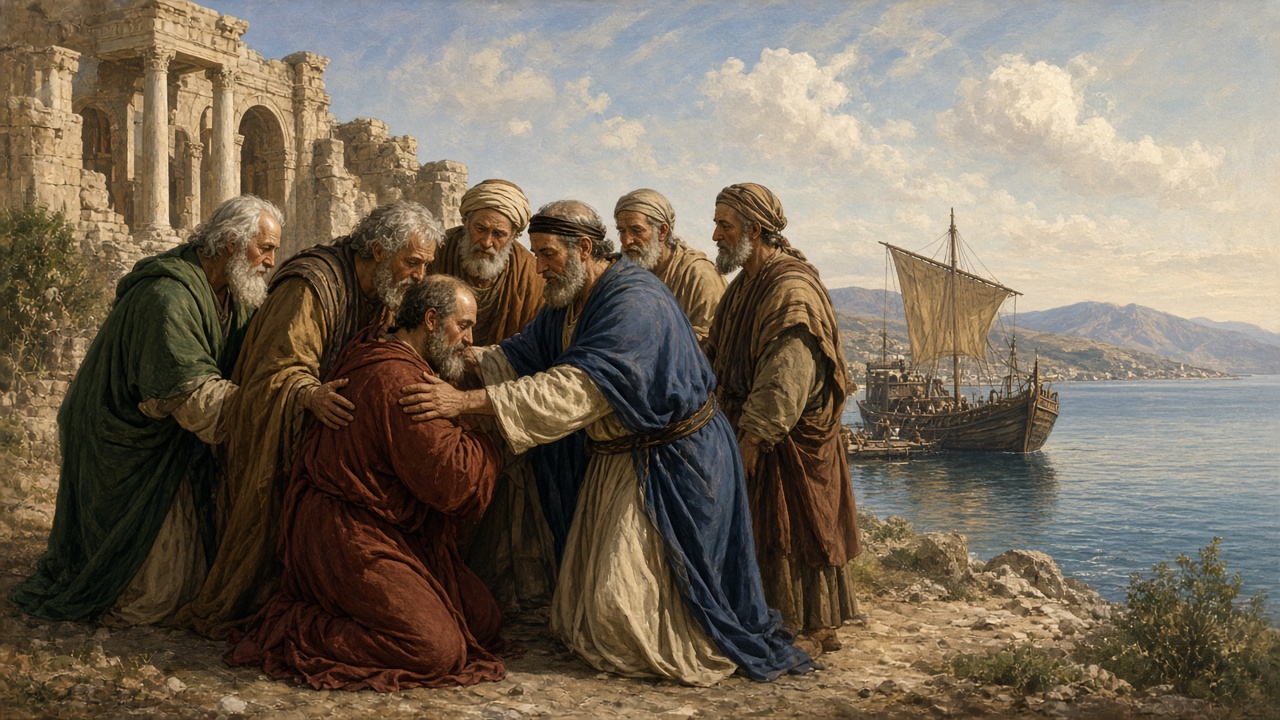
Farewell on the way to Jerusalem
- Leaving Troas, Paul sent his companions ahead by ship and walked to Assos along the Roman road. Assos was a seaport of Proconsular Asia in Mysia, on the north shore of the Gulf of Adramyttium; the walk was about 20 miles, the sea route about 30, and the island of Lesbos lay about 7 miles offshore.Sources: the Bible text itself · Assos
- Paul sailed past Ephesus to avoid spending time in the province of Asia—the Roman province in western Asia Minor, with Ephesus as its capital—because he hoped, if possible, to reach Jerusalem by the day of Pentecost. He stopped at Miletus, a seaport and the ancient capital of Ionia about 36 miles south of Ephesus, and summoned the elders of the Ephesian church.Sources: the Bible text itself · Asia · Miletus
- Seven men traveled with him: Sopater of Berea, Aristarchus and Secundus of Thessalonica, Gaius of Derbe, Timothy, and Tychicus and Trophimus from Asia. Aristarchus of Thessalonica later shared Paul’s imprisonment in Rome, and Trophimus, an Ephesian, accompanied him on this part of the journey and was with him in Jerusalem.Sources: the Bible text itself · Aristarchus · Trophimus
Notes written with AI assistance from open sources (Theographic Bible Metadata, CC BY-SA 4.0; Easton’s Bible Dictionary, public domain) and reviewed before publishing.
Places in this chapter
- Macedonia · 41.600, 22.540 · verses 1, 3, 6
- Greece · 37.972, 23.727 · verse 2
- Syria · Today: Syria 2 · 33.511, 36.306 · verse 3
- Asia · 38.400, 28.300 · verses 4, 16, 18
- Berea · Today: Veria · 40.518, 22.200 · verse 4
- Thessalonica · Today: Thessaloniki · 40.638, 22.946 · verse 4
- Troas · Today: Alexandria Troas · 39.752, 26.159 · verses 5, 6
- Philippi · 41.012, 24.285 · verse 6
- Assos · 39.491, 26.337 · verses 13, 14
- Mitylene · Today: ancient theater at Mitylene · 39.110, 26.547 · verse 14
- Chios · 38.373, 26.137 · verse 15
- Miletus · 37.531, 27.276 · verses 15, 17
- Samos · 37.750, 26.833 · verse 15
- Trogyllium · Today: Cape Mycale · 37.659, 27.003 · verse 15
- Ephesus · 37.939, 27.341 · verses 16, 17
- Jerusalem · 31.777, 35.234 · verses 16, 22
Only places identified with high confidence are shown (90% or more according to the scholarly sources compiled by OpenBible). Period map: DARE (Digital Atlas of the Roman Empire), CC BY 4.0; modern map: © OpenStreetMap contributors; places: OpenBible.info (CC BY 4.0).
Credits and license for this translation
Nhandejáry Nhe'ẽ
New Testament in Kaiwá (BR:kgk:Kaiwá)
copyright © 2006 Wycliffe Bible Translators, Inc.
Language: Kaiwá
Translation by: Wycliffe Bible Translators, Inc.
Copyright Information
© 2006, Wycliffe Bible Translators, Inc. All rights reserved.
This translation text is made available to you under the
terms of the Creative Commons License: Attribution-Noncommercial-No Derivative Works.
( http://creativecommons.org/licenses/by-nc-nd/3.0/ )
In addition, you have permission to port the text to different file formats, as long as you
do not change any of the text or punctuation of the Bible.
You may share, copy, distribute, transmit, and extract portions
or quotations from this work, provided that you include the above copyright
information:
You must give Attribution to the work.
You do not sell this work for a profit.
You do not make any derivative works that change any of the actual words or punctuation of the Scriptures.
Permissions beyond the scope of this license may be
available if you contact
us with your request.
The New Testament
in Kaiwá
© 2006, Wycliffe Bible Translators, Inc. All rights reserved.
This translation is made available to you under the terms of the
Creative Commons Attribution-Noncommercial-No Derivatives license 4.0.
You may share and redistribute this Bible translation or extracts from it in any format, provided that:
You include the above copyright and source information.
You do not sell this work for a profit.
You do not change any of the words or punctuation of the Scriptures.
Pictures included with Scriptures and other documents on this site are licensed just for use with those Scriptures and documents.
For other uses, please contact the respective copyright owners.
2014-04-27
Source: http://ebible.org/kgkNT/ · eBible.org