Acts 19
Nhandejáry Nhe'ẽ · Tap a verse to see its cross-references.
Paulo ogwahẽ oho-vy Éfeso tetã-my
1Ha Apolo katu opyta Corinto tetã-my. Oime jave upe-py, ohasa hasa Paulo. Yvyaty aty pa'ũ-rupi, tetã mirĩ-rupi, ohasa oho-vy. Upe rire ogwahẽ oho-vy Éfeso tetã-my. Upe-py oĩ Hesu nhe'ẽ renduha. 2Ogwahẽ ramo, otopa íxupe kwéry. Upéi oporandu íxupe kwéry Paulo:
—Peroviamaha áry-py, upéa áry-py ogwahẽ-ma tipo peẽ-my Nhe'ẽ Marangatu tee va'e? he'i íxupe kwéry.
Ha'e kwéry he'i:
—Nogwahẽi vyteri, he'i. —Gwĩ Nhe'ẽ Marangatu tee va'e rehegwa nhe'ẽ norohendúi vyteri voi, he'i íxupe hikwái.
3—Kiva'e réry-py penhemongarai uka va'ekwe, he'i jevy oporandu-vy íxupe kwéry.
—Oronhemongarai va'ekwe João Batista oporomongarai hagwe-rami, he'i íxupe hikwái.
4Upe ramo he'i íxupe kwéry Paulo:
—Ha João Batista katu, ogwerova rova gwekoha va'e-pe omongarai. Omongarai jave, he'i va'ekwe henda-py ou va'ekwe-pe: “Xe ranhe ko aju tenonde-rupi. Ha xe rapykwerigwa katu ou-ta ave. Ou ramo, pejerovia katu hese” he'i íxupe kwéry João Batista, he'i. —Hapykwerigwa ko Hesu voi, he'i Paulo imombe'u-vy.
5Ohendu ramo inhe'ẽ, onhemongarai uka-ma Nhandejáry Hesu réry-py. 6Upéi omoĩ inhakã akã ári opo. Omoĩ-ma ramo, omohynyhẽmba ipy'a kwéry Nhe'ẽ Marangatu tee va'e. Omohynyhẽmba-gwi, onhe'ẽ nhe'ẽ ambue-py hikwái. Nhandejáry rehegwa omombe'u ave. Ha'e oikwaa e'ỹ va'e oikwaa uka imombe'u-vy íxupe. 7Upe ramo doze kwimba'e-rupi ipy'a rynyhẽmba Nhe'ẽ Marangatu tee va'e-gwi. 8Ha upéi katu Paulo oike judeu oporahéi haty-py. Mbohapy jasy-rupi onhemonhe'ẽ nhe'ẽ oiko-vy. Notĩry omombe'u hagwã Nhandejáry rehegwa nhe'ẽ: “Pemoirũ katu Hesu Nhandejáry nhande ruvixarã-pe” he'i omombe'u mbe'u-vy oikwaa uka porãve rãve hagwã.
9Ha upe-py oĩ nohenduséi va'e. Gwĩ ogwerovia e'ỹ va'e, onhe'ẽ rei rei va'e Nhandejáry Hesu-rehe enterovéa rovagwy-py. Upéixa ramo Paulo osẽ oho-vy. Kente kwéry pa'ũ-gwi osẽ oho-vy. Ogweraha ojave Hesu nhe'ẽ renduha. Oike oho-vy imbo'eháry nhe'ẽrendu haty-py. Imbo'eháry héry va'e Tirano. Ha upéi oike rire upe-py, peteĩ teĩ áry-py omombe'u mbe'u oikwaa uka porãve rãve hagwã Nhandejáry rehegwa nhe'ẽ.
10Mokõi ro'y omombe'u oiko-vy upe-py. Upéixa-gwi ohendupa Nhandejáry Hesu rehegwa nhe'ẽ hikwái. Ásia yvy pygwa gwive, judeu va'e, judeu e'ỹ va'e ave ohendupa inhe'ẽ. 11Ha Nhandejáry ojapo uka íxupe hexapyrã-rupi, heroviapyrã-rupi ave ojapo uka. Upéixa ramo jahexa e'ỹ va'e ohexa hikwái. 12Ou Paulo renda-py. Ogweraha íxugwi inhakã jokwaha oiporu va'ekwe. Hambeo oiporu va'ekwe oipe'a ave íxugwi heraha-vy. Hasy va'e ha-py ogweraha. Omboja ramo hese okwera-ma hasy va'e. Osẽ-ma anháy oho-vy íxugwi kwéry.
13Upe-py oĩ ave judeu ogwata oiko-vy va'e. He'i onhemombe'u-vy: “Ore oromosẽ kwaa va'e imondo-vy anháy” he'i rei onhemombe'u-vy. Ha upéi katu Hesu réry oiporu rei omosẽ hagwã mo'ã anháy rerekoha-gwi:
—Esẽ katu Hesu réry-py. Upe Paulo remimombe'u va'e réry-py esẽ katu, he'i mo'ã anháy rerekoha-pe.
14Upéixa voi hembiapo sete kwimba'e, Ceva ra'y kwéry. Ha Ceva judeu va'e, pa'i ruvixa va'e ave. Ta'y kwéry oiporu rei va'e Hesu réry imosẽ-vy.
15Ha anháy katu he'i íxupe kwéry:
—Hesu ko aikwaa xe. Paulo ave aikwaa. Ha peẽ katu ndapokwaáiry voi, he'i íxupe kwéry anháy.
16Upe-ma ramo upe anháy rerekoha opo hese. Ipu'aka hese kwéry oinupã nupã-vy. Upéa-gwi osẽ oho-vy hóga-gwi. Opi-vy oripara oho-vy. Onhemaxukapa ave oho-vy hikwái.
17Ha upéi katu opa tetã-rupi oho herakwã. Gwĩ Éfeso pygwa gwive, judeu va'e, judeu e'ỹ va'e ave ohendupa herakwã. Ohendu ramo ikyhyje eterei voi. Ipy'amirĩmba upe-py oĩ va'e gwive. Ha Nhandejáry Hesu réry katu: “Iporãmba ete voi” he'i imboete-vy hikwái.
18Upéixa ramo ogwahẽ ou-vy heta ogwerovia va'e. Hembiapo vaikwe ne'írã ogwerovia reheve ojapo va'ekwe omombe'u atýra-py. 19Yma oiko va'ekwe imoháy va'e. Oiko ave va'ekwe onhembo'e va'e ombohasy hagwã gwapixa-pe. Oiko ave va'ekwe omoheonde vai va'e ojéupe. Upéa rehegwa kwatia nhe'ẽ ha'e kwéry hembiporukwe ogweru gweru omboaty aty hagwã. Omboaty ramo ohapypa pono oiporu jevy ivai va'e. Enterovéa rovagwy-py ohapy voi. Upéi mbovy repy po oĩ upéa kwatia oipapa oikwaa hagwã. Oipapa rire:
—Heta eterei ra'e. Cinqüenta mil moeda tuvixa va'e repy ra'e, he'i.
20Upéixa ramo opa-rupi oho Nhandejáry nhe'ẽ imbaraeteve teve oho-vy.
21Upe rire Paulo he'i ojéupe: “Ahasa hasa-ta Macedônia yvy-rupi. Hesu reroviaha va'e rexa-vy aha-ta” he'i. “Acaia yvy-rupi ave ahasa-ta agwahẽ hagwã Jerusalém tetã-my. Upe-py naxe are mo'ãi. Upe rire aha-ta Roma tetã-my. Xe kyre'ỹ eterei aha hagwã upe-py” he'i ojéupe.
22Upéi gwenonderã omondo mokõi oirũ. Timóteo Erasto ndive omondo. Macedônia yvy-py omondo íxupe. Ha'e katu opyta joty Ásia yvy-py.
Ojogweroaty Éfeso tetã mygwa onhombopoxy-vy
23Upe ramo Éfeso tetã mygwa ipoxy voi Nhandejáry Hesu nhe'ẽ rendusere'ỹ-vy. Peteĩ henda-py ojogweroaty onhombopoxy-vy hikwái. 24Oĩ kwimba'e héry va'e Demétrio. Prata-gwi opaixagwa apoha. Ha'e ranhe ipoxy. Upe tetã-my oĩ óga kakwaa. Upe óga gwy-py onhemboete tupã ra'anga héry va'e Diana. Ha'e ramigwa teĩ óga ra'anga ojapo Demétrio. Diana róga ramigwa teĩ óga ra'anga mixĩ va'e ojapo ovende va'erã. Upéa-rehe ogana porã oiko-vy. Ipytygwõháry ogana porã ave. 25Upe va'e ombojogweroaty oha-py. Ha'e-rami omba'apo va'e ohenói ave ogwahẽ hagwã oha-py. Upéi he'i íxupe kwéry:
—Xe irũ gwéry, he'i, —kóixa nhane rembiapo ramo, nhavende ramo, nhagana porã voi. Mba'éixa nhagana peẽ peikwaa voi, he'i.
26—Ha upe Paulo no'ã-rami he'i va'e: “Gwĩ tupã ra'anga erejapo va'e ndaha'éi tupã” he'i. Upéa-gwi Paulo nhe'ẽ-rupi ndogweroviavéi tupã ra'anga-pe. Inhe'ẽ-rupi heta-ma oĩ ogwerovia e'ỹ va'e. Oĩ a pygwa, mombyry rupigwa ave ndogweroviavéiry va'e. Ásia yvy-rupi heta-ma ogwerovia e'ỹ va'e oĩ. Ha upe va'e katu pehexa-ma, pehendu-ma ave, he'i. 27—Naiporãi upéa. Ivai voi. Oiméne nogwahẽvéi-ma ijogwaharã. Nogwahẽvéi ramo, nanhagana porã mo'ãvéi-ma arã, he'i. —Oiméne nogwahẽvéi-ma óga kakwaa-py imboete-vy. Upéa gwy-py oĩ Diana ra'anga, nhane remimboete va'e. Tuvixa mba'e voi Diana, he'i. —Ha Ásia pygwa gwive, opa rupigwa gwive ave omboete ete íxupe va'e. Ha nogwahẽvéi ramo katu iha-py, nomboete mo'ãvei-ma íxupe hikwái. Nomomba'egwasu mo'ãvéi-ma. Naimandu'avéi arã hese, he'i íxupe kwéry Demétrio.
28Inhe'ẽ ohendu ramo, ipoxypa hikwái Paulo-rehe. Nogana porã mo'ãvéi-gwi ipoxypa Diana-rehe hakate'ỹ-vy.
—Tuvixa mba'e Diana, nhande kwéry Éfeso pygwa va'e járy, he'i onhe'ẽ hatã hatã-vy.
29Ha upe tetã mygwa ndaipy'agwapyvéi-ma. Osẽmba ohendu-vy oripara oho-vy ojogweroaty heta heta haty-py. Omoatã heraha-vy mokõi Macedônia pygwa héry va'e Gaio Aristarco ave. Paulo ogwata ramo, omoirũ va'e íxupe. Upe mokõi oipyhy heraha-vy hikwái. 30Ha upéi katu Paulo osẽ-ta mo'ã ijayvu va'e kwéry pa'ũ-my onhe'ẽ hagwã. Ha Hesu nhe'ẽ renduha ndohejái osẽ. 31Oĩ Ásia pygwa ruvixa va'e Paulo-pe ohayhu va'e. Ndohejái ave osẽ. Ombou íxupe onhe'ẽ ani hagwã osẽ teĩ: “Ani erenhembopy'agwasu teĩ eresẽ hagwã” he'i uka íxupe.
32Ha upe pygwa oikwaa e'ỹ reheve mba'eve ijayvu yvu rei voi okwa-vy ojogweroaty heta heta haty-py.
—Ma'erã po jaju rei a-py ndajaikwaái, heta oĩ he'i va'e ojóupe. 33Omombe'u joavy avypa rei hikwái. Ha judeu kwéry ogwenohẽ heraha-vy kwimba'e-pe héry va'e Alexandre. Kente kwéry pa'ũ-gwi ogwenohẽ íxupe. Omoanha anha gwenonde-rupi onhe'ẽ hagwã íxupe kwéry. Ombovava íxupe kwéry opo. Omongirirĩmbase mo'ã. Onhe'ẽse mo'ã ani hagwã omboja rei judeu kwéry-rehe hikwái: “Ore ko judeu kwéry va'e ndaha'éi Paulo rehegwa” he'ise mo'ã. 34Ha ohexa ramo íxupe hikwái:
—Upe va'e ndaha'éi nhande re'ýi, he'i. —Judeu kwéry va'e rehegwa voi upe va'e, he'i hikwái.
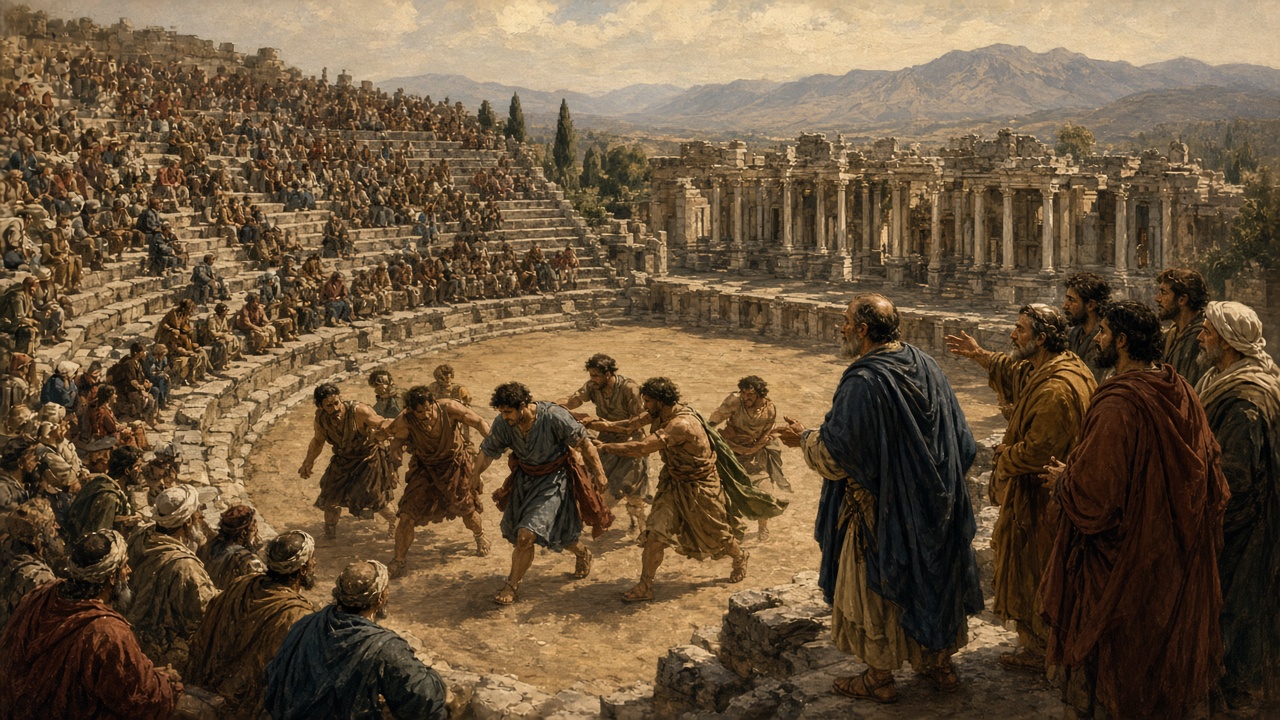
Nokirirĩséi voi. Are are eterei ijayvu okwa-vy. Ára pyte-py ka'arugwasu peve onhe'ẽ hatã hatã. Peteĩxa onhe'ẽ hatã okwa-vy:
—Tuvixa mba'e Diana, nhande kwéry Éfeso pygwa va'e járy, he'i.
35Ha upéi katu mburuvixa Éfeso pygwa ruvixa va'e opu'ã-ma omongirirĩ hagwã ijayvu va'e kwéry-pe. Omongirirĩmba rire, onhemonhe'ẽ íxupe kwéry:
—Xe rapixa kwéry, Éfeso pygwa va'e, he'i. —Nhande kwéry ko Diana róga kakwaa-rehe nhanhangareko va'e. Tuvixa mba'e Diana, nhande kwéry Éfeso pygwa járy voi, he'i. —Yvate-gwi ho'a araka'e ha'anga ita-gwi ijapopyre. Upe ita marangatu-rehe nhanhangareko va'e ave. Ndaipóri avave oikwaa e'ỹ va'e nhande nhanhangarekoha. 36Upéixa ja'e ramo, enterove oikwaa anhetegwaha, he'i. —Ndaipóri “Nde apu” he'i va'erã nhande-vy. Upéa-gwi pekirirĩ katu. Peikwaa porã e'ỹ reheve, ani mba'eve pejapo teĩ, he'i íxupe kwéry.
37—Ko va'e kwimba'e ndoikéiry va'e jepe Diana róga-py imba'e marangatu omonda-vy, nonhe'ẽ rei reíry va'e jepe Diana-rehe nhande kwéry járy-rehe, peru joty ko'a-py. Ma'erã tipo peru rei joty íxupe? he'i.
38—Ha'e-ta peẽ-my: Oime mburuvixa nhane monhe'ẽhaty va'e. Nhane monhe'ẽ va'e oikwaa hagwã nhane rembiapokwe. “Iporã para'e, tapa naiporãi” he'i nhane monhe'ẽ-vy. Upéixa ramo oĩ ramo omombe'use va'e Paulo-rehe hembiapo vai va'ekwe, toho katu imombe'u-vy mburuvixa renda-py. Toho katu imombe'u-vy Demétrio, ha'e-rami omba'apo va'e ave. Oime ave mburuvixagwasu imbaraeteve va'e. Peteĩ teĩ tomombe'u íxupe hese hembiapo vai va'ekwe. 39Neremombe'uséi ramo mburuvixa-pe, emombe'u katu kente kwéry-pe. Mburuvixa nhe'ẽ-py ombojogweroatypa rire-ma, emombe'u katu íxupe kwéry kuri. 40Oiméne mburuvixa kwéry he'i va'erã nhande-vy: “Ma'erã po pende ayvu rei etería? Ma'erã penhombopoxy rei ave?” Upéixa he'i ramo nhande-vy, ndaipóri nhane remimombe'urã. Nhanhomboaty rei-gwi, ndajarekói nhane remimombe'urã. Nhande poxy rei voi kuri, he'i íxupe kwéry mburuvixa.
41Upéa he'i rire:
—Tapeho jevy katu, he'i íxupe kwéry.
Did you know?
Paul, the Way, and Artemis in Ephesus
- Ephesus was the capital of proconsular Asia, the Roman province covering the western part of Asia Minor, and in Roman times it bore the title of the first and greatest metropolis of Asia. The city was distinguished for the temple of Artemis, whom the Romans called Diana, built outside the walls and reckoned one of the seven wonders of the ancient world. At its center stood an ancient image of the goddess, reputed to have fallen from the sky.Sources: Ephesus · Diana · Asia
- Demetrius, a silversmith at Ephesus, made silver shrines of Artemis, models of her temple or of her statue, which sold readily to visitors from all over Asia Minor. Acts says this trade was the craftsmen's source of prosperity, and that Demetrius warned them of danger to their business and to the honor of the temple of Artemis, the goddess he said was worshiped throughout the province of Asia and the whole world.Sources: Demetrius · the Bible text itself
- The crowd rushed into the theatre of Ephesus, which Easton's Bible Dictionary (1897) describes as the largest in the world, open to the sky and able to hold 50,000 spectators. Friends of Paul among the chiefs of Asia, wealthy citizens elected each year to preside over the games and religious festivals of their cities, begged him not to go in. The city clerk then reminded the assembly that Ephesus was guardian of the temple of the great Artemis and of her image, said to have fallen from heaven.Sources: Ephesus · Asia · the Bible text itself
Notes written with AI assistance from open sources (Theographic Bible Metadata, CC BY-SA 4.0; Easton’s Bible Dictionary, public domain) and reviewed before publishing.
Places in this chapter
- Corinth · 37.906, 22.879 · verse 1
- Ephesus · 37.939, 27.341 · verses 1, 17, 23, 26, 35
- Asia · 38.400, 28.300 · verses 10, 22, 26, 27, 31
- Achaia · 38.720, 22.540 · verse 21
- Jerusalem · 31.777, 35.234 · verse 21
- Macedonia · 41.600, 22.540 · verses 21, 22, 29
- Rome · 41.892, 12.485 · verses 21, 40
Only places identified with high confidence are shown (90% or more according to the scholarly sources compiled by OpenBible). Period map: DARE (Digital Atlas of the Roman Empire), CC BY 4.0; modern map: © OpenStreetMap contributors; places: OpenBible.info (CC BY 4.0).
Credits and license for this translation
Nhandejáry Nhe'ẽ
New Testament in Kaiwá (BR:kgk:Kaiwá)
copyright © 2006 Wycliffe Bible Translators, Inc.
Language: Kaiwá
Translation by: Wycliffe Bible Translators, Inc.
Copyright Information
© 2006, Wycliffe Bible Translators, Inc. All rights reserved.
This translation text is made available to you under the
terms of the Creative Commons License: Attribution-Noncommercial-No Derivative Works.
( http://creativecommons.org/licenses/by-nc-nd/3.0/ )
In addition, you have permission to port the text to different file formats, as long as you
do not change any of the text or punctuation of the Bible.
You may share, copy, distribute, transmit, and extract portions
or quotations from this work, provided that you include the above copyright
information:
You must give Attribution to the work.
You do not sell this work for a profit.
You do not make any derivative works that change any of the actual words or punctuation of the Scriptures.
Permissions beyond the scope of this license may be
available if you contact
us with your request.
The New Testament
in Kaiwá
© 2006, Wycliffe Bible Translators, Inc. All rights reserved.
This translation is made available to you under the terms of the
Creative Commons Attribution-Noncommercial-No Derivatives license 4.0.
You may share and redistribute this Bible translation or extracts from it in any format, provided that:
You include the above copyright and source information.
You do not sell this work for a profit.
You do not change any of the words or punctuation of the Scriptures.
Pictures included with Scriptures and other documents on this site are licensed just for use with those Scriptures and documents.
For other uses, please contact the respective copyright owners.
2014-04-27
Source: http://ebible.org/kgkNT/ · eBible.org