2 Timothy 4
Nhandejáry Nhe'ẽ · Tap a verse to see its cross-references.
Paulo oipota Timóteo gwetea'e reheve omombe'u Nhandejáry nhe'ẽ porã
1Nhandejáry resa-py, Cristo Hesu resa-py ave amombe'u-ta nde-vy ne rembiaporã. Ha'e ae hovagwy-py onhembo'y-ma va'erã entéro omano va'ekwe oikove vyteri va'erã gwive ave. Peteĩ teĩ hembiapo apokwe-rami ogwereko va'erã íxupe kwéry. Ha'e ojekwaa jevy ou-vy va'erã ko yvy-py enterove oĩ va'e gwive ruvixarã. 2Upéa-gwi ha'e ae hesa-py amombe'u-ta nde-vy ne rembiaporã. Emombe'u katu nhe'ẽ porã. Nde retea'e reheve emombe'u katu. Ne nhe'ẽ renduse ramo, ne nhe'ẽ nohenduséi ramo jepe, emombe'u meme joty íxupe. Ojejavy va'e-pe eikwaa uka íxupe hembiapokwe. Enhemonhe'ẽ katu íxupe emokyre'ỹ íxupe eremohembiapo porã-vy. Ereporombo'e mbo'e jave, ani erenhe'ẽ asy teĩ ne nhe'ẽ rendusere'ỹ va'e-pe. 3Ogwahẽ va'erã Nhandejáry nhe'ẽ rendusere'ỹha áry. Upe ramo nohendusevéi va'erã nhe'ẽ porã. Ojapose va'e rei ojapo va'erã. Heta omombe'u joavy avy va'erã omogwahẽ ojéupe. “Orohendu va'erãte ore-vy oroipota pemombe'u” he'i va'erã gwemimogwahẽ porã-pe. “Ore remihenduse e'ỹ ani pemombe'u teĩ” he'i va'erã nhe'ẽ porã rendusere'ỹ-vy. 4Anhetegwa va'e nhe'ẽ nohenduséiry va'erã voi. Inhe'ẽ rei va'e-pe ae katu ohenduse va'erã hikwái. “Anhetegwa” he'i mo'ã va'erã hese. Upéa-gwi ãy voi katu emombe'u nhe'ẽ porã. Ohendusere'ỹha áry ne'írã vyteri ogwahẽ jave, nde retea'e reheve emombe'u mbe'u joty íxupe kwéry. 5Inhe'ẽ rei va'e ha'e kwéry ohendu va'erã. Nde ae katu nde pu'aka meme katu ndéjehe. Nde rereko asy ramo jepe, ani ereva teĩ joty Hesu rape-gwi. Emba'apo katu Nhandejáry-pe Hesu rehegwa nhe'ẽ porã eremosarambi hagwã. Ne rembiaporã gwive ejapopa katu ereiko-vy. 6Xe rekovia ejapo. Ãy ijukapyrã-rami xe aime. Ogwahẽ-tama xe-vy xe mano hagwã áry. 7Oĩ oripara hatã va'e. Ikyre'ỹ oripara hagwã oho-vy ogwahẽse ha-py ogwahẽ hagwã. Upéixa ete yma gwive xe kyre'ỹ aiko-vy nhe'ẽ porã mombe'u-vy ãy peve. Ha ko'ánga katu ogwahẽse ha-py ogwahẽ-ma va'e-rami oripara-vy, xe ajapo japo va'erã apy-py agwahẽ-ma. Cristo Hesu-rehe ajerovia tee-ma aiko-vy ajehesa rerova uka e'ỹ reheve. 8Oripara va'e ogwahẽ ranheve va'e-pe ombohekovia. Upéixa ete xe-vy ave ombohekovia va'erã. Hemimbota ajapopa-gwi, oĩ xe-vy imarangatu ete va'e ome'ẽ va'erã xe-vy Cristo. Enterove va'e ha'e hembierekorã hembiapo apokwe-rehe. Upe áry-py naxe anhóiry hemimbohekoviarã. Entéro oha'arõ va'e-pe gwive ombohekovia va'erã íxupe.
Paulo omombe'u ojehegwigwa
9Ne kyre'ỹ reheve eiko katu pya'e eregwahẽ hagwã xe ha-py. 10Xe irũ kwéry xe rejapa-ma oje'ói-vy xe anho xe reja. Demas xe reja teko rei remimbojohu porã omomba'egwasuve-gwi. Tessalônia tetã-my oho xe reja-vy. Ha Crescente katu oho Galácia yvy-koty. Dalmácia yvy-koty oho Tito. Ha Tíquico amondo kuri íxupe Éfeso tetã-my. Lucas anho mante opyta xe ndive. Xe anho eterei. Upéa-gwi ne kyre'ỹ eregwahẽ hagwã xe ha-py. Ereju ramo, eju Marcos ndive. Amba'apo jave Nhandejáry-pe, ha'e xe pytygwõ voi oiko-vy. 13Ereju ramo eru katu xe-vy xe ao jo'avy Trôade tetã-my aheja va'ekwe, Carpo róga-py aheja va'ekwe. Eru ave xe-vy xe kwatia. Vaka pire-rehe oĩ va'e nhe'ẽ aipota eterei ereru. 14Oĩ Alexandre kwarepoti-rehe omba'apo va'ety. Ha'e ojapo vai xe-rehe. Hembiapokwe-rami ogwereko va'erã íxupe Nhandejáry. 15Nhane nhe'ẽ ombojevy jevy upe va'e. Ema'ẽ katu hese. Háke upe va'e kwimba'e. Ejoko katu íxupe. Ojapo vai va'erã nde-rehe ave. 16Mburuvixa xe rekoha-rehe oporandu ypy ramo xe-vy, “Nahembiapo vaíry ra'e Paulo” he'i va'erã ndoúiry xe yke-rehe onhembo'y-vy. Xe rejapa-ma xe anho oje'ói-vy hikwái. Ha'e kwéry hembiapo vai e'ỹ va'ekwe-rami togwereko íxupe Nhandejáry. 17Ha xe ndive onhembo'y oĩ-vy va'e-rami, onhembo'y-ma oĩ-vy Nhandejáry xe yke-rehe xe mombaraete-vy xe monhe'ẽ hagwã. Upéa-gwi arosapukái voi imombe'u-vy judeu e'ỹ kwéry-pe. Entéro Hesu rehegwa nhe'ẽ gwive amombe'u. Heta tetã-gwi ou va'e hendu uka-vy amombe'u íxupe. Jagwarete juru-py aha vérami, xe repy jevy va'ekwe Nhandejáry. Ijuru-gwi xe pe'a vérami xe resende va'ekwe. 18Ãy jagwarete juru-py vérami aha jevy ramo, xe-rehe ojapo vai ramo, xe repy jevy jevy joty arã Nhandejáry. Xe resende va'ekwe-gwi aikwaa voi íxupe. Xe resende jevy voi arã ave ãy. Mba'eve ojehu e'ỹ reheve xe-vy xe reraha va'erã voi yváy-py. Upe-py ha'e anho mburuvixa va'erã voi upe-py. Tanhamomba'egwasu meme va'erã íxupe opa e'ỹ reheve. Amém. 19Emombe'u katu Áqüila-pe Priscila-pe ave xe mandu'aha hese. Onesíforo re'ýi-pe ave emombe'u xe mandu'aha hese. 20Erasto opyta Corinto tetã-my. Trófimo hasy-gwi aheja va'ekwe íxupe Mileto tetã-my. 21Ne kyre'ỹ katu eregwahẽ hagwã xe ha-py ro'y e'ỹ-py. Nhande re'ýi Êubulo, Prudente, Lino, Cláudia ndive omombe'u uka nde-vy omandu'aha nde-rehe. Ambue kwéry, nhande re'ýi va'e omombe'u uka ave. 22Toiko Nhandejáry nde rekoirũ ramo, Timóteo. Tapende rexakwaa porã rei Nhandejáry pende rovasa-vy.
Did you know?
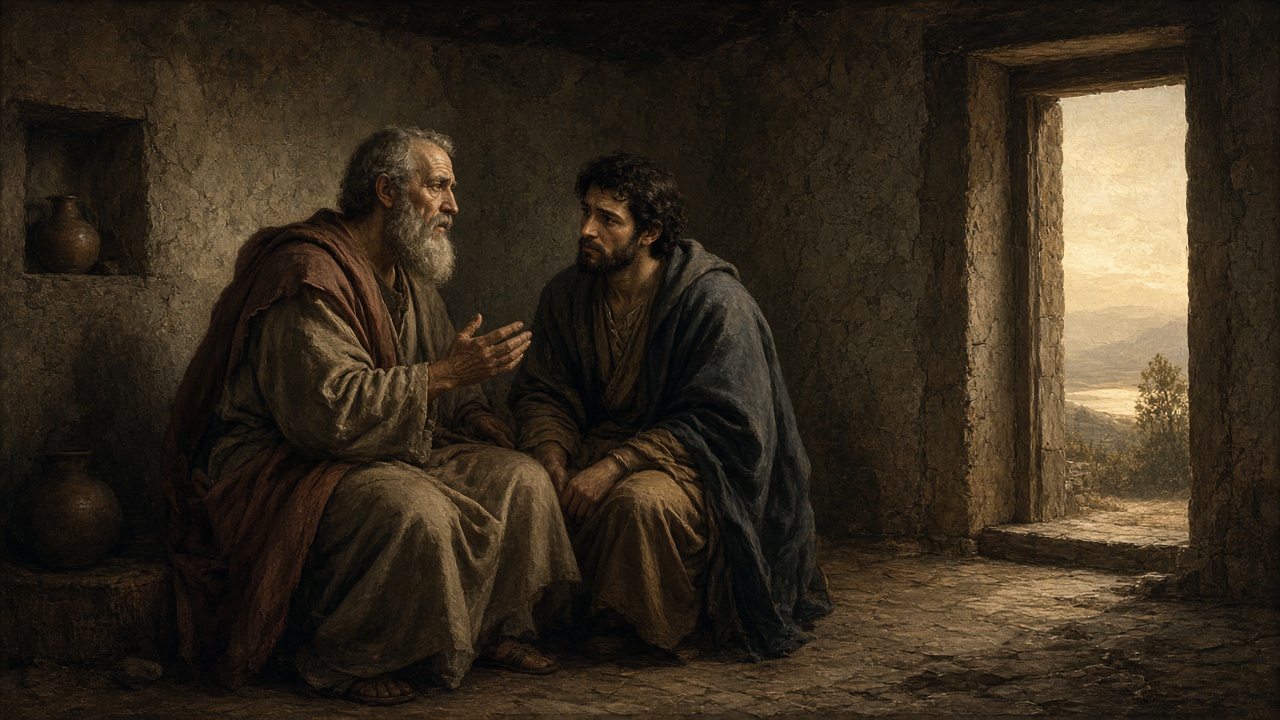
Paul's Final Charge and Farewell
- Paul urges Timothy to come quickly. Demas, whom Easton's Bible Dictionary (1897) describes as a companion and fellow worker during Paul's first imprisonment at Rome, has deserted him out of love for this world and gone to Thessalonica, a large city on the Thermaic bay and the capital of one of Macedonia's four Roman districts. Crescens has gone to Galatia and Titus to Dalmatia, a mountainous country on the eastern shore of the Adriatic and part of the Roman province of Illyricum; Paul has sent Tychicus to Ephesus, and only Luke remains with him.Sources: Demas · Thessalonica · Dalmatia · the Bible text itself
- Easton's Bible Dictionary (1897) identifies Alexander the coppersmith as a man who, with Hymenaeus and others, taught certain views about the resurrection, and says that Paul excommunicated him. In this chapter Paul writes that Alexander did him great harm, tells Timothy to beware of him because he vigorously opposed our message, and says the Lord will repay him according to his deeds.Sources: Alexander · the Bible text itself
- Paul asks Timothy to bring the cloak he left with Carpus at Troas, together with his scrolls, especially the parchments, and to arrive before winter. Troas was a city on the coast of Mysia, in the northwest of Asia Minor, named after ancient Troy, which lay about four miles to the north.Sources: Troas · the Bible text itself
Notes written with AI assistance from open sources (Theographic Bible Metadata, CC BY-SA 4.0; Easton’s Bible Dictionary, public domain) and reviewed before publishing.
Places in this chapter
- Dalmatia · 43.813, 16.219 · verse 10
- Galatia · 39.267, 32.983 · verse 10
- Thessalonica · Today: Thessaloniki · 40.638, 22.946 · verse 10
- Ephesus · 37.939, 27.341 · verse 12
- Troas · Today: Alexandria Troas · 39.752, 26.159 · verse 13
- Corinth · 37.906, 22.879 · verse 20
- Miletus · 37.531, 27.276 · verse 20
Only places identified with high confidence are shown (90% or more according to the scholarly sources compiled by OpenBible). Period map: DARE (Digital Atlas of the Roman Empire), CC BY 4.0; modern map: © OpenStreetMap contributors; places: OpenBible.info (CC BY 4.0).
Credits and license for this translation
Nhandejáry Nhe'ẽ
New Testament in Kaiwá (BR:kgk:Kaiwá)
copyright © 2006 Wycliffe Bible Translators, Inc.
Language: Kaiwá
Translation by: Wycliffe Bible Translators, Inc.
Copyright Information
© 2006, Wycliffe Bible Translators, Inc. All rights reserved.
This translation text is made available to you under the
terms of the Creative Commons License: Attribution-Noncommercial-No Derivative Works.
( http://creativecommons.org/licenses/by-nc-nd/3.0/ )
In addition, you have permission to port the text to different file formats, as long as you
do not change any of the text or punctuation of the Bible.
You may share, copy, distribute, transmit, and extract portions
or quotations from this work, provided that you include the above copyright
information:
You must give Attribution to the work.
You do not sell this work for a profit.
You do not make any derivative works that change any of the actual words or punctuation of the Scriptures.
Permissions beyond the scope of this license may be
available if you contact
us with your request.
The New Testament
in Kaiwá
© 2006, Wycliffe Bible Translators, Inc. All rights reserved.
This translation is made available to you under the terms of the
Creative Commons Attribution-Noncommercial-No Derivatives license 4.0.
You may share and redistribute this Bible translation or extracts from it in any format, provided that:
You include the above copyright and source information.
You do not sell this work for a profit.
You do not change any of the words or punctuation of the Scriptures.
Pictures included with Scriptures and other documents on this site are licensed just for use with those Scriptures and documents.
For other uses, please contact the respective copyright owners.
2014-04-27
Source: http://ebible.org/kgkNT/ · eBible.org