2 Timothy 3
Nhandejáry Nhe'ẽ · Tap a verse to see its cross-references.
Paulo omombe'u ojehu va'erã
1Aipota ereikwaa ojehu va'erã Cristo ou jevyha áry ogwahẽ e'ỹ ngatu. Ojekwaa va'erã heta hekoha vai va'e Cristo reko-rupi oiko va'e moakãrasyharã. 2Oporohayhu e'ỹ-vy ha'e ae ojehayhu ukase mo'ã va'erã. Pirapire mante omomba'egwasu va'erã. Onhemboete ukase mo'ã rei va'erã. Ha'e seve seve oiko-vy va'erã. Gwapixa-rehe onhe'ẽ rei rei va'erã. Gwu nhe'ẽ, osy nhe'ẽ omomba'e rei va'erã. Heko otima porã e'ỹ va'e gwapixa-pe ojekwaa va'erã. Ojekwaa va'erã Nhandejáry mboete e'ỹharã. 3Heko porayhu e'ỹ va'erã, ojoporiahuvereko e'ỹ va'erã. Oapu-vy rei oiko va'erã gwapixa kwéry-rehe. Ójehe ndaipu'akái va'e. Heko poxy-vy rei oiko va'erã. Iporã va'erã gwive íxupe ndojohu porãiry. 4Gwapixa oikwaa uka rei va'erã ija'e'ỹha-pe. Ipy'agwasu va'erã. Onhemomba'egwasu ukase rei va'erã. Nhandejáry-pe ohayhu e'ỹ va'erã. Onhembysaraiha omomba'egwasu va'erã Nhandejáry-pe omboyke-vy. 5“Xe heroviaha tee va'e” he'i mo'ã va'erã ójehe. Ha ipy'a-py katu noĩry Nhandejáry remimoĩ imombaraete hagwã. Upeixagwa-pe gwive emboyke katu. Ani erepena teĩ hese kwéry. 6Ãy oiko-ma voi ave upeixagwa hekoha vai va'e. “Xe aporombo'ehaty va'e” he'i mo'ã ójehe. “Xe aiko-ta voi nde róga gwy-py” he'i gwapixa-pe oporombotavy-vy. Omogwahẽ rire íxupe ombotavy oiko-vy hóga pygwa. Kunha hi'arandu e'ỹ va'e-pe ombotavy ohesa rerova uka-vy ójehe. Upeixagwa kunha ojejavy va'ety. Ojapose va'e rei-ma ojapo. 7Hi'aranduse teĩ. Inhe'ẽ porã rendu-vy, “Anhetegwa voi nipo ra'e” nde'íry hese. Hi'arandu va'erãgwe, inhe'ẽ rei ohendu-gwi. 8Yma va'ekwe oiko va'ekwe hi'arandu va'erãgwe héry va'e Janes, Jambres ave. Moisés amyrĩ nhe'ẽ ombojevyse mo'ã va'ekwe. Yma onhonhe'ẽ mbojevy jevy hagwe-rami, ãy ave upéixa oiko upe hekoha vai va'e kwéry. Onhe'ẽmbojevy jevyse ave anhetegwa va'e omboyke jevy hagwã. Hi'arandu va'erãgwe jepe, pytũ-my rei oiko va'e-rami joty oiko. Ndogwerovia teéi-gwi, Nhandejáry remimboyke voi upe va'e. 9Pya'e noporombotavyvéi-ma va'erã. Yma va'ekwe ojekwaa-ma myamyrĩ rekoha vai. Ohexa kwaa va'ekwe hekoha-rehe. Upéixa ete ãy ohexa kwaa ave va'erã hese hekoha-rehe. Oikwaa arã íxupe. Ha upe rire katu noporombotavyvéi-ma va'erã oiko-vy.
Paulo omombe'u Nhandejáry kwatia nhe'ẽ rehegwa nhe'ẽ
10Ha nde ae katu xe reko kwaa-ma. Xe aporombo'e jave, xe moirũ-ma va'ekwe. Xe reko rexa-ma. Xe rembiapo porã xe renonde-py xe remimoĩ ereikwaa-ma. Ereikwaa voi Nhandejáry-rehe ajeroviaha. Xe reko kirirĩha ereikwaa-ma ave. Xe ajohayhuha, xe ava e'ỹha ave ereikwaa-ma voi. 11Xe aiko jave Antioquia tetã-my, Icônio tetã-my, Listra tetã-my ave, xe mbohasa asy voi va'ekwe xe rereko asy-vy. Xe rereko asy ramo jepe, ndajeréi joty va'ekwe Hesu rape-gwi. Xe rereko asy asy jave, xe resende sende joty va'ekwe Nhandejáry. Upéa xe-vy ojehu va'ekwe gwive ereikwaa voi. 12Ha entéro ogwerovia tee va'e peteĩxa omoirũse va'e katu Cristo Hesu-pe ojerereko asy va'erã. 13Ha hekoha vai va'e, “Hekoha porã nipo ra'e” oipota mo'ã he'i ójehe. Onhemboete ukase mo'ã. Upéa ivaive ive va'erã hekoha oho-vy. Oporombotavy rei va'erã oiko-vy. Ha'e ae onhembotavy va'erã ave oiko-vy. 14Ha nde ae katu erovia joty katu nde-vy hemimombe'ukwe. Hemimbojerovia uka nde-vy erovia katu inhe'ẽ. “Anhete teegwa nipo ra'e” ere va'ekwe hese. Are-ma hembiherovia uka nde-vy erovia joty inhe'ẽ. Ne mbo'eháry rekoporãha ereikwaa-ma voi ereiko-vy. 15Ne mitã ramogware ãy peve ereikwaa-ma voi va'ekwe ereiko-vy Nhandejáry kwatia nhe'ẽ marangatu. Ãy peve erehendu ereiko-vy. Upéa nhe'ẽ ne mo'arandu va'e voi erejerovia hagwã Nhandejáry Hesu Cristo-rehe ne resendeharã-rehe. Upeixagwa nhe'ẽ erovia joty ereiko-vy. 16Entéro Nhandejáry kwatia nhe'ẽ Nhandejáry rembihai ukakwe va'ekwe. Onhe'ẽ-rupi oikwaa uka ihaiharã-pe imo'arandu-vy. Upe va'e nhe'ẽ-py nhanhombo'e. Upéa nhe'ẽ rendu-vy jaikwaa jajejavyha. Upéa nhe'ẽ rendu-vy tape porã-rupi nhasẽ jaiko hagwã. Upéa nhe'ẽ rendu-vy tekoha-rupi jaiko va'erã nhande py'a potĩ reheve. 17Oipota Nhandejáry jaiko hembigwái ramo íxupe. Oipota nhahendu upe va'e nhe'ẽ nhane arandupa hagwã, nhane rembiapo porã porã hagwã íxupe jaiko-vy.
Did you know?
Hard times and opposition to the truth
- This chapter compares people who oppose the truth with Jannes and Jambres. A Bible dictionary identifies Jannes as one of the Egyptians who withstood Moses, and Jambres as one of those who opposed Moses in Egypt. The letter says that, like them, these opponents are depraved in mind and disqualified from the faith, and that their folly will be plain to everyone.Sources: Jannes · Jambres · the Bible text itself
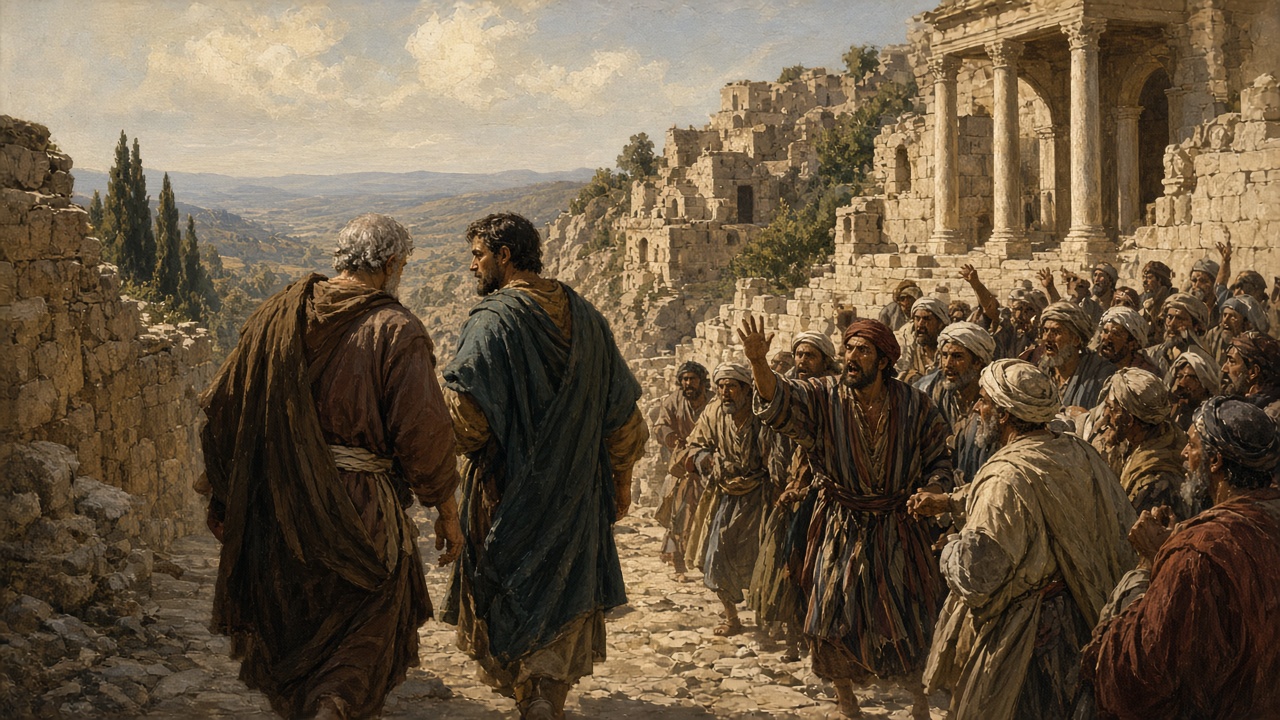
- Paul recalls the persecutions and sufferings that came upon him in Antioch, Iconium, and Lystra, and says the Lord rescued him from all those persecutions. On the first missionary journey with Barnabas, Jews in Antioch, in the extreme north of Pisidia, stirred up violent opposition, and the two had to leave; in Iconium they were persecuted by the Jews and fled to Lystra. Iconium was the capital of ancient Lycaonia; Lystra was a town of Lycaonia in Asia Minor, in a wild district.Sources: Antioch (Pisidia) · Iconium · Lystra · the Bible text itself
Notes written with AI assistance from open sources (Theographic Bible Metadata, CC BY-SA 4.0; Easton’s Bible Dictionary, public domain) and reviewed before publishing.
Places in this chapter
- Antioch · Today: Antioch in Pisidia · 38.306, 31.189 · verse 11
- Iconium · Today: Konya · 37.872, 32.492 · verse 11
- Lystra · Today: Tel Lystra · 37.602, 32.338 · verse 11
Only places identified with high confidence are shown (90% or more according to the scholarly sources compiled by OpenBible). Period map: DARE (Digital Atlas of the Roman Empire), CC BY 4.0; modern map: © OpenStreetMap contributors; places: OpenBible.info (CC BY 4.0).
Credits and license for this translation
Nhandejáry Nhe'ẽ
New Testament in Kaiwá (BR:kgk:Kaiwá)
copyright © 2006 Wycliffe Bible Translators, Inc.
Language: Kaiwá
Translation by: Wycliffe Bible Translators, Inc.
Copyright Information
© 2006, Wycliffe Bible Translators, Inc. All rights reserved.
This translation text is made available to you under the
terms of the Creative Commons License: Attribution-Noncommercial-No Derivative Works.
( http://creativecommons.org/licenses/by-nc-nd/3.0/ )
In addition, you have permission to port the text to different file formats, as long as you
do not change any of the text or punctuation of the Bible.
You may share, copy, distribute, transmit, and extract portions
or quotations from this work, provided that you include the above copyright
information:
You must give Attribution to the work.
You do not sell this work for a profit.
You do not make any derivative works that change any of the actual words or punctuation of the Scriptures.
Permissions beyond the scope of this license may be
available if you contact
us with your request.
The New Testament
in Kaiwá
© 2006, Wycliffe Bible Translators, Inc. All rights reserved.
This translation is made available to you under the terms of the
Creative Commons Attribution-Noncommercial-No Derivatives license 4.0.
You may share and redistribute this Bible translation or extracts from it in any format, provided that:
You include the above copyright and source information.
You do not sell this work for a profit.
You do not change any of the words or punctuation of the Scriptures.
Pictures included with Scriptures and other documents on this site are licensed just for use with those Scriptures and documents.
For other uses, please contact the respective copyright owners.
2014-04-27
Source: http://ebible.org/kgkNT/ · eBible.org