2 Corinthians 8
Nhandejáry Nhe'ẽ · Tap a verse to see its cross-references.
Nhame'ẽ katu opamba'e nhane rakate'ỹ e'ỹ reheve
1Xe re'ýi kwéry, Hesu reroviaha kwéry, amombe'use peẽ-my mba'éixa pa Nhandejáry oheko mbo'e Macedônia pygwa-pe, ójehe ojerovia va'e-pe. Oheko mbo'e íxupe kwéry ohexakwaa porã rei hagwã gwapixa kwéry-pe. 2Ha'e kwéry ohasa asy eterei ramo jepe ovy'a joty. Iporiahu ramo jepe ha'e kwéry ome'ẽ heta voi iporiahuve va'e-pe. Ndahetái jepe ogwereko nahakate'ỹiry gwemime'ẽrã-rehe. 3“Ore ave orome'ẽse Judéia pygwa kwéry Hesu reroviaha va'e kwéry-pe. Orome'ẽ-ta nde-vy ore pirapire ereraha hagwã íxupe kwéry ipirapirerã” he'i va'ekwe ore-vy. Oikotevẽ jepe ohexakwaa rei joty gwapixa-pe. “Hetave tave orogweraha ukase nde-vy íxupe kwéry, iporiahu va'e kwéry pegwarã” he'i ore-vy. “Ndaha'éiry eremanda-gwi ore-vy orome'ẽ. Ore ae voi orome'ẽse-gwi orome'ẽ” he'i va'ekwe ome'ẽ-vy. Ore ae oro'e: “Iporiahu-gwi ra'e ndahetái opirapire ogweraha uka va'erã” oro'e rei va'ekwe hese kwéry. Heta voi ore-vy ogweraha uka opirapire. Onheme'ẽ ete ranhe ra'e Nhandejáry-pe. Upéi ojapose eterei voi ra'e inhe'ẽ. Xe nhe'ẽ ave ojapose voi ave ra'e.
6Upéixa ha'e kwéry ojapo ramo xe mandu'a jevy pende-rehe peẽ Corinto tetã mygwa kwéry-rehe. Upe jave anhomongeta Tito ndive. “Ereime ramo araka'e Corinto tetã-my eremombe'u íxupe para'e pirapire omboaty hagwã iporiahu va'e-pe ome'ẽ hagwã. Upéixa-gwi iporã ereho jevy Corinto tetã-my” ha'e kuri Tito-pe. “Ereime jave araka'e onhypyrũ-ma ra'e omboaty hagwã gwemime'ẽ me'ẽrã. Aipo ramo tereho jevy teremokyre'ỹ jevy íxupe kwéry heta heta omono'õ hagwã gwemime'ẽrã. Upéixa ramo ha'e kwéry ohexa uka va'erã Hesu re'ýi ojohayhuha gwembiapo porã ojapo-vy” ha'e ave íxupe oho hagwã pende ha-py.
7Peẽ pende rekoha porãve rãve ra'e ambue kwéry reko-gwi. Pejerovia teeve ra'e Nhandejáry Hesu-rehe. Hesegwa nhe'ẽ pemombe'u porãve ra'e, peikwaa porãve ave ra'e. Ambue kwéry-gwi pene kyre'ỹve ra'e ambue kwéry-pe peipytygwõ-vy. Ore rayhuve ave voi ra'e. Aipo ramo ha'e-ta peẽ-my “Enterove va'e reko pehasave-gwi tapeme'ẽve katu pende pirapire iporiahu va'e kwéry pegwarã. Oporohayhu va'e rembiapo voi upe va'e”.
8Namandáiry peẽ-my peme'ẽ hagwã pende pirapire íxupe kwéry. Amombe'u ramo peẽ-my Macedônia pygwa kyre'ỹha aipota ojekwaa ave pende-rehe pejohayhuha. Heta voi pende pirapire peme'ẽ ramo “Corinto pygwa ore rayhu voi ra'e” he'i va'erã pende-rehe.
9Pene mandu'a katu Nhandejáry Hesu Cristo nhande rayhuha-rehe. Yma va'ekwe opamba'e ogwereko yváy-py. Ha upéi ogwejy ou-vy ko yvy-rehe jave katu iporiahu-ma opyta-vy. Upéixa onhemboheko poriahu va'ekwe pende-rehe ha-py pende rovasa porã porã hagwã.
10Amombe'u-tama peẽ-my pene remime'ẽrã-rehe. “Nhamboaty-ta iporiahu va'e pegwarã” peje araka'e. Ojapo-ma peteĩ ro'y aipo peje hagwe. Yma tenonderã penhypyrũ-ma peme'ẽ. Pevy'a reheve pehayhu eterei-gwi peme'ẽse íxupe kwéry araka'e. “Nhame'ẽ-ta jaiporiahuvereko-gwi íxupe kwéry” peje araka'e penhypyrũ-vy araka'e hese kwéry.
11Ko'ánga katu iporã pejapopa upe pene rembiapo porã. Ani peha'arõve peme'ẽ me'ẽ va'erã-rehe. Peteĩ teĩ pereko va'e-gwi pemono'õ peme'ẽ va'erã íxupe kwéry. Pevy'a reheve pene kyre'ỹ reheve pende aja-rupi peme'ẽ iporiahu va'e kwéry-pe. 12Anhete voi ome'ẽse va'e ogwereko háixa ome'ẽ ramo ombovy'a arã Nhandejáry-pe. Ndahetái ramo jepe Nhandejáry-pe ombovy'a joty ome'ẽ-vy. Ha'e ndojeruréiry jareko e'ỹ va'e-rehe.
13Nda'éiry peẽ-my peme'ẽ me'ẽ hagwã íxupe kwéry peikotevẽ jevy hagwã. Ãy heta pene mba'e. Iporiahu joty ha'e kwéry. Aipo ramo iporã pemboja'o ime'ẽ-vy íxupe kwéry. Ogwahẽ ramo ndaperekoiha óra pende rexakwaa jevy va'erã ave ha'e kwéry peẽ-my. Upéixa ramo ha'e-rami ave meme penhopytygwõ arã onhondive avave ndoikói hagwã iporiahu va'e-rami. Ndoikói ave arã imba'e retave va'e-rami ojóhugwi. Pejogwereko rei arã peteĩxa penhopytygwõ-vy. 15Nhandejáry nhe'ẽ kwatia-rehe oĩ va'e he'i:
“Hetave omono'õ va'e nahembýi joty íxupe.
Mixĩ jepe omono'õ va'e omohygwyatã joty íxupe”
he'i Nhandejáry kwatia nhe'ẽ peteĩxa ogwereko íxupe kwéry-gwi.
Tito, oirũ kwéry ndive oho oipytygwõ hagwã Corinto tetã mygwa Hesu reroviaha kwéry-pe
16Ore-rami ave pene pytygwõse ave Tito. Ikyre'ỹ xe nhe'ẽ rendu-vy oho hagwã. Pende rereko opy'apy-py. Nhandejáry voi omoĩ ipy'a-py ohose hagwã pene pytygwõ-vy. Upéa-rehe atima porã Nhandejáry-pe hese. 18Indive oromondo ave peteĩ nhande re'ýi va'e. Opa rupigwa Hesu réry-py onhomboaty va'e kwéry remimboete upe xe remimondo. Omombe'u porã kwaa Hesu rehegwa nhe'ẽ. Upéixa-gwi omboete íxupe henduha kwéry. 19Ha'e Hesu reroviaha va'e, ha Hesu reroviaha kwéry oiporavo va'ekwe íxupe ore irũrã ore ndive ogweraha hagwã pirapire Judéia tetã-my gwarã. Jahexakwaa rei ramo upe pygwa kwéry oikwaa arã jahayhuha íxupe kwéry. “Hesu-rehe ojerovia va'e onhopytygwõ voi ra'e okwa-vy” he'i arã nhande-rehe hikwái nhande rexaháry. “Nhandejáry nipo omboheko pyahu ra'e íxupe kwéry” he'i ave arã omomba'egwasu-vy Nhandejáry-pe nhande rexaháry kwéry.
20Heta voi pirapire orogweraha va'erã. Pono onhe'ẽ rei xe-rehe, heta oho va'e ndive orogweraha va'erã pirapire. Upéixa ramo “Oiporu rei nipo ra'e ojéupe gwarã oipe'a” ndikatúi he'i va'erã ore-rehe.
21Nhandejáry oikwaa ore rekoha porã tee voi. Entéro va'e renonde-py ave ore rekoha porã ore rembiapo ave oroipota ojekwaa porã ore-rehe. 22Upéixa-gwi peteĩ jevy oho-ta Tito ndive inhirurã ave imbohapyha ramo oromondo-ta. Aheko rexa meme va'ekwe íxupe. Hesu reroviaha va'e ha'e. Ikyre'ỹ voi ha'e onhopytygwõ hagwã. Ha ko'ánga ojerovia-ma ave pende-rehe pene pytygwõse ave peme'ẽ porã hagwã pende pirapire iporiahu va'e kwéry-pe. Upéixa-gwi oromondo-ta imbohapyha ramo pende ha-py.
23Tito xe irũ voi. Xe ndive omba'apo va'e voi pene pytygwõ-vy. Oho-ta xe rekovía. Oho ave arã gwĩ Cristo-pe omomba'egwasu gwasu va'e. Hesu réry-py onhomboaty aty va'e rembigwái ramo ha'e kwéry hekovia oho va'erã upe inhirũrã kwéry. 24Upéixa-gwi pemogwahẽ porã katu íxupe kwéry igwahẽ ihovy-ramo. Hesu réry-py onhomboaty aty va'e-kwéry opa rupigwa oikwaa hagwã pende reko porãha. “Omogwahẽ ohayhu porã reheve Hesu reroviaha va'e Corinto pygwa” he'i va'erã pende-rehe. Upéa-rupi ojekwaa porã va'erã pende rekoha. “Ndaha'e ae reíry omoherakwã porã-ma va'ekwe Corinto pygwa rekoha-rehe” he'i va'erã xe-rehe.
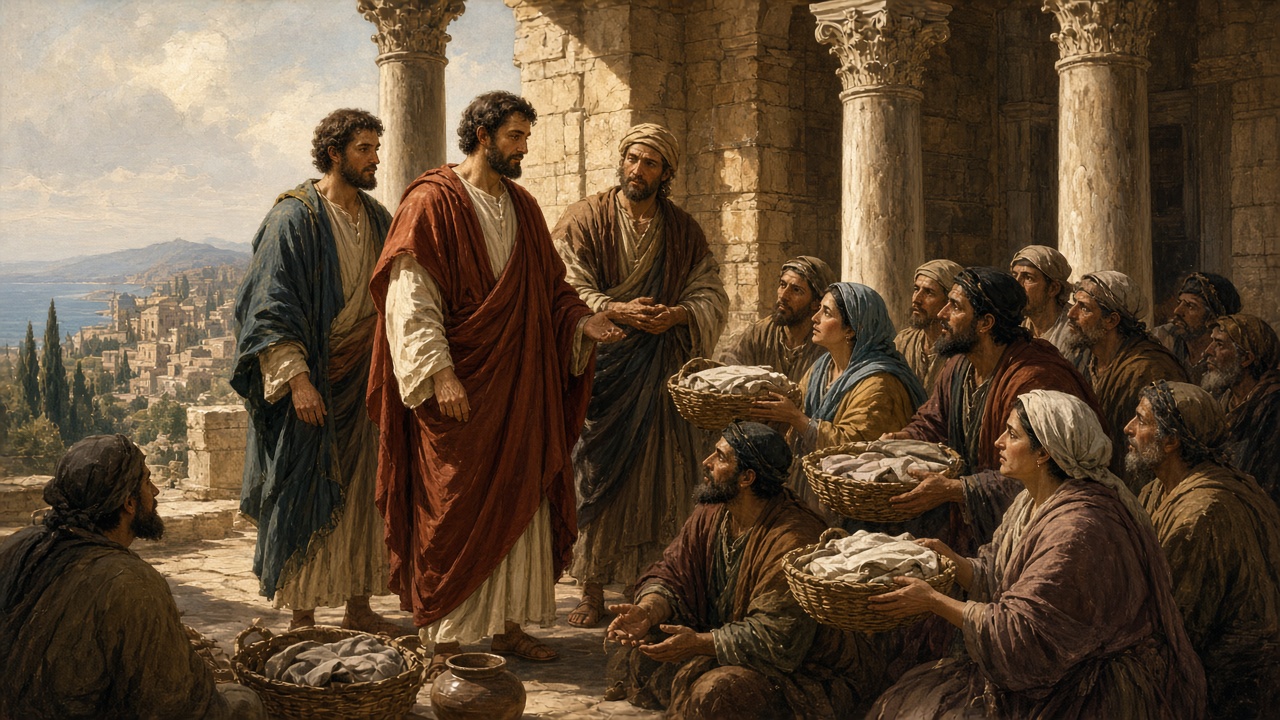
Did you know?
Generosity and the Jerusalem Collection
- In New Testament times Macedonia was a Roman province north of Greece. Paul was summoned by the vision of a man of Macedonia to preach the gospel there, and this chapter tells the Corinthians how those churches, in a terrible ordeal and deep poverty, gave joyfully and even beyond their ability.Sources: Macedonia · the Bible text itself
- Titus, whose name nowhere occurs in Acts, appears to have been a Gentile chiefly engaged in ministering to Gentiles. From Ephesus, Paul sent him to Corinth to forward the church's contributions for the poor saints at Jerusalem; in this chapter Paul urges him to complete that work, and Titus is coming eagerly of his own accord.Sources: Titus · the Bible text itself
- Along with Titus, Paul is sending a brother praised by all the churches for his work in the gospel and chosen by them to accompany the offering, and another brother whose earnestness has been proven many times and in many ways. He explains that this care is meant to avoid criticism of how the generous gift is administered, so that they do what is right not only in the eyes of the Lord but also in the eyes of other people.Sources: the Bible text itself
Notes written with AI assistance from open sources (Theographic Bible Metadata, CC BY-SA 4.0; Easton’s Bible Dictionary, public domain) and reviewed before publishing.
Places in this chapter
Only places identified with high confidence are shown (90% or more according to the scholarly sources compiled by OpenBible). Period map: DARE (Digital Atlas of the Roman Empire), CC BY 4.0; modern map: © OpenStreetMap contributors; places: OpenBible.info (CC BY 4.0).
Credits and license for this translation
Nhandejáry Nhe'ẽ
New Testament in Kaiwá (BR:kgk:Kaiwá)
copyright © 2006 Wycliffe Bible Translators, Inc.
Language: Kaiwá
Translation by: Wycliffe Bible Translators, Inc.
Copyright Information
© 2006, Wycliffe Bible Translators, Inc. All rights reserved.
This translation text is made available to you under the
terms of the Creative Commons License: Attribution-Noncommercial-No Derivative Works.
( http://creativecommons.org/licenses/by-nc-nd/3.0/ )
In addition, you have permission to port the text to different file formats, as long as you
do not change any of the text or punctuation of the Bible.
You may share, copy, distribute, transmit, and extract portions
or quotations from this work, provided that you include the above copyright
information:
You must give Attribution to the work.
You do not sell this work for a profit.
You do not make any derivative works that change any of the actual words or punctuation of the Scriptures.
Permissions beyond the scope of this license may be
available if you contact
us with your request.
The New Testament
in Kaiwá
© 2006, Wycliffe Bible Translators, Inc. All rights reserved.
This translation is made available to you under the terms of the
Creative Commons Attribution-Noncommercial-No Derivatives license 4.0.
You may share and redistribute this Bible translation or extracts from it in any format, provided that:
You include the above copyright and source information.
You do not sell this work for a profit.
You do not change any of the words or punctuation of the Scriptures.
Pictures included with Scriptures and other documents on this site are licensed just for use with those Scriptures and documents.
For other uses, please contact the respective copyright owners.
2014-04-27
Source: http://ebible.org/kgkNT/ · eBible.org