2 Corinthians 7
Nhandejáry Nhe'ẽ · Tap a verse to see its cross-references.
1Upe nhe'ẽ jaikwaa-gwi xe rembihayhu kwéry, tanhanhemopotĩ kena opa ivai va'e-gwi. Nhande rete-py ivai va'e-gwi, nhande py'apy-py ivai va'e-gwi tanhanhemopotĩ katu jaiko porã hagwã Nhandejáry-pe, ha'e he'i hagwã peteĩ teĩ nhande-rehe: “Onhemomarangatu xe mboete-vy. Opy'apy gwive onhemopotĩ xe-rehe ojerovia ete-gwi” he'i hagwã nhande-rehe Nhandejáry.
“Xe rembiayhu va'e voi peẽ” he'i Paulo Corinto pygwa kwéry-pe
2Ha xe ko ajerure-ta peẽ-my ore rayhu hagwã-rehe. Pende py'a gwive pehendu hagwã xe nhe'ẽ. Xe py'a gwive xe rembiayhu va'e voi peẽ. Naxe rembiapo vaíry avave-pe xe. Oĩ onhembohekoha vai va'e. Xe ae avave-pe nambohekoha vaíry. Xe ko nambotavýiry voi avave-pe. 3Upéixa ha'e ramo jepe, “Pene rembiapo vai ko” nda'éi joty va'erã peẽ-my. Ha'e jevy-ta joty peẽ-my “Peẽ ko xe py'a gwive xe rembiayhu va'e voi peẽ. Jaiko gwive onhondive nhamano peve onhondive xe py'a ete gwive apohayhu. Xe re'ýi ramigwa voi peẽ.” 4Ajerovia porã pende-rehe. Apomoherakwã porã opa-rupi. Xe py'agwapy jevy-ma pende-rehe. Opamba'e ahasa asy ramo jepe pende reko arovy'a joty.
Tito omoirũ jevy-ma Paulo-pe
5Macedônia yvy-py orogwahẽ ramo va'ekwe ndikatúi oropytu'u porã. Ndore py'agwapýi voi va'ekwe oropytu'u e'ỹ-vy. Ore jerekwe-rupi ore mbohasa asy va'ekwe-gwi ore py'a kyhyje va'ekwe voi oroiko-vy. 6Nhandejáry ae katu ore mbopy'agwapy jevy-ma. Ojepy'apy va'e-pe ombopy'agwapy kwaa voi Nhandejáry. Ha ore mbopy'agwapy-ma. Tito ogwahẽ ore-vygwi ore mbopy'agwapy jevy-ma Nhandejáry. 7Ndaha'éiry igwahẽha-rehe rei ore py'agwapy. Omombe'u kuri xe-vy pende rekoha: “Corinto pygwa kwéry nde rexa nga'u voi kuri. Ojepy'apy nipo ra'e nde-rehe” he'i pende-rehe. “Ha'e kwéry omboasy gwembiapokwe ra'e” he'i. “Nde ereipota va'e ojapose voi” he'i xe-vy pende reko mombe'u-vy. Upéa ahendu ramo xe mbovy'a jevy-ma.
8Perovy'are'ỹ voi ra'e xe nhe'ẽ araha uka va'ekwe peẽ-my kwatia-rehe. Upéa-rehe “Ma'erã po ra'e araha uka íxupe kwéry upe kwatia?” nda'éi ramo jepe, haimete aipo-rami ha'e va'ekwe pende vy'are'ỹha rerakwã rendu-vy. “Corinto pygwa ndovy'avéi ne rembihaikwe-rehe” omombe'u jevy-ma ramo xe-vy, ndahi'aréi upéixa peiko ramo jepe, haimete-ma anhemboasy peẽ-my ahai hagwe-rehe. 9Ãy ae avy'a jevy. Ndaha'éi pevy'are'ỹ hagwe-rehe avy'a. “Iporã jarova nhande rekoha” peje ra'e-gwi ae xe mbovy'a jevy peẽ. Nhandejáry pene mbovy'are'ỹ uka va'ekwe pene mo'arandu hagwã. Pevy'a e'ỹ-rupi ojapo porã pende-rehe Nhandejáry. Upéa-rehe ndorojapo vaíry va'ekwe joty pende-rehe.
10Nhandejáry nhane mbovy'are'ỹ uka jarova hagwã nhande rekoha nhane rembiapo vaikwe omboyke hagwã nhandéhegwi. Teko rei reko rupi oiko va'e ae ndaha'éi upéixa. Ivy'are'ỹ ramo jepe nonhemohi'agwĩry Nhandejáry-gwi. Onhemomombyryve ryve joty íxugwi.
11Pemondo porã katu pende resa pende rekokwe-rehe pene mandu'a porã hagwã mba'éixa pa Nhandejáry pende rovasa pene mbovy'are'ỹ-gwi. Pene vy'are'ỹha-gwi pene mboetea'e nipo ra'e pejapo hagwã hemimbota. Pene mokyre'ỹ ra'e pende reko porãha pehexa uka hagwã xe-vy ra'e. Hembiapo vai va'ekwe-pe pereko asy nipo ra'e. Peẽ pekyhyje nipo ra'e. Xe rexa nga'u voi nipo ra'e. Pene rakate'ỹ ave nipo ra'e xe-rehe. Pya'e pereko asy nipo upe mba'e vai apohare-pe ra'e. Upéixa peiko-gwi, ojekwaa pende-rehe xe nhe'ẽ pehenduha. Ndapeikói voi ra'e upe va'e reko-rupi.
12Araha uka-ma ramo va'ekwe peẽ-my upe kwatia nhe'ẽ ndaha'éiry hembiapo vai va'ekwe-rehe mate ahai va'ekwe peẽ-my. Ndaha'éiry ave hese hembiapo vai va'ekwe-rehe ave. Pende rehegwa voi upe va'e kwatia. Aipota eterei voi pene momandu'a xe-rehe Nhandejáry “Nhane rembihayhu voi Paulo” peje hagwã xe-rehe. Upéa-rehe voi ahai va'ekwe peẽ-my upéa kwatia.
13Upéixa ramo aikwaa-ma xe rayhu teeha voi ra'e. Upéa-rehe xe py'agwapy jevy-ma ãy arovy'a jevy-ma. Tito ave xe mbovy'a-ma ave. Ha'e ovy'a eterei-gwi xe avy'a ave. “Corinto pygwa xe mogwahẽ porã kuri” he'i Tito pende rekoha omombe'u-vy xe-vy. “Omoro'ysã jevy-ma xe py'apy-py” he'i ave Tito pende-rehe. Upéixa-gwi avy'a jevy xe ave. 14Yma va'ekwe apomoherakwã porã va'ekwe Tito-pe. “Ne mogwahẽ porã arã Corinto pygwa kwéry” ha'e va'ekwe íxupe pende-rehe. “Oromondo-gwi ohendu arã ne nhe'ẽ” ha'e ave pende-rehe. Ha nanhemotĩry xe ha'e hagwe-rehe. Anhetegwa meme mate ha'e peẽ-my. Upéixa ave apomoherakwã porã ramo va'ekwe Tito-pe anhete tee voi upe xe nhe'ẽ. 15Ha'e pende rayhuve huve ra'e imandu'a ramo pende-rehe. “Xe mogwahẽ porã kuri. Xe nhe'ẽ ohendu porã” he'i pende-rehe. Pene kyre'ỹ nipo ra'e hemimombe'u pejapo-vy. Xe remimondo va'e-gwi para'e penhemoĩ nipo ra'e ipogwy-py xe mboete-vy nipo ra'e. Upéixa araka'e perohory íxupe imogwahẽ-vy. 16Xe katu avy'a pende-rehe. Ajerovia pende reko-rehe xe.
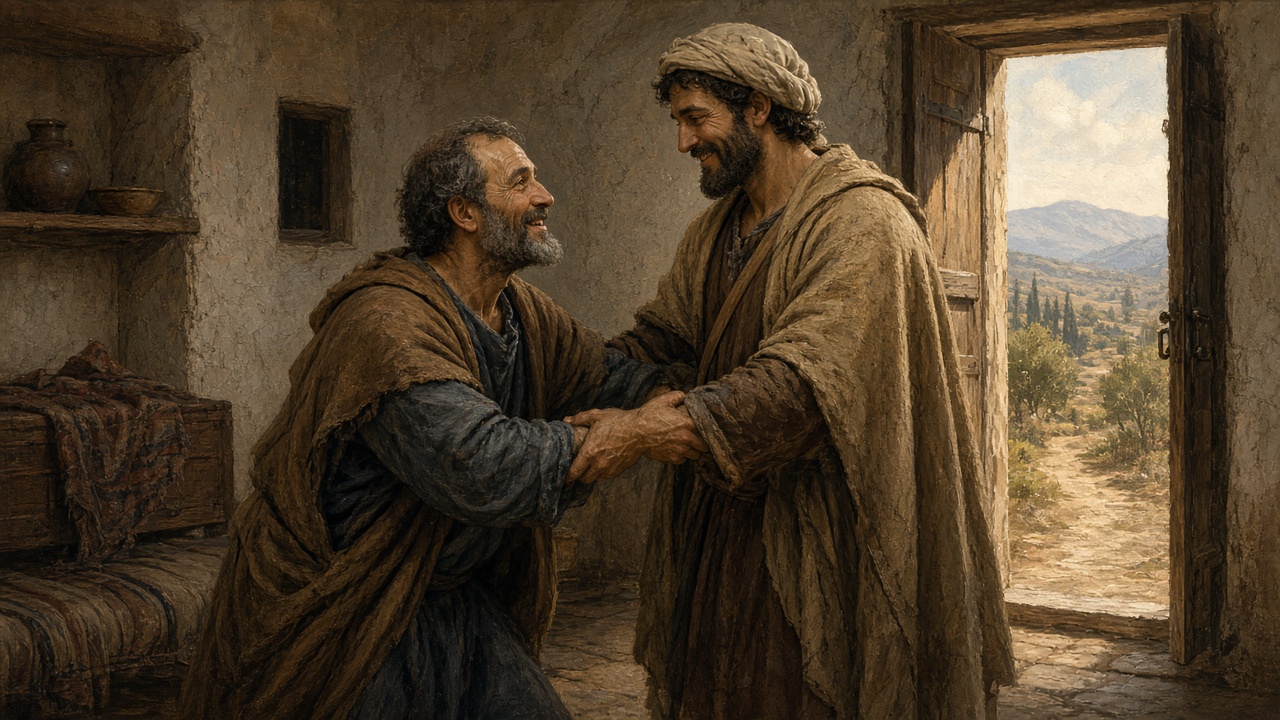
Did you know?
Comfort after a painful letter
- Macedonia, where Paul says he arrived with no rest in his body—conflicts outside and fears within—was a Roman province north of Greece. There, he writes, the God who comforts the downcast comforted him by the arrival of Titus.Sources: Macedonia · the Bible text itself
- Paul speaks of a letter that made them sorrowful, but only for a short time. He now rejoices not because they were sorrowful, but because that sorrow led them to repentance; he says they felt the sorrow God intended, were not harmed by him, and showed earnestness, zeal, and innocence in the matter.Sources: the Bible text itself
- A short account describes Titus as a companion of Paul, apparently a Gentile chiefly engaged in ministering to Gentiles. In this chapter Paul says Titus’s arrival comforted him, that Titus reported their longing, mourning, and zeal, and that they welcomed Titus with fear and trembling.Sources: Titus · the Bible text itself
Notes written with AI assistance from open sources (Theographic Bible Metadata, CC BY-SA 4.0; Easton’s Bible Dictionary, public domain) and reviewed before publishing.
Places in this chapter
- Macedonia · 41.600, 22.540 · verse 5
Only places identified with high confidence are shown (90% or more according to the scholarly sources compiled by OpenBible). Period map: DARE (Digital Atlas of the Roman Empire), CC BY 4.0; modern map: © OpenStreetMap contributors; places: OpenBible.info (CC BY 4.0).
Credits and license for this translation
Nhandejáry Nhe'ẽ
New Testament in Kaiwá (BR:kgk:Kaiwá)
copyright © 2006 Wycliffe Bible Translators, Inc.
Language: Kaiwá
Translation by: Wycliffe Bible Translators, Inc.
Copyright Information
© 2006, Wycliffe Bible Translators, Inc. All rights reserved.
This translation text is made available to you under the
terms of the Creative Commons License: Attribution-Noncommercial-No Derivative Works.
( http://creativecommons.org/licenses/by-nc-nd/3.0/ )
In addition, you have permission to port the text to different file formats, as long as you
do not change any of the text or punctuation of the Bible.
You may share, copy, distribute, transmit, and extract portions
or quotations from this work, provided that you include the above copyright
information:
You must give Attribution to the work.
You do not sell this work for a profit.
You do not make any derivative works that change any of the actual words or punctuation of the Scriptures.
Permissions beyond the scope of this license may be
available if you contact
us with your request.
The New Testament
in Kaiwá
© 2006, Wycliffe Bible Translators, Inc. All rights reserved.
This translation is made available to you under the terms of the
Creative Commons Attribution-Noncommercial-No Derivatives license 4.0.
You may share and redistribute this Bible translation or extracts from it in any format, provided that:
You include the above copyright and source information.
You do not sell this work for a profit.
You do not change any of the words or punctuation of the Scriptures.
Pictures included with Scriptures and other documents on this site are licensed just for use with those Scriptures and documents.
For other uses, please contact the respective copyright owners.
2014-04-27
Source: http://ebible.org/kgkNT/ · eBible.org