Genesis 19
Meeŋka Jooŋ · Tap a verse to see its cross-references.
Ḍüümtïn Caduum ke Amuura
1Aŋ malaŋŋi kä yewwe äätin baan mooye yen mä Caduum biigin ti aŋŋi, i Luut cääy äntüke yen baan mooye ti. Aŋ wääna malaŋŋi yooṭṭeeda kä ye, ike juwin ñaalok paakke aŋ ḍüŋjïn ïñï, aŋ waŋge kümjene ïñï ŋomgu gïtï. 2Aŋ ike jaajjin ogo, “Mügdoni yeeki, ääte paa ba' kiingon yeenic. Aŋ kïïgïc looke woo, aŋ ïkïïn nïïnïn tiññaŋ aŋ ikee murje woo kä tïṇṇäŋänä.” Aŋ iken luukcin ogo, “Ba'ay, ikoon bi nïïnon woo käpet.”
3Aŋ ïïrï Luut ke gïmmene, aŋ wooyne ti baanne. Aŋ tutkene waak äämkä ḍiirken ke bïggï yaaka batta cääyge ti ŋimin ye, aŋ iken ämmä. 4I iken batta mor ootunu, ook muure yek baan mooye yen mä Caduum dürjï ke dänkä duurin än yeenen küürï ti. 5Aŋ Luut yaawgä ogo, “Wali ook yaaka äätin baannü biigin ti tiññaŋ ye? Ickoon kä woo dalä nïïnon.”
6Aŋ Luut kaaccä woo iken ti, aŋ äntüke üüljene ŋäñe ti. 7Aŋ jaajjin ogo, “Ba'ay, müggü yeeki, yiñ yaanna ŋana naŋde. 8Däämme, ika cääyga ṭulgu kä yewwe yaaka kücï ook ye. Dale ken äcke kä woo, aŋ naŋe nääŋk'a daa ṭäkke naŋe daa kä ye. Ŋana ook yaakki naŋde nääŋkalaŋ, iken a wilgä yeeki aŋ tïïjä kä ika.”
9Aŋ luugi ogo, “Wükcü woo päy yoono waŋ,” Aŋ iken jaajjin ogo, “Men yaanni äätin winni a boorgon, aŋ ṭäkï ïkïïn nüütkïtï nääŋka naŋtïn ye! Ïkï bi näŋgini yiñ käärcï woo kä iken.” I iken wüükïdï ti Luut ti atï ṭäkï äntüke liktä gïtï.
10Aŋ malaŋŋi ïnken lajji woo, aŋ Luut guuŋi ti äräk aŋ äntüke üüljï. 11Aŋ ook muure yaaka yudok äntüke tük dürjï ke dänkä ye, uuyi waŋgin nuŋko ŋana äntüke kañte daa.
12Aŋ malaŋŋi Luut taaji ogo, “Ïkï cääygi ŋaannä winni? Ïkï cääygi märäŋgünü, ke ooglen yüükü, ke tïïrïn yüükü, ke mä yüükü yakkalaŋ baan mooye jï winni? Äcci woo nänṭä yaanni ti. 13Ikoon ṭäkon nänṭä yaanni ḍüümon gïtï. Cïŋtäŋ yen yiñ mä baan yaanni ḍakkä ti Pïṭo ti, aŋ ikoon tuujonon ogo ḍüümjon gïtï.”
14Aŋ Luut attä nüütkïdï märäŋgene yaaka a ḍüccïnï jiik ṭäkï ḍïjï ṭulge ye, aŋ kiinne ogo, “Kä bïraŋ juwe kaace woo nänṭä yaanni ti! Pïṭo baan mooye ṭäkke ḍüüme gïtï.” Aŋ iken ḍüücï ogo ike ñääyo ogo ñääyon.
15Aŋ wääna buur kääjenee kä ye, malaŋŋi Luut jüümï yok ogo, “Kä bïraŋ, ïïŋü koowu ke tïïrïn yüükü yaaka kä yewwe winni yaakki. Aŋ kaace woo tiññaŋŋi, nuŋko ikee cüccete woo ke baan naana jooññu ätä ye.”
16Aŋ wääna Luut juugge riijjene kä ye, mügï malaŋŋi kä ïṇte aŋ iiŋe mügï kä ïṇte aŋ cäänna tïïrïn yeeke yaaka kä yewwe ye, müügï kä ïnken aŋ ici woo baan jï ṭeṭaŋ, nääŋka ängene daa ŋïngïn Pïṭo ye. 17Aŋ wääna äbene daa kä woo ye, kiini malak yaŋkalaŋ ogo, “Buurce woo üde, aŋ ŋana ikee däämmede ŋäjäk, aŋ ŋana ikee yuutcede ïñï nänṭä yaŋkalaŋ ti ḍääñgon jï. Lüüde nänṭä pämkä nuŋko ikee cüccete me woo!”
18Aŋ kiini Luut ogo, “Ba'ay, kura Mügdoni yeeki. 19Kiingon yeenic käññä ŋerrä ikee ti aŋ ika nüütkana biilin yaana batta düüñïdï ye, kä daljin üṇṇü yeeni. Aŋ ika batta bi lïïṭä lüüdü nänṭä pämkä, nuŋko ika wäätta ŋäc jooññu aŋ ika tüwdü. 20Yooru, baan yaanni ike cokulaŋ ti, aŋ dalä ika lüüdü ike ti, aŋ ike cäänna ḍeeraŋ, tiiŋgaa dalä ika lüüdü nänṭä yaana ḍeeraŋ yaanja ti, nuŋko üdü kä.”
21Aŋ kiini malak ogo, “Jiik yüükü yaaka kiinnaa kä yaakka gïmgänä, aŋ baan yaanna batta bi ḍüümü gïtï. 22Kä bïraŋ, lüüdü nänṭä yaanja ti, ika batta bi lïïṭä näŋä ginkalaŋ i ïkï batta mor ḍakci ti.” Aŋ ina ken baan yaanna äkkene daa me ogo Coogaar yaanna ogo ḍeeḍoḍeet.
23Aŋ Luut ḍakkä ti Coogaar i äŋ kääjïdï. 24Aŋ Pïṭo puukin ïñï cägärey kä polloŋ jïnä Caduum ti ke Amuura.
25Aŋ bänkä yaakca ḍüümme gïtï ke ḍääñgon ke m'aka cäyok bänkä gïtï ye, ke waak garkä yaaka a yülïn ye muure. 26Aŋ iŋ Luut däämjin ŋäjäk, aŋ wäättä a taŋkuulu yen äyyä.
27Aŋ Abrayiim cuuyin kä tïṇṇäŋänä aŋ ḍukcin nänṭä yaana yuuttee kä Pïṭo ñome ti ye. 28Aŋ ike däämjin ïñï taaŋŋä Caduum ke Amuura, ke taaŋŋä ḍääñgon ti, aŋ jiinä yooṭṭe ḍüüŋïdï ñaalok kä yaac ŋommañ jï, bata jiinä yek käälmaañ.
29Aŋ Jooŋ wääna bänkä mäyken yaaka cäyok ḍääñgon jï ye ḍüümmeeda kä gïtï ye, Abrayiim pajjene aŋ Luut määgene woo jooññu yaana näŋŋä ḍoŋe bänkä yaaka cääynee kä gïtï ye ti.
Luut ke Tïïrïn Yeeke
30Aŋ Luut booññu kä cäwdä Coogaar aŋ baŋŋä ke tïïrïn yeeke yaaka kä yew ye, aŋ attä cääjjin ṭuum pämkä gïtï. 31Aŋ nïïnnä yaŋkalaŋ ti tïïron yaana a kaygon ye, käwen ḍeerconḍe kiinne ogo, “Wäyo ḍuuŋdin, aŋ baati oon yaŋkalaŋ winni yaana ïkïï koowï ye, bata poñ yen me muure ŋommañ wic ye. 32Äätä wäyo nääkkï määk, aŋ wäättana ïkïï nïïnï ke ike aŋ wina ïkïi bi ääcï woo kaaynä wäyo ti.”
33Aŋ wïïrïn jïñe yaanja ti wäyen nääkki määk, aŋ tïïron yaana a kaygon ye kaaccä aŋ nïngïn ke wäyen. Aŋ nïïnjïn yaana nïïnjenee kä ke juwin yaana juwenee kä ye kucu wäyen.
34Aŋ tïṇṇäk aŋŋi tïïron yaana a kaygon ye, käwen ḍeerconḍe kiinne ogo, “Wïïrïn tiinuk ikoon nïïnnon ke wäyo, ŋocï nääkkï määk wïïrïn, aŋ ïkï kaacci nïïne ke ike nuŋko ääcii kä woo kaaynä wäyo ti.” 35Aŋ wïïrïn jïñe yaanja ti wäyen ŋoci määtki määk, aŋ tïïron yeene ḍeerconḍe attä kaaccä nïïnnene. Aŋ nïïnjïn yaana nïïnjenee kä ke juwin yaana juwenee kä ye kucu wäyen. 36Aŋ Luut tïïrïn yeeke muuṭuk laacce. 37Aŋ kaygon giiṇṇä minneni oone aŋ äkkene ogo Muwaab. Aŋ ike ken a wäy yen mä Muwaab ke tiññaŋ. 38Aŋ tïïron ḍeerconḍe yeene giiṇṇä minneni oone cäänna, aŋ äkkene ogo Benaammi, aŋ ike ken a wäy yen mä Amüün ke tiññaŋ.
Did you know?
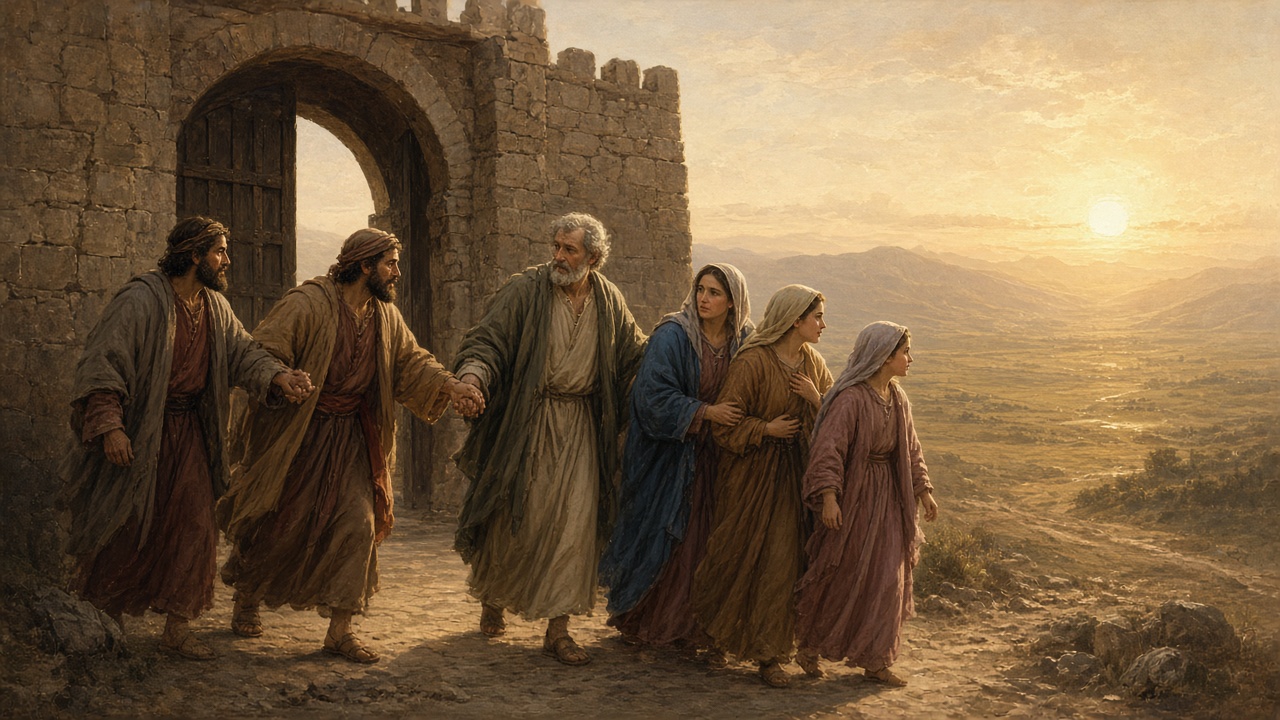
The Destruction of Sodom and Gomorrah
- The town Lot begged to flee to was Zoar, a name Easton's Bible Dictionary (1897) explains as “small,” matching his plea that it was only a little place. The same entry says it was first called Bela and lay east or southeast of the Dead Sea, and that the prophets Isaiah and Jeremiah later refer to it.Sources: Zoar · the Bible text itself
- Easton's Bible Dictionary (1897) gives Sodom, in the vale of Siddim, the meaning “burning” or “the walled,” and says the wickedness of its inhabitants brought down fire from heaven that destroyed the city. The same dictionary explains Gomorrah as “submersion,” one of five cities of that plain, and says they probably stood close together near the northern end of what is now the Dead Sea, and that Gomorrah is always mentioned next after Sodom.Sources: Sodom · Gomorrah · the Bible text itself
- Lot’s older daughter named her son Moab, and the narrative calls him the father of the Moabites, a name later books use for that people. The younger daughter named her son Ben-ammi, father of the Ammonites; Easton's Bible Dictionary (1897) explains Ben-ammi as “son of my kindred” and identifies him as Lot’s son by his youngest daughter.Sources: the Bible text itself · Moab · Ben-ammi
Notes written with AI assistance from open sources (Theographic Bible Metadata, CC BY-SA 4.0; Easton’s Bible Dictionary, public domain) and reviewed before publishing.
Places in this chapter
Only places identified with high confidence are shown (90% or more according to the scholarly sources compiled by OpenBible). Period map: DARE (Digital Atlas of the Roman Empire), CC BY 4.0; modern map: © OpenStreetMap contributors; places: OpenBible.info (CC BY 4.0).
Credits and license for this translation
Meeŋka Jooŋ
Jumjum Bible Translation
copyright © 2023 Pioneer Bible Translators
Language: (Jumjum)
Contributor: Pioneer Bible Translators
This translation is made available to you under the terms of the
Creative Commons Attribution Share-Alike license 4.0.
You have permission to share and redistribute this Bible translation in any format and to make reasonable revisions and adaptations of this translation, provided that:
You include the above copyright and source information.
If you make any changes to the text, you must indicate that you did so in a way that makes it clear that the original licensor is not necessarily endorsing your changes.
If you redistribute this text, you must distribute your contributions under the same license as the original.
Pictures included with Scriptures and other documents on this site are licensed just for use with those Scriptures and documents.
For other uses, please contact the respective copyright owners.
Note that in addition to the rules above, revising and adapting God's Word involves a great responsibility to be true to God's Word. See Revelation 22:18-19.
2025-05-06
Source: http://ebible.org/jum/ · eBible.org