John 11
Tẹsitamenti Ikne n'Ọnu Ikwere · Tap a verse to see its cross-references.
Ẹnwu Lazarọsi
1Otu nwerukna rẹwhna bụ Lazarọsi, nye wu nụ Bẹtani, dnarnụ ẹhni igbugbu. Bẹtani bụ hne Meri nụ nwene a rinya Mata wu. 2Ka bụ Meri wam ke wụsiri Jizọsi mọno otute, gweru rukeri-ize a kwnosnama ọchi a, bụ nye nwene a rukna Lazarọsi dnarnụ ẹhni igbugbu. 3Rụmu nne a rinya ziznenu Jizọsi izi kaa, “Nyenwe aị, enyi i ke ị whnụrnu n'anya naarịa arịa.”
4Nga Jizọsi nụrnu a, ọ kaa, “Ẹhni igbugbu ka jọ́obu ẹnwu Lazarọsi, kọvu o jeenye Chiokike igwugwu ma be hite nụ a nyee Nnwọ Chiokike igwugwu.” 5Jizọsi whnụrnu Mata nụ nwene a rinya nụ Lazarọsi n'anya. 6Kọvu nga ọ nụrnu nụ Lazarọsi naarịa ẹhni igbugbu, ọ dazịri nụ hne ọ zị ọbochi lawụru berere.
7Omekwo, ọ kanụ ele sno apna a, “Anụ va ma a lahna Judiya.”
8Ele sno apna a kanụ a, “Nye-zni-nhne, o gbúle ọkwnu ele Ju pioru ọ tụ akaworugwu, ị naalahna kọriri pịi?”
9Jizọsi sarụ be, “Otu ọbochi nwernu nri nụ awa lawụru, nye ọbula ke znernu izne n'iwhnehnie jọ́okpobi ọchi, kwnornu nụ ọ nọowhnu iwhne k'ọwa. 10Kọvu ọ bụru nụ o zne izne n'abalị, ọ jọokpobi ọchi, kwnornu nụ ọ zị́ iwhne zị nụ rime a.”
11Nga Jizọsi kwukworu kpa, ọ kaa, “Lazarọsi enyi aị neezni anyarna, kọvu m jeezne ma m kpatne a.”
12Ele sno apna a kaa, “Nyenwe aị, ọ bụru nụ o neezni anyarna, ẹhni jọoburu a ọma.” 13Kọvu nhne Jizọsi nookwu bụ nụ Lazarọsi nwụnam. Kọvu be neeche nụ ọ bụ ozni anyarna etekne.
14Jizọsi kawhnomenu be, “Lazarọsi nwụnam. 15Mkpọma nọoso m n'ọnu kwnornu anụ, nụ m zị́la m hne ọ nwụrnu, ma anụ kweru. Anụ lizọ ma a znekwnusi a.”
16Tọmosi, nye be kwu Didimọsi (ke bụ ejima) kanụ ele sno apna a ibne a, “Anụ lizọ ma a snornu a zne, ma a snornu a nwụ ẹnwu.”
Jizọsi, olizọ n'ẹnwu // nụ bụdnu
17Nga Jizọsi vaduru, ọ whnụrnu nụ be lilem Lazarọsi ọbochi ẹno wheru ewhe. 18Bẹtani dụ́la maịli lawụru hite nụ Jerusẹlem. 19Agịda ele Ju varụ ọ kasi Mata nụ Meri mkpọma kwnornu ẹnwu nwene be rukna. 20Nga Mata nụrnu nụ Jizọsi vawa, ọ whọga znekwnusi a, kọvu Meri dazịri n'ọro.
21Mata kanụ Jizọsi, “Nyenwe aị, ọ bụru nụ ị zị hna, nwene m rukna bọ́ ọ nwụna. 22Kọvu m maam nụ nhne ọbula ị rịoru n'aka Chiokike, o jeenye i ya.”
23Jizọsi kanụ a, “Nwene i rukna jeelizọ berere.”
24Mata sa a, “M maam nụ o jeelizọ berere n'ọbochi ipne-aznụ.”
25Jizọsi kanụ a, “Mawa bụ olizọ n'ẹnwu nụ bụdnu. Nye ọbula ke kweru nụ me, ọ bụrubedi nụ ọ nwụrnu ọnwu, ọ jaazị bụdnu. 26Berere kwno, nye ọbula ke zị bụdnu kweru nụ me jọ́onwu ẹnwu tim tọm. Mata, i kweru nhne me nookwu?”
27Mata sarụ, “Owe! Nyenwe aị, m kweru m nụ jị bụ Karaịsi, Nnwọ Chiokike ke varụ n'ọwa.”
Jizọsi kwnarnụ ẹkwna
28Nga Mata kwukworu ka, ọ lahna, sukwu Meri nwene a rinya ichne kanụ a, “Nye-zni-nhne zị hna, o noosukwu i.” 29Nga Meri nụrnu ka, o lizọ wara wara ma o kwnusi Jizọsi. 30Jizọsi yáavaduge nụ rime ẹli-ọhna, ọ zị kọriri nụ hne Mata kwnusiri a. 31Ele Ju be nụ Meri zị n'ọro naakasi a mkpọma, snornu a nga be whnụrnu nụ o lizọru wara wara whọga. Be neeche nụ o neezne akwna ẹkwna n'ilili.
32Nga Meri dụru hne Jizọsi zị, whnụ a, ọ dna n'ẹli n'ọchi a, kaa, “Nyenwe aị, ọ bụru nụ ị zị hna, nwene m rukna bọ́ ọ nwuna.”
33O metụru Jizọsi nụ mkpọma nga ọ whnụrnu Meri nụ ele Ju sno a naakwna ẹkwna, o gbu a igbugbu nụ mkpọma. 34Ọ sịkwa be, “Ndaa hne anụ vubiri a?”
Be kaa, “Nyenwe aị, va whnụrnu.”
35Jizọsi kwnarnụ ẹkwna.
36Ele Ju kaa, “Le, ọ whnụrnu a n'anya k'agịda.”
37Kọvu agwna be kaa, “O kpumernu anya nwerukna kpuru isni, ọ bụ nụ o jéenwe rikne mee Lazarọsi gharụ ọ nwụ ẹnwu?”
Jizọsi mernu Lazarọsi hi // n'ẹnwu lizọ
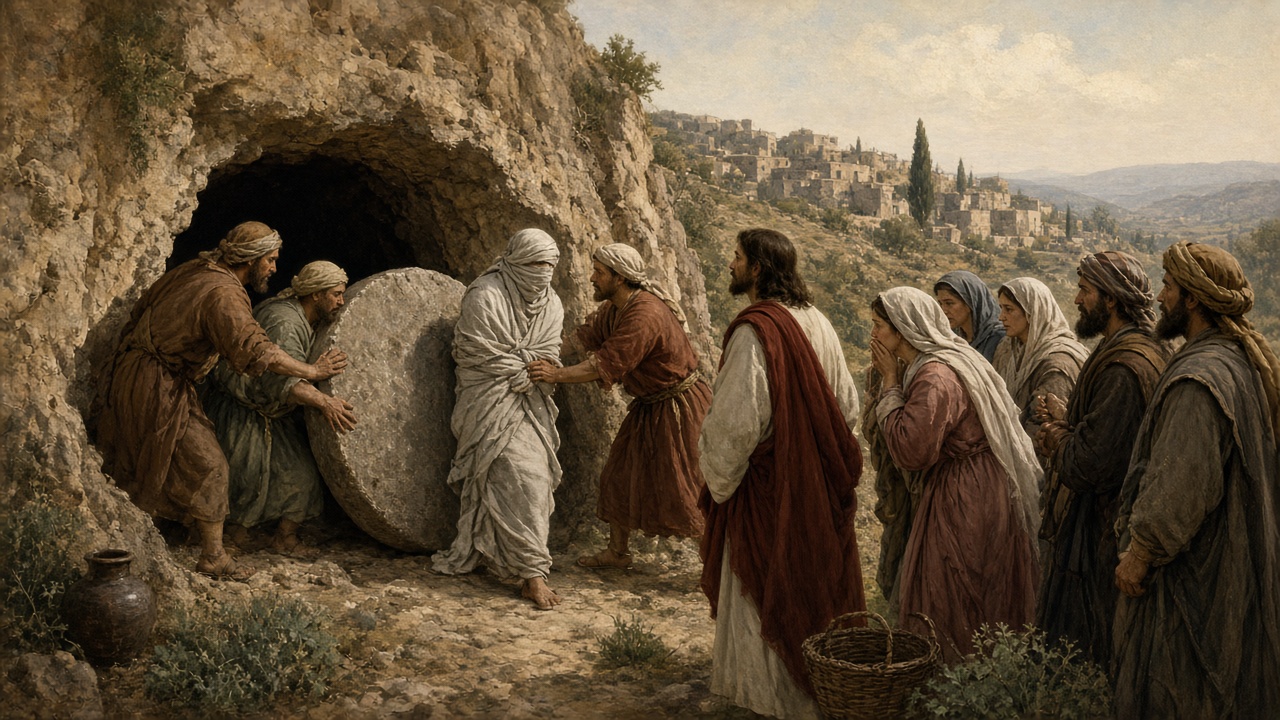
38O gbu kwno Jizọsi igbugbu nụ mkpọma, o zne n'ilili be gwuru nụ rime rugwu, be jiri rugwu kpusni ọnu a. 39Jizọsi kaa, “Anụ gweme rugwu ka.”
Mata, nwene rinya nwerukna wam nwụrnu ọnwu kaa, “Nyenwe aị, ọ jeenwe ẹknarna ọjo, kwnornu nụ tna bụ ọbochi ẹno be liri a.”
40Jizọsi kaa, “Me kannụ ị nụ i jọowhnu igwugwu Chiokike ọ bụru nụ i jeekweru kpọi?”
41Be vume rugwu wam. Jizọsi lelizọ anya n'olu, kaa, “Nda m, meka, kwnornu nụ i bnonem me nsnị. 42M magwụ m nụ i noobnonu m nsnị ige ọbula, kọvu kwnornu nụ ele ka zị hna m nookwu a ma be kweru nụ jị ziyaru m.”
43Nga o kwukworu ka, o gweru okne nkọli siwama, “Lazarọsi, whụya.” 44Nwerukna wam nwụrnu ọnwu whụya, nye be ji ikpe iznu whụ a aka lawụru nụ ọchi lawụru, nụ ikpe be jiri whụ ruwhnu a. Jizọsi kanụ be, “Anụ tọma a, ma ọ la.”
Be gbarụ iznuznu // o gbu Jizọsi
45Agịda ele Ju ele varụ elekwa Meri whnụrnu nhne Jizọsi mernu, kweru nụ ya. 46Kọvu agwna be lahna kanụ ele Farisi nhne Jizọsi mernu. 47Ele Farisi nụ ele risi arịohna kwu ikwu kaa, “Ndaa nhne a neeme? Nwerukna ka nọornu agịda ẹrnu ndu-ẹhni. 48Ọ bụru nụ a gharụ a, o neezne nụ ruwhnu, kpakara ele badnụ jeekweru nụ ya. Ele Rom jaava lulu ẹli aị ma Ọro Nsọ aị.”
49Otu nyenum n'esilawụru be, rẹwhna a bụ Kayafasị, nye bụ nye risi arịohna n'awha wam, kaa, “Anụ máa nhne rịa rịa. 50Ọ bụru ọma nụ otu badnụ nwụhianu kpakara badnụ ẹnwu, ma kpakara mba gharụ o whu etekne.”
51N'ezi ọka, o kwúge nhne ka hite nụ mkpọma a, kọvu lele nye risi arịohna n'awha wam, ọ whnụrnu ọwhnurninya nụ Jizọsi jọonwuhianu ele Ju ẹnwu. 52Ọ bụ́o ele Ju kpọi, kọvu kwnornu kpakara rụmu Chiokike be chịsaru nụ kpakara ọwa, chịkota be ma be bụru otu. 53Hite n'ọbochi wam ele risi ele Ju bete ọ gba iznuznu kpa be joogbu Jizọsi.
54Kam kpayarụ, Jizọsi zị́ma neezne izne nụ ruwhnu ọhna n'esilawụru ele Ju, kọvu ọ whọga zne hne zị ndụndu n'ẹli-ịkpa, bna n'otu ẹli be kwu Ifirem, ya nụ ele sno apna a dazịri pịi.
55Ige Iriri Ọgawhe ele Ju zị ndụndu, agịda ele Ju zne Jerusẹlem, zne ọ bịta ẹhni be nsọ sụ ọ dụ Iriri Ọgawhe be. 56Be noopio Jizọsi, be gbakọ n'Ọro Nsọ Chiokike, be nẹesikwa ibne be, “Ndaa nhne bụ echiche anụ? Ọ bụ nụ ọ jáava Iriri ka sa?” 57Ele risi arịohna nụ ele Farisi nyernu iwu, kaa, nye ọbula ke magwụ hne Jizọsi zị kanụ be ma be nwudne a.
Did you know?
Lazarus Raised at Bethany
- John places Bethany, the village of Lazarus and his sisters Mary and Martha, a little less than two miles from Jerusalem. Easton's Bible Dictionary (1897) locates it on the southeastern slope of the Mount of Olives, on the road to Jericho, and says it took its name from the palm trees that grew there and was known as el-Azariyeh, “place of Lazarus.”Sources: Bethany · the Bible text itself
- Thomas, one of the twelve, was also called Didymus, the Greek equivalent of his name, which means “twin.” When Jesus chose to go back to Judea, where people had just tried to stone him, Thomas said to the other disciples, “Let us also go, so that we may die with Him.”Sources: Thomas · the Bible text itself
- After some reported what Jesus had done, the chief priests and Pharisees convened the Sanhedrin, afraid that if everyone believed in Jesus the Romans would take away both their place and their nation. Caiaphas, high priest that year and, according to Easton's Bible Dictionary (1897), a Sadducee who held office from A.D. 27 to 36, said it was better that one man die for the people than that the whole nation perish. John says that as high priest that year he was prophesying that Jesus would die for the nation, and from that day they plotted to kill him.Sources: Caiaphas · the Bible text itself
Notes written with AI assistance from open sources (Theographic Bible Metadata, CC BY-SA 4.0; Easton’s Bible Dictionary, public domain) and reviewed before publishing.
Places in this chapter
- Judea · Today: Judea 1 · 31.777, 35.234 · verses 7, 8, 54
- Jerusalem · 31.777, 35.234 · verses 18, 54, 55
- Ephraim · Today: Taybeh · 31.954, 35.300 · verse 54
Only places identified with high confidence are shown (90% or more according to the scholarly sources compiled by OpenBible). Period map: DARE (Digital Atlas of the Roman Empire), CC BY 4.0; modern map: © OpenStreetMap contributors; places: OpenBible.info (CC BY 4.0).
Credits and license for this translation
Tẹsitamenti Ikne n'Ọnu Ikwere
New Testament in Ikwere
copyright © 2010 Wycliffe
Language: Ikwere
Translation by: Wycliffe
Ikwerre – (ikw) Nigeria
The Iwerre language of Nigeria can also be spelled Ikwere and Ikwerri. This language is spoken primarily by the Ikwerre people who live in the Rivers State of Nigeria and is one of the many ethnic groups in the Niger Delta. There were more than 23,000 speakers of this language in 1973. There is also a considerable local interest in literacy and grammar.
Copyright Information
© 2010, The Nigeria Bible Translation Trust. All rights reserved.
This translation text is made available to you under the
terms of the Creative Commons License: Attribution-Noncommercial-No Derivative Works.
( http://creativecommons.org/licenses/by-nc-nd/3.0/ )
In addition, you have permission to port the text to different file formats, as long as you
do not change any of the text or punctuation of the Bible.
You may share, copy, distribute, transmit, and extract portions
or quotations from this work, provided that you include the above copyright
information:
You must give Attribution to the work.
You do not sell this work for a profit.
You do not make any derivative works that change any of the actual words or punctuation of the Scriptures.
Permissions beyond the scope of this license may be
available if you contact
us with your request.
Printed book ISBN 9789789076369
New
The New Testament
in Ikwere
© 2010, The Nigeria Bible Translation Trust. All rights reserved.
This translation is made available to you under the terms of the
Creative Commons Attribution-Noncommercial-No Derivatives license 4.0.
You may share and redistribute this Bible translation or extracts from it in any format, provided that:
You include the above copyright and source information.
You do not sell this work for a profit.
You do not change any of the words or punctuation of the Scriptures.
Pictures included with Scriptures and other documents on this site are licensed just for use with those Scriptures and documents.
For other uses, please contact the respective copyright owners.
2019-08-09
Source: http://ebible.org/ikwNT/ · eBible.org