Luke 3
Elu Ọhụn: Ẹkụkwọ-Nsọ (Azụụn Ọhụn rịn'a) · Tap a verse to see its cross-references.
Ozi Jọnụ Hụn E Mẹ Mirin-Chuku Zi
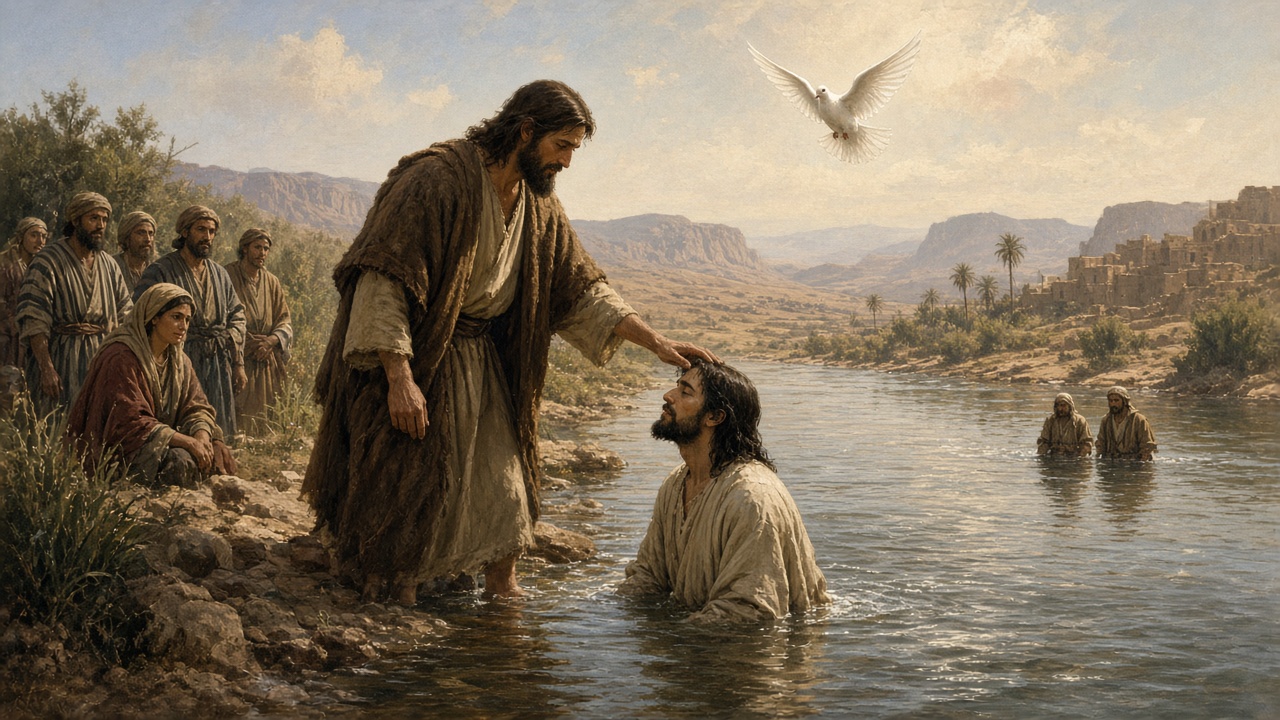
1Hụn mẹ ẹ ahụa mmisẹn imẹ ọkịkị eze-kanị w'a kpọ Siza Taịberiasị, ogẹn hụ Pọntus' Paịleti gi wụ Gọvanọ rị a kị Judia—wẹ kebe Izrẹlụ lẹ alị ndị nọkunmẹ n'ẹ ụzọ ẹnọ ogẹn hụ: Hẹrọdụ hụ a kị Galili; Filipu nwẹnẹ ẹ hụ a kị Ituria lẹ Trakọnitisi; Lisanịasị hụ a kị Abilẹni. 2Anasị lẹ Kayafasị wụ ndị-isi nchụ-ẹjan. Ogẹn hụ kẹ oku Osolobuẹ gi bịanị Jọnụ nwa Zẹkaraya imẹ atụ. 3'Ya ọ nọ ghagbamachanrịn ẹgbẹrẹ Iyi Jọdanị, a ma ọkwa—a sị wẹ bịa d'e mẹ mirin-Chuku, gi ẹ ghọsị n'e rogharịgụọ wẹ—kẹni Osolobuẹ hụn ụzọ gbagharị wẹ njọ. 4Ẹrịra kẹ wẹ dọn de ẹ imẹ ẹhụhụọ Azaya onyẹ-amụma, nị,
“Olu onyẹ ohu rị a han imẹ atụ,
a sị,
‘Kwa nị nị Di-nwọnni-ẹnyi ụzọ;
mẹmẹ ni ụzọ a n'o zinrin.
5Wẹ jẹnkọ d'e hukin ọdanmgbugbu ile,
mẹ ugu lẹ oke ile hẹnrinsọnmẹ alị-aradan;
wẹ jẹnkọ d'e mẹ ụzọ-ngịrịgọ ile zinpụ,
mẹ ụzọ-mkpọke ile riẹnpụ —
6ịhịan ile a hụn nzụọpụha Osolobuẹ!’ ”
7Ya Jọnụ nọ rị a gwa igunrun ndị hụ rị a bịa d'e kunrunn'ẹ n'o mẹ wẹ mirin-Chuku oku, a sị, “Igunrun ẹjụ-alị! Onyẹ sị ụnụ gba nị iwe lẹ ọnụma Osolobuẹ lalanị ọsọ?! 8Mịkwọ nị nwan mkpụrụ hụn jẹnkọ d'a ghọsị nị ụnụ e rogharịgụọ! Aghakwọlẹ ni a sị enwẹn ụnụ, ‘Ebraham wụ nẹdi ẹnyi nụ!’ Makẹni, ezioku kẹ m rị a gwakwọ ụnụ, Osolobuẹ sikọ d'a saẹka gi ọmụma ndịnị mẹmẹsọnmẹ ni Ebraham ụmụ. 9Anyụn a rịgụọlẹ nwan ukun-osisi, e che: osisi ọwụlẹ mịlẹni mkpụrụ rị mma, e gbutu w'ẹ, tụ a ye imẹ ọkụn.”
10Igunrun ndị ahụn hụ a sị a, “Kịnị kẹ ẹnyi sịkọ d'e mẹ nwan?” 11Ọ nọ sị wẹ, “Onyẹ ọwụlẹ nwọn ẹwuru ẹbụọ jẹnkọ d'e werịrị ohu ye onyẹ nwọnlẹni; onyẹ ọwụlẹ nwọn ihiẹn-oriri sikọ d'e mẹzikwọ ẹrịra.” 12Ndị a na ụgwọ-isi hụn bịazịkwọ d'e mẹ mirin-Chuku nọ jụ a, sị, “Onyẹ-nkuzi, kịnị kẹ ẹnyi jẹnkọ d'e mẹ?” 13Ọ nọ sị wẹ, “Anakarịlẹ ni ihiẹn wẹ sị ụnụ na.” 14Ndị-agha nọ bịazịkwọ d'a jụ a, sị, “Ẹnyi nwẹn? Kịnị kẹ ẹnyi jẹnkọ d'e mẹ?” Ọ nọ sị wẹ, “Aghazịlẹ ni e gi ẹka-ikẹn a narịn ịhịan ego; ebuokinzilẹ ni ịhịan ọnụ; nị nị ụgwọ-ọrụn ụnụ e jun ụnụ ẹfọ.”
15Makẹni wẹ rị a tụkẹnmẹ ẹnya Kraịstị, Onyẹ-nzụọpụha Hụ Osolobuẹ Tumẹ, hụn o kwe nkwa n'o jẹnkọ d'e zihẹ, lẹzị makẹni wẹ rị a jụ enwẹn wẹ kẹ Jọnụ rọ, 16Jọnụ nọ sị wẹ, “M gi mirin mmaka e mẹ ụnụ mirin-Chuku, kanị onyẹ kanị m lala: efurudẹni m onyẹ jẹnkọ d'a tọpụ eriri akpụkpọ-ụkụ a! O sikọ d'e gi Mmọn-nsọ lẹ ọkụn mẹ ụnụ mirin-Chuku.
17O gi ihiẹn o gi a fụchan ọka: o jẹnkọ d'a fụchanchanrịn ọka ile rị ebe ọ nọ a kụkpọ ọka, kpọn akpụrụ a ye ebe o kpọntọ ọka, kpọnkikomẹ ẹfịfịa kpọnye imẹ ọkụn hụn wẹ ghalẹni e tinyụn.”
18Jọnụ gizi oku ndụnmọdụn bu ọda rịsọnmẹ ichẹn-ichẹn zi wẹ oziọma.
19Jọnụ nọ jụgbọ eze wụ Hẹrọdụ makẹni o jẹn d'a lụma Hẹrọdịasị wụ nwunyẹ nwẹnẹ ẹ lẹzi makẹ eje-ihiẹn ndị ọzọ bu ọda Hẹrọdụ mẹ. 20'Ya Hẹrọdụ nọ mẹdẹ hụn ka njọ ghahanị ikpọkin Jọnụ ye ụlọ-ngan.
E Mẹ Wẹ Jizọsị Mirin-Chuku
21Ogẹn wẹ gi rị e mẹ ịhịan ile mirin-Chuku, wẹ nọzị mẹ Jizọsị. E mẹgụụ w'a 'ya, ebe ọ rị e mẹ ekpere, elu-igwee nọ kpupụ, 22Mmọn-nsọ nọ gi ụdị nduru hidan, bekwasị a. Olu nọ gha elu-igwee sị, “Ịyụ wụ ezi Nwa m; ihiẹn i a sụọka m.”
Ndị Mụ Jizọsị
23Jizọsị rị ihiẹn rịkẹ nwa ahụa iri-kwasị-ọgụn k'o bidọn ọrụn a. Wẹ weri Jizọsị nọkẹ nwa Josẹfụ.
Josẹfụ wụ nwa Heli,
24Heli wụ nwa Matitatị,
Matitatị wụ nwa Livaị,
Livaị wụ nwa Mẹki,
Mẹki wụ nwa Janaị,
Janaị wụ nwa Josẹfụ,
25Josẹfụ wụ nwa Matatịasị,
Matatịasị wụ nwa Emọsị,
Emọsị wụ nwa Nahum,
Nahum wụ nwa Es'li,
Es'li wụ nwa Nagaị,
26Nagaị wụ nwa Maatị,
Maatị wụ nwa Matatịasị,
Matatịasị wụ nwa Sẹmẹi,
Sẹmẹi wụ nwa Josẹkị,
Josẹkị wụ nwa Jọda,
27Jọda wụ nwa Johananị,
Johananị wụ nwa Resa,
Resa wụ nwa Zẹrubabẹlụ,
Zẹrubabẹlụ wụ nwa Shịatẹlụ,
Shịatẹlụ wụ nwa Neri,
28Neri wụ nwa Mẹki,
Mẹki wụ nwa Adi,
Adi wụ nwa Kosam,
Kosam wụ nwa Ẹmadam,
Ẹmadam wụ nwa Ẹh,
29Ẹh wụ nwa Joshụa,
Joshụa wụ nwa Ẹliẹza,
Ẹliẹza wụ nwa Jorim,
Jorim wụ nwa Matitatị,
Matitatị wụ nwa Livaị,
30Livaị wụ nwa Simiọnụ,
Simiọnụ wụ nwa Juda,
Juda wụ nwa Josẹfụ,
Josẹfụ wụ nwa Jonam,
Jonam wụ nwa Ẹlịakin,
31Ẹlịakin wụ nwa Mẹlịa,
Mẹlịa wụ nwa Mẹna,
Mẹna wụ nwa Matata,
Matata wụ nwa Natanị,
Natanị wụ nwa Defidi,
32Defidi wụ nwa Jese,
Jese wụ nwa Obẹdi,
Obẹdi wụ nwa Bụazị,
Bụazị wụ nwa Salụmọnụ,
Salụmọnụ wụ nwa Nashọnụ,
33Nashọnụ wụ nwa Aminadabụ,
Aminadabụ wụ nwa Adimini,
Adimini wụ nwa Anị,
Anị wụ nwa Hẹz'rọnụ,
Hẹz'rọnụ wụ nwa Pẹrẹzị,
Pẹrẹzị wụ nwa Juda,
34Juda wụ nwa Jekọpụ,
Jekọpụ wụ nwa Aziki,
Aziki wụ nwa Ebraham,
Ebraham wụ nwa Tẹra,
Tẹra wụ nwa Nahọ.
35Nahọ wụ nwa Serugu,
Serugu wụ nwa Reu,
Reu wụ nwa Pẹlẹgị,
Pẹlẹgị wụ nwa Ẹba,
Ẹba wụ nwa Shẹla,
36Shẹla wụ nwa [Kaịnanị],
[Kaịnanị] wụ nwa Afasadị,
Afasadị wụ nwa Shẹm,
Shẹm wụ nwa Nua,
Nua wụ nwa Lamẹkị,
37Lamẹkị wụ nwa Mẹtusẹla,
Mẹtusẹla wụ nwa Ẹnọkụ,
Ẹnọkụ wụ nwa Jarẹdị,
Jarẹdị wụ nwa Mahalalẹlụ,
Mahalalẹlụ wụ nwa Kenan,
38Kenan wụ nwa Ẹnọsị,
Ẹnọsị wụ nwa Sẹtị,
Sẹtị wụ nwa Adam,
Adam wụ nwa Osolobuẹ.
Did you know?
John the Baptist prepares the way
- Luke sets John's preaching in the fifteenth year of Tiberius Caesar, the stepson of Augustus, who succeeded him in A.D. 14 and died in A.D. 37. Easton's Bible Dictionary (1897) notes that John began his public ministry in that year, and that Pontius Pilate, the sixth Roman procurator of Judea from A.D. 26 to 36, kept his headquarters at Caesarea during a term that covered the ministries of John and Jesus. Herod Antipas, a son of Herod, was then tetrarch of Galilee.Sources: the Bible text itself · Tiberius · Pontius Pilate · Herod Antipas
- The chapter dates these events during the high priesthood of both Annas and Caiaphas. Easton's Bible Dictionary (1897) records that Annas was high priest from A.D. 7 to 14 and was deposed by the Roman procurator, and that Caiaphas, who had married Annas's daughter, was raised to that office in A.D. 25. The same entry suggests that the Jews may still have regarded Annas as the lawful high priest, since Mosaic law held the office for life, and that he probably served with Caiaphas as president of the Sanhedrin or as the high priest's deputy.Sources: the Bible text itself · Annas
- John, son of Zechariah, was of priestly descent: his father was a priest of the course of Abia, and his mother, Elizabeth, belonged to the daughters of Aaron. Easton's Bible Dictionary (1897) notes that his mission was the subject of prophecy, including Isaiah's voice crying in the wilderness, and that his birth came six months before the birth of Jesus. In this chapter he preaches a baptism of repentance throughout the region around the Jordan, and Herod the tetrarch later imprisons him after John rebukes him over Herodias.Sources: the Bible text itself · John the Baptist
Notes written with AI assistance from open sources (Theographic Bible Metadata, CC BY-SA 4.0; Easton’s Bible Dictionary, public domain) and reviewed before publishing.
Places in this chapter
- Abilene · 33.627, 36.106 · verse 1
- Galilee · 32.760, 35.527 · verses 1, 19
- Ituraea · 33.400, 35.850 · verse 1
- Judea · Today: Judea 1 · 31.777, 35.234 · verse 1
- Trachonitis · Today: Lajat · 32.969, 36.455 · verse 1
- Jordan · Today: Jordan River · 31.761, 35.558 · verse 3
Only places identified with high confidence are shown (90% or more according to the scholarly sources compiled by OpenBible). Period map: DARE (Digital Atlas of the Roman Empire), CC BY 4.0; modern map: © OpenStreetMap contributors; places: OpenBible.info (CC BY 4.0).
Credits and license for this translation
Elu Ọhụn: Ẹkụkwọ-Nsọ (Azụụn Ọhụn rịn'a)
Revision of New Testament in Ika
copyright © 2010 Wycliffe
Language: Ika
Translation by: Wycliffe
Ika (ikk) Nigeria
In Nigeria the word Ika is not only the name of the Ika
people, but is also used to designate a local government area in the Akwa Ibom
State. The Ika people are a sub group of the Igbo people. It is interesting to note
that Ika is the name of a town in Croatia is one of the eight Annang local
government areas of the local government areas in Akwa Ibom State. An alternative
name for the Ika people is Ika-Annang. There appears to be another dialect of Ika
that is spoken in Delta State of Nigeria.
Copyright Information
© 2010, Wycliffe. All rights reserved.
This translation text is made available to you under the terms of the Creative
Commons License: Attribution-Noncommercial-No Derivative Works. ( http://creativecommons.org/licenses/by-nc-nd/3.0/ ) In addition, you have
permission to port the text to different file formats, as long as you do not change
any of the text or punctuation of the Bible.
You may share, copy, distribute, transmit, and extract portions or quotations from
this work, provided that you include the above copyright information:
You must give Attribution to the work.
You do not sell this work for a profit.
You do not make any derivative works that change any of the actual words or
punctuation of the Scriptures.
Permissions beyond the scope of this license may be available if you contact us
with your request.
Printed book ISBN 9789789037056
Revision
The New Testament
in Ika
© 2010, Wycliffe. All rights
reserved.
This translation is made available to you under the terms of the
Creative Commons Attribution-Noncommercial-No Derivatives license 4.0.
You may share and redistribute this Bible translation or extracts from it in any format, provided that:
You include the above copyright and source information.
You do not sell this work for a profit.
You do not change any of the words or punctuation of the Scriptures.
Pictures included with Scriptures and other documents on this site are licensed just for use with those Scriptures and documents.
For other uses, please contact the respective copyright owners.
2019-08-09
Source: http://ebible.org/ikkNT/ · eBible.org