Matthew 3
Eta Táurinaquene máechajiriruvahi ema Viya eta viyehe, ticaijare puito Eta Nuevo Testamento · Tap a verse to see its cross-references.
Ema Juan Tícachasiricarahi tépanavapa ticametarairu eta máechajiriruva ema Viya nayehe ena vámahicuruhana
1Tacahe, te jácani treinta áñohi, matiarihihivare ema achane ticaijare Juan. Éma, máichuhaquenehi ema Viya eta macametarairuirayare, máetupiricavacayare ena achaneana. Tacahe, masuapahi eta matuparahahi. Tiyanapa vámahicuruhapa. Váipa avasarecuruhainahini. Ticametarairupaipa nayehe ena macutiqueneanahi vámahicuruhana, ticavasanahi te tachausi eta Jordán te tinapaicahi eta Judea. 2Ánipa macahehi eta máimituresirahi:
—Ítsivacha eta epanereruana. Éneuchava mayehe ema Viya, taicha márajapainapa ema aquenucayare mavaneruhi ema Viya —máichavacapa.
3Ánaquiaparipahi eta áñoana acane, ema Viya mametacapa ema víyarahaini profeta Isaías eta mapanereruhi, eta mavanesirayare ema Machicha te juca apaquehe, ticatiurahiyarehi eta tímitecayarehi. Énerichuvare matiarihiyareva ema apana achane máichuhaqueneyarehi ema Viya. Macametarairuyarehi, máetupiricavacayare ena achaneana, náinajisirayarehi eta napanereruana tamauriqueneana, apaesa táuri eta najacapirayare ema Machicha ema Viya. Émaripa ema Juan, ema máechajisihaquenehi ema Viya, máetupiricavacayare ena achaneana. 4Ema Juan, vanairucahi me Viya, profetahi éma. Eta mamuirihahi eta náitsameru tajiyaha eta náitátiquene ticaijare camello. Eta máitijuhe, vácapi jayumepi. Eta maniriji manicasare eta tsacara. Eta matítivera eta mápama. 5Tiyananavare nacapayaca ena achaneana ticavasana te Jerusalén, navarairahi nasamararaca eta máechajisihaquene; énapa ena ticavasana te Judea, énapa ena tiávihanahi tayehe eta cajacure Jordán. 6Tacahe, eta nametauresiravaipa, navarairahivare náinajica eta napecaturana, ema Juan máicachasicavacapaipa te cajacure Jordán.
7Énaripa ena fariséoana énapa ena saducéoana nayanauchahivare ema Juan. Vahi náeneuchavahini, navarahahisera ticaicachasiana. Tacahe, ema Juan máichavacapa:
—¿Tájaha tacayema eta epauchiranuhi, eti tachichanaveanatataji eta quichare? Esamairiricahipuca eta járajapairayarepa eta táiñehiqueneyare ecuñaraqui. Evarahahipuca iúchucuhayare. 8Tiuri puiti, te evarahapuca eta iúchucuha, yátupina tátupiruva eta epanereruana. Ímerecava eta ínajisiraya eta epecaturana. 9Váhivare ecucajamurava eta mámariéqueneháirahehi ema viáchucaini Abraham. Taicha tayanapane mámarihepuca éma, váhisera iúchucuhaimahi te vahi ecuitsivacha eta epanereruana. Ema Viya, tájina máemaitucaimahi éma. Te mávarahapuca, vahi máejecarachaimahi máepiyaca achaneanaina eta juca mari, mavarairainahi yátupina ena mámariequeneanaina ema Abraham. 10Ecauneuchava, taicha tiánehipa eta táitecapauchirahaviyare eta ecuñaraqui nayehe ena achaneana máitucarahanahi téneuchavana, váhivare náitsivachahini eta napanereruana. Tímicutijirícavaipa te máechucayarepa ema achane eta yucuqui máhireana. Ticaechuyarehi tamutu eta tapareana. Tíjuyarehi. 11Yátupi núti nícachasicahehi te une, te éneuchava mayehe ema Viya. Ávanepaipahisera mácani ema yátupiquene Cristo. Te yátupina ecasiñava mayehe, tícachasicaheyareva; tíjaracaheyareva ema Espíritu Santo. Téhesera vahi ecucasiñavapuca mayehe, tícuñacaheyare tayehe eta táijurequene yucu. Éma, ichapequenehi nuyehe núti. Váiparinehi nácutinasimahi eta máitupajijiasiravahi. Váiparinehivare nácaemuñavaimahi macamusuranuhini núti páuresami. 12Puiti éma márajapainapa tinerejiricainapa nácani yátupiqueneana téhicana. Máunacainapa éna. Ticutinapa mácani achane te tiácatayajirica eta arusu. Máunacainapa. Tásiha, máquijicapa eta tapiraquiji. Máijuchayarepa te yucu. Eta nacaheyare ena máurirahanahi, tíjuanáinapa te yucu, máitavacacayarehi eta namuruira —máichavacapa ema Juan.
Eta macaicachasirahi ema Jesús
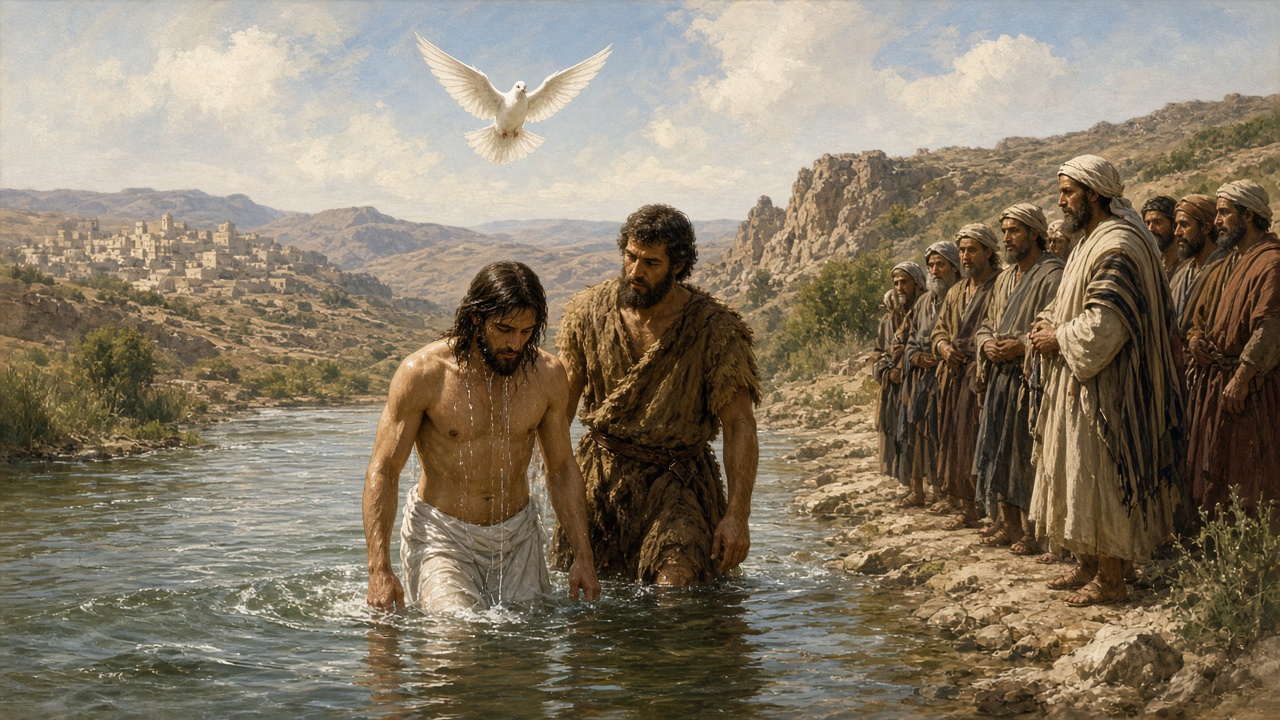
13Tacahe, títecapavarepa ema Jesús te cajacure Jordán te mávihahi ema Juan. Éma, másihapahi te tinapaica eta Galilea. Mavarahahi ticaicachasiyare mayehe ema Juan. 14Émasera ema Juan, vahi mávarahahini máicachasicahini. Ánipa macahe:
—Tata Jesús, nútira táuricahi nútivaina pícachasicanu. Nusapihapa núti picaijuhenuhi eta nícachasicaviya —máichapa.
15Émasera ema Jesús majicapapa:
—Tájinachucha táichava. Ticamunucarehi nítauchayare eta mavarahaquenehi ema Nucaiyaquene —máichapa.
Tásiha, ema Juan tísapavapa. 16Te tamutupa eta macaicachasirahi ema Jesús, tiúcupaicapa tayehe eta une. Tásiha, tíjahúchavapa téjiaca eta anuma. Máimahapa ema Espíritu Santo tiúcupaicapaipahi, mavasimahipaipa eta paloma. Tavenesicapa ema Jesús. 17Tacahe, tiáramicarepa eta mahu ema Viya tásihaquenehi te anuma, ánipa macahe:
—Ema maca ema yátupiquenehi nuchicha némunaruquenehi. Tétavicavahi eta núrisamurevahi máicha —macahepa.
Did you know?
Repentance and Baptism at the Jordan
- Matthew identifies John the Baptist as the one spoken of through the prophet Isaiah: a voice calling in the wilderness, “Prepare the way for the Lord.” Easton's Bible Dictionary (1897) records that John’s mission was the subject of prophecy, citing this passage, Isaiah 40:3, and Malachi 3:1, and that he was of priestly descent—his father Zacharias a priest of the course of Abia, and his mother Elisabeth of the daughters of Aaron. A chronology dates both the beginning of John’s ministry and his baptism of Jesus to AD 26.Sources: the Bible text itself · John the Baptist · John the Baptist Begins Ministry · John Baptizes Jesus
- John came preaching in the wilderness of Judea, and people went out to him from Jerusalem, all Judea, and the whole region around the Jordan, confessing their sins and being baptized in the Jordan River. Easton's Bible Dictionary (1897) notes that under the Romans, in the time of Christ, Judea denoted the southernmost of the three divisions of Palestine, as distinguished from Galilee and Samaria, and included the territories of Judah, Benjamin, Dan, Simeon, and part of Ephraim. Jesus came from Galilee—called Galil by the Jews—to the Jordan to be baptized by John.Sources: the Bible text itself · Judea · Galilee
- John warned the Pharisees and Sadducees not to rely on the claim, “We have Abraham as our father,” saying that God could raise up children for Abraham from the stones. Easton's Bible Dictionary (1897) explains the name Abraham as “father of a multitude” and describes him as the son of Terah, named before his older brothers because he was the heir of the promises.Sources: the Bible text itself · Abraham
Notes written with AI assistance from open sources (Theographic Bible Metadata, CC BY-SA 4.0; Easton’s Bible Dictionary, public domain) and reviewed before publishing.
Places in this chapter
- Judea · Today: Judea 1 · 31.777, 35.234 · verses 1, 5
- Jerusalem · 31.777, 35.234 · verse 5
- Jordan · Today: Jordan River · 31.761, 35.558 · verses 5, 6, 13
- Galilee · 32.760, 35.527 · verse 13
Only places identified with high confidence are shown (90% or more according to the scholarly sources compiled by OpenBible). Period map: DARE (Digital Atlas of the Roman Empire), CC BY 4.0; modern map: © OpenStreetMap contributors; places: OpenBible.info (CC BY 4.0).
Credits and license for this translation
Eta Táurinaquene máechajiriruvahi ema Viya eta viyehe, ticaijare puito Eta Nuevo Testamento
New Testament in Ignaciano (BL:ign:Ignaciano)
copyright © 2012 Wycliffe Bible Translators, Inc.
Language: Ignaciano
Translation by: Wycliffe Bible Translators, Inc.
Copyright Information
© 2012, Wycliffe Bible Translators, Inc. All rights reserved.
This translation text is made available to you under the
terms of the Creative Commons License: Attribution-Noncommercial-No Derivative Works.
( http://creativecommons.org/licenses/by-nc-nd/3.0/ )
In addition, you have permission to port the text to different file formats, as long as you
do not change any of the text or punctuation of the Bible.
You may share, copy, distribute, transmit, and extract portions
or quotations from this work, provided that you include the above copyright
information:
You must give Attribution to the work.
You do not sell this work for a profit.
You do not make any derivative works that change any of the actual words or punctuation of the Scriptures.
Permissions beyond the scope of this license may be
available if you contact
us with your request.
The New Testament
in Ignaciano
© 2012, Wycliffe Bible Translators, Inc. All rights reserved.
This translation is made available to you under the terms of the
Creative Commons Attribution-Noncommercial-No Derivatives license 4.0.
You may share and redistribute this Bible translation or extracts from it in any format, provided that:
You include the above copyright and source information.
You do not sell this work for a profit.
You do not change any of the words or punctuation of the Scriptures.
Pictures included with Scriptures and other documents on this site are licensed just for use with those Scriptures and documents.
For other uses, please contact the respective copyright owners.
2014-04-25
Source: http://ebible.org/ignNT/ · eBible.org