Acts 4
Eta Táurinaquene máechajiriruvahi ema Viya eta viyehe, ticaijare puito Eta Nuevo Testamento · Tap a verse to see its cross-references.
Ema Pedro émapa ema Juan námaqueneanahi te namirahu ena tuparairucana
1Téchajicanarichaha ema Pedro ema Juan te namirahu ena achaneana, títecapanapa ena tuparairucana, énapa ena tímiturecarahiana ticaijareana saducéoana. Námapahivare ema náquenuruha ena tasuntarurana eta Templo. 2Tisemanapa taicha vahi náuricahini eta nasamairirisirahi ena apinana apóstoleana náimitusirahi ena achaneana. Vahi náuricahini eta nametasirahi eta yátupiquenerahi eta máechepusirahi ema Jesús te máecari, mápechiravahi títareca. 3Tacahe, nacaratacavacapa, náimisiapavacapa te cárcel. Váipasera nacayaseserehihini, taicha cáperehichícharínehi. Tiámainucavapa te apanapa sache, nacuchucavacaya ticayaseserehianayarehi. 4Camurianasera ena tisuapanahi táichavenehi eta nasamararasirahi eta náechajiriruvahi ena apóstoleana. Eta natupahi ena téhicanaripa ema Viáquenu Jesucristo cinco mil ena achaneana ajairana. Camurianavare ena esenana énapa ena amaperuana. 5Te apanaquenepa sache, ema corregidor Caifás ticurujicapa ena apamuriana aquenucarahana tayehe eta ichapequene cabildo te Jerusalén. Natiarihihivare ena escribánoana. Matiarihihivare ema Anás ema pasado corregidorhi, énapa ena machichanaveana: ema ticaijarehivare Juan émapa Alejandro. Natiarihihivare ena apamuriana machichanaveana.
7Tacahe, náemepanapa ema Pedro ema Juan te cárcel. Nacatupiacapa te namirahu, nayaseserecapa. Ánipa naicha:
—Éti, vahi vituparacahehini eta ímitusirahi eta juca. ¿Nájaha tivanecahehi icha eta juca? ¿Nájaha ema tíjaracahehi eta ítupajijiásiravahi? —nacahepa.
8Tacahe, ema Espíritu Santo máimicatacahi ema Pedro eta majicapirahi ena tiyaserecanahi, ánipa macahe:
—Tátanaveana juéseana, tátanaveana víyacárana te juca viávasa. 9Evaraha echa eta juca táuriqueneana táicharacavahi eta vicanarasirahi ema maca achane macajumaquenenihi. 10Vimetacaheyare puiti. Vivaraha vémechaheyare, eti énapa namutu ena achaneana te juca viávasa Israel. Ema maca achane, ímahaquenehi eta manarasirahi. Vivaraha vímimatichahe eta máitupajijiasirava ema Jesucristo ema Nazareno tacanaracahi eta vipiarasirahi te máijare. Éma, émetatáruhi te crusu, ecaparuhi. Émasera ema Viya macaechepucahi te máecari. 11Éti, épuruhi ema Jesús, ema manerejiruquenehi ema Viya. Puiti, ecutipa ena máitucarahana tépiyarecana peti, te náepurupuca eta tatumequene esuiqui táesuiquirayarehini eta peti. 12Macarichu ema Jesucristo eta marataha eta macatiuchirahaviya macuchucuirahaviyarehi. Taicha ema Viya manerejiruhichuhi ema Jesús eta macuchucuirahaviyare. Nájina apanaina manerejiruinahi te vimuri viti achaneana eta te juca apaquehe —macahepa ema Pedro.
13Tacahe, ena tuparairucana náraminehi eta náitusirahi téchajicana ema Pedro ema Juan. Náichacacapa:
—¡Tájina vahi napicacaracavahini eta viyehe! Ena nani tájina náitucaquenéna eta letra. Máiturereanahi. Tájina náimatiyahini eta viyehe escuela. ¿Máijaracavacahipuca ema Jesús eta náitupajijiasiravahi te macachanevacaichaha ema? —náichacacapa.
14Tájina naviyahini nacayema taicha matiarihi ema achane masarini, titupihahi te namirahu. Taicha náimahahi eta yátupirahi eta manarasirahi. 15Tacahe, navanecapa eta nacuchusiraya ena apóstoleana eta te náurujisiavahi. Nanasipa ena aquenucana téchajiricavanaripa. 16Ánipa nacahe:
—¿Tájaha vícharacavayare nayehe ena nani? Taicha namutu ena achaneana ticavasanahi te juca Jerusalén náechahi eta náichirahi ena nani eta tiáramicare. Tásiha, vahi visuapacaremahi te vépiyaequenehavacapuca. 17Váhisera távaraha vísapa náimiyanava náimitureca nayehe ena achaneana. Vípicararecavacaya apaesa vahi nacuimiyanava náechajisiha eta máechepusirahipuca ema mácanínavaji Jesús —nacahepa.
18Tacahe, nacasiapavarepa ema Pedro ema Juan. Navanecapa éna, ánipa naicha:
—Vahi vivaraha ímiyanava échajisiha eta juca, váhivare ecuimitureca nayehe ena achaneana eta máechepusirahipuca ema Jesús —náichapa.
19Najicapapasera ema Pedro ema Juan, ánipa naicha:
—Esamahavichaha. Ema Viya timetacahavi eta véchajisiháirayare. Étisera ecatichapa véchajisiha éma. Émaquenehisera tisuapacarepanahi eyehe éti. Epanerecha yátupina. 20Víti, vahi vimatinaimahi eta véchajisiháiraya tamutu eta juca vímahaqueneanahi visamaqueneanahivare mayehe ema Jesucristo —nacahepa.
21Tacahe, ena tuparairucana eta nasamirahi eta namasuapirahi, tisemanapa. Tacahe, náipicararecapa. Tájinapasera náicharacahini. Nacaiticapa taicha tájina naviurevainahini jácani táimicuñacahini. Taicha namutuhi ena achaneana nacunachahi ema Viya táichavenehi eta náimahaquenehi. 22Cuarenta áñoripa eta mahañora ema maca achane masarini. Tétavicavahi eta tiáramicarevahi eta manarasirahi maicha ema Vi ya.
Ena téhicana ema Jesús tiyaseserecana eta natumesamurevaina
23Eta náuchucuiraripa ema Pedro émapa ema Juan, tiyananapa eta te návihahi ena nachamuriana. Nametacapa tamutu eta nacatianasirahi ena tuparairucana. 24Te náechapa, ena nachamuriana tiyujaracanapa namutu. Ánipa nacahe eta nayujarasirahi:
—Tata Viáquenu, píti pépiyacahi eta anuma, eta apaquehe étapa eta ichapequene une mar. Pétupiricahi tamutu eta juca vímahaqueneanahi puiti. 25Píti pimetacahi ema víyarahaini David pivanarainihi eta májucunachiraya eta te Salmo. Ani tacahehi eta májurehi: “Tatiarihiya eta avasareana, ena achaneana navarahaya nacanara ema Viya. Énaparichu ena nujaneanana, énerichuvare napanerechaya nacanara ema Viya. Máetupicushiana éna. 26Ena réyeana te juca apaquehe títsecavanayare eta nacanarairayare. Énaripa ena aquenucarahana nacapanereruya nacanaraya ema Viya, nacanarayareva ema Cristo manerejiruhi éma” tacahehi eta májurehi ema David.
27Étaripa te juca viávasa, ticuticacahi eta napanerechirahi ema Herodes Antipas, ema Poncio Pilato, ena apavasanana, énapa ena vijaneanana israelítana, navarairahi nacapaca ema sántoquene pichicha Jesús, ema pinerejiruquenehi. 28Títauchavahi naicha eta juca pipanereruana étairayarehi tacaheyarehi eta péchajiriruvana. 29Pítisera, Tata Viáquenu, pímararacahavihi puiti eta náichirahavihi viti pivanaranahi. Píjaracahavisera vitumesamurevaina eta véchajisihairaya eta péchajiriruva. 30Píjaracahavi eta vítupajijiásiravaina viratahairaina vicanaraca ena nacajumaqueneana, vímeresiraina eta tiáramicareana táichavenehi eta vicasiñairahi ema sántoquenehi pichicha Jesús —nacahepa.
31Te títapiricanapa eta nayujarasirahi, tíjahúchavapa tiyayacare eta apaquehe návihahi éna. Tacahehi eta mávahásiravácahivare namutu ema Espíritu Santo. Váipasare napicacaracavahini eta náechajisirahi eta máechajiriruva ema Viya.
Ticajicacanahi tamutu eta náimahaqueneana
32Namutu ena nasimutuvaqueneana tisuapajirahianahi, ticuticacahi eta napanereruana eta nacajicacairahi. Namutu nácani téchanahi eta náimahaqueneana nacayehequeneanahi, vahi nayavanihacacahini. Tatupiruvahi te nasamureana eta nacajirahi. 33Tacahe, tímiyanavanahi ena apóstoleana eta náechajisihairahi eta máechepusirahi ema Viáquenu Jesucristo. Tisuapacarepaicha eta náimiturapianahi. Máimicatacavacahivare ema Viya ena téhicanapahi ema Jesús. Namutu éna, tipicauchacareanahivare ne achaneana. 34Nájina émanáinahíni te nataracu máemepaurechavahíni. Taicha ena ticayeheana apaquehe, pétipuca, náijararecapaipa. 35Tásiha, náijaracavare eta plata ena apóstoleana. Tásiha, ena apóstoleana náijaracavacavare nácani páurepananahi.
36Matiarihivare ema achane ticaijare José. (Éma máuchurehi eta te tiúrupuhi te mar ticaijare Chipre.) Ema maca José náumurivaichaha ena levítana. Ena apóstoleana nanacapa eta máijarehi Bernabé (te véchajiriruva ticaijare Ticaurisamurerahi). 37Ema maca máijararecapa eta mapenapahini. Tásiha, máijaracapa eta plata ena apóstoleana.
Did you know?
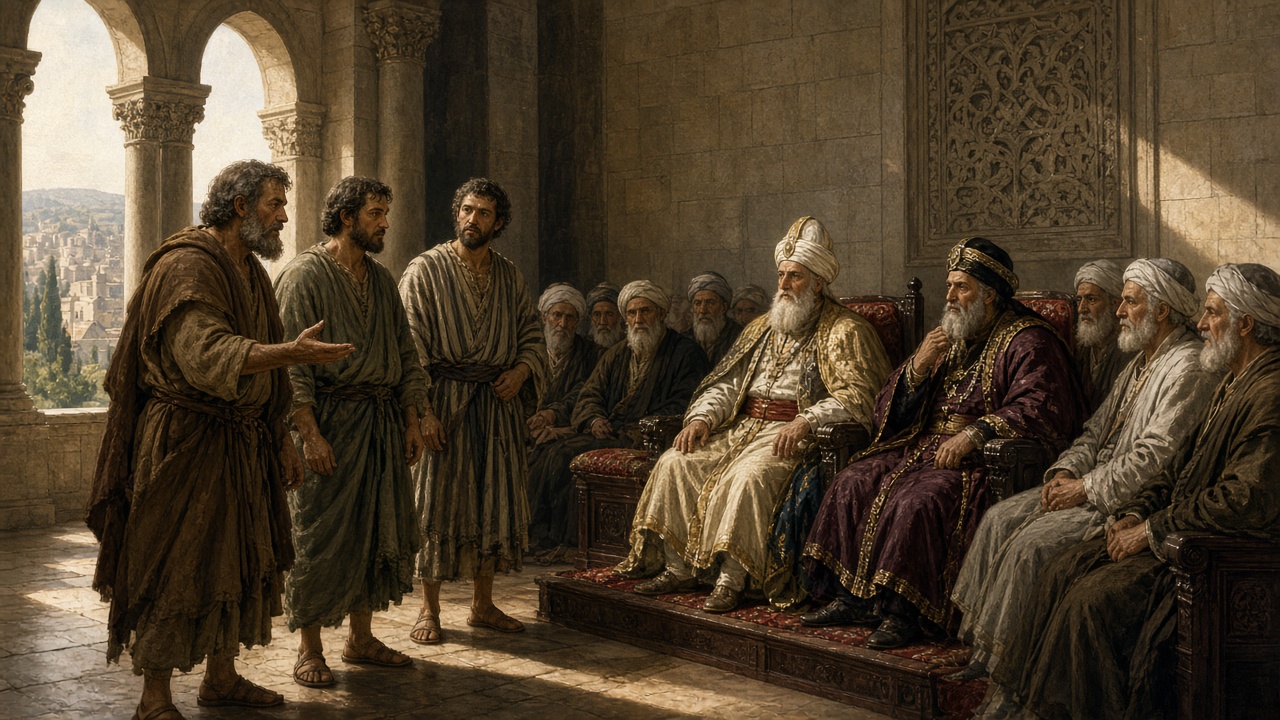
Peter and John before the Sanhedrin
- The priests, the captain of the temple guard, and the Sadducees seized Peter and John because they were teaching the people and proclaiming in Jesus the resurrection of the dead. Caiaphas, who sat with the assembly the next day, belonged to the Sadducees.Sources: the Bible text itself · Caiaphas
- Annas, called high priest here, had held that office from A.D. 7 to 14 until a Roman procurator deposed him. Caiaphas, who had married Annas's daughter, was raised to the office in A.D. 25; even so, some Jews may still have regarded Annas as the legal high priest, since Mosaic law treated the office as lifelong, and Annas was probably president or deputy of the Sanhedrin. John and Alexander, relatives of the high priest and otherwise unknown, sat with them.Sources: the Bible text itself · Annas · John (Relative of the High Priest) · Alexander (Son of Simon)
- Peter, a fisherman from Bethsaida, and John, also a fisherman and a son of Zebedee, were brought before the rulers, elders, and scribes. The council marveled at their boldness when it realized that they were unschooled, ordinary men, and took note that they had been with Jesus.Sources: the Bible text itself · Simon Peter · John the Apostle
Notes written with AI assistance from open sources (Theographic Bible Metadata, CC BY-SA 4.0; Easton’s Bible Dictionary, public domain) and reviewed before publishing.
Places in this chapter
- Jerusalem · 31.777, 35.234 · verses 5, 16
- Nazareth · 32.702, 35.298 · verse 10
- Cyprus · 35.000, 33.000 · verse 36
Only places identified with high confidence are shown (90% or more according to the scholarly sources compiled by OpenBible). Period map: DARE (Digital Atlas of the Roman Empire), CC BY 4.0; modern map: © OpenStreetMap contributors; places: OpenBible.info (CC BY 4.0).
Credits and license for this translation
Eta Táurinaquene máechajiriruvahi ema Viya eta viyehe, ticaijare puito Eta Nuevo Testamento
New Testament in Ignaciano (BL:ign:Ignaciano)
copyright © 2012 Wycliffe Bible Translators, Inc.
Language: Ignaciano
Translation by: Wycliffe Bible Translators, Inc.
Copyright Information
© 2012, Wycliffe Bible Translators, Inc. All rights reserved.
This translation text is made available to you under the
terms of the Creative Commons License: Attribution-Noncommercial-No Derivative Works.
( http://creativecommons.org/licenses/by-nc-nd/3.0/ )
In addition, you have permission to port the text to different file formats, as long as you
do not change any of the text or punctuation of the Bible.
You may share, copy, distribute, transmit, and extract portions
or quotations from this work, provided that you include the above copyright
information:
You must give Attribution to the work.
You do not sell this work for a profit.
You do not make any derivative works that change any of the actual words or punctuation of the Scriptures.
Permissions beyond the scope of this license may be
available if you contact
us with your request.
The New Testament
in Ignaciano
© 2012, Wycliffe Bible Translators, Inc. All rights reserved.
This translation is made available to you under the terms of the
Creative Commons Attribution-Noncommercial-No Derivatives license 4.0.
You may share and redistribute this Bible translation or extracts from it in any format, provided that:
You include the above copyright and source information.
You do not sell this work for a profit.
You do not change any of the words or punctuation of the Scriptures.
Pictures included with Scriptures and other documents on this site are licensed just for use with those Scriptures and documents.
For other uses, please contact the respective copyright owners.
2014-04-25
Source: http://ebible.org/ignNT/ · eBible.org