1 Kings 1
Biblica® Baịbụlụ Nsọ nʼIgbo Ndị Ugbu a nke dịrị onye ọbụla ịgụ · Tap a verse to see its cross-references.

About this book
About 1 Kings
- Easton's Bible Dictionary (1897) treats the authorship of the books of Kings as uncertain. A tradition that Jeremiah wrote them is, in Easton's view, supported by passages almost identical with parts of Jeremiah and by events Jeremiah knew personally, yet Easton thinks it more probable that Ezra, after the Captivity, compiled the books from earlier documents, perhaps written by David, Solomon, Nathan, Gad, and Iddo. Easton dates the composition between 561 B.C., when Jehoiachin was released from captivity by Evil-merodach, and 538 B.C., the decree of Cyrus.Sources: Easton: Kings, The Books of
- Easton says these books contain the annals of the kingdom from Solomon's accession until Nebuchadnezzar and the Babylonians subdued it, a period he estimates at about 453 years. 1 Kings opens while David is dying: Adonijah, his fourth son, who had become heir-apparent to the throne after the deaths of Amnon and Absalom, has himself proclaimed king, but Nathan and Bathsheba persuade David to enthrone Solomon at once. Solomon, David's son by Bathsheba, whose history is recorded in 1 Kings 1-11, came to the throne, Easton suggests, at about sixteen or eighteen.Sources: Easton: Kings, The Books of · Adonijah · Solomon
- In the Hebrew Scriptures the two books of Kings originally formed one book; the Septuagint first divided them and, with the Vulgate, numbers them as the third and fourth books of Kings, the books of Samuel being the first and second. Easton notes that Chronicles gives greater prominence to the priestly or Levitical office, while Kings gives greater prominence to the royal office, and that in the threefold division of the Scriptures by the Jews these books are ranked among the Prophets. The narrative points to earlier sources: the book of the acts of Solomon and the chronicles of the kings of Judah and of Israel.Sources: Easton: Kings, The Books of
- After Solomon's death the ten tribes revolted and invited Jeroboam, son of Nebat, to be their king; Easton calls him the first king of those tribes and dates his reign from 976 to 945 B.C. He had fled to Egypt under the protection of Shishak I, and later moved his residence from Shechem, his first capital, to Tirzah, which remained the chief residence of Israel's kings until Omri bought the hill of Shomeron from Shemer for two talents of silver and built Samaria. The later narrative includes Ahab, Omri's son and the seventh king of Israel, whose wife was Jezebel: to the calf worship introduced by Jeroboam he added the worship of Baal, and he was severely admonished by the prophet Elijah.Sources: Jeroboam · Tirzah · Samaria · Ahab
Notes written with AI assistance from open sources (Theographic Bible Metadata, CC BY-SA 4.0; Easton’s Bible Dictionary, public domain) and reviewed before publishing.
Adonaịja echie onwe ya eze
1Mgbe eze Devid ghọrọ agadi, nʼagbanyeghị na-eji ọtụtụ uwe kpuchie ya, ahụ ya ekpoghị ọkụ. 2Ya mere, ndị na-ejere ya ozi sịrị ya, “Ka anyị chọtara eze otu nwaagbọghọ na-amaghị nwoke, onye ga-akwụ nʼihu eze ma bụrụkwa onye ga-elekọta ya. O nwere ike idina nʼakụkụ onyenwe anyị bụ eze ime ka ahụ kpoo ya ọkụ.”
3Ha gagharịrị nʼala Izrel niile chọọ nwaagbọghọ mara mma, chọta otu nwaagbọghọ onye Shunem, aha ya bụ Abishag, kpọtaara ya eze. 4Nwaagbọghọ a mara mma nke ukwuu; ọ lekọtakwara eze, jekwaara ya ozi ma ya na eze enweghị mmekọ ọbụla.
5Nʼoge a, Adonaịja onye nne ya bụ Hagit, wepụtara onwe ya, kwuo sị, “Aga m abụ eze.” Nʼihi nke a, ọ kwadooro onwe ya ụgbọ agha na ọtụtụ ịnyịnya, kpọtakwa iri ndị ikom ise, ndị ga-agba ọsọ nʼihu ya. 6Na ndụ Adonaịja niile, o nweghị oge nna ya baara ya mba site nʼịjụ ya, “Gịnị mere i ji akpa agwa dị otu a?” Ọ bụ nwokorobịa mara mma nke ukwuu; ọ bụ ya na-esotekwa nwanne ya Absalọm.
7Adonaịja na Joab, nwa Zeruaya tinyere Abịata onye nchụaja, kparịtara ụka. Ha kwenyere inyere ya aka ka ọ ghọọ eze. 8Ma Zadọk onye nchụaja, Benaya nwa Jehoiada, Netan onye amụma, Shimei, Rei na ndị agha niile na-eche Devid nche esonyeghị Adonaịja.
9Adonaịja chịịrị atụrụ, ehi na ụmụ ehi gbara abụba, gaa nʼakụkụ En-Rogel chụọ aja na Nkume Zohelet. Ọ kpọrọ ụmụnne ya niile bụ ụmụ ndị ikom eze na ndịisi Juda niile, ndị na-ejere eze ozi oku, 10ma ọ kpọghị Netan onye amụma, maọbụ Benaya, maọbụ ndị agha niile na-eche Devid nche. Ọ kpọkwaghị Solomọn nwanne ya.
11Mgbe ahụ, Netan onye amụma jụrụ Batsheba nne Solomọn ajụjụ sị, “Ị nụghị na Adonaịja nwa Hagit aghọọla eze ugbu a, ma onyenwe anyị bụ Devid amaghị ihe ọbụla banyere ya? 12Ma ugbu a, ka m dụọ gị ọdụ otu ị ga-esi zọpụta ndụ gị na ndụ nwa gị Solomọn. 13Bakwuru eze Devid sị ya, ‘Onyenwe m bụ eze, ọ bụ na i kweghị m bụ ohu gị nkwa sị: “Nʼezie, Solomọn nwa gị ga-abụ eze nʼọnọdụ m, ọ ga-anọdụ nʼocheeze m”? Ma gịnị mere Adonaịja ji bụrụ eze?’ 14Mgbe ị ka nọ na-akpanyere eze ụka, mụ onwe m ga-abịakwute gị gbaa okwu niile ị na-ekwu ume.”
15Batsheba bakwuuru eze nʼime ụlọ. Eze emeela nnọọ agadi nke ukwuu. Abishag onye Shunem nọkwa na-elekọta ya. 16Batsheba gburu ikpere nʼala, kpọọ isiala nye eze.
Mgbe ahụ, eze jụrụ ya sị, “Gịnị ka ị na-achọ?”
17Batsheba zara sị ya, “Onyenwe m, i jiri Onyenwe anyị Chineke gị ṅụọrọ m iyi, kwee m nkwa sị na nwa m Solomọn ga-abụ eze, nọdụkwa nʼocheeze gị. 18Ma ugbu a, Adonaịja aghọọla eze, ma gị onyenwe m bụ eze amaghị ihe banyere nke a. 19O jirila ọtụtụ igwe ehi na ụmụ ehi gbara abụba, na atụrụ chụọ aja. Ọ kpọkwara ụmụ ndị ikom eze niile na Abịata onye nchụaja, na Joab onyeisi agha. Ma ọ kpọghị Solomọn bụ ohu gị. 20Ma ugbu a, onyenwe m eze, ndị Izrel niile na-ele gị anya isi nʼọnụ gị nụta onye ga-anọchi anya gị, ịnọkwasị nʼocheeze eze gị. 21Ma ọ bụghị otu a, ngwangwa onyenwe m bụ eze ga-esoro ndị nna nna ya ha dina nʼọnwụ, mụ onwe m na nwa m Solomọn ka a ga-emeso mmeso dịka ndị mmebi iwu.”
22Mgbe Batsheba nọ na-akpanyere eze ụka, Netan onye amụma batara. 23A gwara eze okwu sị, “Netan onye amụma nọ nʼebe a.” Ya mere, ọ gara nʼihu eze kpọọ isiala nye ya.
24Netan sịrị, “Onyenwe m, bụ eze, ọ bụ gị onwe gị sịrị Adonaịja ga-abụ eze mgbe ị nwụrụ, na ọ ga-anọkwasịkwa nʼocheeze gị? 25Taa, ọ gaala jiri ọtụtụ igwe ehi, na ụmụ ehi gbara abụba, na ụmụ atụrụ chụọ aja. Ọ kpọọkwala ụmụ ndị ikom eze niile. Ọ kpọkwara ndịisi agha, na Abịata onye nchụaja. Ha na ya na-eri ihe oriri, na-aṅụkwa ihe ọṅụṅụ, na-eti mkpu na-asị, ‘Eze Adonaịja ga-adị ruo mgbe ebighị ebi.’ 26Ma ha akpọghị mụ bụ ohu gị na Zadọk, onye nchụaja, na Benaya nwa Jehoiada, na ohu gị bụ Solomọn. 27Ọ bụ site nʼaka onyenwe m bụ eze ka ihe nke a siri mee, ma i meghị ka ndị ohu ya mata onye ga-anọdụ nʼocheeze onyenwe m eze, mgbe ọ nọghịkwa ya?”
Devid emee Solomọn eze
28Mgbe ahụ, Devid kwuru okwu sị, “Kpọọrọnụ m Batsheba.” Batsheba batara, guzo nʼihu eze.
29Mgbe ahụ, eze ṅụrụ iyi sị ya, “Dịka Onyenwe anyị na-adị ndụ, Onye ahụ napụtara m site na nsogbu m niile, 30otu ahụ m siri ṅụrụ gị iyi nʼaha Onyenwe anyị, Chineke Izrel, sị, na Solomọn nwa gị ga-abụ eze nʼọnọdụ m, ọ bụ ya ga-anọchi anya m, nọdụkwa nʼocheeze m. Otu ahụ ka m ga-eme nʼụbọchị taa.”
31Mgbe ahụ, Batsheba kpọrọ isiala, gbukwaa ikpere nʼihu eze sị ya, “Ka onyenwe m eze Devid dịrị ndụ ruo mgbe ebighị ebi.”
32Mgbe ahụ, Devid nyere iwu sị, “Kpọọrọ m Zadọk onye nchụaja, na Netan onye amụma, na Benaya, nwa Jehoiada.” Mgbe ha niile bịara nʼihu eze, 33ọ sịrị ha, “Duru ndị ozi onyenwe unu, tinyere unu onwe unu, mee ka Solomọn nwa m nọkwasị nʼelu ịnyịnya muul nke mụ onwe m, kpọrọnụ ya gbada Gaihọn. 34Nʼebe ahụ, ka Zadọk onye nchụaja, na Netan onye amụma, tee ya mmanụ ịbụ eze Izrel. Fụkwaanụ opi, tiekwanụ mkpu sị, ‘Eze Solomọn ga-adị ndụ ruo mgbe ebighị ebi.’ 35Mgbe ahụ, unu na ya ga-esokwa gbagota, ọ ga-abịa nọkwasị nʼocheeze m ịchị nʼọnọdụ m. Nʼihi na ọ bụ ya ka m họpụtara ịchị eze nʼIzrel na Juda.”
36Benaya nwa Jehoiada zara eze sị, “Amen, ka Onyenwe anyị Chineke onyenwe m na eze, kwupụta ya ka ọ dị otu a. 37Dịka Onyenwe anyị si nọnyere onyenwe m bụ eze, biko, ka o si otu a nọnyere Solomọn ime ka ocheeze ya dị ukwuu karịa ocheeze onyenwe m bụ eze Devid.”
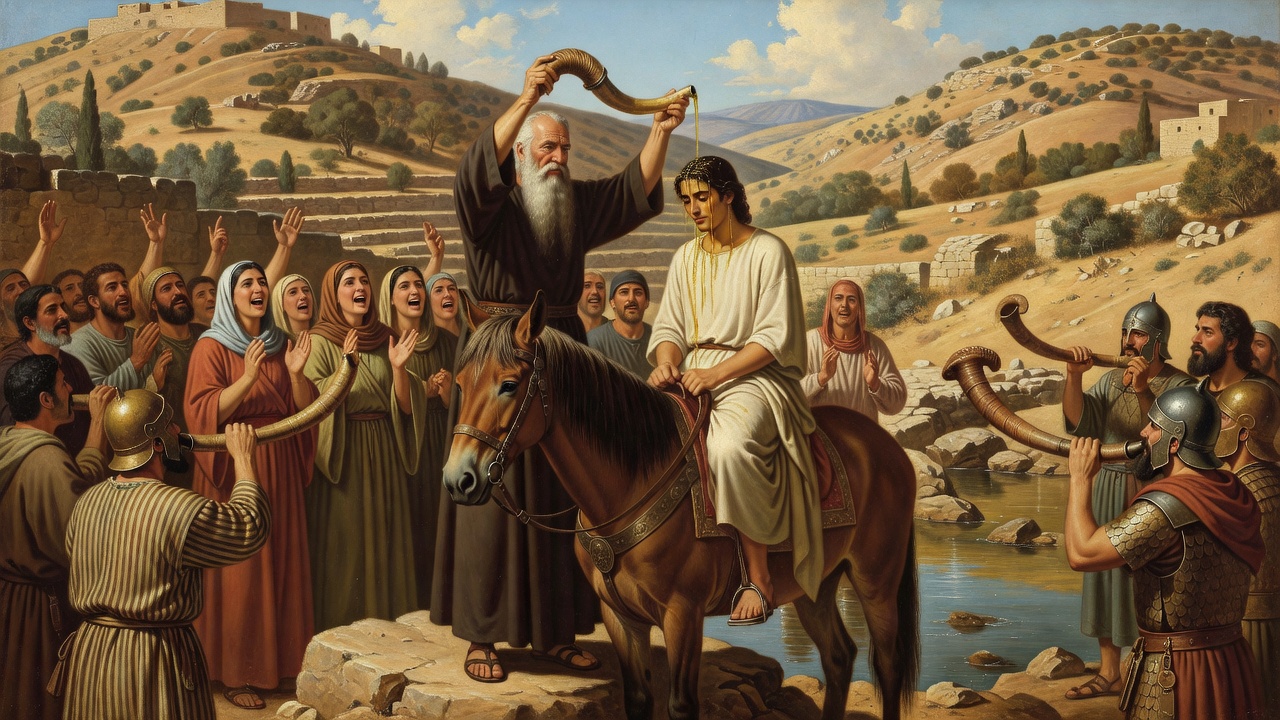
38Ya mere, Zadọk, onye nchụaja, na Netan onye amụma, na Benaya, nwa Jehoiada, na ndị Keret na ndị Pelet, duuru Solomọn mee ya ka ọ nọkwasị nʼelu ịnyịnya muul nke eze Devid. Emesịa, ha duuru ya gaa Gaihọn. 39Nʼebe ahụ, Zadọk onye nchụaja wepụtara mpi mmanụ ahụ dị nʼụlọ nzute Chineke, were tee Solomọn nʼisi. Ha fụkwara opi. Mgbe ahụ, ndị mmadụ niile tiri mkpu sị, “Ka eze Solomọn dịrị ndụ ruo mgbe ebighị ebi.” 40Ndị Izrel niile sooro ya rigoo, na-afụ ọja na-aṅụrịkwa oke ọnụ, ruo nʼala mara jijiji nʼihi oke ụzụ.
41Adonaịja na ndị ọbịa ya niile nụrụ mkpu ọṅụ ahụ mgbe ha onwe ha na-erisi nri. Mgbe Joab nụrụ opi ike ka ọ na-ada, ọ jụrụ sị, “Gịnị mere oke ụzụ dị otu a ji na-ada nʼime obodo.”
42Ma mgbe ọ ka kpụ okwu ahụ nʼọnụ, lee Jonatan nwa Abịata onye nchụaja, ka ọ batara. Adonaịja sịrị, “Bata! Nʼihi na ị bụ ezi mmadụ amaara m na ọ bụ oziọma ka i ji bịa.”
43Jonatan zara ya sị, “Mba, ọ dịghị otu ahụ! Onyenwe anyị eze Devid emeela Solomọn eze. 44Eze e zigala ya na Zadọk onye nchụaja, na Netan onye amụma, na Benaya nwa Jehoiada, ndị Keret na ndị Pelet sokwa duru ya gaa. Ha mere ka ọ nọkwasị nʼelu ịnyịnya muul eze. 45Zadọk onye nchụaja na Netan onye amụma eteela ya mmanụ na Gaihọn ịbụ eze. Ha esitekwala nʼebe ahụ ṅụrụ ọṅụ na-alaghachikwa, ndị obodo niile nọkwa ugbu a na-eme mkpọtụ, na-aṅụrịkwa ọṅụ. Ọ bụkwa ụzụ ọṅụ ha ka unu nụrụ. 46Solomọn na-anọkwasị nʼocheeze ugbu a. 47Ọzọkwa, ndị na-ejere eze ozi abịala ikele onyenwe anyị eze Devid ekele, na-asị, ‘ka Chineke gị mee ka aha Solomọn bụrụ aha a ma ama karịa nke gị, ka ocheeze Solomọn dịkwa ukwuu karịa nke gị.’ Eze nọkwa nʼelu ihe ndina ya kpọọ isiala ofufe, 48sị, ‘Otuto dịrị Onyenwe anyị, Chineke Izrel onye mere ka m jiri anya m hụ onye nọchiri anya nʼocheeze m taa.’ ”
49Mgbe ahụ, Adonaịja, na ndị ọbịa ya si nʼebe ha na-eri ihe malie. Onye ọbụla sikwa nʼebe ahụ gbapụ ọsọ, nʼihi ụjọ. 50Ma Adonaịja tụrụ egwu nke ukwuu ihe Solomọn ga-eme ya, nʼihi ya, ọ gara jide mpi dị nʼebe ịchụ aja aka. 51Mgbe ahụ, a gwara Solomọn sị, “Adonaịja na-atụ egwu ihe Solomọn ga-eme ya, nʼihi ya ọ na-ejide mpi ebe nchụaja aka. Ọ na-asị, ‘Ka eze Solomọn ṅụọra m iyi taa sị na ọ gaghị eji mma agha gbuo ohu ya.’ ”
52Solomọn zara sị, “Ọ bụrụ na o gosi onwe ya dịka onye kwesiri ntụkwasị obi, otu agịrị isi dị ya nʼisi agaghị ada nʼala, ma ọ bụrụ na a hụta ihe ọjọọ na nʼaka ya, ọ ga-anwụ.” 53Mgbe ahụ, eze Solomọn, zigara ndị ozi mere ka o site nʼebe nchụaja rịdata. Adonaịja bịara kpọọ isiala nye eze Solomọn. Mgbe ahụ, Solomọn sịrị ya, “Laa nʼụlọ gị.”
Did you know?
The Succession to David's Throne
- As David's oldest surviving son after the deaths of Amnon and Absalom, Adonijah claimed the royal succession, backed by the military commander Joab and the high priest Abiathar. However, David chose his younger son Solomon, who was supported by the prophet Nathan, the priest Zadok, and the royal bodyguard under Benaiah.Sources: Adonijah · Solomon · the Bible text itself
- Riding the king's own mule was a decisive public declaration of royal authority. By David's explicit instruction, Solomon was escorted down to the spring of Gihon, where Zadok anointed him king with oil taken from the tabernacle to the sound of ram's horns and popular celebration.Sources: Gihon · Zadok · the Bible text itself
- Upon hearing of Solomon's public coronation, Adonijah fled in terror and sought asylum by taking hold of the horns of the sacrificial altar. Solomon granted him conditional clemency, sparing his life so long as he proved himself a worthy man.Sources: Adonijah · the Bible text itself
Notes written with AI assistance from open sources (Theographic Bible Metadata, CC BY-SA 4.0; Easton’s Bible Dictionary, public domain) and reviewed before publishing.
Places in this chapter
- Shunem · Today: Sulam · 32.606, 35.334 · verse 3
- Serpent’s Stone · Today: within 100 m of Bir Ayub · 31.767, 35.236 · verse 9
- Gihon · Today: Gihon Spring · 31.773, 35.236 · verses 33, 38, 44, 45
- Jerusalem · 31.777, 35.234 · verse 40
Only places identified with high confidence are shown (90% or more according to the scholarly sources compiled by OpenBible). Period map: DARE (Digital Atlas of the Roman Empire), CC BY 4.0; modern map: © OpenStreetMap contributors; places: OpenBible.info (CC BY 4.0).
Credits and license for this translation
Biblica® Baịbụlụ Nsọ nʼIgbo Ndị Ugbu a nke dịrị onye ọbụla ịgụ The Holy Bible in the Igbo language of Nigeria: Biblica® Baịbụlụ Nsọ nʼIgbo Ndị Ugbu a nke dịrị onye ọbụla ịgụ copyright © 2020 Biblica, Inc. Language: Igbo Contributor: Biblica, Inc. This work is made available under the Creative Commons Attribution-ShareAlike 4.0 International License (CC BY-SA). To view a copy of this license, visit http://creativecommons.org/licenses/by-sa/4.0 or send a letter to Creative Commons, PO Box 1866, Mountain View, CA 94042, USA. Biblica® is a trademark registered by Biblica, Inc., and use of the Biblica® trademark requires the written permission of Biblica, Inc. Under the terms of the CC BY-SA license, you may copy and redistribute this unmodified work as long as you keep the Biblica® trademark intact. If you modify a copy or translate this work, thereby creating a derivative work, you must remove the Biblica® trademark. On the derivative work, you must indicate what changes you have made and attribute the work as follows: “The original work by Biblica, Inc. is available for free at www.biblica.com and open.bible.” Notice of copyright must appear on the title or copyright page of the work as follows: Biblica® Baịbụlụ Nsọ nʼIgbo Ndị Ugbu a nke dịrị onye ọbụla ịgụ Ndị Biblica, Inc. degharịrị ya nʼafọ © 1980, 1988, 2019, 2020 Biblica® Open Igbo Contemporary Bible™ Copyright © 1980, 1988, 2019, 2020 by Biblica, Inc. “Biblica” bụ akara e ji mara ụlọ ọrụ a, nke edebanyere dịka iwu si kwado nʼụlọ ọrụ dị nʼobodo United States, ebe a na-enye akara a na ikike maka azụm ahịa ndị Biblica, Inc. Ọ bụ ha ka e nyere ikike idenye ya. “Biblica” is a trademark registered in the United States Patent and Trademark Office by Biblica, Inc. Used with permission. You must also make your derivative work available under the same license (CC BY-SA). If you would like to notify Biblica, Inc. regarding your translation of this work, please contact us at https://open.bible/contact-us. This translation is made available to you under the terms of the Creative Commons Attribution Share-Alike license 4.0. You have permission to share and redistribute this Bible translation in any format and to make reasonable revisions and adaptations of this translation, provided that: You include the above copyright and source information. If you make any changes to the text, you must indicate that you did so in a way that makes it clear that the original licensor is not necessarily endorsing your changes. If you redistribute this text, you must distribute your contributions under the same license as the original. Pictures included with Scriptures and other documents on this site are licensed just for use with those Scriptures and documents. For other uses, please contact the respective copyright owners. Note that in addition to the rules above, revising and adapting God's Word involves a great responsibility to be true to God's Word. See Revelation 22:18-19. 2023-04-12
Source: http://ebible.org/ibo/ · eBible.org