Matthew 7
Juziñamui Ñuera Uai · Tap a verse to see its cross-references.
Jɨáɨma jánana fɨeni úriñeno o iri
1Juzíñamui ómoɨmo izire jɨ́canoñeillena, mai jɨáɨma jánana fɨeni úriñeno o iri. 2Mei jɨáɨma jánana rɨire o úrilla izói, afe izói Juzíñamui rɨire ómoɨmo jɨcánoite. Jɨáɨmamo raana fácano omoɨ feca izói, afe izói afémɨe ómoɨmo fácano fécaite. 3¿Mei nɨɨe izói o ama uimo ite jéenide ráaruaɨna cɨ́odɨo, mei íadɨ afe dáaruido dama o uimo jéerie rarúnguaɨ íllana náfueñedɨo? (Afena dáɨiacade: Aillo fɨénidɨfue omo illa llezica, ¿nɨɨe izói due jiza oni nɨbéfodo baɨídɨmɨe jánana úriredɨo? Urinidɨo.) 4Iemo afe jéerie rarúnguaɨ dama o uimo íadɨ o ámana ¿nɨɨe izói daɨíredɨo: “O uimo ite jéenide ráaruaɨ cuena otátari”? Daɨínidɨo. 5¡Abɨ dɨne ñue cɨoide comécɨna ɨáɨredɨmɨedɨo! Fueñe dama o uimo ite jéerie rarúnguaɨ oíri. Afe o ua mei, afe o ama uimo ite jéenide ráaruaɨna jino óredɨoza.
6Juzíñamui ñue fɨnoca raa, Juzíñamuina ɨ́aɨruitɨnomo fecáñeno iri; fecádɨomoɨniadɨ áfena jámairuillano afémacɨ ómoɨna tɨ́bɨtaitiaɨoɨ. Daje izói perla izoide ráifidɨfuiaɨ merónɨaɨ izoide ɨ́aɨfuiaɨredɨnomo lloñeno iri; llotɨ́omoɨniadɨ merónɨaɨ rɨ́irɨifɨrena izói bimacɨ ómoɨna uáitaɨbitiaɨoɨ. Afe izoide ñúefuiaɨ fɨeni íacadɨnomo llónide.
Juzíñamuimo caɨ jɨcalle bie izói jóide
7Mai omoɨ jɨcari, íemona Juzíñamui ómoɨmo fécaite. Mai omoɨ jenori; báitɨomoɨza. Nazémona caɨmare omoɨ uáidori; ómoɨmo tuizáɨbiteza. 8Mei jɨcádɨmɨe llɨ́ɨnoteza. Daje izói jenódɨmɨe báiteza; íemo jɨáɨ nazémona caɨmare uáidotɨmɨemo túigaza.
9Mei ómoɨmona dáamɨe ie jitó pan jɨ́caja llezica ¿meita nofɨ́cɨna írede? ¡Jaca ínide! 10Iemo afémɨe chamu jɨ́caja llezica ¿meita jaiona írede? ¡Inide! 11Mei fɨénidɨnodɨcaɨ íadɨ, ñuera raa caɨ úruiaɨmo fécajana onódɨcaɨ. Mei íadɨ afe baɨmo monamo ite omoɨ Moo, afémɨemo jɨcádɨnomo jamánomo ñuera raa fécajana onode.
12Mei íemona omoɨ jitailla jɨáɨmacɨ íaɨoɨ ómoɨmo fɨ́nua dɨeze, dájeze afémacɨmo fɨnóredɨomoɨ. Mei Moisés ocuica uai bie izói jóideza. Daje izói jaiai Juzíñamui uai lloraɨnɨ cuega uai afe izói jóideza.
Rɨllírede monamo duide io rafue
13Mei afe rɨllírede monamo duide iodo omoɨ jai. Nɨné táɨnocaitaitɨnomo jóide io ɨere áilloo. Daje izói áfeo boilla jamánomo áillue. Afeodo aillo comɨnɨ jailla. 14Mei jɨáɨfodo zíiñona caɨ cáaillɨnomo jóide io jaɨ́cɨna jóide íadɨ rɨllírede. Daje izói áfeo boilla rɨllírede. Afeodo jáidɨno dúemacɨ.
Naga amena ie llɨzílledo onórede
15Dɨga comɨnɨ “Juzíñamui dɨbénedo úritɨcaɨ” daɨdíaɨoɨ, íadɨ taɨno llotíaɨoɨ. Afe izoide comɨ́nɨmona abɨ́ omoɨ rairuiri. Afe bimacɨ ebire jɨféidɨno izói ómoɨmo bitíaɨoɨ. Uáfueza, illáɨnide ovéjaɨaɨ izói ómoɨmo bitíaɨoɨ, mei íadɨ comecɨ dɨne illáɨrede jánallari izóidɨno. 16Afémacɨ fɨnócafuiaɨdo íaɨoɨna uáfodo ónoitɨomoɨ. Mei jíirede ñecɨ́namona jɨ́rɨcue óñegaza. Daje izói jíirede monáigɨmona jíficollɨaɨ óñegaza. 17Mei daɨí nana ñuera amena ñue llɨzide. Daje izói nana fɨénide amena fɨénidɨjɨaɨna llɨzide. 18Ñuera aménamo fɨénide ráajɨaɨ llɨzínide. Daje izói fɨénide aménamo ñuera ráajɨaɨ llɨzínide. 19Nana ñuera ráajɨaɨna llɨzíñede amena tɨ́iano iraimo jobaica. 20Bie izói baie ómoɨmo bitɨ́nona íaɨoɨ fɨnócaigafuedo uáfodo ónoitɨomoɨ.
Nana comɨnɨ monamo ite Juzíñamui illáɨmana illɨ́ruimo jáiñeitiaɨoɨ
21Nana cuena “Ocuíraɨma” daɨífɨredɨno monamo ite Juzíñamui illáɨmana illánomo jofo jáiñeite. Danɨ monamo ite cue Moo comecɨ jítaillana fɨnódɨno jofo jáirena. 22Aféruillaɨmo dúcɨa llezica, dɨga comɨnɨ cuena dáɨitiaɨoɨ, “Ocuíraɨma, Ocuíraɨma, o mámecɨdo úrifɨredɨcaɨ. Daje izói o mámecɨdo fɨénide jóriaɨna jino orédɨcaɨ. Daje izói o mámecɨdo cɨóraɨnina raana uaido comuítatɨcaɨ.” 23Mei íadɨ afémacɨna dáɨitɨcue: “Jaca ómoɨna onóñedɨcue. Dɨga ɨ́aɨfuiaɨ comuídɨomoɨza, cúemona oni ii,” dáɨitɨcue.
Ménade jofo nillɨno rafue
24Mei afe bie izói joide. Cuena cacádɨmɨe íemo cue ocuícana fɨnódɨmɨe jofo níllana baitádɨmɨe izoide. Afémɨe maɨrídɨnomo ie jofo nite. 25Rɨire nocɨ bɨide, íemo ille rɨire renaide, íemo rɨírede jairifo afécomo jaiñode; mei íadɨ afeco jaɨnóñede, mei maɨride énɨemo nígaza. 26Mei jɨáɨfodo cuena cacádɨmɨe mei íadɨ cue ocuícana fɨnóñedɨmɨe jofo níllana fɨgo baitáñedɨmɨe izoide. Afémɨe ɨ́dɨaɨdɨnomo ie jofo nite. 27Afe mei rɨire nocɨ bɨide, íemo ille rɨire renaide, íemo rɨírede jairifo jaiñode. Iemona afécona jaɨnode. Nana ana baɨíllano due fɨébiñeno nɨné táɨnocaide. Jesús dɨnori úrite.
28Jesús úrilla méifomo, nana comɨnɨ ie llófuemarillari caɨmare fáɨgacaidiaɨoɨ, 29mei rɨ́inoredɨmɨe izói íaɨoɨna llófueteza. Jaiai ocuica uai llófuefɨredɨno rɨ́inonide llófuia izói afémɨe llófueñede.
Did you know?
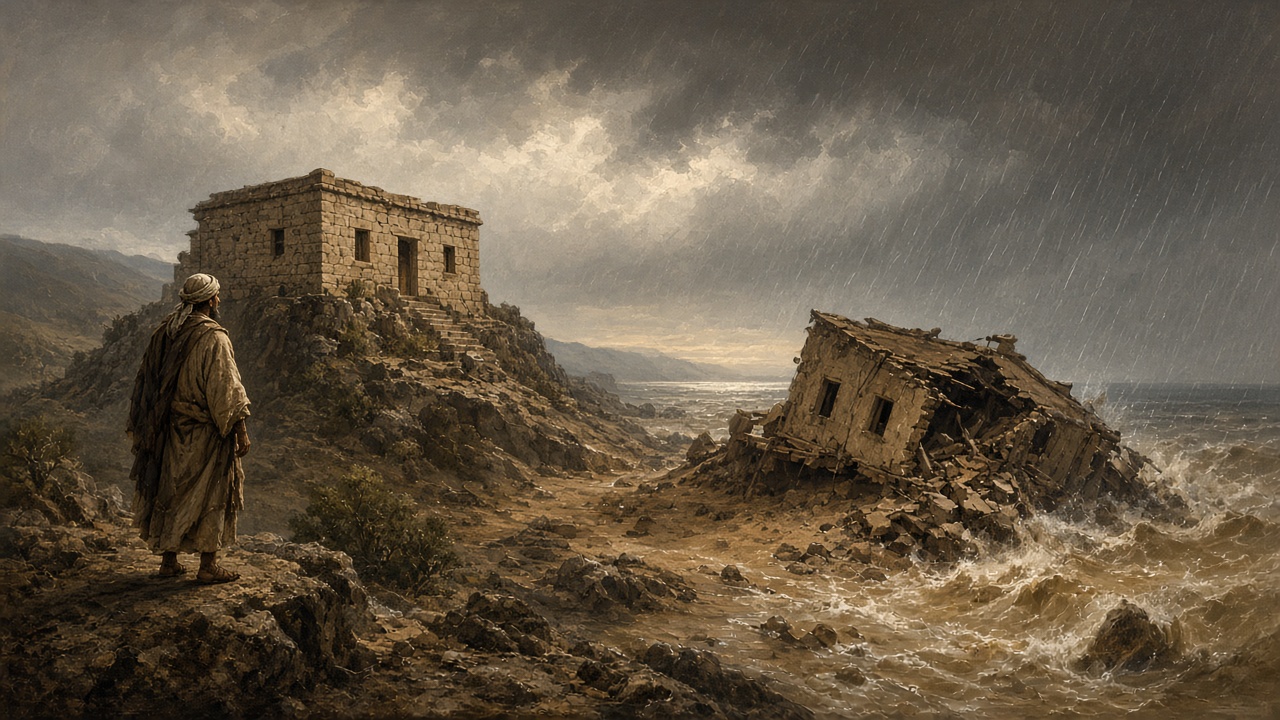
Judgment, the narrow way, and a firm foundation
- The event record dates the start of the Sermon on the Mount to AD 28 and its duration to one day. This chapter ends as the crowds are astonished at Jesus’ teaching, because he taught as one who had authority, and not as their scribes.Sources: Sermon on the Mount · the Bible text itself
- Jesus warns that the judgment a person pronounces, and the measure that person uses, will be turned back on them. He pictures someone who notices a speck in a brother’s eye yet misses a beam in their own, and he says the beam must be removed first.Sources: the Bible text itself
- The chapter calls doing to others as you would have them do to you the essence of the Law and the Prophets. It contrasts a wide gate and broad way that leads to destruction, which many enter, with a small gate and narrow way that leads to life, which few find, and it compares hearing these words and acting on them to a house built on rock rather than on sand.Sources: the Bible text itself
Notes written with AI assistance from open sources (Theographic Bible Metadata, CC BY-SA 4.0; Easton’s Bible Dictionary, public domain) and reviewed before publishing.
Credits and license for this translation
Juziñamui Ñuera Uai
New Testament in Huitoto, Minica
copyright © 2011 Wycliffe Bible Translators, Inc.
Language: Minica Huitoto (Huitoto, Minica)
Translation by: Wycliffe Bible Translators, Inc.
Copyright Information
© 2011, Wycliffe Bible Translators, Inc. All rights reserved.
This translation text is made available to you under the
terms of the Creative Commons License: Attribution-Noncommercial-No Derivative Works.
( http://creativecommons.org/licenses/by-nc-nd/3.0/ )
In addition, you have permission to port the text to different file formats, as long as you
do not change any of the text or punctuation of the Bible.
You may share, copy, distribute, transmit, and extract portions
or quotations from this work, provided that you include the above copyright
information:
You must give Attribution to the work.
You do not sell this work for a profit.
You do not make any derivative works that change any of the actual words or punctuation of the Scriptures.
Permissions beyond the scope of this license may be
available if you contact
us with your request.
The New Testament
in Huitoto, Minica
© 2011, Wycliffe Bible Translators, Inc. All rights reserved.
This translation is made available to you under the terms of the
Creative Commons Attribution-Noncommercial-No Derivatives license 4.0.
You may share and redistribute this Bible translation or extracts from it in any format, provided that:
You include the above copyright and source information.
You do not sell this work for a profit.
You do not change any of the words or punctuation of the Scriptures.
Pictures included with Scriptures and other documents on this site are licensed just for use with those Scriptures and documents.
For other uses, please contact the respective copyright owners.
2014-08-06
Source: http://ebible.org/hto/ · eBible.org