Luke 6
Aka (Hrusso) Bible · Tap a verse to see its cross-references.
Jisu Sabbat go Tawgyew
1Sündalye ĝyogow ñeto sehu i vi goŝü dañe kamkoi sese, seyo í shürhaw na pu ye trükülyelalye, ügzüku yo shükrüñe tsa-tsa ka. 2Sese Farisi namko yo na hadamje chekülyetcho, “Djo süna chiĝa hado dawwa hai ye ĝyogow ñeto ge madafiwjoma?” 3Jisu i ná trutcho, “Hawa djo he í mangüma, nugo Dawudñe üdra ayo na luhuŝüda sese ha dawma? 4I kündañe Tawgyew ichi ñe ge jima, seyo lapsü djüdaw go odje na lañe tsa, se na bó mügaw ná tralye djusaje matsafijo, seyo ídra yo naje djüdalubi?” 5Sünda i ná chetcho, “Nüna üsaw ye ĝyogow ñeto ge je Tawgyewbamme.”
Ĝyogow ñeto ye sonaw ná dagyow
6Sünda ana dañ ahua ye ĝyogow ñeto kuw sese i ñegru ge jiñe shi-ñu trutchoñe da ĝyo; seyo sa a nüna a duw ye ügzü fuvro go krosdzüada. 7Shizew-ñuzewñe Farisi na í hadamje zeñe ñu jojoñe hoksü ĝyo, i ĝyogow ñeto ge dagyoahima madagyoima hojoñe. 8Séŝo ibó nalu vyedaw dãhuñda; sündada i se ügzü kroadaw nüna í che, “Pülyiñe, umko a gudzug.” I pülyiñe gudzu. 9Jisu i í chetcho, “No djo he dzüime ĝyogow ñeto ge ha dafijowa, uw dajo veima mo mau dajoma; shüw ná ĝaksüjoma mo maĝaksüjoma?” 10Seyo i vyew ná hozeĝiatsülye, se nüna í che, “Bagzü ye vro ge djüwe.” I süna da, sündawñe ügzü ye muchoañe uw lya. 11Séŝo se na ñepsü ge kuhuatcholye lusvyuñe naĝütchü poĝitcho, ñi he Jisu idra ha dañelye?
Shürhaw ĝü yo ksü
12Seyo se ñeto bó i pudru ge küĝüw katrükralye, seyo akülya ñetow Tawgyew í küĝü ñetoaha. 13Ñetoahuwñe, i í shürhaw ná balalye namko ye ĝü yo ksü ye pola, sündalye ná shürhawñe che. 14Sünda se na heimme; Simon í ñiñi ye i Patras ñe je vye; seyo í ñuw Andriyas, seyo Yakub, seyo Yohañ, seyo Fillipus, seyo Bertulme, 15Seyo Matti, seyo Tomas, seyo Halfais í saw Yakub, seyo Simon dju í Jeletes je chewma, 16Seyo Yakub í saw Yahuda, seyo Yahuda tcho Iskariyoti, se i í tsadrüahuw lyikülye.
Jisu i nüna ná truñe dagyow
17Sündawñe na ídra kagalye no üpra a ye gudzutsü, sünda ichi shürhaw na upu mutchu, seyo vyew Yahudiya na, seyo Yarusalem, seyo Sor seyo Sidon go sütüĝülü üdza ge küña ñetrü ma sego ŝüpyo nüna upu na je, 18Dju i shi-ñu truw í seyo ĝulo ná muchoañe dagyojoñe ichi ge jikutsüdama, süge dutsü. Seyo chigüje na maw da vyedaw na je uw dagyo. 19Seyo vyew na í kidüĝyoñ vyetsü, hado cheme íso go ĝagra na kahuañe ná muchoahi.
Gaĝüze shi-ñu
20Sündawñe i í shürhaw nachi ge hoñe che,
“Ŝüvzüwme bá, ñeto daw ye,
Hado cheme Tawgyew ichi ñetrü ye bachime.”
21“Ŝüvzüwme bá je, dju luhuŝüdama,
Hado cheme ĝaksüjome,
Ŝüvzüwme bá, dju ksei ma;
Hado cheme tchüjome.”
22“Ŝüvzüwme bá, dju nüna üsaw íbo
Bá mau dajome,
Seyo bá lahuajome, seyo bá tchüĝo-hoĝojome,
Seyo bá ñiñi danghulye vyetsü djojome.
23“Sehu ñeto lüshüñe gyojo dawe, hado cheme hojo dawe, babó soĝgo ge lapsü dume. Í bupye-ñipye ñihow kew nadra je süna dawbamme.”
Dzüngawhuw shi-ñu
24“Séŝo tui me djo, dju bo-luko duma,
Hado cheme djo djolu vyew apyew pajebi.”
25“Tuime djó dju hesahe ĝaksüwdadama,
Hado cheme luhuŝüjome.”
“Tuime djó, dju hesahe tchüima,
Hado cheme duhu pajome seyo ksejome.”
26“Tui me djó, nüna na djodruge uw chejome,
Hado cheme ná bupye-ñipye na mülaw ñihow nadra je ana dawbamme.”
Vyeñiw na je nülvowe
27“Seŝo dzüvodo djó no chei me, bá vyeñido na nülvow dawe; bá dju mau daiba sena uw dajo dawe. 28Bá dju chemui ma, sená gaĝüzü djüjo dawe; bá dju zeamei ma, senábo küĝüijo dawe. 29Dju bákrumo ge tcheima, ichi ge krumo a go je djüwe; seyo dju bachi güfaw laĝaima, se í bá polu djulawe djuchewe. 30Dju damje bá prüima sená djüwe; seyo bachi gañ laĝaimeje, í djuprüwe. 31Seyo ba nüna ná bá küna daweñe vyedama, baje ná süna dajo dawe.
32“Seŝo ba bá nülvow dai ná akasa ba nülvow dame je, ba ha dew dawwa? Hado chemeje lalo dado na je, ná dju nülvow daima na je sená nülvow daŝoi. 33Ba bá dju uw daihi ma sená akasa uw daijobame, bá ha dew chejowa? Hado chemeje lalo daw na je süna bó daŝoi. 34Seŝo ba í chi gudzumeje, nachi go patchojoñe vyemeje, bachi ha uwwa? Hado cheme lalo daw naĝütchü je chi bó gudzuŝoi. 35Seŝo bá vyeñido nadra nülvow dawe, seyo uw dawe, seyo patchojoñe mavyew chi gudzujo dawe; seyo babó dew lapsü lyijome; seyo ba Tawgyew í üsañe chejome, hado chemeje i se nabó dju maŝüvzüdügyejome, dju kew nadru ge nülvoi me 36Baw küna nülvosüwma, sünambo ba je nülvojo dawe.
Udru ge dju truchoawe
37“Külü dju jowe, sündame badru ge je külü majojome; trudañe djuchewe, badru ge je truda machejome; aloijoda, sündameje bá je alojome. 38Djüjo dawe, sündame bá je djüjome: nüna na düsdzü-düsdzüñe seyo so-soñe seyo gusuañe badru ge suijome, hado cheme ha chi yo ba tsoima, se chi yo babó je seiyo tsojome.”
39Sündatcholye i ná zeĝaw a yo chetcho: “Hawa ñiĝew ye, ñiĝew í ĝabo trufijoma? Hawa naksü noĝu ge magaajoma? 40Shürhaw na nudzoĝ chi dadrüw na yo madewfojome, seŝo djudamje dagro dama, i í chi dadrüw imbó vyedujome. 41Ba bá ñuw ichi iñi go gashüsadaw shobosa í hado hoiya, seyo bá nudzoĝ báñi go sholbosa duw ye maholama? 42Seyo ba bá nudzoĝ bañi go sholbosa mahomeje, ba bá ñuw ichi í künda chefijowa, ‘No ñuwwa, mola bañi go gashüdaw ye lahuajoma?’ He dakulyutchüwba, uvromashü bachi iñi go sholbosa lahuavzüwe, sündameje sese bachi üñuw ichi iñi go gashüdaw ye hohulye lahuahifijome.
Shoñ í hosüjo ye üje yo
43“Ha shoñ uw a je ñime, dju sheje ha madaĝiw jewma, seyo ha madaĝiw shoñ je ñime, dju shejo uw jewma. 44Shoñ küña duma, nudzoĝ üje yo hosüwme; hado cheme nüna na gralye go lufuje mapyowme, seyo küfsüje go angur mapyofijome. 45Nüna uw na nudzoĝ lu go ñu uw chehuahi; seyo nüna mau na nudzoĝ lu go mau ñu na mau yo chehuajome; hado cheme lu ge ha gudama se i namdzu go kahuajome.
Ñe daw nüna sama ksü yo duw
46“Ba nó ñu chew ná madzüjomeje, sünameje hado nó ‘He Tawgyewwa, he Tawgyewwa,’ cheiya? 47Dju damje nochi ge jikuima, seyo nó ñu í dzühulyeñe zew dzüima, no djo trujome, na dju vyeduwma? 48I se nüna i vyeduwme, dju ñe damkoi sese nogüdzü ye ĝyuw chigalye kunu ge ñekrü dzuñe, seyo hutchuĝo-ĝolüŝü ye idru yo da kaa, séŝo í madañifijome; hado chemeje i lyow yo dada. 49Séŝo dju dzhutcholyeñe zew madzüma, se i se nüna i dambo vyeduwme, dju nogüdzü ye ñekru lyow madaw dadama. Se udru ge hutchuĝo-ĝolüŝü kame, i sebyo-seĝyo ngüañe seyo se i gaañe ganü-gaĝaaha.”
Did you know?
The Sabbath, the Twelve, and the Plain
- On a Sabbath, as Jesus passed through the grainfields, his disciples picked heads of grain, rubbed them in their hands, and ate them, and some Pharisees called this unlawful. Jesus recalled that David and his hungry companions ate consecrated bread from the house of God, bread lawful only for the priests, and said that the Son of Man is Lord of the Sabbath. On another Sabbath he restored a man’s withered right hand in the synagogue while scribes and Pharisees watched for a reason to accuse him; a chronology dates both episodes to AD 28.Sources: the Bible text itself · Corn on the Sabbath · Healing a Withered Hand
- After spending the night in prayer on the mountain, Jesus called his disciples and chose twelve, whom he designated apostles. Among them were Simon, whom he named Peter, and Peter’s brother Andrew, fishermen from Bethsaida on the western coast of the Sea of Galilee, and Matthew, a tax collector at Capernaum who had formerly been known as Levi.Sources: the Bible text itself · Simon Peter · Andrew · Matthew
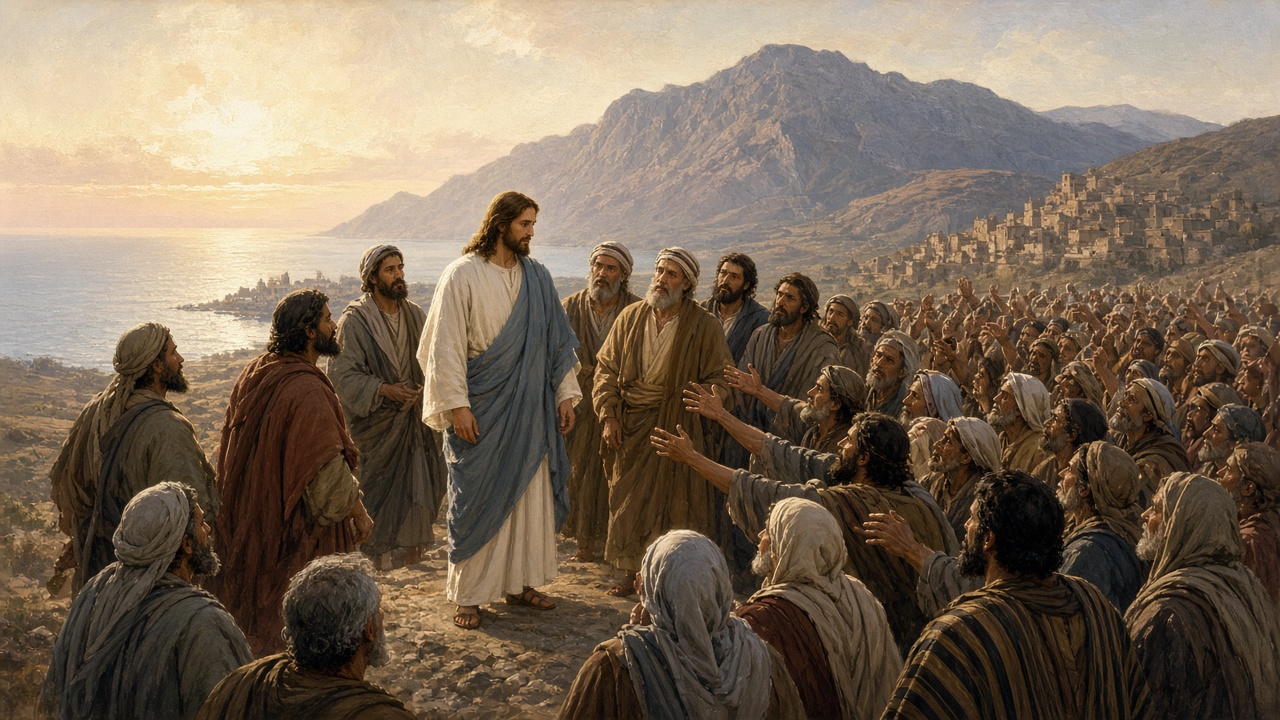
- Jesus came down with them and stood on a level place, where people from Judea, Jerusalem, and the sea coast of Tyre and Sidon had gathered to hear him and to be healed. Tyre and Sidon were ancient Phoenician cities on the Mediterranean; Sidon, the older city, lay about twenty-five miles north of Tyre. A chronology dates this teaching to AD 28 and titles it the Sermon on the Mount, though the narrative places Jesus on level ground after he came down from the mountain.Sources: the Bible text itself · Tyre · Sidon · Sermon on the Mount
Notes written with AI assistance from open sources (Theographic Bible Metadata, CC BY-SA 4.0; Easton’s Bible Dictionary, public domain) and reviewed before publishing.
Places in this chapter
- Jerusalem · 31.777, 35.234 · verse 17
- Judea · Today: Judea 1 · 31.777, 35.234 · verse 17
- Sidon · Today: Sandikli archaeological site in Sidon · 33.561, 35.372 · verse 17
- Tyre · 33.271, 35.196 · verse 17
Only places identified with high confidence are shown (90% or more according to the scholarly sources compiled by OpenBible). Period map: DARE (Digital Atlas of the Roman Empire), CC BY 4.0; modern map: © OpenStreetMap contributors; places: OpenBible.info (CC BY 4.0).
Credits and license for this translation
Aka (Hrusso) Bible
Hruso: Aka (Hrusso) Bible (Portions) for India
copyright © 2024 Bridge Connectivity Solutions Pvt. Ltd.
Language: (Hruso)
Contributor: Bridge Connectivity Solutions Pvt. Ltd.
This translation is made available to you under the terms of the
Creative Commons Attribution Share-Alike license 4.0.
You have permission to share and redistribute this Bible translation in any format and to make reasonable revisions and adaptations of this translation, provided that:
You include the above copyright and source information.
If you make any changes to the text, you must indicate that you did so in a way that makes it clear that the original licensor is not necessarily endorsing your changes.
If you redistribute this text, you must distribute your contributions under the same license as the original.
Pictures included with Scriptures and other documents on this site are licensed just for use with those Scriptures and documents.
For other uses, please contact the respective copyright owners.
Note that in addition to the rules above, revising and adapting God's Word involves a great responsibility to be true to God's Word. See Revelation 22:18-19.
2025-05-03
Source: http://ebible.org/hru/ · eBible.org