Genesis 47
Hset Hadròeh · Tap a verse to see its cross-references.
Jacôp xam ƀài kon calô haq trùh enh ngèa Phara-ôn…
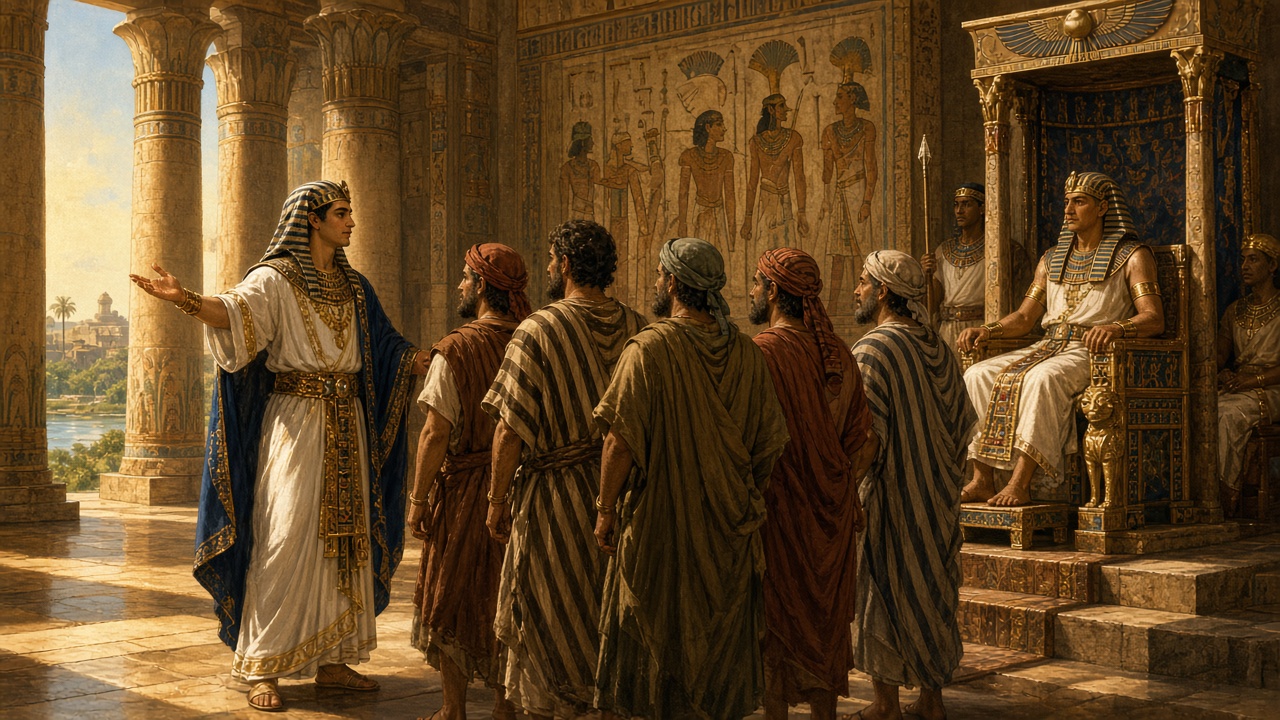
1Jôsep lam anoe ka Phara-ôn loq ƀài bìac aih, rai doe tam: Baq xam ƀài oh daq au enh gùng Cana-an trùh, wê tiaq deh trìu, ƀo xam ƀài kùng hang da wì haq. Manòeq kô qnang oe tagùng Gôsen. 2Haq ràih yŏc padam ngai taqne wì oh daq mùt gàm Phara-ôn. 3Phara-ôn bòch: Ƀài pì abroq ngè cleq? Wì padreo bàu: Mangai hapŏng ìh kô la mangai ban trìu, qmang ka wì kan cadraq khoe broq enh nèh. 4Èh wì anoe tam ka haq: Nhèn khoe trùh oe đò đeh tacô majah qmang aih kan pangot ta Cana-an kàn raya pi oe qmòe ka nhat đòeq ka ƀài ngè da hapŏng ìh ma ban hu acaq. Qmang aih, manòeq kô nhèn cali calo đeh ka ìh am ka ƀài hapŏng ìh jah oe đeh ta Gôsen.
5Phara-ôn doe ka Jôsep qmang kô: Baq xam ƀài oh daq ìh khoe trùh ta ìh; 6qmang aih gùng Êdip khoe padon đòeq qmòe ka ìh; aih drah am ka baq xam oh daq ìh taleq ma yeo jìang dŏng tagùng kô; am wì jah oe ta Gôsen. Tàng joq taqne wì aih ìh loq cabô ma yeo rabiaq, thê dèch haq aih ban ƀài calùh da au.
7Khoe aih Jôsep ajèn aràng Jacôp, baq rađeh lam glàm Phara-ôn. Jacôp waiq xôq ramot am ka Phara-ôn. 8Phara-ôn bòch Jacôp: Ìh halình đeh khoe jah toq leq hanam? 9Jacôp padreo bàu: Ƀài hanam au rìh tacô tatau dìq dŏng jah mòeq hrinh piq jàt hanam; ƀài hanam qnhòng rìh da au joq haqnop, toq nanxa đeh hrình, yôh ùh diang ƀài hanam da kan cadraq au jò haq rìh tacô tatau. 10Jacôp waiq xôq ramot hòm ka Phara-ôn, khoe aih hi lùi loh khoe ka mat haq.
11Qmang aih Jôsep tiaq bàu Phara-ôn, padì nòe oe deh ka baq xam ƀài oh daq, am ka wì haq nòe taneh ma yeo lem dŏng ta Êdip hu broq kùng hang ka wì haq, tagùng Ramse. 12Jôsep tiaq qmòe tang ngai, taqmroq am dahwèq acaq dèh ka baq, dèh ka ƀài oh daq xam dìq dŏng ka hnim deh baq.
Jôsep jò pangot hrah …
13Jò aih, kan pangot kàn pi cajaq, dài jàp gùng pi oe i qmòe ka cleq hu acaq; gùng Êdip xam gùng Cana-an dìq loh ka ralênh dŏng taiq kan pangot aih. 14Jôsep tigop yŏc dŏng ƀac gùng Êdip xam gùng Cana-an, aih la ƀac wì phù cròng rot qmau; khoe èh aràng don đòeq bac aih ta hnim Phara-ôn. 15Jò ƀac ta Êdip xam gùng Cana-an khoe dìq, aih mangai Êdip dìq trùh ta Jôsep rai creo dang: Am ka nhèn dahwèq hu acaq, ji laiq taiq khoe dìq ka ƀac dài nhèn ma ep cachìt enh ngèa ka wì craq qmòh?. 16Jôsep tèu: Tàng joq khoe dìq ka ƀac, aràng ƀài ngè pì ma aban trùh ka au, aih èh au hi halìh dahwèq acaq ka pì. 17Qmang aih, wì aràng ka Jôsep ƀài calùh ngè wì ma ban; Jôsep yŏc dahwèq acaq halìh yŏc axêh, calùh trìu, calùh ƀo, xam lùa. Hanam aih haq tigop yŏc ƀài ngè da wì ma aban đòeq halìh yŏc dahwèq acaq.
18Dìq ka hanam aih, hanam atìq wì trùh hòm creo dang ka haq hòm: Nhèn ùh hangah cleq ka ìh, ƀac jèn khoe hreo hrua, ƀài ngè nhèn ma ban hadai khoe aràng dìq ka wì craq; manòeq kô nhèn oe i toq chac cla nhèn xam taneh ruàng 19Wìa ka nhèn xam taneh ruàng nhèn ma dìq cachìt lùch enh ngèa wì craq? Rot cla nhèn xam taneh ruàng nhèn hu halìh dahwèq acaq, aih èh nhèn xam taneh nhèn hi broq dìc ka Phara-ôn. Am ka nhèn adrech cleq hu rai, đòeq nhèn rìh ùh hìaq cachìt, taneh ùh hìaq ep cađac clui. 20Jôsep rot ka Phara-ôn dìq dŏng taneh ruàng tagùng Êdip; taiq kan pangot dài rìm ngai Êdip aràng tech dŏng deh taneh ruàng, qmang aih taneh ruàng jah dŏng Phara-ôn. 21Qmang aih dìq dŏng mangai Êdip dìq wìa dŏng hapŏng, enh haqmai kô trùh haqmai tau da taneh diac. 22Mahaq ruàng da ƀài pajàu kàn aih Jôsep ùh i rot, majah qmang aih wì haq i jah mòeq phàn dahwèq enh Phara-ôn ma khoe a; aih phàn dahwèq Phara-ôn khoe dì am ka wì haq. Aih ìq! ƀài pajàu kàn dài ma ùh i cabô aràng tech deh taneh ruàng. 23Jôsep doe dìq ka mangai gùng aih: Ngan kô, au khoe rot pì xam taneh ruàng pì ka Phara-ôn; hacô adrech ka pì hu rai maq ta ruàng aih. 24Trùh jò gat, pì ep dèch hlài da Phara-ôn mòeq phàn padam, oe pôn phàn tau đòeq ka pì broq adrech rai maq, đòeq broq dahwèq acaq ka pì xam ka mangai ta hnim hloe xam ka kon qyoh pì. 25Wì mangai ta aih doe: Wì craq khoe dèch kan rìh nhèn! Waiq dôq nhèn jah kan tamèt enh ngèa wì craq, aih èh nhèn jah broq hapŏng dìc ka Phara-ôn. 26Qmang aih Josep hi qnac qnoh moeq ranenh oe hloe trùh manòeq, taneh ruàng Êdip dìq ep dèch thèq ka Phara-ôn mòeq phàn padam dahwèq rađeh. Toq taneh ruàng da ƀài pajàu kàn ma ùh i jah Phara-ôn.
Jacôp panan Jôsep hapah tèu bàu catùh haq tanòe ralùng kan cadraq …
27Qmang aih Isorali oe ta Gôsen gùng Êdip, abroq jah kùng hang ta aih, ha-uang chèch lòe tam haraya. 28Jacôp oe ta Êdip jah mòeq jàt tapèh hanam, halình jah mòeq hrinh tapèh jàt pôn hanam. 29Trùh jò ten cachìt, Isorali creo ka Jôsep kon calô rađeh, haq doe: Tàng joq baq jah kan tamèt enh ngèa kon, aih kon yŏc tì kon roh enh qnhèq ka cataih baq rai dìq ka kan alàng xam manoh hnhuh jang đòeq hu òq bàu ka baq, kon apaq catùh baq ta taneh Êdip. 30mahaq jò baq kùi padài ti kan cadraq, ahlài baq loh khoe ka taneh Êdip, catùh pajùm ta nòe da wì haq. Jôsep doe: Kon broq tiaq wop qmang ka bàu baq tanap thê. 31Jacôp doe: Kon hapah beq. Jôsep hi hapah. Khoe aih Jacôp hacùn cràng kùh waiq ajang nòe gàu juàng cla haq.
Did you know?
A Home in Goshen
- Joseph settled his father and brothers in Goshen, the region Pharaoh called the best part of the land. The same district is also called the land of Rameses; it lay east of the Nile, apparently not far from the royal residence, though the region is now desert.Sources: the Bible text itself · Goshen · Rameses
- When Pharaoh asked their occupation, Joseph’s brothers answered that they were shepherds, as their fathers had been, and they asked to stay in Goshen because the famine in Canaan had left no pasture for their flocks. Easton’s Bible Dictionary (1897) identifies the Pharaoh of Joseph’s day as probably Apopi, the last Hyksos king, and notes that shepherds were an abomination to the native Egyptians, while these Asiatic shepherds were welcomed by the Hyksos; some instead place Joseph in the reign of Thothmes III, long after the Hyksos.Sources: the Bible text itself · Pharaoh (of Joseph)
- As the famine exhausted Egypt and Canaan, Joseph took payment first in money, then in livestock, and finally in land, so that the fields became Pharaoh’s and the people were reduced to servitude. He did not take the priests’ land, since Pharaoh already supplied their rations, and he established that a fifth of the produce belonged to Pharaoh.Sources: the Bible text itself
Notes written with AI assistance from open sources (Theographic Bible Metadata, CC BY-SA 4.0; Easton’s Bible Dictionary, public domain) and reviewed before publishing.
Places in this chapter
- Canaan · 32.767, 35.333 · verses 1, 4, 13, 14, 15
- Goshen · Today: Goshen 1 · 30.799, 31.834 · verses 1, 4, 6, 27
- Egypt · 30.129, 31.308 · verses 4, 6, 11, 13, 14, 15, 20, 21, 26, 27, 28, 29, 30
Only places identified with high confidence are shown (90% or more according to the scholarly sources compiled by OpenBible). Period map: DARE (Digital Atlas of the Roman Empire), CC BY 4.0; modern map: © OpenStreetMap contributors; places: OpenBible.info (CC BY 4.0).
Credits and license for this translation
Hset Hadròeh
The New Testament in the Hre language of Vietnam, translated by Baq Thi
Copyright © 2024 Baq Thi
Language: (Hre)
This translation is made available to you under the terms of the
Creative Commons Attribution Share-Alike license 4.0.
You have permission to share and redistribute this Bible translation in any format and to make reasonable revisions and adaptations of this translation, provided that:
You include the above copyright and source information.
If you make any changes to the text, you must indicate that you did so in a way that makes it clear that the original licensor is not necessarily endorsing your changes.
If you redistribute this text, you must distribute your contributions under the same license as the original.
Pictures included with Scriptures and other documents on this site are licensed just for use with those Scriptures and documents.
For other uses, please contact the respective copyright owners.
Note that in addition to the rules above, revising and adapting God's Word involves a great responsibility to be true to God's Word. See Revelation 22:18-19.
2026-07-18
Source: http://ebible.org/hrebt/ · eBible.org