Exodus 21
Hset Hadròeh · Tap a verse to see its cross-references.
Ranenh ka mangai hapŏng Hêbru.
1Kô raq ƀài ranenh ì ep hnài mangai Isorli:
2Tàng ìh rot mòeq ngai hapŏng Hêbru, aih èh haq patìh ka ìh tadràu hanam; mahaq trùh ta hanam tapèh, aih haq jah caqnaih, ùh ep padreo hlài bac. 3Tàng joq haq mùt đeh moeq ngai, aih hadai loh đeh moeq ngai; tàng i mai, aih loh deh ti mai. 4Tàng wì craq hnim aih ban ka haq mai, èh tàng joq mai haq ha-uang kon calô qnì cadrì qnì, aih èh haq loh đeh mòeq ngai, mai xam kon haq aih jah da wì craq hnim. 5Tàng mangai hapŏng aih doe: Au ha-och deh ka wì craq, deh ka mai xam kon au, ùh enh claih toq ka rađeh. 6qmang aih cla wì craq aràng haq enh ngèa Boc Plình, thê lam ten ka qmang tàng ùh long jrang, khoe aih yŏc jùi pàc don; haq hi patìh ka wì craq aih lùch dèh ka qnhòng.
7Tàng cabô tech deh kon cadrì broq hapŏng, mangai kon cadrì aih ùh jah loh tìah ka ƀài hapŏng calô tau. 8Tàng cla wì craq adroe aih khoe yŏc mangai hapŏng cadrì kô broq yang, yàng èh khoe ka aih pi enh hòm, aih èh cla wì craq ep thê wì baxon yŏc hlài, ùh jah qnùt khoe aih aràng tech haq ka mangai diac wì. 9Mahaq tàng cla wì craq enh taqmroq dèh ka kon calô aih ep ngan haq tìah dèh ka kon cadrì. 10Tàng cla wì craq loq yŏc mangai qnoeq, mahaq ti mangai ma adroe kô dua ùh jah palùa da haq dahwèq acaq, dahwèq atàc xam manoh ŏng mai yac ka bu toq biaq. 11Tàng cla wì craq ùh broq tiaq piq trong kô, mangai cadrì jah loh dech, ùh ep padreo hlài ƀac.
Troq ti haƀo đac mangai...
12Cabô jêh cachìt moeq ngai, haq aih ep jêh đac ka cachìt. 13Yàng tàng ùh xài haq to chaq trong jêh, mahaq pàng Boc Plình khoe hataq mangai ƀìq jêh cachìt aih ta tì kŏng haq, haq aih ep cadàu trùh tanòe au patô hu hanình. 14Mahaq tàng cabô yòng tablêq deh ka mangai haten hatìa đòeq qnac chaq trong jêh đac, mangai aih yac ka haq amot taprang tadreo au, dua ìh ep rùp qnoh đòeq jêh đac.
15Cabô jêh dèh baq qnì, miq qnì, mangai aih ep cachìt.
16Cabô rùp atùng mangai yac ka khoe aràng tech, yac ka oe raq ta tì kŏng haq, haq aih ep cachìt.
17Cabô ra-òh hamaiq deh ka baq ka miq mangai aih ep cachìt.
18Tàng baiq ngai talech èh mangai kô jêh mangai tau xi hmu qnì xi tì qnì, loh ka habau ep kùi moeq nòe mahaq ùh hìaq cachìt, 19tàng oe jah canhra loh enh gùng, mangai ma jêh aih ùh hìaq ep pòq yiniq lui. Mahaq ep clìh ƀac jèn huđèn hlài kan haƀo ka mangai ma ƀìq tau toq leq hì haq ma padài, èh ep ban trùh jò tadêh halài.
20Jò cla wì craq yŏc long jêh deh hapŏng calô qnì hapŏng cadrì qnì, tàng cachìt hloe draq drình, aih èh ùh claih ka kan baxa 21Mahaq tàng mangai hapŏng calô hapŏng cadrì aih oe rìh moeq baiq hì, cla wì craq ùh hìaq pòq yiniq lui cleq, majah qmang aih haq aih la kùng hang da cla wì craq.
22Tàng baiq ngai qnang tajêh, troq ataq mòeq ngai gucdrì wê cliac, broq haq loh ka ha-uang sroeh, ùh hìaq i cleq qnoeq ma yeo hamoq, mangai ma troq jêh aih èh ep clìh ƀac tiaq bàu ŏng haq pajaq, caqnaih ƀac enh ngèa ka cwan hadrah.
23Tàng loq i cleq hamoq, aih èh ìh ep yŏc caxènh clìh caxènh. 24Yŏc mat clìh ka mat, yŏc hanenh clìh ka hanenh, yŏc tì clìh ka tì, yŏc jènh clìh ka jènh, 25yŏc padŏc clìh ka padŏc, yŏc pràm clìh ka pràm, yŏc habau clìh ka habau.
26Tàng cla wì craq jêh troq mat dèh hapŏng, yac ka hapŏng calô hapŏng cadrì, broq mat aih loh ka lua, aih èh ep caqnaih haq claih ka broq hapŏng, đòeq đèn da haq mat. 27Tàng cla wì craq broq tagoh mòeq pliang hanenh dèh hapŏng calô hapŏng cadrì, aih ep caqnaih haq claih ka broq hapŏng, majah qmang aih khoe hnhung moèq pliang hanenh.
28Tàng mòeq toq ƀo jàu troq mòeq ngai gucalô qnì mangai cadrì qnì loh ka cachìt, ƀo aih ep yŏc hmo đàp ka cachìt, wì ùh khòh kaq ƀo aih; cla wì ma i ƀo aih ùh ep pòq yiniq lui cleq. 29Mahaq tàng enh adroe dua ƀo aih loq jàu èh cla mangai i ƀo khoe lah tàng anoe yôt, mahaq ùh kàt ùh clêh, đòeq ƀo jàu cachìt mòeq ngai calô mangai cadrì qnì, ƀo aih ep yŏc hmo đàp ka cachìt, èh cla mangai i ƀo hadai ep cachìt. 30Mahaq tàng wì qnoh jaq ka mangai i ƀo đòeq haq baxon hlài deh caxènh, cla mangai i ƀo ep baxon rađeh wop troeq jaq wì panoh. 31Tàng ƀo jàu troq mòeq ngai qyoh calô qnì cadrì qnì, pì hadai ep tiaq ranenh kô. 32Ƀo jàu troq mòeq ngai hapŏng calô qnì cadrì qnì, cla mangai i ƀo ep clìh piq jàt siaclo ƀac ka wì craq da hapŏng aih; khoe aih èh ƀo aih ep yŏc hmo đàp ka cachìt.
33Tàng cabô pèch ngah ralŏc, chìa hàm mahaq ùh gùp hlài, tàng loq i ƀo qnì lùa qnì clìh ta aih, 34Cla wì craq hàm aih ep đèn ƀac ka cla wì craq ma i ngè aih, mahaq ngè cachìt aih jah rađeh. 35Tàng ƀo cabô jàu troq ƀo wì haten hatìa ka rađeh loh ka cachìt, wa aih ep tech ƀo rìh aih, ta-axong ƀac èh ta-axong hloe ƀo cachìt. 36Mahaq tàng cla mangai i ƀo khoe loq dèh ƀo rađeh kô loq jàu, yàng dua ùh waq ka clêh ùh waq kàt đòeq, cla mangai i ƀo ep yŏc ƀo clìh ka ƀo, èh ƀo cachìt aih đòeq ka haq.
Did you know?
Ordinances on Servants and Injuries
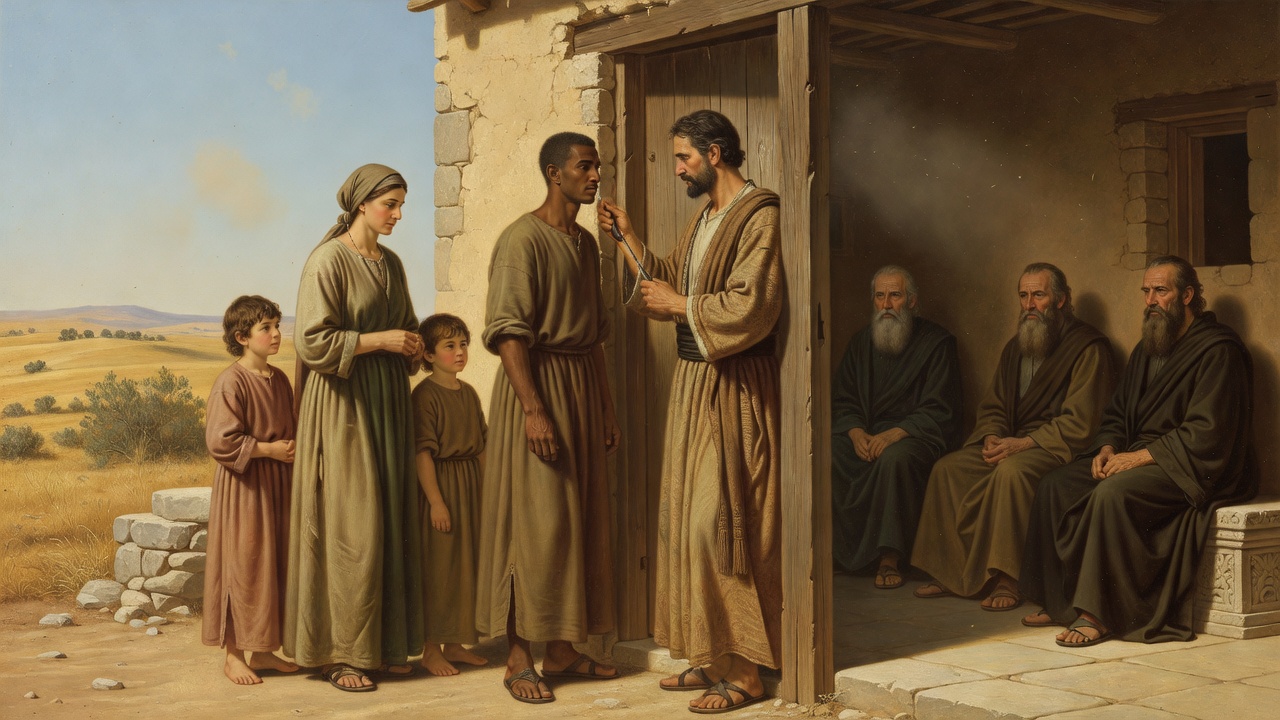
- A bought Hebrew servant served six years and went free in the seventh year without payment. He left alone if he had arrived alone, or with his wife if he had arrived with her, but a wife given by the master and any children she bore remained with the master. If the servant declared that he loved his master, his wife, and his children and did not wish to go free, the master brought him before the judges, pierced his ear with an awl at the door or doorpost, and he served for life.Sources: the Bible text itself
- Whoever struck and killed a man was to be put to death. If he had not lain in wait, but God had allowed it to happen, a place was appointed where he might flee; yet if he schemed and acted willfully to kill his neighbor, he was taken even from the altar to be put to death. Whoever struck or cursed his father or mother, and whoever kidnapped another man whether he sold him or the man was found in his possession, was also to be put to death.Sources: the Bible text itself
- If men quarreled and one struck the other with a stone or a fist so that he was confined to bed but did not die, the striker went unpunished once the injured man could walk outside with his staff, but he had to compensate for lost work and see that he was completely healed. If a serious injury resulted, the requirement was a life for a life, an eye for an eye, a tooth for a tooth, a hand for a hand, a foot for a foot, a burn for a burn, a wound for a wound, and a stripe for a stripe. If a man struck and blinded the eye or knocked out the tooth of his manservant or maidservant, he had to let the servant go free as compensation.Sources: the Bible text itself
Notes written with AI assistance from open sources (Theographic Bible Metadata, CC BY-SA 4.0; Easton’s Bible Dictionary, public domain) and reviewed before publishing.
Credits and license for this translation
Hset Hadròeh
The New Testament in the Hre language of Vietnam, translated by Baq Thi
Copyright © 2024 Baq Thi
Language: (Hre)
This translation is made available to you under the terms of the
Creative Commons Attribution Share-Alike license 4.0.
You have permission to share and redistribute this Bible translation in any format and to make reasonable revisions and adaptations of this translation, provided that:
You include the above copyright and source information.
If you make any changes to the text, you must indicate that you did so in a way that makes it clear that the original licensor is not necessarily endorsing your changes.
If you redistribute this text, you must distribute your contributions under the same license as the original.
Pictures included with Scriptures and other documents on this site are licensed just for use with those Scriptures and documents.
For other uses, please contact the respective copyright owners.
Note that in addition to the rules above, revising and adapting God's Word involves a great responsibility to be true to God's Word. See Revelation 22:18-19.
2026-07-18
Source: http://ebible.org/hrebt/ · eBible.org